
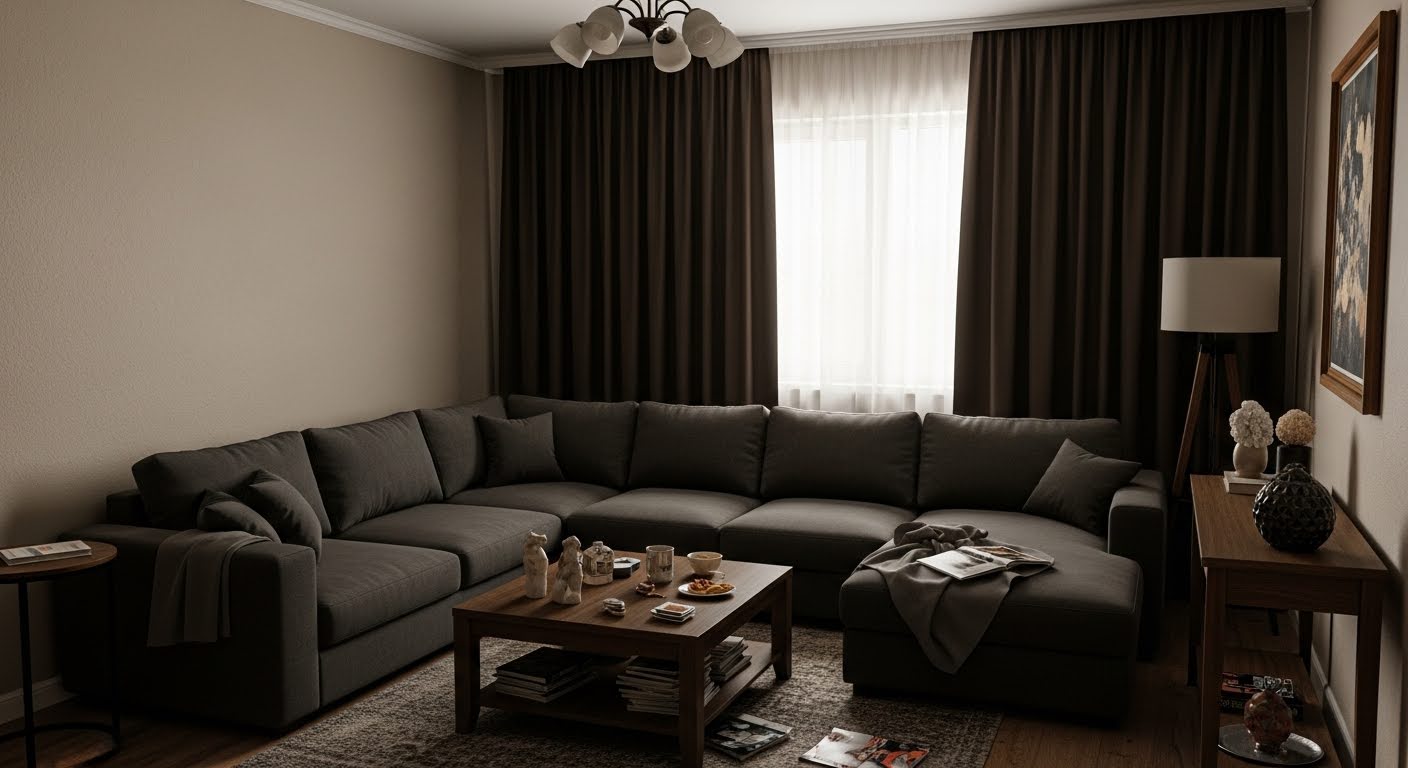
Small Living Room TV Ideas:Where to Put Your Screen
You’ve got a small living room, a TV that needs a home, and walls that don’t seem to cooperate. Sound familiar? It’s one of those challenges that feels bigger than it is — mostly because there are actually a lot of good options, and nobody tells you that upfront.
Whether you’re in your first apartment or just trying to rethink a cramped setup, TV placement in a compact space can feel like a puzzle with too many pieces. The furniture’s in the way. The outlets are in the wrong spots. The angles are awkward. And somehow, whatever you try, the screen ends up dominating the room.
Good news: it doesn’t have to stay that way. In this guide, you’ll find six real, practical small living room TV ideas — from wall mounting to clever hidden solutions — plus the most common mistakes people make and honest answers to the questions that come up most. Let’s figure out where your screen actually belongs.
Quick Summary
WHO THIS IS FOR
Apartment renters, first-time homeowners, and anyone living in a compact space who wants a smarter setup
TIME TO READ
5 min
TOP 3 TAKAWAYS
1. Wall Mounting Pros and Cons
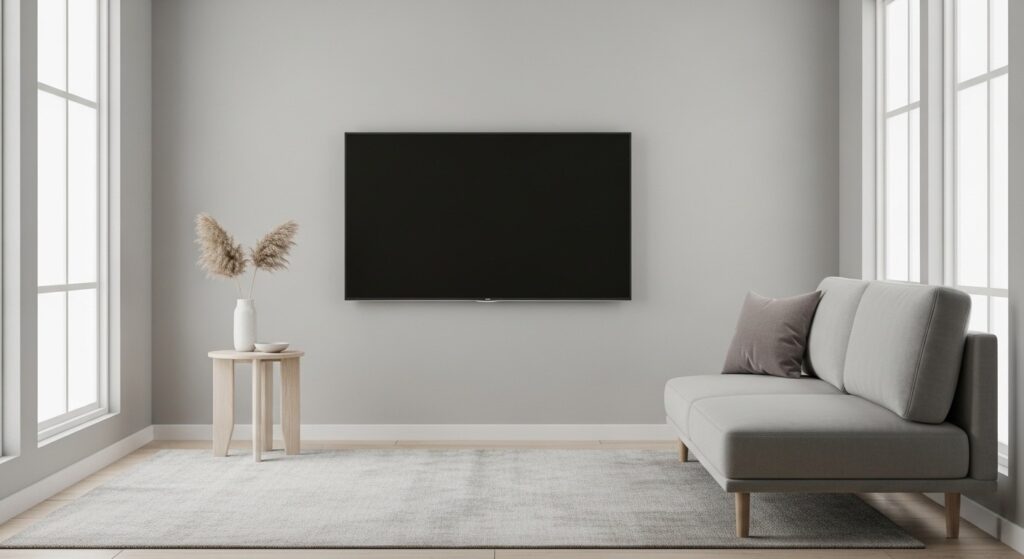
Wall mounting is probably the first thing that comes to mind for TV placement in a small room — and honestly, it’s popular for good reason. Get the TV off the floor, off the furniture, and flat against the wall, and suddenly you’ve got more breathing room without moving a single piece of furniture.
That said, it isn’t perfect for every situation. If you rent, drilling into walls might not fly with your landlord. You’ll also want to confirm the wall can handle the weight and that your stud placement actually works with where you want the screen to land. These things sound obvious, but they trip people up more than you’d think.
If you do go this route, aim to centre the screen at roughly 42 to 48 inches from the floor when you’re sitting down. That’s the sweet spot for avoiding neck strain during a long movie. A little higher is fine — but any further up and you’ll start feeling it after an hour.
| Pros• Frees up floor space instantly• Clean, intentional look• Flexible viewing angles• Works in almost any room shape | Cons• Requires drilling (check your lease)• Harder to move once done• Cables can be tricky to conceal• Stud placement may limit positioning |
2. TV Stand Alternatives
A traditional TV unit is fine — until it takes up half the wall in a small room. Wide, boxy media consoles can eat up floor space and make the room feel heavier than it needs to. The good news is there are some genuinely useful alternatives that work just as well and take up a lot less visual real estate.
Floating media shelves are probably the most practical swap. You get a clean surface for your devices, keep the floor completely clear, and the whole thing looks deliberate rather than default. Pair it with a wall-mounted power strip to keep cords from dangling, and it looks surprisingly polished.
If you want something with more personality, a low vintage trunk or a storage ottoman can double as a TV stand while giving you hidden storage underneath. This works especially well if your sofa sits close to the ground and your screen is on the smaller side. Ladder shelves are another option worth considering — they give you vertical storage and a TV display spot in one piece.
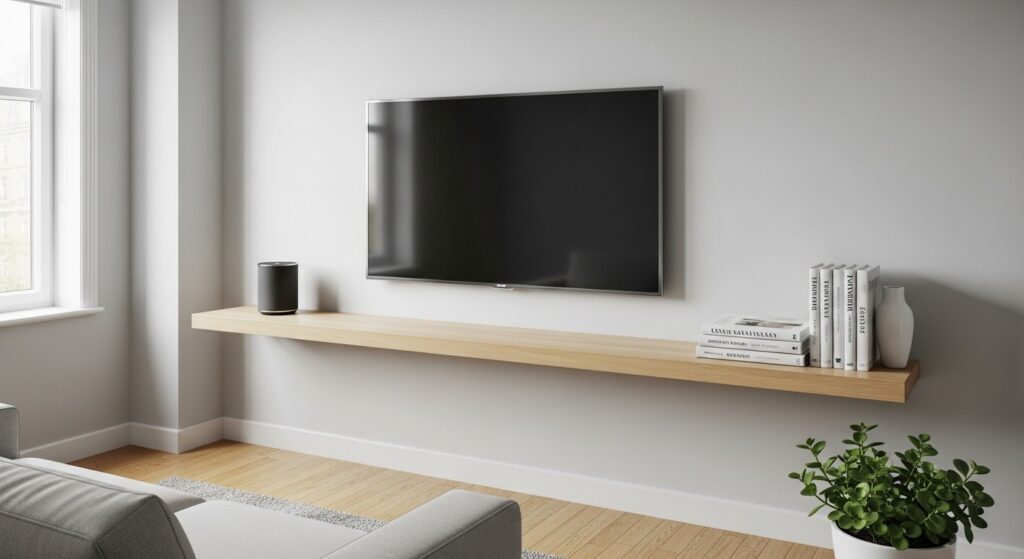
- Floating shelf: Minimal, clean, easy to install on any wall
- Low media console: Keeps storage without adding visual bulk
- Storage ottoman: Multifunctional and easy to move around
- Ladder shelf: Vertical storage combined with a display surface
3. Corner TV Placement
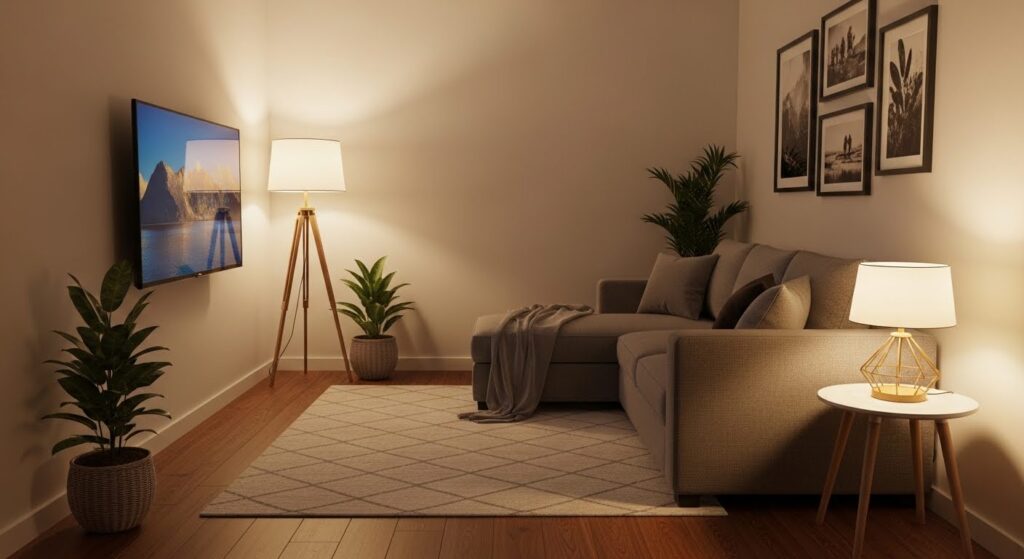
Corners might be the most underused spots in a small living room. Most people ignore them entirely. But tucking the TV into a corner can actually free up your main wall for something more interesting — shelving, a window you want to enjoy, art you’ve been meaning to hang. It creates a clear focal point that doesn’t compete with everything else.
A corner TV stand, a swivel wall mount, or a custom-built corner shelf can all make this work well. The trick is getting your seating arrangement right. An L-shaped sofa or a combination of a small sofa and a single chair gives everyone a comfortable angle without having to sit sideways all evening.
One thing worth checking before you commit: if your room is very narrow and your main seating runs along one wall, guests at the far end may end up watching at a steep angle. It’s not a dealbreaker, but it’s worth testing with your actual furniture before drilling anything.
4. Above the Fireplace Debate
Mounting a TV above the fireplace looks really good in photos. In real life, it can be a different story. The screen often ends up higher than it should be for comfortable viewing, and after an hour of looking up at an angle, most people start noticing it — especially during anything longer than a sitcom.
There’s also a heat consideration worth thinking through. If your fireplace gets regular use, warmth and particulates in the air can shorten the lifespan of electronics over time. If it’s mainly decorative, the risk drops significantly. Either way, it’s worth checking the specs of your specific unit before deciding.
That said, if you love this setup and your fireplace is mostly for show, a downward-tilting mount changes things considerably. It lets you angle the screen toward eye level, which takes care of the neck strain problem without sacrificing the look. It’s not a perfect solution, but it’s a solid compromise that works well in the right space.
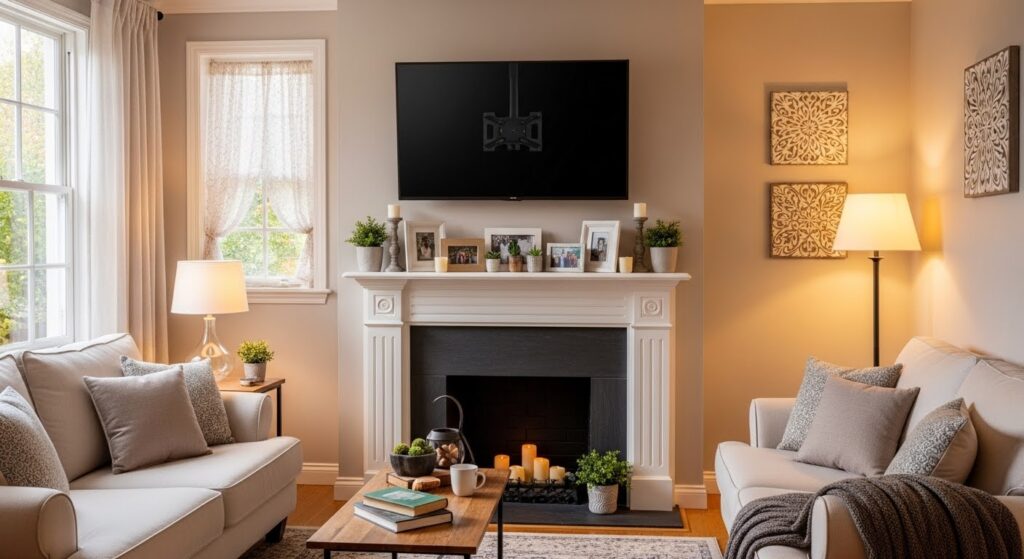
- Best case scenario: decorative-only fireplace with a 15° tilting mount
- Worth reconsidering if: the fireplace is in regular use or the mantle sits very high
- Quick tip: test your neck angle by holding your phone at the planned screen height and watching for two minutes
5. Hidden TV Solutions
Some rooms just don’t want a TV front and centre — or at least, they don’t want to look like they do when the screen is off. Hidden TV solutions range from simple weekend projects to more elaborate builds, and there’s genuinely something for every budget in between.
One of the most achievable options is blending your TV into a gallery wall. When you arrange framed prints and artwork at the same scale as the screen, it reads as part of the collection when it’s off and steps forward when it’s on. It takes a bit of planning to get the spacing right, but the result is usually worth it — and it’s one of those things that makes the room feel curated rather than generic.
Motorised TV lifts are on the pricier end, but they’re genuinely impressive. The screen rises from a console or storage unit when you want it and disappears entirely when you don’t. If you want the room to feel like a proper living space during the day rather than just a TV room, it’s hard to beat that kind of flexibility.
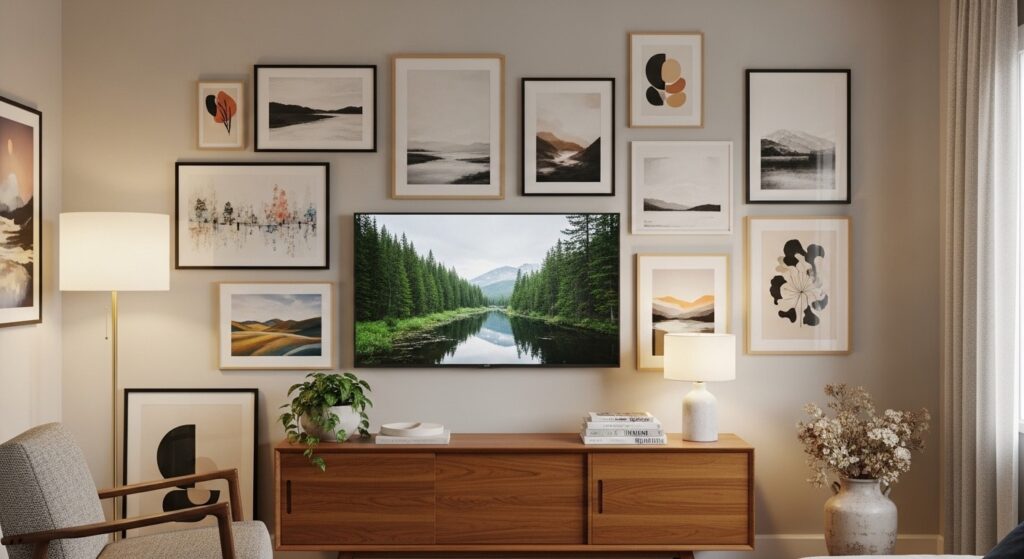
- Gallery wall blend: Low cost, high visual impact, very achievable as a DIY project
- Hinged canvas cover: A simple weekend project that hides the screen at a glance
- Sliding panel: Custom but extremely clean — worth it if you’re renovating anyway
- Motorised lift: Premium option for a completely seamless everyday look
6. Cable Management Tips
Even a beautifully placed TV can look like a mess if cables are hanging freely down the wall. Good cable management takes about an hour, costs very little, and makes a bigger difference than most people expect. It’s genuinely one of the highest-return things you can do once the screen is positioned.
Cable raceways are the easiest starting point — plastic channels that stick to the wall and cover the cords behind a neat strip. Paint them to match your wall colour and they’re practically invisible. For mounted TVs, in-wall cable kits take things a step further by routing everything behind the drywall entirely. It looks like the TV has no cables at all, which is a surprisingly satisfying result for a couple of hours of work.
Before you buy anything, it’s worth doing a quick audit of what’s actually plugged in and what you genuinely need. Streaming sticks and wireless HDMI transmitters can eliminate a surprising number of cables. The fewer you’re managing, the cleaner the result — and the less time you spend rerouting things whenever you rearrange.
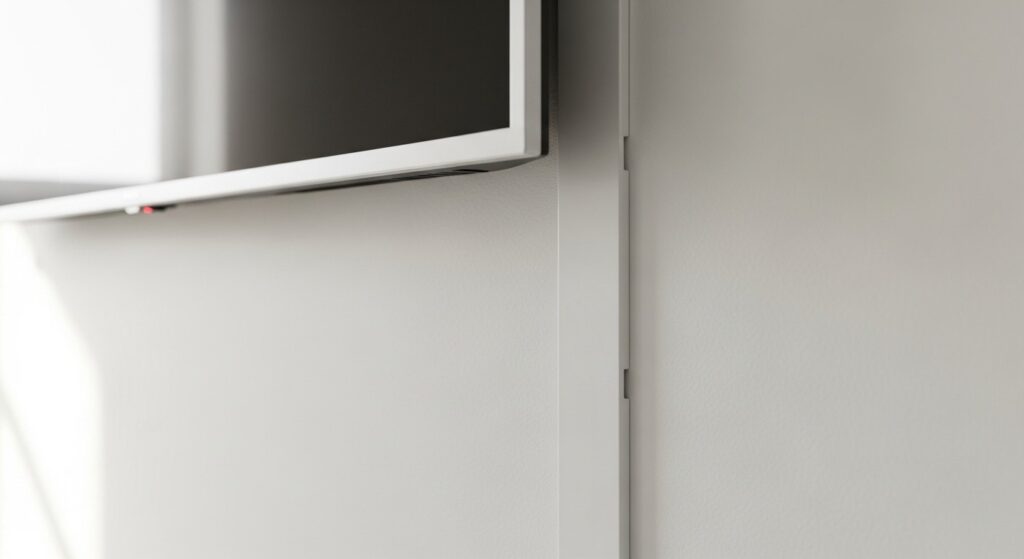
- Cable raceway: Quick, affordable, and paintable to blend into any wall
- In-wall kit: The cleanest possible result for permanent wall mounts on drywall
- Wireless HDMI: Eliminates source cables entirely — great for streaming setups
- Velcro ties: Bundles loose cords neatly behind furniture — simple and cheap
Common Mistakes to Avoid
Even with the right TV placement, a few decorating habits can undercut the whole effect. These are the ones that come up most often in small living rooms:
1. Pushing all furniture against the walls — It seems like the logical way to make space, but it actually creates a waiting-room feel and makes the room look smaller, not larger. Pull your sofa forward by 6 to 12 inches and let the space breathe.
2. Using oversized furniture — A sofa that spans the entire wall leaves no room for flow or visual balance. Always scale your pieces to the actual room — not to what looked good in the store or online.
3. Ignoring vertical space — Small rooms have height too. Tall shelving or wall-mounted storage above your TV zone draws the eye upward, which creates a genuine sense of spaciousness without taking up any extra floor area.
4. Too many small decor items — A collection of tiny objects around the TV creates visual noise fast. Group things in threes, keep the TV area intentionally minimal, and let the screen itself do the work without competing with clutter.
5. Poor lighting choices — Overhead-only lighting flattens a compact room and makes it feel clinical in the evenings. Add a floor lamp or a couple of wall sconces near the TV area for warmth, depth, and a much more comfortable viewing atmosphere.
Frequently Asked Questions
What is the best sofa for a small living room?
The best sofa for a small living room is one that’s actually sized for the space — not the largest thing you can get through the door. A compact two-seater or a slimmer three-seater with thin arms and raised legs tends to work best. Those details make the piece look lighter and take up less visual weight even if the physical dimensions aren’t dramatically different. Avoid deep, oversized sectionals unless your room has a specific shape that benefits from an L-configuration. A sofa in a light neutral or a tone that matches your walls will visually recede into the space — a dark, contrasting piece does the opposite.
How do I make my small living room look bigger?
The fastest gains come from decluttering first, then applying a few simple visual tricks. Mirrors are one of the best tools available — a large mirror placed opposite a window bounces light and creates the impression of depth that can effectively double how big the room feels. A consistent, light colour palette across walls and larger furniture reduces visual interruptions that make a room feel choppy. Clear pathways between pieces of furniture signal spaciousness to the eye. And layered lighting at multiple heights — not just a ceiling fixture — adds warmth and dimension that transforms the room at any time of day.
What colours make a small room look larger?
Soft, light, neutral tones are the classic answer — warm whites, pale creams, off-whites, and light greys reflect light and push walls back visually. But you have more options than just neutral. Pale greens, muted dusty blues, and soft blush tones can open a space while still adding personality. If you want something bolder, try painting just one wall — like the TV wall — in a deeper tone. This creates depth rather than closing the room in, especially when the rest of the surfaces stay cohesive. The key is keeping large surfaces consistent so the eye moves around the room without getting caught on interruptions.
Should I use a rug in a small living room?
Yes — but get the size right, or it’ll work against you. The most common mistake is choosing a rug that’s too small. It ends up looking like a postage stamp floating in the middle of the room, which actually fragments the space visually. Your rug should be large enough that the front legs of your sofa and chairs sit on it, anchoring the seating group together as a single unit. A solid colour or a low-contrast pattern keeps the floor calm and uncluttered. A well-chosen rug in the right size makes the whole room feel finished and intentional in a way that’s hard to achieve through any other single piece.
Final Thoughts
Finding the right TV spot in a small living room is really just about being intentional. Whether you go with a wall mount, a floating shelf, a corner setup, or something hidden behind a gallery wall, the right choice is whatever fits your room’s proportions, your daily habits, and — if you’re renting — your lease. Start with one idea. Measure twice. Don’t rush into anything permanent until you’ve lived with the layout for a few days.
Small spaces actually reward careful decisions more than big ones do. Every choice you make — where the screen sits, how the cables run, what furniture surrounds it — adds up to a room that feels considered rather than cramped. Once your TV situation is sorted, you’ll be surprised how much easier the rest of the room falls into place.