
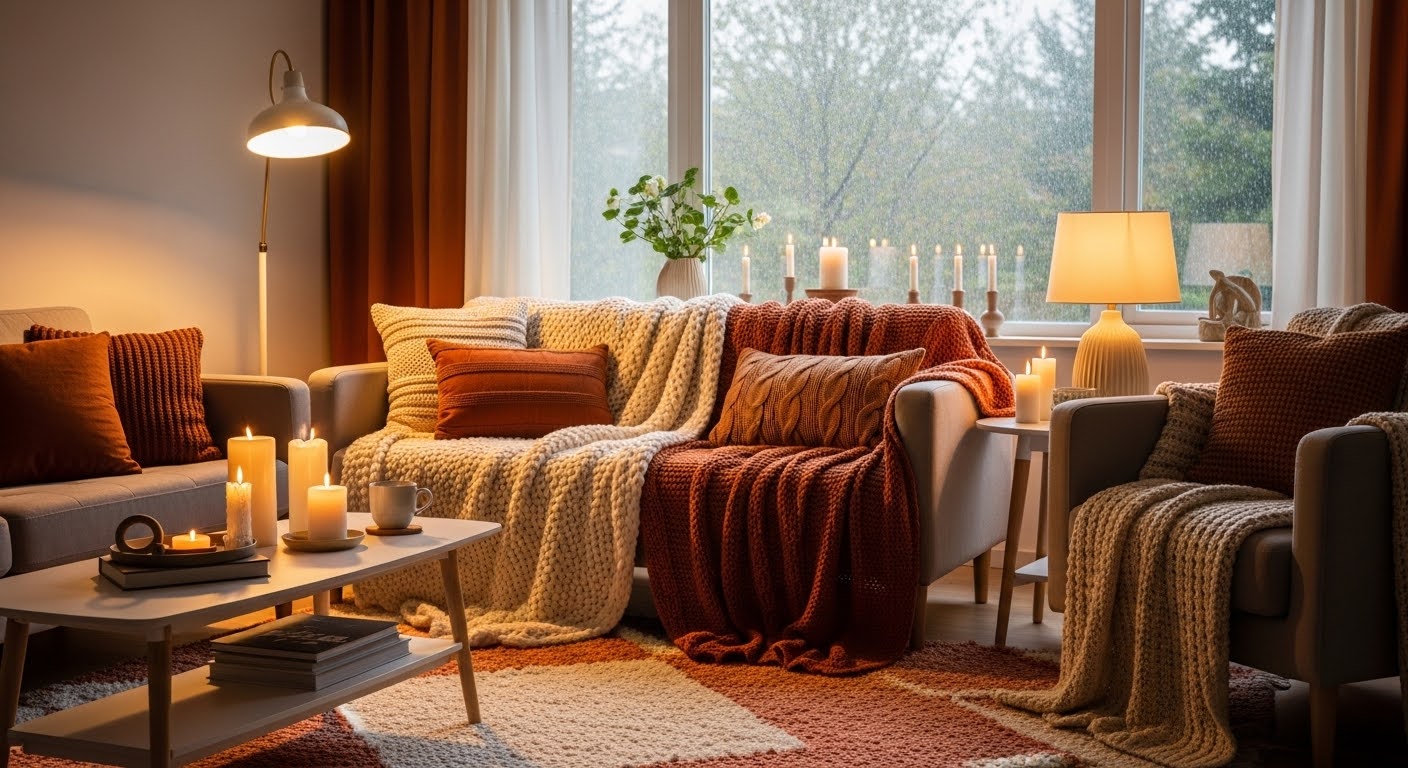
Cozy Living Room Ideas: Warmth & Comfort Guide (2026)
There’s a specific kind of letdown that happens when you come home after a long day and your living room just… doesn’t do anything for you. It’s not bad exactly — it just feels blank. A little cold. Like a waiting room you happen to own a couch in. If that sounds familiar, you’re in good company. A lot of people feel that way, and most of them assume fixing it requires money they don’t have or space they’re not working with.
Here’s the thing though: coziness isn’t about square footage or a big renovation budget. It’s not even really about furniture. It’s about how a room feels when you’re actually in it — the softness underfoot, the quality of the light in the evening, whether there’s something within arm’s reach that makes you feel at home. Those things are surprisingly affordable to create, and they’re available to you whether you’re renting a studio or settling into your first house.
This guide covers everything — color, lighting, textiles, arrangement, scent, seasonal updates, budget strategies, the works. Some of these ideas you can do this afternoon for free. Others are small investments that’ll change how you feel about your space every single day. Either way, by the time you reach the end, you’ll know exactly where to start.
Quick Summary
WHO THIS IS FOR
Anyone who wants their living room to feel genuinely warm and welcoming — renters, first-timers, small-space dwellers, all of the above
TIME TO READ
13 min
TOP 3 TAKAWAYS
1. What Actually Makes a Room Feel Cozy
Coziness isn’t a style. You can’t buy it in a single trip to a home goods store, and it doesn’t come down to matching your throw pillows to your curtains. It’s a feeling — and like most feelings, it’s layered. Warmth in a room usually comes from hitting several senses at once: something soft to touch, light that’s easy on the eyes, a gentle scent, and an arrangement that makes you feel held rather than exposed.
Designers sometimes talk about the idea of ‘refuge’ — the sense that a space feels sheltered and contained. Rooms with furniture arranged in tight, inward-facing groups trigger this naturally. So do rooms with layered rugs and soft materials that visually lower the ceiling and close in the walls (in a good way). You don’t need a fireplace or wooden beams to get there. You need intention.
The other thing worth knowing: cozy is mostly about what you add, not what you subtract. You’re not stripping your room down to some minimalist ideal. You’re building it up — thoughtfully, in layers. Start small. Pick one category from this guide and work on just that. The room will start to shift faster than you’d expect.
The core ingredients:
- Warm, low lighting — not a single bright overhead fixture
- Something soft within reach at all times
- A clear focal point that draws the room together
- Surfaces that look purposeful, not piled up
- At least one natural material — wood, rattan, stone, a living plant
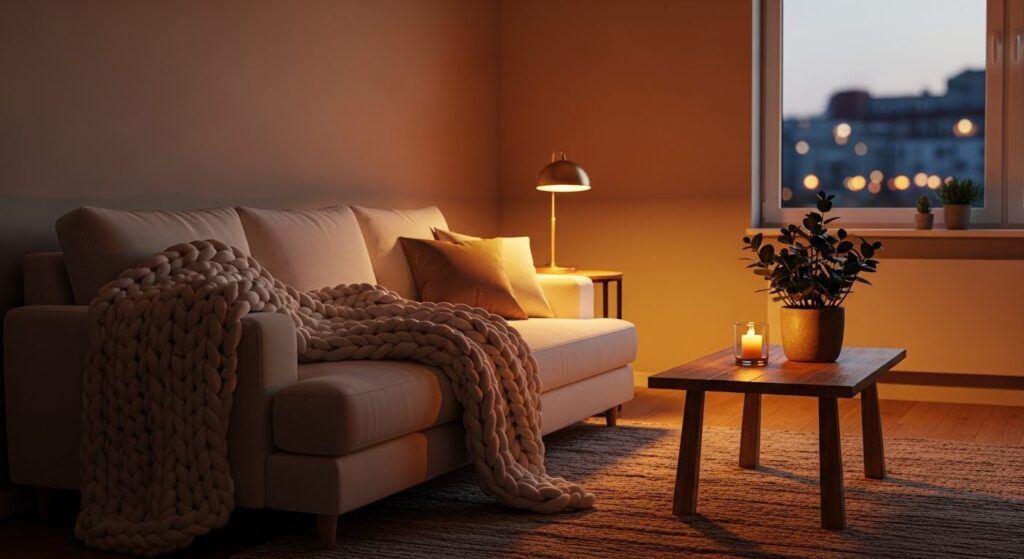
2. The Psychology of Warm Colors
Color affects how warm or cool a space feels before you even consciously register it. Warm tones — terracotta, rust, amber, caramel, deep olive — literally raise the perceived temperature of a room. It’s not a design myth. There’s real perceptual psychology behind it, and you can use it without touching a single wall.
The most common mistake people make with color is thinking they need to repaint. You don’t. A cream sofa with rust-colored cushions and a warm amber throw reads as dramatically cozier than the same sofa dressed in grey and white. The furniture doesn’t change. The feeling does. Rugs, curtains, pillows, and art are all carrying color signals just as loudly as paint.
If you’re working with a small apartment, reach for warm mid-tones rather than deep, saturated colors. Things like dusty rose, warm sand, soft clay, or sage green keep the room from feeling heavy while still adding that wrapped-in-warmth effect. Stark white walls aren’t a death sentence — pair them with warm textiles and your room will read entirely differently.
A simple warm palette to work from:
- Walls and large textiles: warm white, linen, oat, soft putty
- Mid-tone accents: terracotta, sage, dusty rose, warm caramel
- Pops of color: rust, deep mustard, cinnamon, forest green

3. A Smarter Approach to Lighting
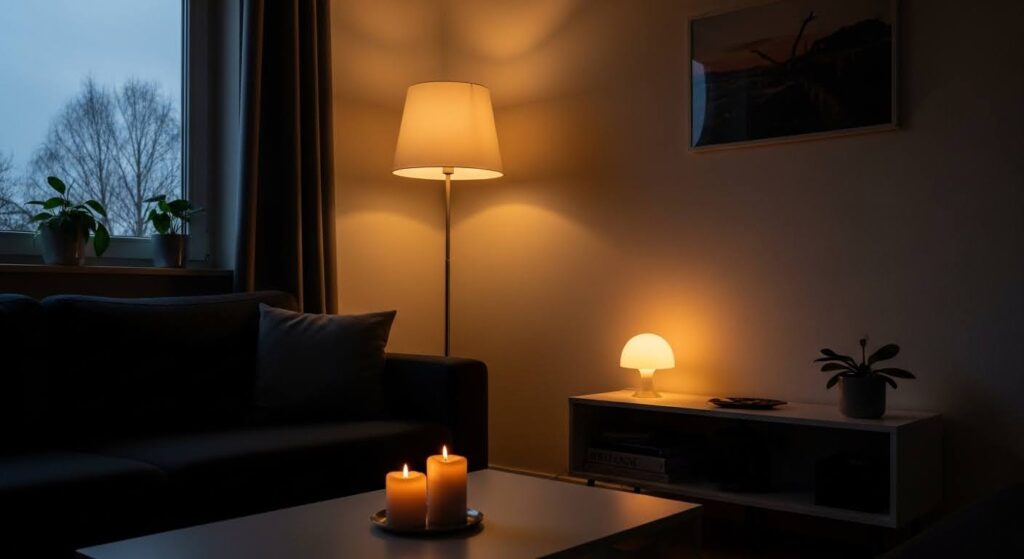
If you want the single biggest change you can make to how your living room feels, this is it: stop relying on one overhead light. Nothing in interior design kills warmth faster than a lone ceiling fixture blasting the room with uniform brightness. It flattens everything. It makes spaces feel like break rooms.
What you want instead is layered lighting — multiple sources at different heights creating overlapping pools of light across the room. A floor lamp in one corner. A table lamp on the side table. Maybe a small lamp on a shelf. Candles on the coffee table in the evening. It sounds like a lot, but it doesn’t have to be expensive, and the difference is almost instant.
One thing most people overlook: the temperature of the bulb matters enormously. Always look for bulbs labeled warm white or soft white — ideally in the 2700K to 3000K range. Anything higher than that, like ‘cool white’ or ‘daylight’ bulbs, will make your room feel clinical no matter how many throws you pile on. It’s the single cheapest fix on this entire list.
Four layers to aim for:
- Ambient: a dimmer-controlled ceiling fixture or a tall arc floor lamp
- Task: a lamp next to wherever you usually sit and read
- Accent: a small lamp on a shelf, console, or side table
- Atmosphere: candles, string lights, or an LED flame for evenings
4. Textiles — Your Secret Weapon
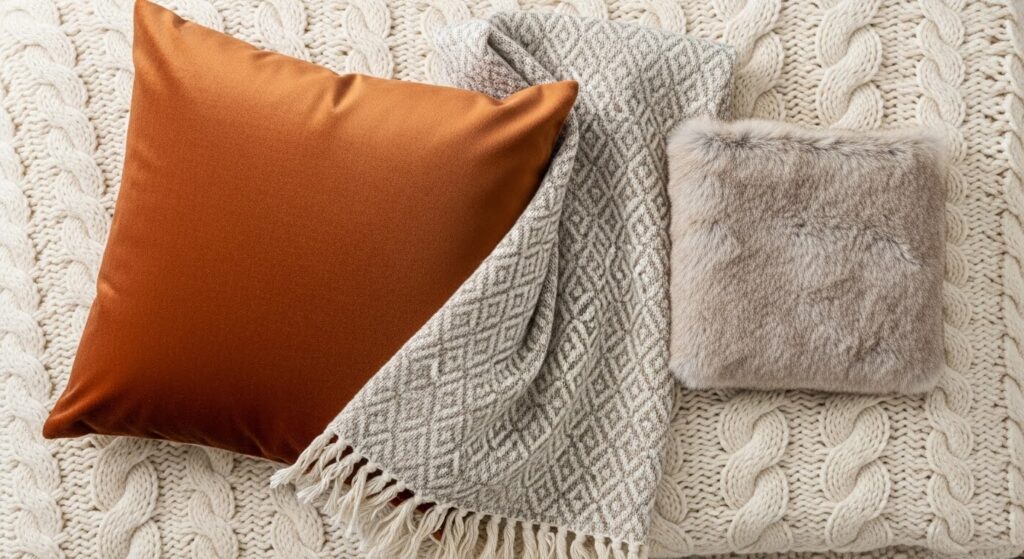
If there’s a shortcut to a cozy room, it’s this: add more soft things in more textures. Chunky knit next to velvet next to woven cotton — when you layer materials like that, your brain registers warmth even before you physically touch anything. It’s one of the core ideas behind hygge-style decorating from Scandinavian design, and it works in any apartment, any size.
Start with your sofa. Honestly, just start there. Add two throw pillows in different textures. Drape a blanket loosely over one arm. Those three small additions will do more for the feel of the room than almost any furniture purchase you could make. Mix your pillow sizes too — large squares with a smaller lumbar pillow creates a lived-in layered look that’s much warmer than matching sets.
Rugs deserve a special mention. If you have hard floors and no rug, that’s likely the single biggest reason your room feels cold. A rug grounds a seating area and creates what designers call a ‘room within a room’ — a defined zone that feels enclosed and intentional. For most living rooms, a rug that fits under at least the front legs of your sofa is the goal.
A simple textile layering formula:
- One warm-toned anchor rug under or beneath the seating area
- One throw blanket per main seating spot, draped casually
- Three to five pillows per sofa — mix textures, not just colors
- Curtains that reach the floor (or close to it) for added softness and height
- A small extra rug in any reading nook or corner
5. Furniture Arrangement for a More Intimate Feel
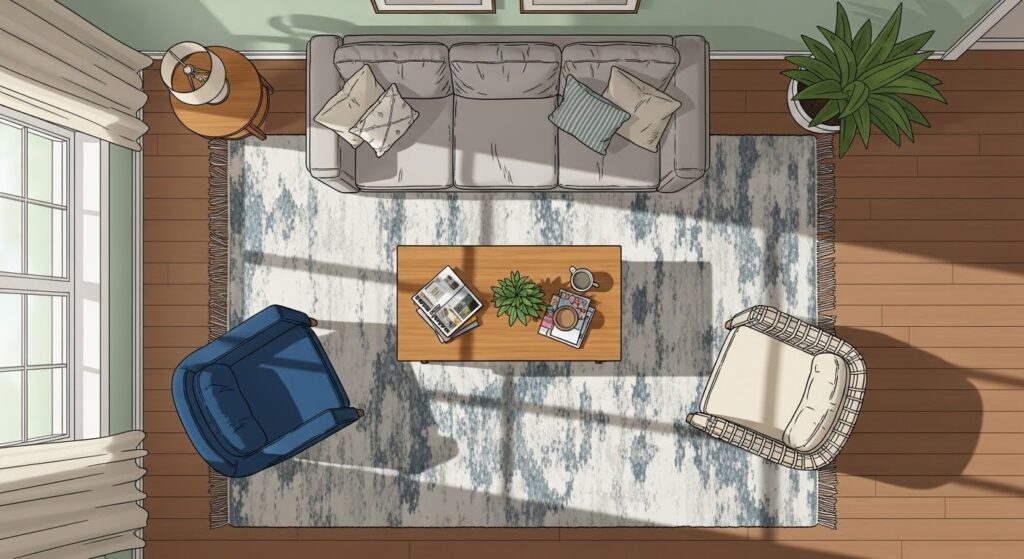
Here’s a move that costs nothing and makes an enormous difference: pull your furniture away from the walls. Most people — especially in smaller apartments — push everything to the perimeter, thinking it’ll make the room feel bigger. It doesn’t. It makes it feel like a hallway. Empty middles are cold. Tight, inward-facing groupings feel intimate and warm.
The goal is a ‘conversation zone’ — your main seating pieces angled toward each other, centered around a focal point like a coffee table, a fireplace, or a media console. When all the seats face a common center, the room has a sense of arrival. People know where to go when they sit down. That psychological clarity is part of what makes a room feel cozy rather than just furnished.
For tighter spaces, you don’t need to float your sofa in the middle of the room. Even pulling it 8 or 10 inches away from the wall does the job. The space behind a sofa can hold a slim console table or a small plant — it doesn’t have to be dead space. Small arrangements that face inward always beat large arrangements spread thin.
Quick arrangement checklist:
- All main seating should angle toward a central point
- Leave about 18 inches between pieces for comfortable movement
- Anchor the group with a coffee table or large ottoman
- Give every seat a surface within arm’s reach
6. Bringing Nature In
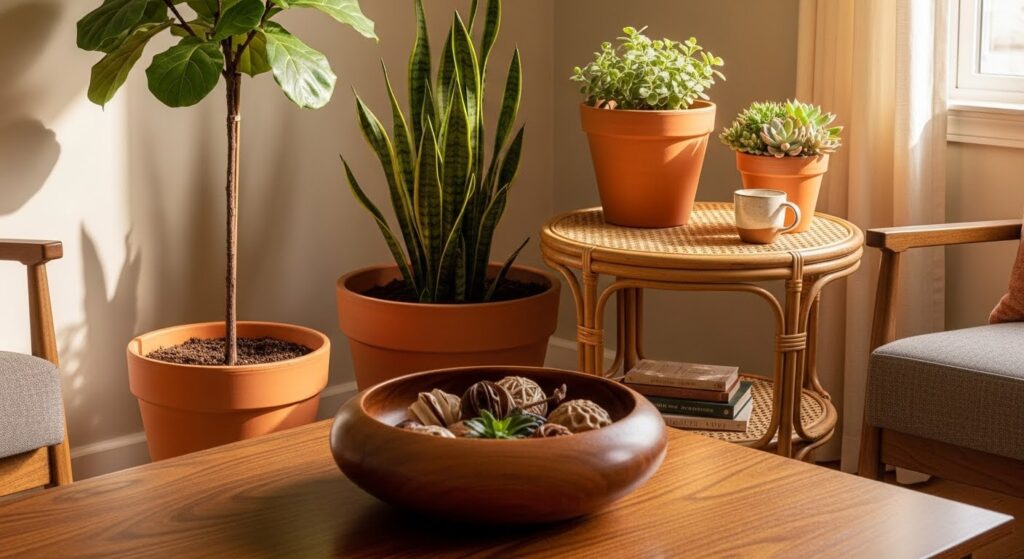
Natural materials have a warmth that manufactured ones rarely replicate. Wood grain, woven rattan, stone, jute — there’s something about the imperfection and texture of natural things that reads as inherently welcoming. A room filled entirely with synthetic materials can look fine and still feel sterile. Add one wooden tray, one wicker basket, one terracotta pot, and the whole room softens.
Plants are probably the easiest place to start. A single medium-sized plant in a clay or ceramic pot adds color, life, and a sense of the organic to any corner. You don’t need to be someone who keeps plants alive — there are genuinely resilient options (pothos, snake plants, ZZ plants) that tolerate low light and irregular watering without complaint. Even a few sprigs of dried pampas grass or eucalyptus in a vase counts.
Beyond plants, look for wood wherever it makes sense. A wooden side table. A rattan pendant light. A carved wooden bowl on your coffee table. These don’t need to be expensive finds — thrift stores and secondhand marketplaces are full of wooden and woven pieces at low prices. Each one adds a layer of texture and warmth that no amount of throw pillows quite replaces.
Natural elements at different price points:
- Free: dried branches, pinecones, stones, foraged seed pods
- Under $20: a small potted plant, a wooden tray, a jute table runner
- Under $50: rattan side table, terracotta pots, a larger plant
- Longer investment: a live-edge coffee table, a stone bowl collection
7. Why Personal Touches Matter More Than You Think
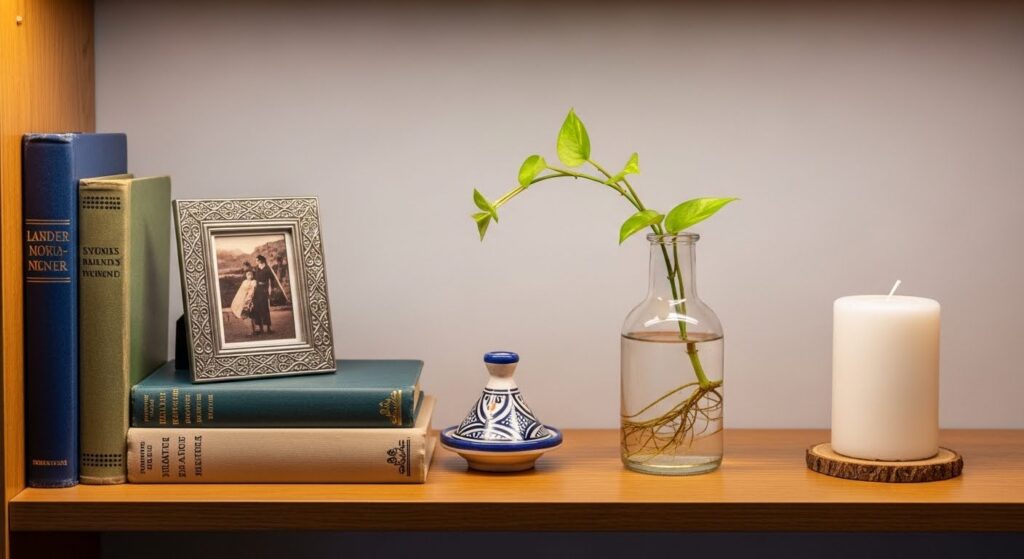
A room full of things you genuinely love will always feel cozier than a perfectly styled showroom. That’s not an opinion — it’s just how spaces work. Personal items create emotional warmth that no amount of tasteful decorating can manufacture. A travel souvenir on the shelf, a stack of books you’ve actually read, a photo of somewhere you love — these things anchor a space in a way that makes it unmistakably yours.
The trick is editing, not accumulating. You don’t need to display everything meaningful you own. Choose a handful of items that carry real joy or memory, and give them intentional placement. One beautiful vignette on a shelf — three objects at different heights, a little breathing room between them — reads as far more personal than a crowded surface trying to tell every story at once.
There’s also something worth noting about what personal objects do for guests. When someone walks into your space and asks about something they notice, and you light up telling the story — that exchange is a big part of what makes a home feel warm to visitors. It’s not about having the right things. It’s about having your things, thoughtfully placed.
Simple rules for personal displays:
- Group objects in odd numbers — threes and fives read more naturally than pairs or fours
- Vary the height of items within each group
- Let one color or material thread through the whole display
- Rotate items every few months to keep things feeling fresh
8. Scent and the Feeling of Home
Most people think about what their living room looks like. Far fewer think about what it smells like — and that’s a missed opportunity. Scent is one of the most direct routes to a feeling of comfort and familiarity. It works faster than any visual cue. A warm, spiced, woody, or gently sweet scent can shift the atmosphere of a room before you’ve even sat down.
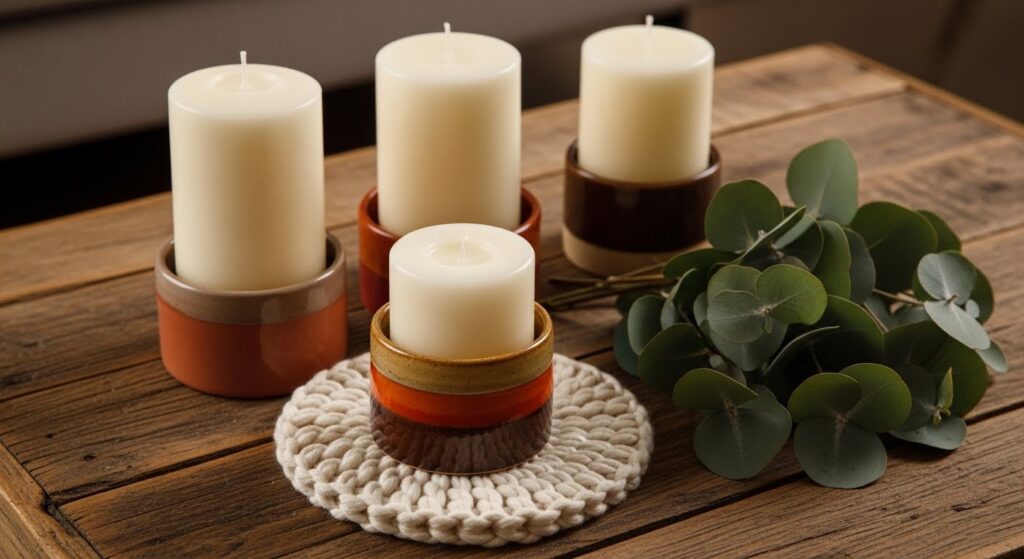
Candles are the classic choice because they do double duty — they add soft, flickering light alongside scent. A group of three candles at different heights on a coffee table creates both visual warmth and ambient fragrance. If open flames aren’t practical in your space, a wax warmer, reed diffuser, or quality room spray does the same job without the fire risk.
And don’t overlook natural scent options. A bunch of eucalyptus tied to a door handle, fresh flowers on the table, a bowl of dried orange peels and cinnamon sticks, or even just simmering a pot of water with spices on the stove — these create a genuinely cozy atmosphere that feels lived-in rather than artificially fragranced.
Scent families that read as warm and cozy:
- Spiced and warm: cinnamon, cardamom, clove, nutmeg
- Woody and grounded: cedarwood, sandalwood, vetiver
- Soft and sweet: vanilla, amber, tonka bean
- Fresh and herbal: eucalyptus, lavender, sage, rosemary
9. Building a Cozy Corner or Reading Nook
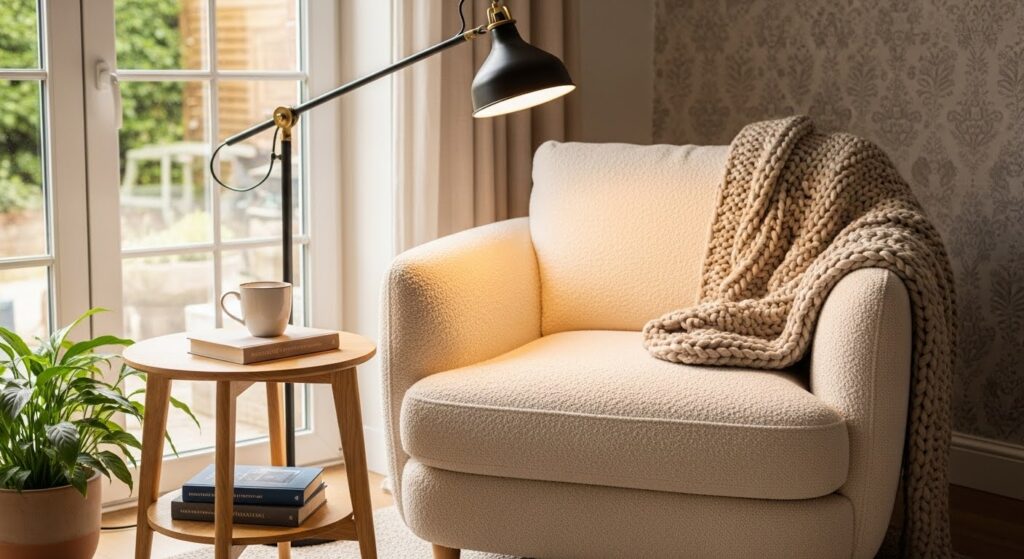
You don’t have to overhaul your entire living room to feel the difference. Sometimes all it takes is one corner. A single well-done reading nook — a comfortable chair, a lamp, a small table for your drink, a throw within reach — can shift how the whole room feels, because now there’s a destination in it. A place that’s clearly meant for you to actually be in.
Look for the spot in your living room that gets the best natural light during the day. That’s where your nook goes. Pull a chair to face the light, add a lamp for evening reading, and put a small surface close enough that you never have to get up for your tea. Keep a basket of blankets nearby rather than folded away in another room — accessibility is a big part of what makes a nook feel genuinely inviting rather than just decorative.
Window seats, if you have one, are among the most underused cozy opportunities in any apartment. A thick seat cushion, a couple of pillows in mixed textures, and a small throw is all you need. If the window is bare, adding sheer curtains behind heavier panels frames the seat and adds depth. (If you’re working with a very small room, check out our Cozy Small Living Room Ideas guide for more nook ideas scaled to tight spaces.)
The anatomy of a good reading nook:
- One seat that’s genuinely comfortable for an hour of reading
- A dedicated light source for that exact spot
- A surface within reach — table, stool, or even a tray on the floor
- At least one soft textile you don’t have to go looking for
- Something nearby that makes the space feel personally yours
10. Keeping It Cozy All Year Long
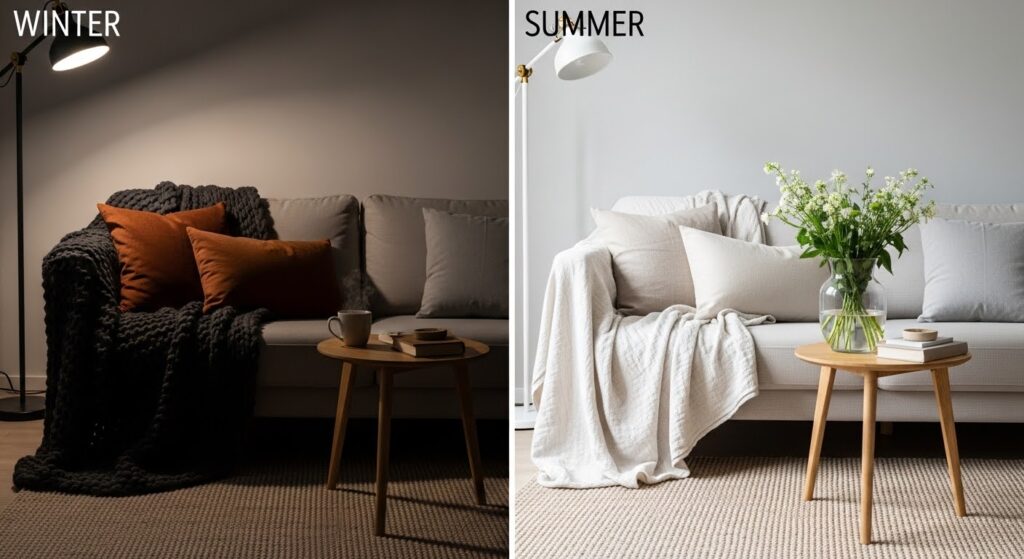
One of the cleverest things you can do for your living room is build in a seasonal swap system. Not a full redecorating — just a light rotation of textiles, accents, and scents that shifts with the season. It keeps the space feeling fresh and intentional without requiring you to buy anything new most of the time. You’re just moving things around.
The way it works: put together a small ‘cozy kit’ for each season — a set of pillows, one or two throws, a candle, maybe a few small decorative pieces. Store each kit in a labeled bin or basket. When the season changes, swap the kit. The bones of the room stay the same. Only the surface layer turns over. Takes about half an hour and completely changes how the space feels.
Fall is probably where this shines most. Transitioning from summer to autumn doesn’t have to mean covering every surface in seasonal decor. It means swapping a lightweight linen throw for a heavier chunky knit, trading your lighter pillow covers for ones in rust, mustard, or deep green, and reaching for a warm spiced candle instead of something fresh and citrusy. Our Fall Living Room Decor guide goes deeper on the full seasonal playbook.
What changes with each season:
- Autumn and winter: heavier knits and velvets, deep warm tones, spiced and woody scents
- Spring and summer: linen and cotton, softer lighter hues, citrus and herbal scents
11. Great Ideas for Every Budget
Here’s something the home decor industry would prefer you didn’t think about too hard: the coziest rooms in the world aren’t usually the most expensive ones. A room that feels genuinely warm and personal almost always got that way through layering and intention, not through spending. A thrifted wool throw that cost twelve dollars can do more for a room than a designer lamp placed wrong.
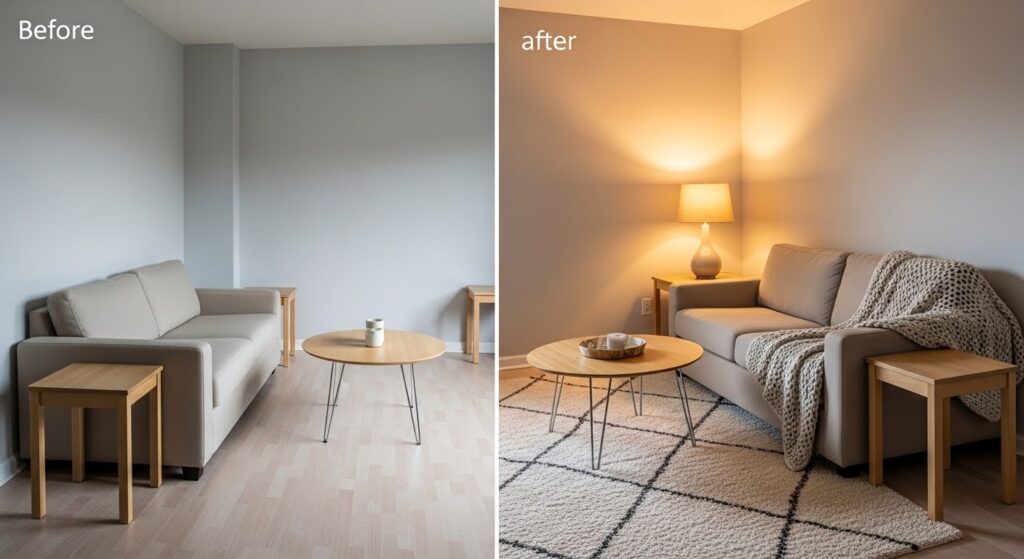
Before you spend anything, spend thirty minutes rearranging. Pull your sofa away from the wall. Group your seating around a center point. Move a lamp from a bedroom. Drape a blanket you already own. Stack the books you have by color. These moves are free and they often produce the most dramatic before-and-after results of anything on this list.
Once you’ve done that, then add selectively. A few candles, a single new plant, a secondhand rug from an estate sale or marketplace app — these things are deeply affordable and deeply effective. Thrift stores are consistently excellent for wooden pieces, rattan baskets, and vintage textiles, all of which add natural warmth at a fraction of retail prices.
Budget-by-budget starting points:
- $0: rearrange furniture, redrape existing textiles, declutter one surface
- Under $25: two candles, a small plant, a set of warm-toned pillowcases
- Under $75: a secondhand area rug, a rattan basket, a warm-toned floor lamp
- Under $150: a thrifted accent chair, a quality throw, lined curtains
12. The Difference Between Cozy and Cluttered
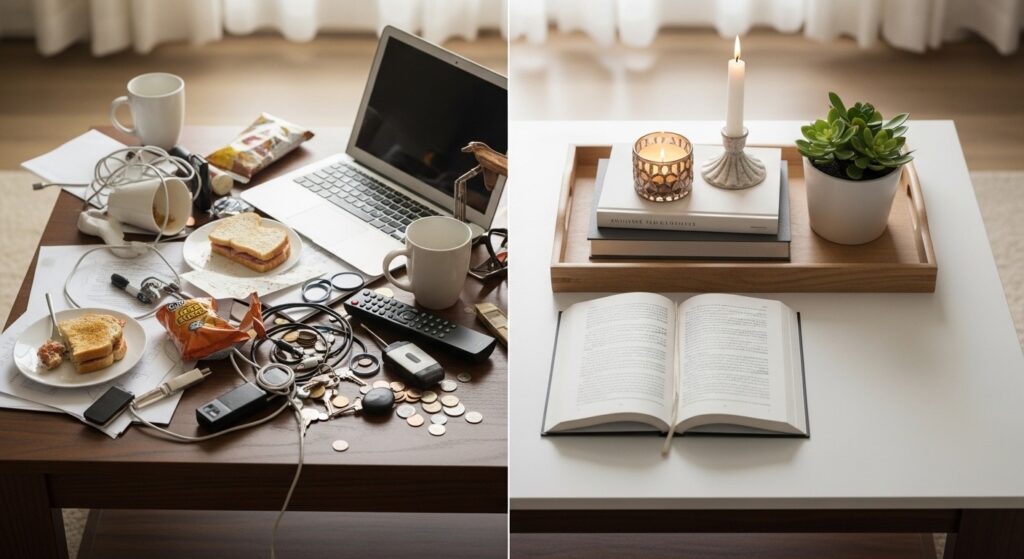
There’s a line between a room that feels layered and warm, and one that just feels chaotic — and it’s easier to cross than you’d think. Clutter is visual noise. When every surface is full, your brain keeps processing all of it as unfinished business. That low-level mental hum is the opposite of restful, and it’s exactly what you’re trying to get away from when you’re going for cozy.
The principle that helps most: give every soft thing a home. A blanket draped over the back of a sofa looks intentional. The same blanket bunched up in a pile on the floor doesn’t. A basket next to the couch for throws, a shelf for extra pillows, a tray on the coffee table to contain the miscellany — these simple containers are what keep a layered room looking styled rather than lived-in-the-wrong-way.
One surface at a time is a useful mindset when you’re building up a cozy room. Before you add anything new to a surface, clear it completely and restyle it from scratch. Three objects at different heights, a little space between them, a sense of intention. One beautiful grouping always beats seven random things. Coziness needs room to breathe — not empty room, but room that isn’t fighting itself.
Practical ways to contain the cozy:
- Use baskets and bins in your room’s palette — they store things while looking good
- Blankets should be draped or folded, not just set down
- Coffee table displays work best with three to five items maximum
- A 10-minute weekly reset of surfaces keeps the room from slowly drifting into chaos
Reading More About – Modern Living Room Lighting
Mistakes Worth Avoiding
These come up over and over — worth knowing before you start:
- Piling things on without a plan. Layering works because each piece is considered. When every surface overflows, the eye has nowhere to land. More isn’t warmer — thoughtful is warmer.
- Blocking natural light. It’s tempting to hang heavy curtains for that cocooning effect, but cutting off daylight makes a room feel small and dim rather than cozy. Let the light in during the day. Layer your window treatments so you can open them easily.
- Using the wrong bulb temperature. This one is quiet but it undermines everything else. Cool white or daylight bulbs (5000K and above) make spaces feel clinical regardless of your other choices. Warm white bulbs in the 2700–3000K range are your friend.
- Ignoring scale. A small rug drifting in the middle of a large room looks awkward and disconnected. Oversized furniture in a tiny room overwhelms it. Match your pieces to the actual dimensions of your space, not what looked good in the showroom.
- Styling for photos rather than for living. If your throw pillows are too perfect to touch, they’re not cozy — they’re decor. The best cozy rooms are ones you can immediately drop into and feel at home. Design for how you actually spend your evenings, not for how the room photographs.
Frequently Asked Questions
What actually makes a living room feel cozy?
It’s never just one thing. Coziness happens when several sensory layers overlap — warm lighting, soft textures you can reach without getting up, a sense of enclosure from how the furniture is arranged, a pleasant scent, and some kind of personal object that anchors the space to your actual life. Any one of those elements alone is nice. Together, they’re the difference between a room that looks fine and one that genuinely feels like coming home.
How do I add warmth to a room without it feeling cluttered?
The key is giving everything a home. A throw blanket in a basket looks intentional. The same throw balled up in a corner doesn’t. Start by containing what you already have — a basket for blankets, a tray on the coffee table, a designated spot for pillows when the sofa isn’t in use. Once your existing layers are contained and purposeful, adding new ones is easy. It’s the difference between building and accumulating.
What colors make a living room feel cozier?
Warm-toned colors do the most work here — terracotta, rust, amber, warm caramel, mustard, deep olive, dusty rose. These tones raise the perceived temperature of a room even in small doses. And you don’t need to use them on the walls. The same effect comes from a rust-colored rug, an amber throw, or caramel-toned curtains. What to avoid as dominant tones: cool greys, stark whites, and blue-based neutrals. They’re beautiful but they work against warmth.
Can a minimalist room feel cozy?
Absolutely. Minimalism and coziness are not opposites — they just require a slightly different approach. In a minimal room, every piece carries more weight, so you want each one to be warm in tone and soft in texture. One quality chunky throw, one wooden side table, one well-chosen plant. The Scandinavian hygge tradition that inspired a lot of cozy decor is deeply minimal at heart. The key is that the few things you choose are chosen deliberately for warmth.
How do I keep a cozy living room feeling fresh throughout the year?
A seasonal swap system is the easiest approach. Keep two or three small ‘kits’ — a collection of pillow covers, a throw, a candle scent, and a few small accents for each season — stored in labeled bins. The furniture arrangement, the rug, the lighting setup all stay the same year-round. Only the surface layer rotates. It takes about half an hour each season and the room feels genuinely new each time without requiring you to buy much of anything.
Final Thoughts
A cozy living room isn’t a destination you arrive at after a big renovation. It’s something you build up over time, one layer at a time — a lamp here, a rug there, a blanket draped over a chair, a candle lit on a Tuesday evening for no particular reason. That accumulation of small, intentional choices is what turns a room from a place you happen to be in into a place you actually want to be.
Pick one section from this guide and act on it today. Not next weekend, not when you’ve saved up for the perfect chair. Today, with what you have. Rearrange the sofa. Move a lamp. Drape a throw differently. The room will start talking back. And once it does, the rest comes pretty naturally.
Want to keep going? Our Cozy Small Living Room Ideas guide takes everything here and adapts it specifically for studio apartments and smaller spaces — same warmth, less room to work with. Worth a read.