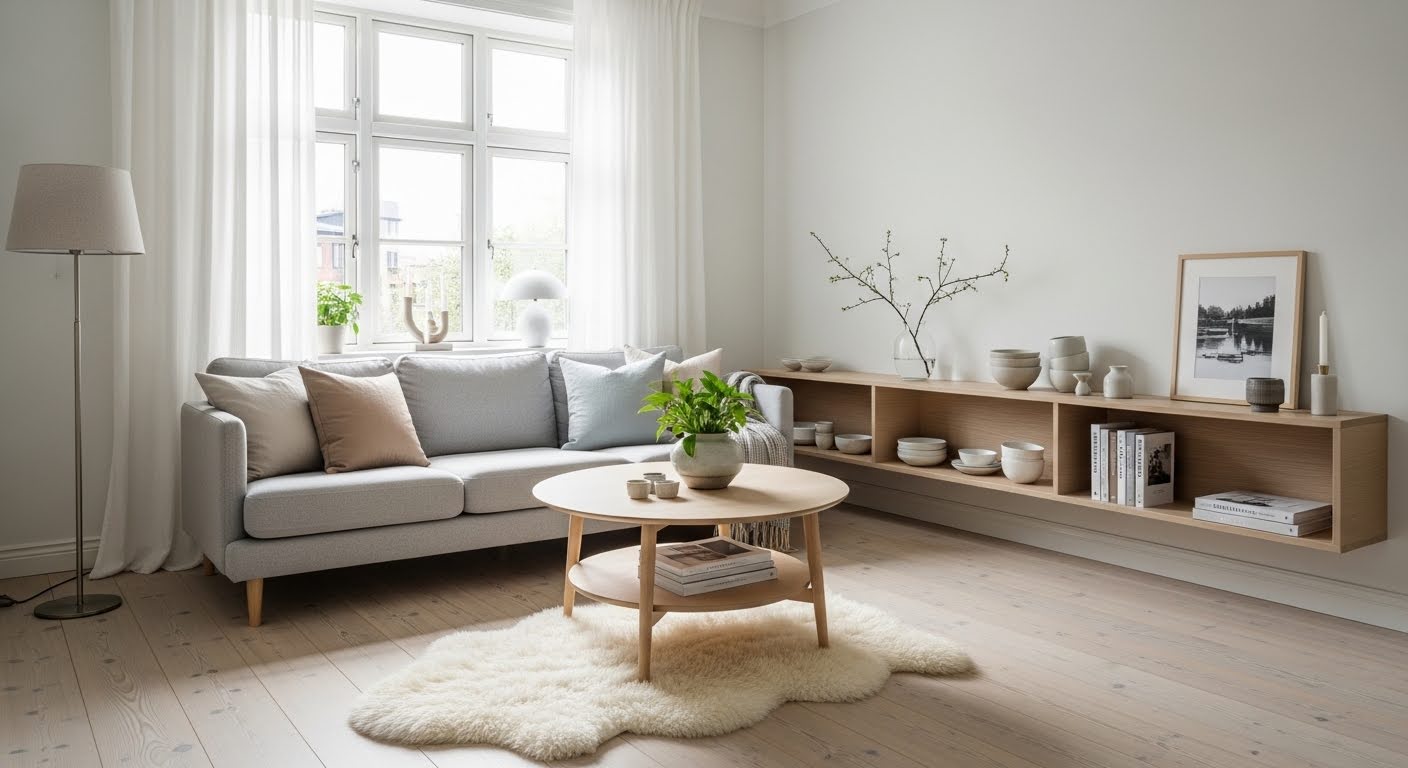
Scandinavian Living Room Ideas: Nordic Simplicity
You know that feeling when you scroll through home photos and keep stopping at the same kind of room? Calm. Clean. Warm. Somehow deeply livable. That’s Scandinavian design doing exactly what it’s meant to do. And if your living room currently feels cluttered, disconnected, or like it doesn’t quite belong to you — nordic living room design might be the fresh start you’ve been looking for.
Here’s the encouraging part: you don’t need to gut your apartment or spend a small fortune to get there. Scandi decor ideas are built around small spaces and modest budgets. The entire philosophy is rooted in doing more with less — which, let’s be honest, is pretty much every apartment dweller’s dream.
In this post, you’ll learn the real principles behind Scandinavian style, how to bring natural warmth into any space, and practical ways to create that famous hygge living room feeling — that cosy, enveloping atmosphere that Nordic people have perfected over centuries. Let’s get into it.
Quick Summary
WHO THIS IS FOR
Home decor beginners, small-space apartment dwellers, anyone ready for a refresh
TIME TO READ
6 min
TOP 3 TAKAWAYS
1. Scandinavian Design Principles
Scandinavian design didn’t emerge from a design school — it grew out of necessity. Long, dark winters pushed Nordic people to create interiors that were bright, purposeful, and genuinely comfortable. What came out of that is a design philosophy where quality wins over quantity, and every piece earns its place by being useful, beautiful, or ideally both.
The three pillars you’ll encounter most often are simplicity, functionality, and beauty. But here’s the thing — it’s not cold or stark in the way people sometimes assume. Scandinavian simplicity is warm and considered. It’s intentional without being precious.
What makes these scandinavian living room ideas so achievable for beginners is that they actively reject the “more is more” approach. You’re not adding layers of stuff. You’re making deliberate choices about what stays and what goes.
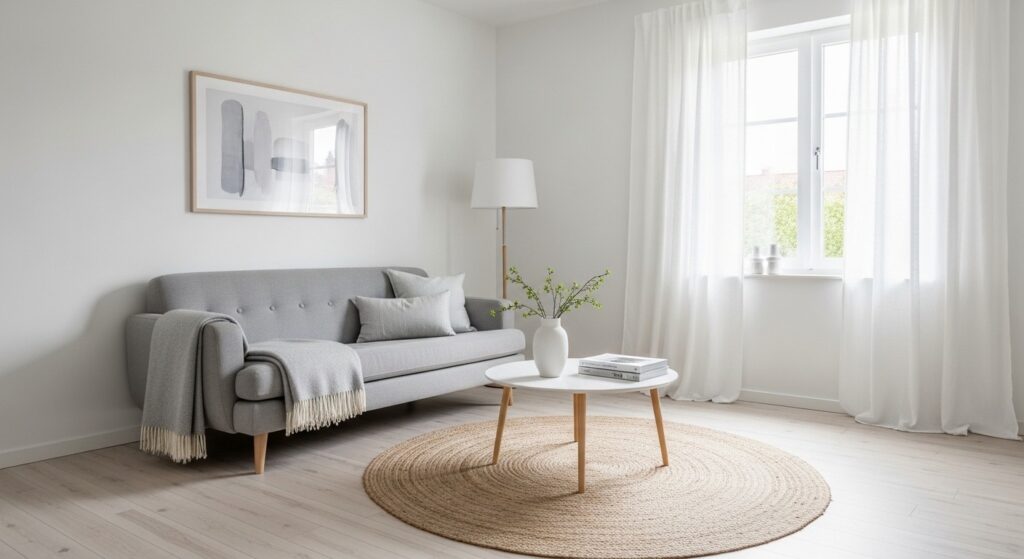
A few principles to keep in mind as you get started:
- Function comes first in every furniture decision
- Fewer, better pieces always beat a room full of average ones
- Let the room breathe — empty space isn’t wasted space
- Build a neutral foundation first, then layer in warmth
2. Light and Bright Essentials
Light is the real secret ingredient in every great Nordic living room. Because Scandinavian countries spend months dealing with limited daylight, the whole design tradition evolved to celebrate and amplify every bit of it. Your first move isn’t buying anything — it’s stopping yourself from blocking the light you already have.
Start by painting walls white or a warm off-white. Swap heavy curtains for sheer linen panels. If you have a mirror, position it opposite a window so natural light bounces deeper into the room. These are small changes that create an outsized impact — especially in compact apartments where every metre matters.
Then think about layering your artificial lighting. Scandi spaces almost never rely on a single overhead light bulb for everything. A floor lamp here, a table lamp there, a few candles in the evening — these work together to create flexible, mood-appropriate light throughout the day.
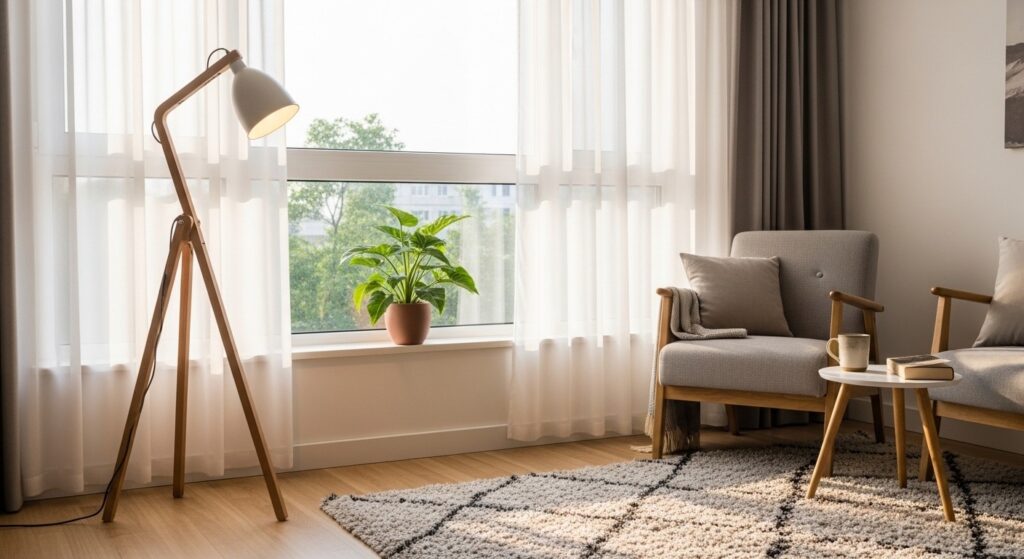
- Use white or warm off-white paint on the walls
- Replace heavy window treatments with sheer linen or cotton panels
- Add at least two secondary light sources beyond your main ceiling fixture
- Choose warm-toned bulbs (2700–3000K) to avoid a clinical, office-like feel
3. Functional Beauty
In Scandinavian design, beautiful objects actually do something. A gorgeous blanket keeps you warm. A well-designed shelf holds your books. A ceramic bowl gets used at breakfast. This is the key difference between nordic living room design and purely decorative styles — every choice starts with a practical reason for being there.
It’s worth doing a gentle audit of your current living room. Walk through it and honestly ask yourself: does this serve a purpose? Does it bring me genuine joy? If something just sits there collecting dust with no function or meaning attached to it, it probably doesn’t belong in a Scandi-inspired space.
Storage is especially important in smaller apartments. Look for coffee tables with drawers, ottomans that open up, and floating shelves that keep the floor clear. Visual clutter is the enemy of that calm, open feeling you’re going for. For more ideas on keeping things clean and streamlined, our guide to Minimalist Living Room Ideas goes deeper on this.
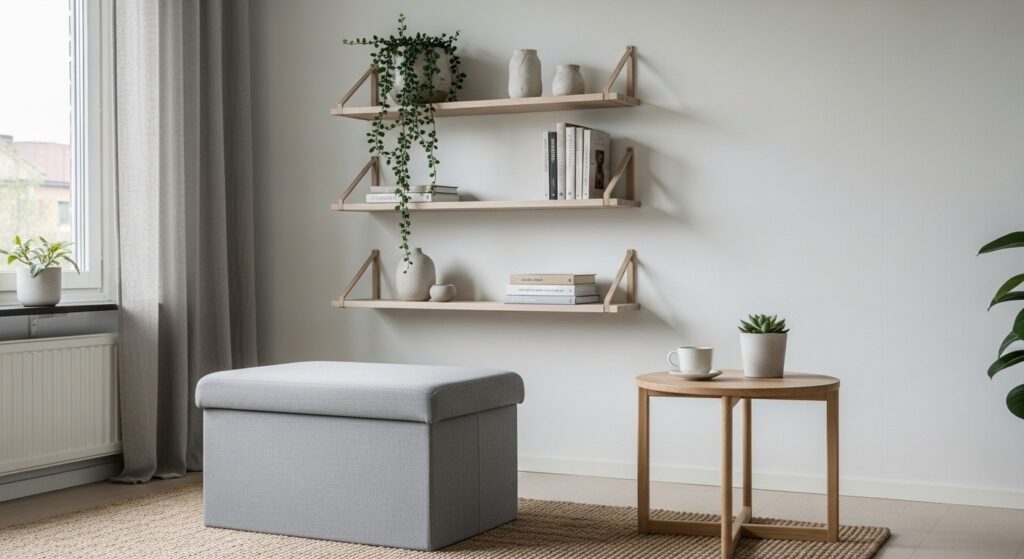
- Choose multi-functional furniture wherever you can
- Edit ruthlessly — if it has no function, remove it
- Use closed storage to keep everyday clutter out of sight
- Display only what genuinely earns its spot in the room
4. Natural Materials Focus
Walk into almost any Scandinavian-inspired living room and you’ll feel an immediate, almost instinctive connection to nature. That’s no accident. Nordic design leans heavily on wood, wool, linen, leather, stone, and ceramics — materials that age well and bring organic texture to a neutral palette.
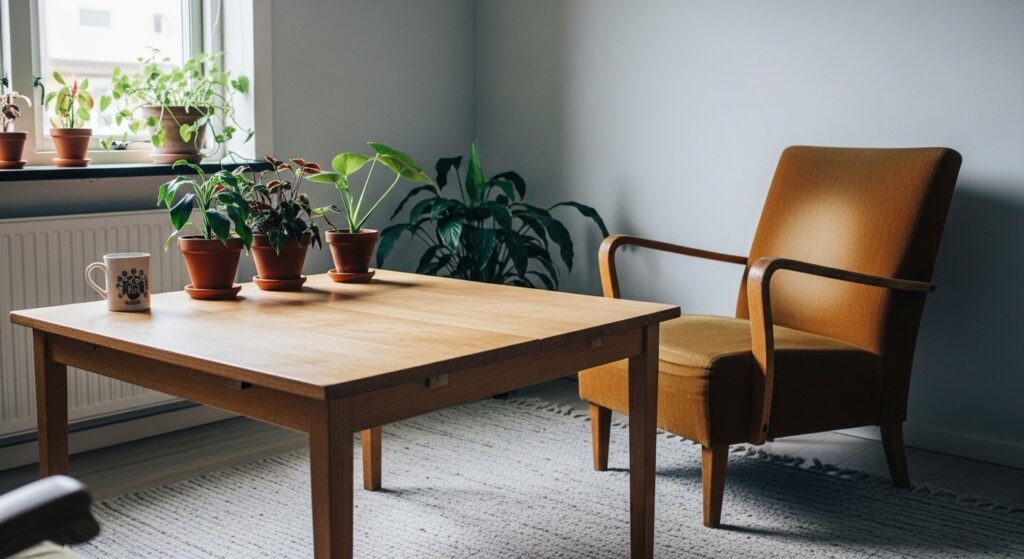
You don’t need to overhaul your furniture to get this right. Start with smaller accents and see how they shift the feel of the room: a jute rug underfoot, a wooden tray on the coffee table, a chunky knit throw draped over the sofa arm, a ceramic vase on the shelf. These layered textures are what stop a white-walled room from feeling cold or impersonal.
Light woods — birch, ash, and pine especially — are the most common materials you’ll see in Scandi spaces. If your existing furniture runs darker, don’t worry. Balance it with lighter accents and natural fibres. The goal is warmth and texture, not a specific wood tone.
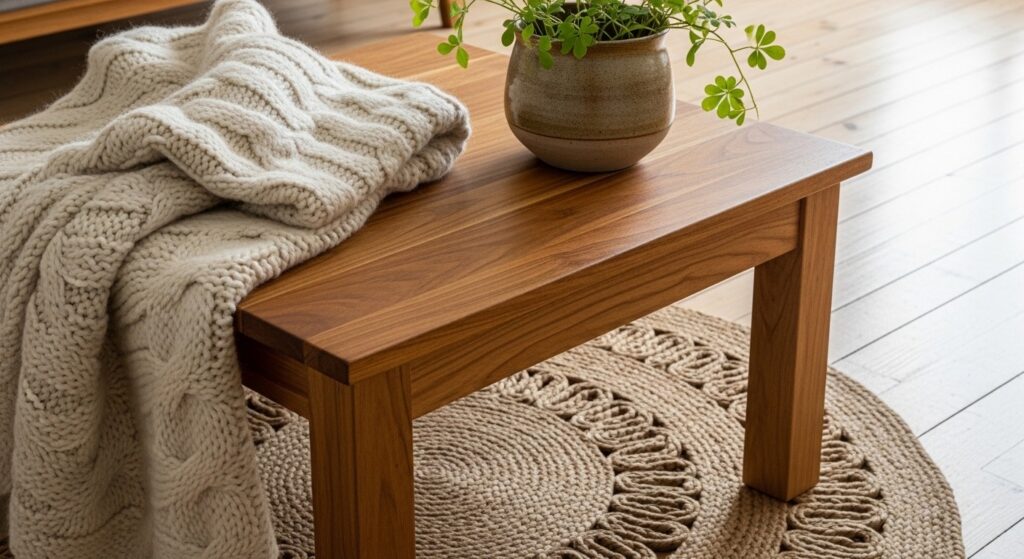
- Bring wood in through trays, picture frames, furniture legs, or shelving
- Layer textiles: linen cushions, a wool throw, a natural-fibre rug
- Add ceramics, stone coasters, or woven baskets for textural variety
- Introduce one or two houseplants for a living, breathing element
5. The Hygge Factor
Hygge (pronounced hoo-gah) is the Danish and Norwegian concept of cosiness, togetherness, and everyday well-being. It’s not really a design style — it’s a feeling. And it’s precisely what separates a merely tidy room from one that genuinely pulls you in and makes you want to stay all afternoon.
Creating a hygge living room is mostly about atmosphere and sensory details. Candles play a surprisingly big role — people in Scandinavian countries use far more candles than almost anywhere else in the world, and for good reason. Soft, warm light in the evening transforms a room completely. Add a plush blanket, a warm drink, and a book you’ve been meaning to read, and you’ve got it.
Consider carving out a dedicated cosy corner in your living room. A comfortable reading chair with a good lamp, a soft throw within arm’s reach, a small side table for your tea or coffee. That one corner can become a daily retreat without you having to touch the rest of the room. We’ve got plenty more inspiration along these lines in our Cozy Living Room Ideas guide.
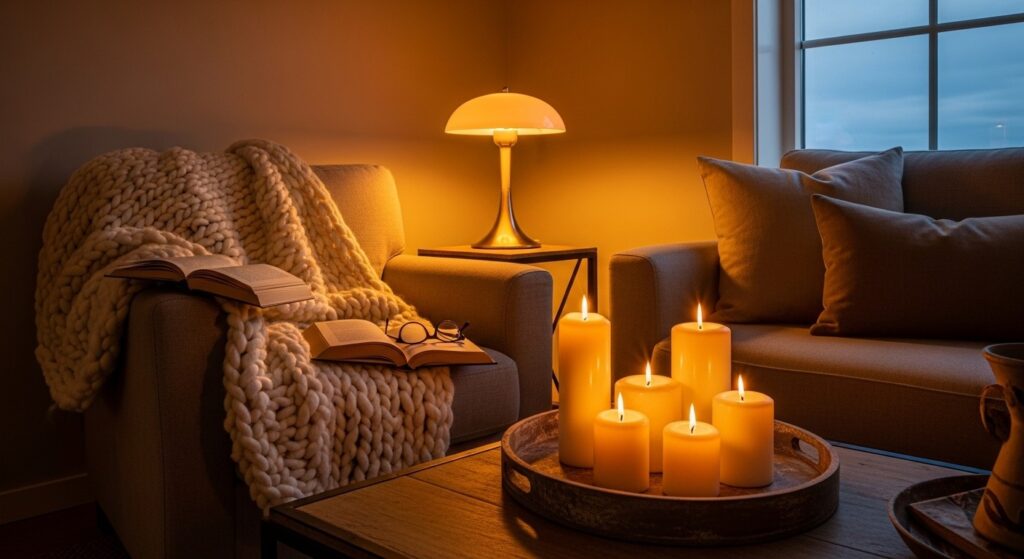
- Use candles as your primary mood lighting in the evenings
- Create a reading nook with a dedicated chair, lamp, and blanket
- Keep soft textiles — throws, cushions, layered rugs — easy to reach
- Bring in natural scents: wood, vanilla, cedar, and citrus work beautifully
6. Minimalism with Warmth
The biggest misunderstanding about Scandinavian style is that it’s cold or sparse. Real Scandi minimalism is warm minimalism. Yes, you remove the clutter — but you replace it with carefully chosen pieces that carry texture, character, and personal meaning.
The real trick is contrast. A plain white wall becomes interesting beside a chunky woven basket. A simple grey sofa comes alive when you add mustard and terracotta cushions. Bare wood floors warm up instantly under a thick, textured rug. These small visual tensions between simple and warm are the heart of the look — and they’re genuinely achievable on any budget.
Build around a restrained colour palette — whites, warm greys, and soft beiges — then introduce colour through accents rather than statement walls. Dusty blues, sage greens, and muted terracottas all sit naturally within the Nordic palette. If you want to explore this approach more broadly, our Modern Living Room Ideas post covers a lot of the same ground from a slightly different angle.
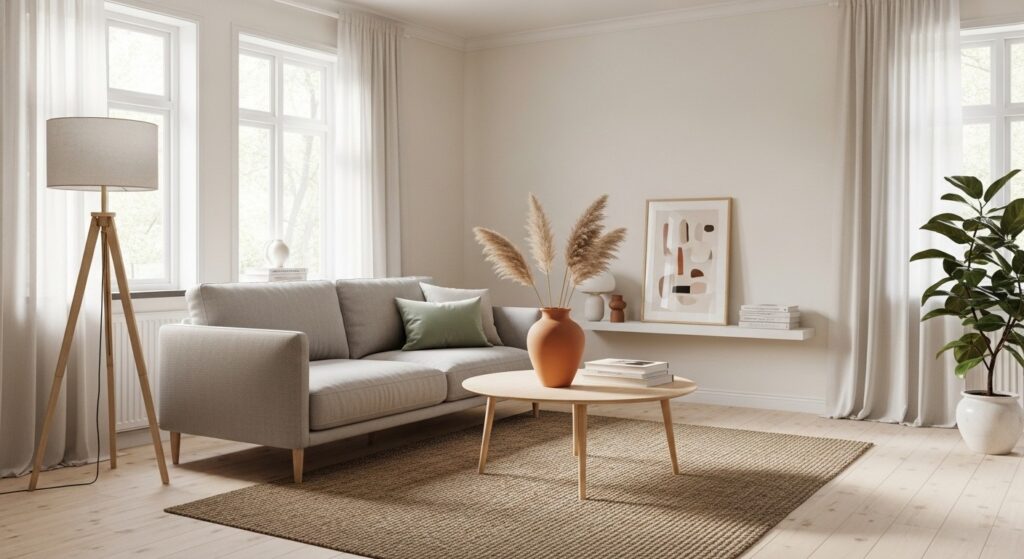
- Stick to 2–3 neutral tones for your walls, sofa, and rug
- Introduce accent colours through cushions, throws, and small decor pieces
- Use texture to add visual interest where you avoid pattern
- Leave some walls and shelves empty — not every surface needs filling
Read More – Minimalist Living Room Ideas
7. Scandinavian on a Budget
Here’s something the Nordic design world has quietly understood for a long time: good design doesn’t require luxury prices. The whole ethos is built on craftsmanship and practicality, not status symbols. You can absolutely nail this look on a tight budget — especially if you’re strategic about it.
Start with what you already own. There’s a very good chance you have neutral-toned furniture that works perfectly as a base. Before buying a single thing, do a declutter. Removing what clutters the space costs nothing and often transforms a room more dramatically than anything you could buy to replace it.
Charity shops, online secondhand markets, and budget home stores are genuinely great hunting grounds for this style. Because Scandi aesthetics favour simplicity, a clean unadorned wooden chair from a secondhand shop fits the look just as well as an expensive designer piece. If you do want to invest in one quality anchor item, make it the sofa or the rug — keep everything else affordable and replaceable.
- Declutter first — it costs nothing and often makes the biggest difference
- Shop secondhand for wooden furniture, frames, baskets, and lighting
- Invest in one quality anchor piece (sofa or rug) and budget everything else
- DIY where possible: paint frames white, sew simple linen cushion covers
- Propagate plants from cuttings — they bring life to a room for almost zero cost
Common Mistakes to Avoid
Even great intentions can lead to missteps. Here are four that trip up beginners most often — and how you can sidestep them from the start.
| 1 | Not measuring firstScandinavian design depends on proportion and breathing room. Furniture that’s too large overwhelms a small space instantly. Always measure your room and any furniture you’re considering before you commit to anything — even a few centimetres makes a real difference in how airy the room ends up feeling. |
| 2 | Ignoring what’s already thereDark floors, exposed brick, or bold architectural features don’t disqualify you from Scandi style. The mistake is fighting them instead of working with them. A darker floor actually grounds a lighter room beautifully — lean into what you have rather than trying to erase it. |
| 3 | Chasing trends over personal styleScandinavian design at its best is deeply personal — it’s about creating a space that genuinely reflects how you live. Copying a mood board without filtering it through your own life results in a room that looks right but feels hollow. Leave space for things that have meaning to you. |
| 4 | Skipping the planning phaseImpulse buying is the enemy of minimalism. Before you purchase anything, spend 20 minutes sketching out what you want the room to feel like, identifying what already works, and making a clear list of the gaps you need to fill. That small investment of time saves a lot of money spent on things you’ll want to rearrange or return. |
Frequently Asked Questions
What’s the most important element to focus on first?
Light — without question. Maximising natural light and layering your artificial lighting sets the foundation for absolutely everything else. A dark room works against every other Scandi principle; no amount of lovely furniture or texture will compensate for poor lighting. Start by painting walls white or off-white, swapping heavy window treatments for sheer panels, and adding at least two warm-toned lamps. Once the light is sorted, everything else becomes much easier to layer in correctly.
How do I start this project without feeling overwhelmed?
Pick one corner and treat it as your pilot project. Clear everything out of that corner, clean the space, and rebuild it with just a few intentional pieces — a chair, a lamp, a small plant, a rug or throw. Live with that corner for a week before touching anything else. This small-wins approach builds confidence and gives you a real-world test of what actually works in your specific space. Scandinavian design is patient by nature. There’s no deadline.
What’s a realistic budget range for a Scandinavian living room refresh?
You can make a meaningful, noticeable difference for as little as £150–£300 by focusing on textiles (a rug, a few cushion covers, a throw), a handful of natural-material accents, and a good declutter session. A more complete transformation — one that includes new furniture anchors — typically runs £500–£1,500, depending on your space and whether you shop secondhand. The most important thing to remember is that this style rewards restraint. A smaller number of well-chosen pieces always looks better than a room full of hurried substitutes.
How long does a full living room transformation take?
At a comfortable, non-stressful pace, plan for four to six weeks. Spend the first week decluttering and honestly assessing what you already have. Use week two for planning: sketching layouts, settling on a colour palette, and writing a specific shopping list. Weeks three and four cover any painting and furniture rearrangement. The final touches — textiles, plants, small decor details — can come gradually over time after that. Rushing the process almost always leads to decisions you’ll want to undo within the month.
Your Nordic Living Room Awaits
Scandinavian living room ideas aren’t about achieving a magazine-perfect look that you’re afraid to actually use. They’re about building a space where you genuinely feel at ease — somewhere that’s calm, warm, and fully livable. The principles of light, natural materials, functional beauty, and hygge atmosphere work in any apartment, at any budget, and around any personal style. The hardest part is usually just getting started, but even one small change — clearing a shelf, adding a lamp, laying down a new rug — begins to shift how the whole room feels.
Be patient with yourself and with the space. Good design evolves slowly and deliberately. You’re not going for perfection on day one — you’re building a home that suits you better with every thoughtful choice you make. Start small, stay consistent, and trust that Nordic simplicity really does deliver exactly what it promises: a calmer, warmer, more genuinely livable home.