Mid-Century Modern Living Room Ideas: Retro Revival
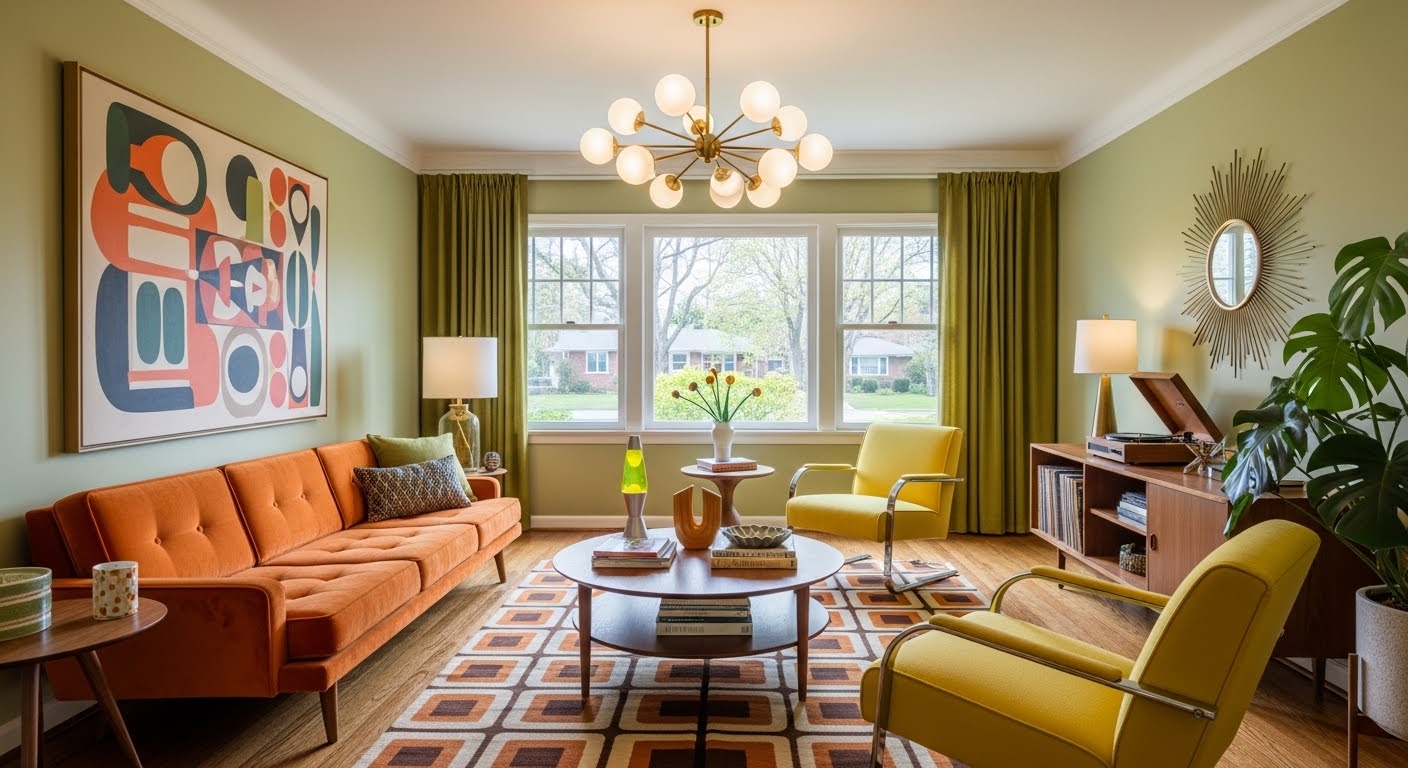
There’s a reason mid-century modern keeps coming back. It’s not pure nostalgia — it’s more that the style just works. Those tapered legs, the low-slung sofas, the warm wood tones. It all feels relaxed and intentional at the same time. But if you’re standing in a small apartment wondering how to actually pull off those mid-century modern living room ideas you’ve been saving, it can feel like a big gap between inspiration and reality.
Good news: you don’t need a mid-century house to get a mid-century living room. This style was designed for everyday people in everyday spaces. It came out of the post-war years, when designers were trying to make beautiful things that normal families could afford and actually live with. That accessibility is baked right into the DNA of the style.
So let’s get practical. Below, you’ll find out which furniture shapes to look for, how to build a palette that feels warm (not cold), how to mix old and new without it looking random, and — most importantly — how to keep the whole thing from feeling like a museum exhibit. This is your living room, not a set design.
Quick Summary
WHO THIS IS FOR
Design enthusiasts, lovers of clean lines, and anyone who wants to refresh their living space without starting from scratch
TIME TO READ
6 min
TOP 3 TAKAWAYS
Mid-Century Modern Explained
Mid-century modern covers roughly 1945 to 1969 — the stretch of time when architects and furniture makers got genuinely excited about designing for the middle class. Not for grand estates or hotels. For real homes. The results were pieces that prioritized function, used new manufacturing techniques alongside natural materials, and managed to look beautiful without being fussy about it.
What still makes retro living room decor so relevant today is that it was built around constraint. Small footprints, smart storage, furniture that didn’t crowd a room. If you’re working with a compact apartment, this style was practically designed with you in mind. Nothing is oversized. Nothing is there just to fill space.
You’ll recognize it quickly once you know what to look for: furniture that sits low to the ground, legs that taper or splay outward at an angle, surfaces that are clean but never cold. There’s always a warmth to it — the wood tones, the earthy upholstery, the way natural light seems to belong in these rooms. It feels lived-in from day one.
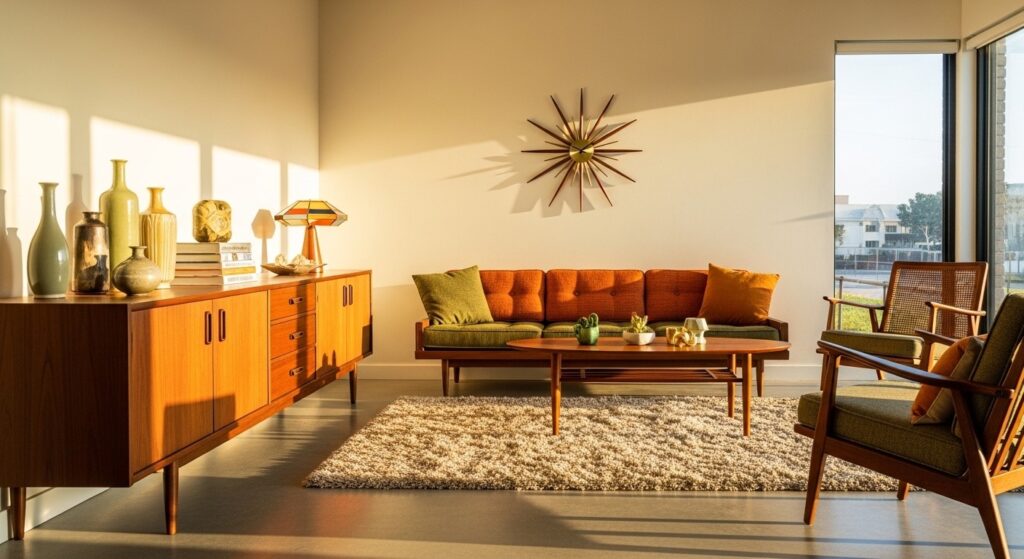
A few hallmarks to look for as you shop and style:
- Low, horizontal furniture — nothing towers over the room
- Tapered or hairpin legs on sofas, chairs, and tables
- A mix of geometric shapes and softer, organic curves
- Decoration that earns its place — no clutter for clutter’s sake
- A feeling of openness, even in a small room
Key Furniture Silhouettes
Your sofa sets the tone for everything else, so it’s worth getting right. In a mid-century modern living room, you’re looking for something low-profile with clean lines and wooden legs that taper toward the floor. Skip anything with a skirt, scrollwork, or cushions so puffy they look like marshmallows. Simple. Grounded. A little sculptural.
An accent chair with a shell shape or a lounge chair with a swivel base does a lot of work from there — it gives the eye somewhere to land without eating into your floor space. Pair it with a hairpin-leg coffee table and you’ve already got the bones of a solid vintage modern living room. The proportions feel right. The sight lines stay open.
Don’t overlook the credenza. That long, low storage piece is one of the most recognizable shapes in mid-century design, and it’s genuinely useful in small living rooms because it stores things without adding visual height. Style the top with a lamp, a plant, and one or two objects — then stop there.
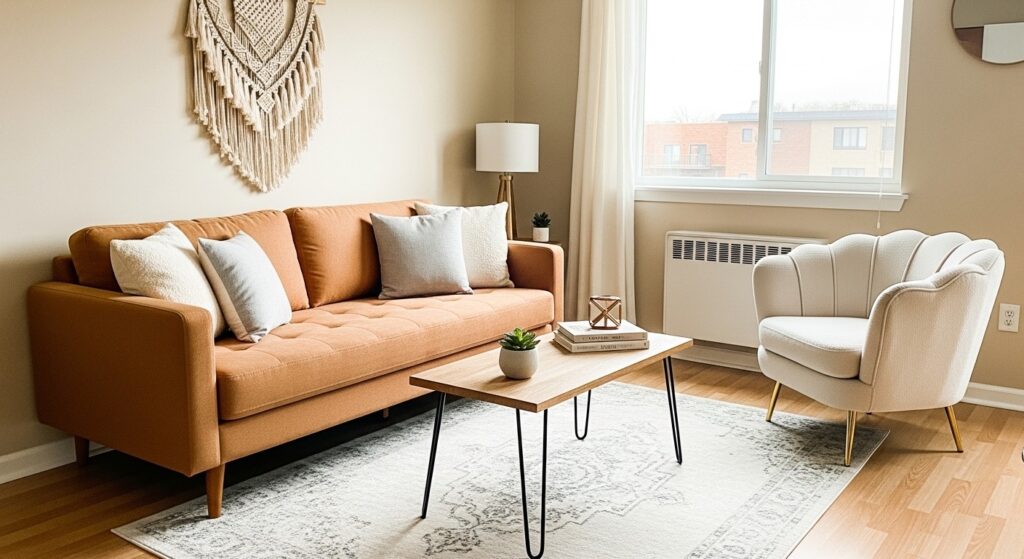
- Sofas: low profile, straight or gently curved back, tapered or splayed legs
- Accent chairs: barrel back, shell shape, or a classic swivel lounge style
- Tables: hairpin legs, round tops, honest mix of wood and metal
- Storage: wide, low credenzas rather than tall, narrow bookcases
- Avoid: overstuffed cushions, ornate carved legs, anything that feels heavy or high
Color Palettes of the Era
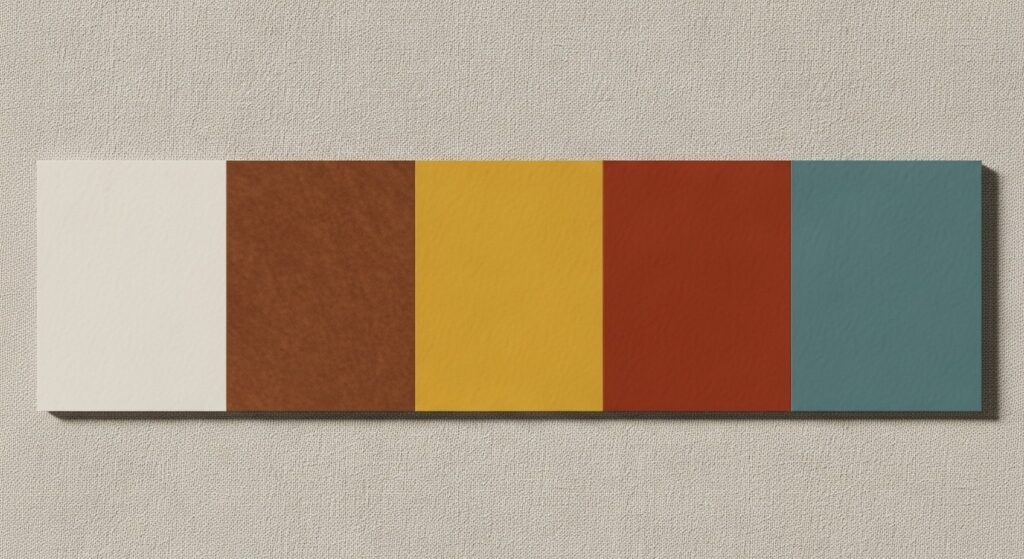
Here’s a common misconception: mid-century modern means avocado green and harvest gold everywhere. Those shades existed — they were the late-era excesses. At its best, though, the style used warm neutrals as a base and pulled in earthy, saturated accents deliberately. Think mustard, rust, olive, burnt orange, and teal — used sparingly, not splashed across every surface.
Start with your walls. A warm white, a soft linen tone, or even a muted sage green gives you a canvas that works with almost everything. Then bring in your accent color through textiles — a mustard-yellow throw, a rust-toned rug, teal cushions. Pick one primary accent and stay with it. The temptation to keep adding more is real, but restraint is what makes the palette feel intentional.
Here’s what most people miss: wood tones do a huge amount of color work in a 60s style living room. Walnut, teak, and rosewood are rich and warm and they ground a palette without requiring you to touch the walls at all. If budget is tight and you can only upgrade one piece, make it something in walnut. It changes the whole temperature of the room.
- Base palette: warm white, soft linen, warm greige
- Wood tones: walnut, teak, oak — medium to dark, always warm
- Accent colors: mustard, rust, burnt orange, olive, teal — choose one or two
- Avoid: cool grays, icy whites, and more than three colors competing at once
Mixing Vintage and New
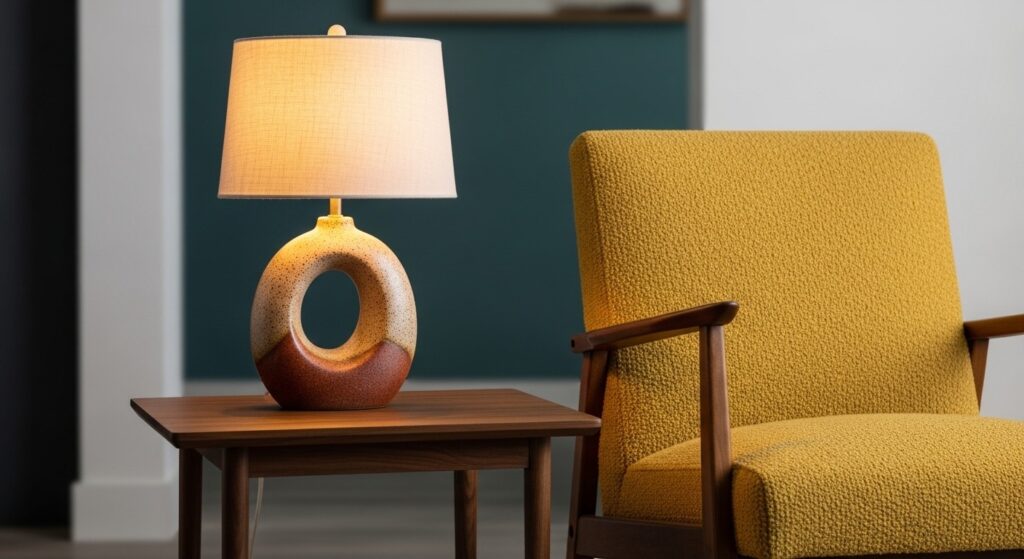
You don’t need to furnish the whole room from a vintage shop. Honestly, you probably shouldn’t. The rooms that look the most effortlessly mid-century today are the ones that blend genuinely old pieces with carefully chosen new ones. A vintage ceramic lamp on a contemporary side table. A thrifted credenza sitting next to a new sofa. The contrast is what makes each piece feel more considered.
Estate sales, thrift stores, and online secondhand platforms are worth your time. When hunting, focus on the silhouette more than the surface condition. A solid vintage piece with dated upholstery or worn paint can be transformed fairly cheaply — reupholster the seat, refinish the legs, swap out the hardware. The bones are what matter. Surface stuff is fixable.
When blending eras, use wood tone and scale as your unifying thread. If a vintage piece is dramatically larger or smaller than everything around it, it’ll look accidental rather than intentional. But if the proportions are close and the wood tones are in the same family, the room starts to feel cohesive in the best way.
- Strategy: invest in one real vintage anchor piece, fill the rest with new
- Best vintage finds: lamps, side tables, mirrors, ceramics, wall art
- Skip for now: heavily worn vintage sofas unless you can reupholster them
- What ties it together: similar wood tones, consistent leg styles, warm metals like brass or bronze
Statement Lighting Choices
Lighting in mid-century modern design is not just functional — it’s structural. A pendant lamp or chandelier isn’t filling empty ceiling space; it’s completing the room. The shapes from this era are genuinely distinctive: starburst chandeliers with spidery arms radiating outward, smoked glass globe pendants, arc floor lamps with long curved necks that sweep over a reading chair. These aren’t subtle choices, and they’re not supposed to be.
If you’re in a small apartment and can only splurge on one thing, consider an arc floor lamp in brushed brass or matte black. It eliminates the need for a side table lamp entirely, adds height without overhead wiring, and transforms whichever corner it lives in. It’s one of those pieces that punches well above its price point in terms of visual impact.
The most inviting rooms layer light at three different heights: something overhead (a pendant or chandelier), something at mid-height (a table lamp or wall sconce), and something low (candles or a warm plug-in lamp). Flat overhead lighting alone makes any room feel like a waiting area. Layer it, and suddenly the space has real atmosphere.
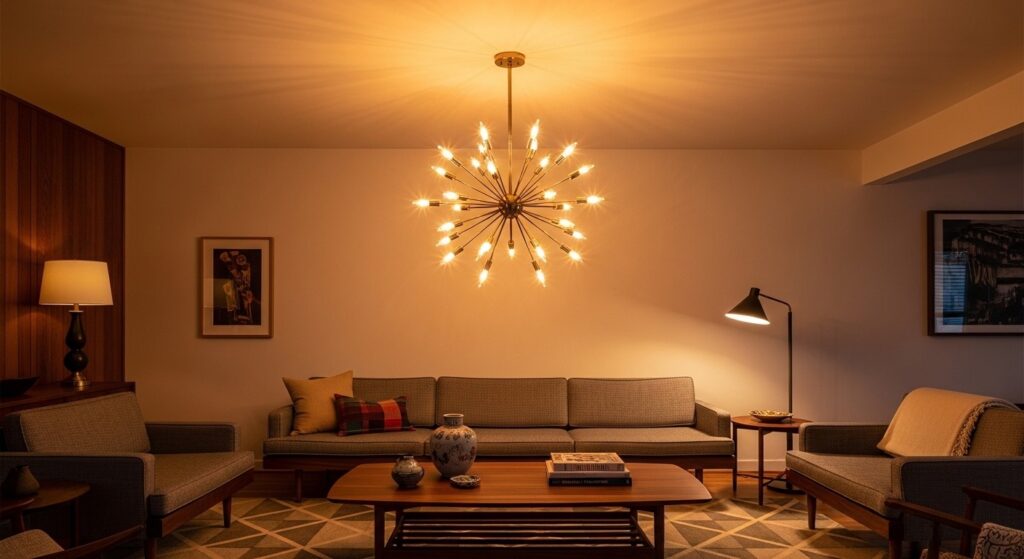
- Overhead: Sputnik chandelier, globe pendant, or a sculptural ceiling fixture
- Mid-height: ceramic or wooden-base table lamps, directional wall sconces
- Floor level: arc floor lamp, slim tripod floor lamp
- Finish: brass and bronze add warmth; matte black works for a crisper contemporary twist
Materials and Finishes
Material choices are where the real mid-century look lives. The era was defined by a specific mix: natural materials like walnut, teak, leather, wool, and rattan, often paired with newer industrial ones — molded plastic, fiberglass, polished steel. That combination of the organic and the manufactured gives the style its particular energy. Copy that contrast and you’ll get close to the aesthetic without needing to source every piece from 1962.
For textiles, lean toward wool, boucle, and velvet in muted, earthy tones. A jute or wool area rug anchors the seating area and adds texture underfoot. Avoid anything that looks overly synthetic or shiny. The tactile richness of natural materials is a big part of what makes a mid-century room feel genuinely comfortable rather than just good-looking in photos.
Metals deserve a deliberate decision. Brass was the signature finish of the era, and warm brushed brass on lamp bases, cabinet pulls, and small decorative objects ties a room together almost effortlessly. Pair it with natural wood and you’ve captured the essence of the look in a couple of simple choices. If brass feels too warm for your taste, bronze works similarly — both are far more at home here than cool chrome.
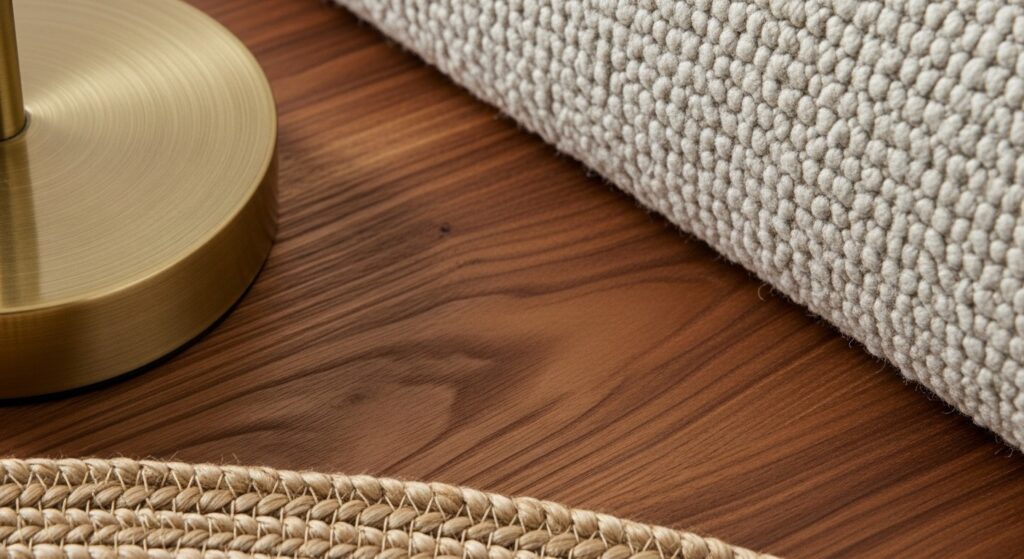
- Wood: walnut, teak, oak — warm, medium to dark tones
- Upholstery: wool, boucle, velvet, leather (steer clear of microfiber)
- Metal finishes: brushed brass, bronze, or black steel
- Rugs: jute, wool, low-pile in earthy tones
- Avoid: chrome finishes, high-gloss lacquer on furniture, and clear acrylic pieces
Avoiding the Theme-Room Trap
This is the part nobody talks about enough. You can get every individual piece right and still end up with a room that feels like a replica of a style rather than a real home. If someone walks in and their first thought is ‘this is very mid-century modern,’ something has probably gone a little too far. The best version of this look is when people just feel comfortable without being able to put a name on exactly why.
The simplest fix is personal touches. Not every object in the room needs to match the era. Your actual books. A piece of art you bought because you liked it, not because it matched a mood board. A plant you’ve kept alive. Family photos in simple frames. These things make a space feel genuinely inhabited, which is exactly what makes a room feel welcoming rather than aspirational.
Also: deliberately include one or two contemporary pieces and let them be contemporary. A current-season throw. A modern abstract print. These choices, made with confidence, signal that you understand the style well enough to work outside its rules. That’s the difference between someone who decorated a room and someone who actually designed one.
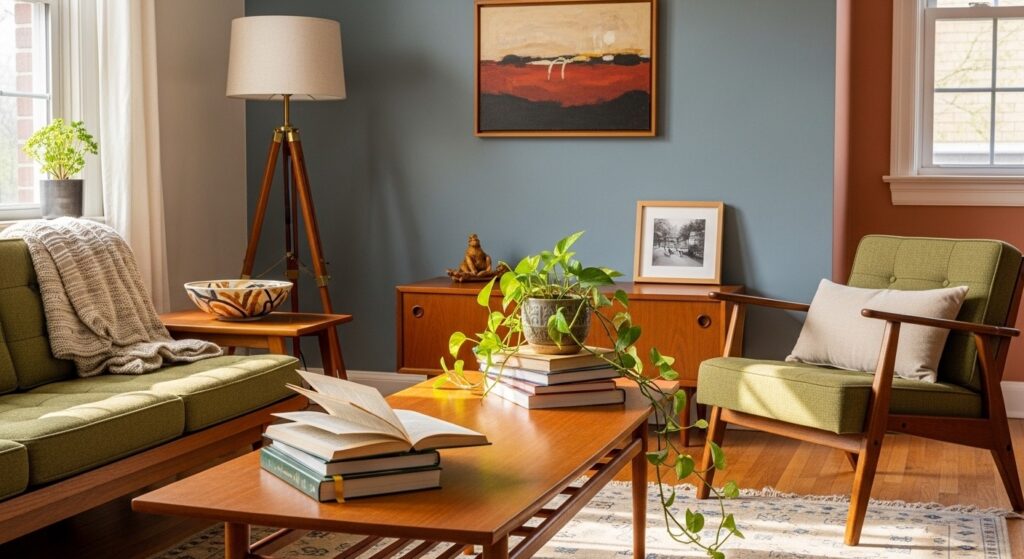
- Add at least one personal or contemporary piece to each seating area
- Bring in living plants — they soften geometric shapes and add real life
- Display books, ceramics, and collected objects without forcing them to match
- Leave breathing room — empty wall space is a design choice, not something to fix
Common Mistakes to Avoid
Even with the right references, a few predictable mistakes can quietly undermine everything. Here’s what to watch for:
- Making it feel cold and sterile. Mid-century modern is warm — it always has been. If your room is starting to feel clinical, add texture through rugs, throws, and plants. Clean lines and a cold atmosphere are not the same thing.
- Going too matchy-matchy. Buying a full matching furniture set will kill the lived-in quality this style depends on. Mix your wood tones. Mix your eras. Source from different places. Variety done on purpose always looks better than a set from the same box.
- Sacrificing comfort for style. A beautiful chair that nobody wants to sit in is a design failure. The whole philosophy of mid-century modern was that good design should work for real people in real life. Comfort and style belong together here.
- Forgetting personal touches. A room with zero evidence of the person who lives there is a showroom, not a home. Make sure something — art, books, objects, plants — is genuinely yours.
Frequently Asked Questions
What actually defines mid-century modern living room style?
At its core, it’s about clean horizontal lines, tapered or hairpin legs on furniture, warm earthy colors, and a commitment to natural materials. It came from the post-war period, when designers believed good design should be accessible to everyone — not just people with large homes or large budgets. What sets it apart from other streamlined styles is its warmth. This is not a cold or minimal aesthetic. It’s intentional, but it’s also comfortable and genuinely easy to live with.
How do I make a mid-century modern room feel cozy, not sterile?
Texture is your best tool. A jute or wool rug under the seating area is one of the highest-impact moves you can make. Add a boucle throw on the sofa. Use warm-toned bulbs in your lamps — the color temperature alone changes how a room feels. Bring in plants, because living things always soften hard geometry. And make sure some part of the room reflects you: a shelf of real books, a piece of art you genuinely love, something collected over time. Rooms feel warm when they feel inhabited.
What colors work best for a mid-century modern living room?
Start with a warm neutral on the walls — soft white, linen, or warm greige. Then let your wood tones (walnut, teak, oak) do the heavy lifting. From there, choose one or two earthy accent shades: mustard, rust, burnt orange, olive, or teal are all era-appropriate. More than that and the room starts to feel chaotic rather than considered. If you’re unsure where to begin, try warm white walls, walnut furniture, and a single accent color through a rug. That combination is almost impossible to get wrong.
Does mid-century modern style have to be expensive?
Not at all. The style was originally designed to be affordable, and a lot of its best pieces can still be found at reasonable prices through estate sales and secondhand platforms. The approach that works for most people: spend more on one real anchor piece — a walnut credenza, a quality sofa with the right silhouette — and fill in around it over time with budget-friendly finds. You can also update existing furniture with new hardware, a fresh stain, or reupholstered cushions to bring it closer to the look without replacing it entirely. Build slowly and it’ll feel more authentic for it.
Wrapping Up
Mid-century modern works so well in small apartments because it was always built around the principles small-space living demands: make every choice count, use materials honestly, and leave room to breathe. You don’t need a lot of space, and you don’t need a big budget. You need a clear eye, a little patience, and the discipline to stop adding things when the room is already doing its job.
Start with one thing. Maybe it’s finally tracking down a walnut credenza. Maybe it’s swapping your rug for jute, or finding an arc floor lamp for the corner that’s been bothering you for months. Great rooms don’t come together in a weekend — they grow through a series of good decisions made over time. Start making them, and trust the process to carry you the rest of the way.
Looking for more? Check out: Scandivian Living Room Ideas | Neutral Living Room Ideas