
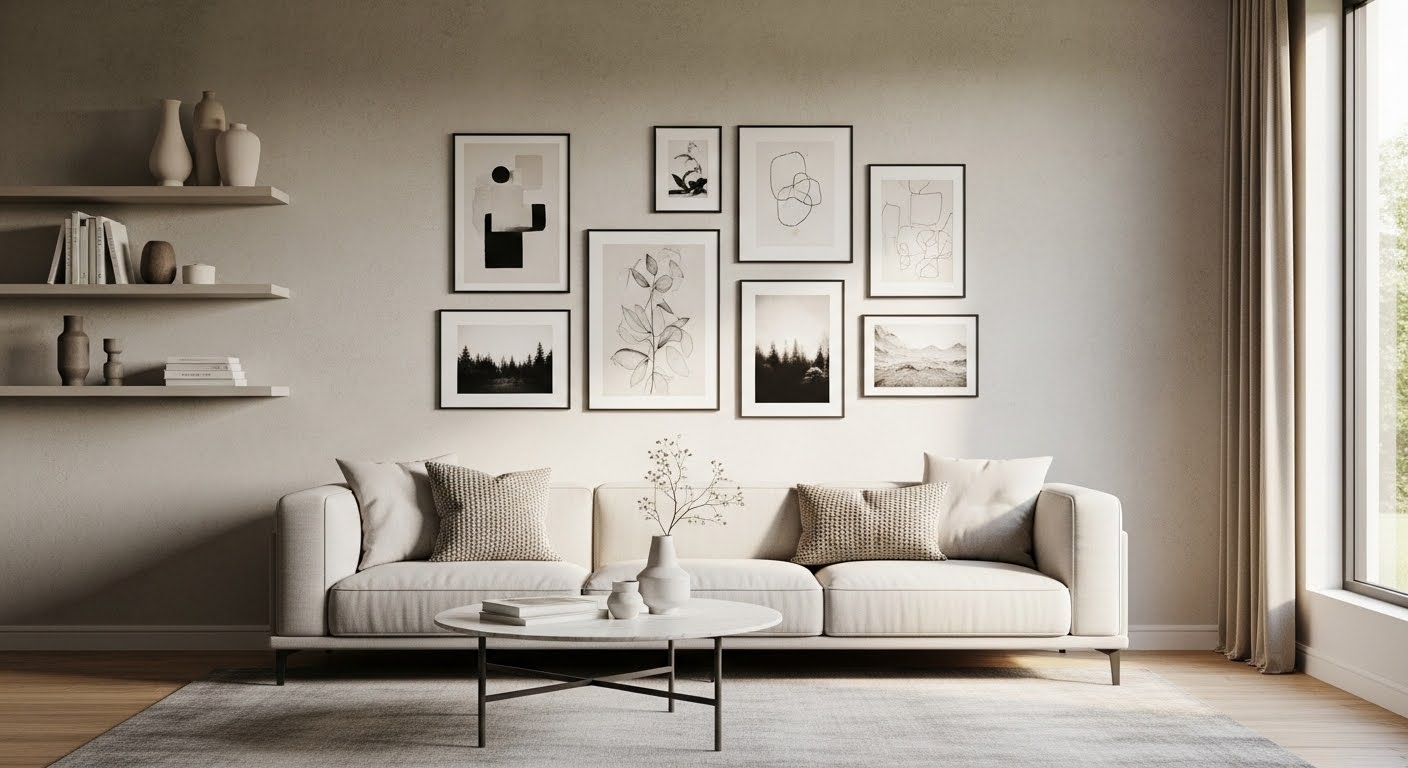
Modern Living Room Wall Decor Ideas: Art & Accent Walls
Blank walls have a way of staring back at you. You move into a new place, get the furniture sorted, and then — nothing. You’re not sure where to start, and every idea you consider feels either too bold or too safe. Sound familiar?
Here’s something worth knowing early: modern living room wall decor is actually one of the most forgiving design styles out there. It doesn’t demand a huge budget, a fancy eye for art, or hours of planning. What it does ask for is a little intention. Choose carefully, hang thoughtfully, and the results can be genuinely stunning — even in a 400-square-foot studio apartment.
This guide walks you through everything, from picking your focal point to layering textures, getting color right, and making the space feel like yours. By the time you’re done reading, you’ll have a clear, practical plan to follow — no overwhelm required.
Quick Summary
WHO THIS IS FOR
Modern design enthusiastsClean-line loversAnyone refreshing their space
TIME TO READ
5 min
TOP 3 TAKAWAYS
1. The Less-Is-More Philosophy
Walk into any well-designed modern living room and you’ll notice something right away: it doesn’t feel crowded. There might be just one piece of art on the wall, or a single shelf with three carefully placed objects. And yet the room feels complete. That’s restraint doing its job.
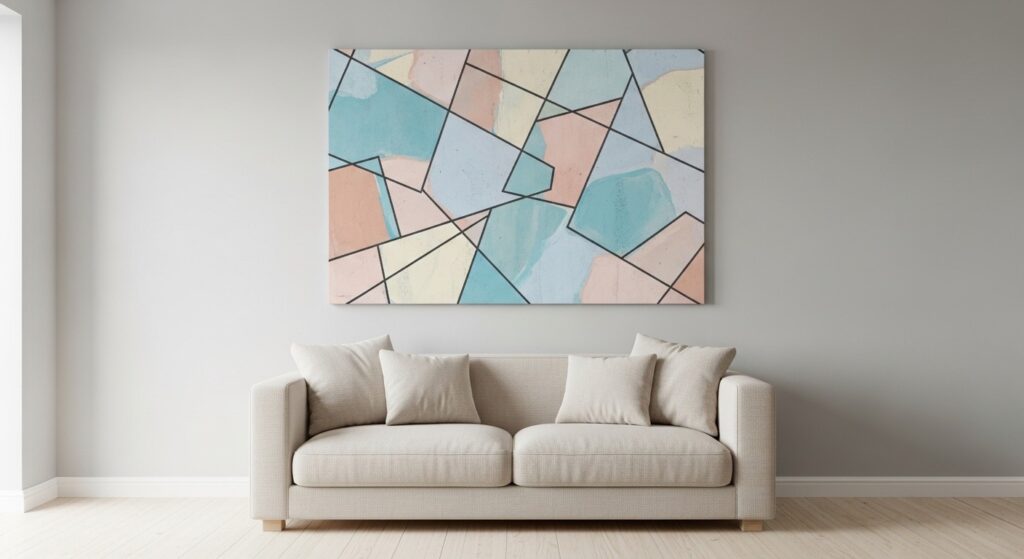
For anyone decorating a small apartment, this is the most useful principle you’ll encounter. A single oversized print can carry an entire wall. Six mismatched frames fighting for attention? They’ll make the same wall feel chaotic and smaller. Before you hang anything, pause and ask yourself honestly: does this add something meaningful, or is it just filling space?
Think of blank wall space the same way you’d think of silence in a good conversation — it gives everything around it more weight. Negative space isn’t empty. It’s what lets your chosen pieces actually breathe and register.
2. Choosing a Focal Point
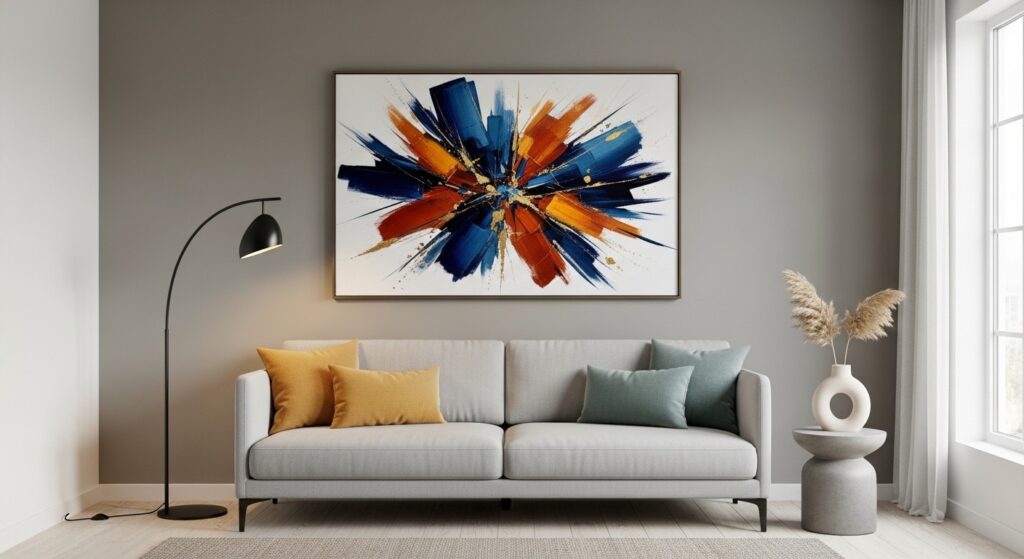
Every room needs a wall that does most of the work. Your focal wall is the one your eyes land on first — usually the wall behind the sofa, directly opposite the entryway, or wherever you naturally look when you walk in. Finding it takes about ten seconds. You probably already know which one it is.
Once you’ve chosen it, give that wall everything. Put your statement art there. Build your gallery wall there. If you’re going to try a bold paint color or an interesting texture, that’s the wall for it. Concentrating your design energy in one place creates a strong visual anchor without making the room feel busy.
The remaining walls? Let them rest. A small shelf, a simple mirror, or just clean paint — that’s plenty. Quiet supporting walls don’t compete for attention. They frame your focal wall instead, making it feel even more intentional than it already is.
3. Scale and Proportion Basics
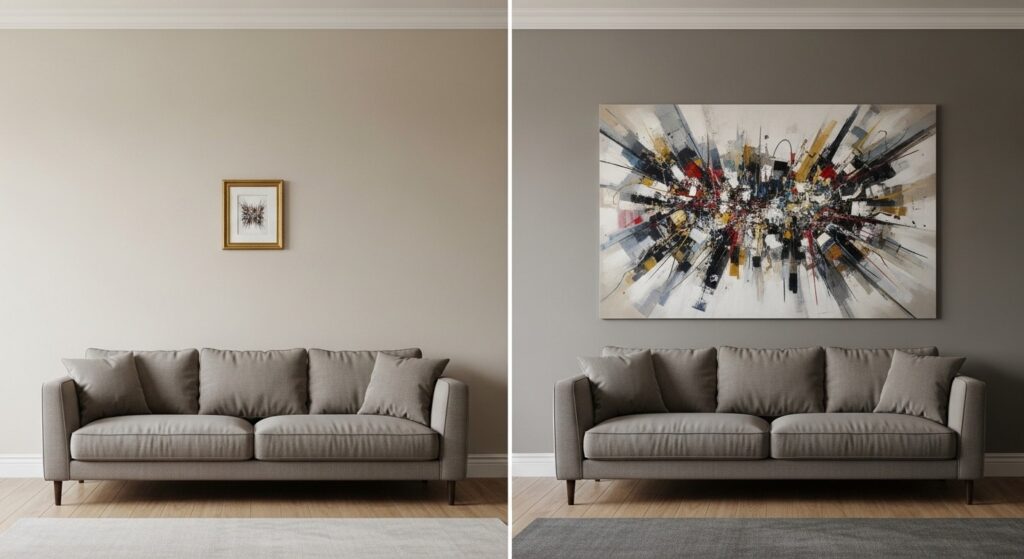
Tiny art on a big wall is one of the most common decorating missteps — and one of the easiest to avoid once you know about it. A small piece doesn’t just look lost; it actually makes the wall (and the room) feel smaller. When you’re not sure whether to go bigger, go bigger.
A practical guideline: your wall art should span roughly two-thirds to three-quarters of the width of the furniture beneath it. So if your sofa runs 80 inches across, you’re looking at art that covers around 50 to 60 inches. That can be one large canvas or a group of pieces arranged to fill that width together.
Hanging height is just as important as size. Center your art at eye level — somewhere between 57 and 60 inches from the floor. Hanging things too high is a surprisingly common habit, and it creates a disconnect between the art and the furniture that makes both look a little off.
- Large single canvas — clean, confident, unmistakably modern
- Diptych or triptych — a simple way to fill a wide wall with cohesion
- Gallery wall — keep frames consistent in color or style for a polished result
- Oversized mirror — bounces light around and makes any room feel more open
4. Mixing Textures Effectively
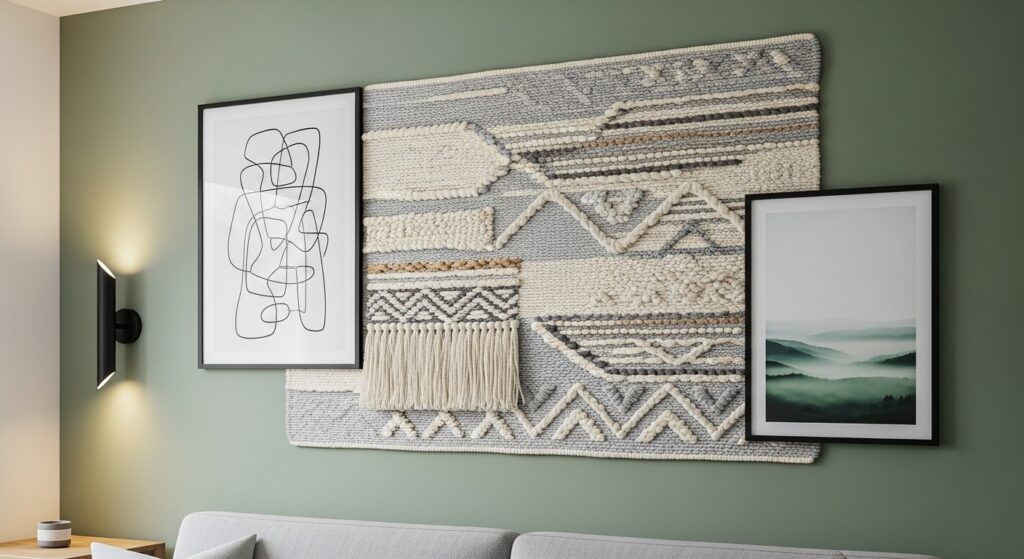
Modern decor gets a bad reputation for being cold, and honestly, it’s deserved — but only when texture gets left out of the equation. Texture is what saves a modern space from feeling like a furniture showroom. Woven wall hangings next to smooth canvas prints, a rough plaster accent wall paired with sleek metal frames — these combinations create visual warmth without adding clutter.
The trick to making different textures work together is keeping your color palette tight. When the tones stay consistent, even very different surfaces can share a wall happily. A natural linen hanging, a matte black framed print, and a glossy ceramic wall sconce can all coexist beautifully if they’re pulling from the same color family.
In smaller spaces especially, texture earns its keep. Bold patterns can feel overwhelming in a compact room, but layered textures add just enough visual complexity to keep things interesting — without tipping into busy.
- Pair matte finishes with at least one gloss element for contrast
- Mix organic materials like wood, linen, and rattan with sleeker ones like metal or glass
- Keep it to two or three texture types per wall grouping — beyond that, it starts to compete
5. Color Coordination Tips
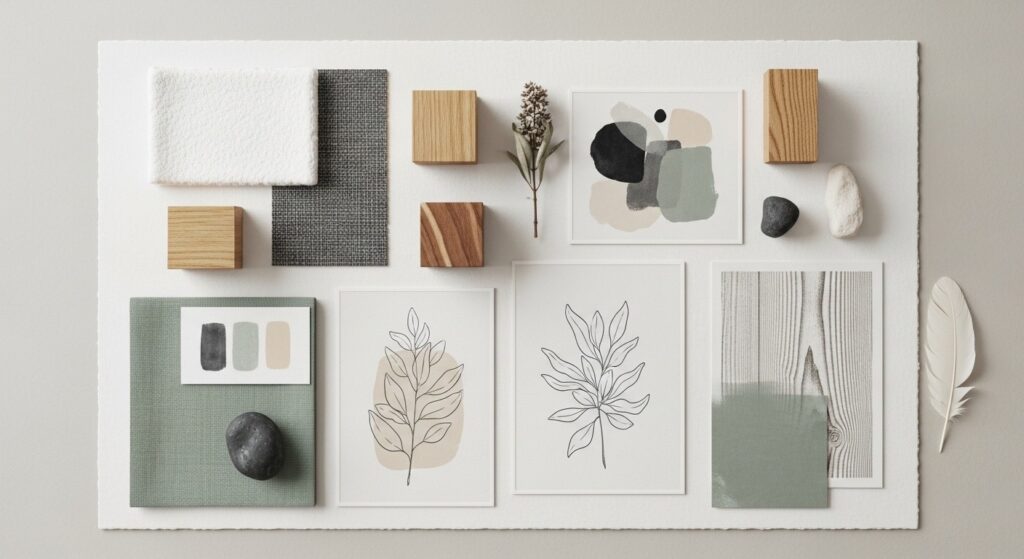
Color is the part that makes most beginners nervous, but modern wall decor is actually quite forgiving here. The palette tends to stay grounded in neutrals — white, off-white, warm gray, charcoal, cream — with occasional softer accent tones like dusty blue, sage green, or terracotta. Nothing too loud, nothing too random.
The most reliable approach: make sure your wall decor connects to at least one color that’s already in the room. Pull from your sofa, your rug, your throw pillows. Even a subtle tonal link creates a sense of intention — the room feels curated rather than assembled piece by piece from wherever.
Thinking about a bold accent wall? Go for it, but keep everything else very neutral. A deep charcoal, a warm clay, or a muted forest green can look incredible as a single statement wall. Just make sure the other three walls are staying out of the way — clean white or off-white, nothing competing.
- Warm neutrals like cream, sand, and soft white feel welcoming without trying too hard
- Repeat your accent color two or three times around the room so it feels deliberate, not accidental
- Black frames on white walls: timeless, clean, works with almost everything
- Cool grays show best in rooms that get a lot of natural daylight
6. Personal Touches That Work
Here’s where modern design gets misunderstood. The goal isn’t to strip your home of personality — it’s to present that personality in a considered way. A space with zero personal connection will always feel like a hotel lobby, no matter how well-decorated. Your home should feel like yours.
Travel photography you actually love, a piece of art you made, a vintage print that’s been in your family — any of these can live beautifully in a modern space. It comes down to how you present it. Put it in a clean, simple frame. Place it alongside one or two other pieces that share a color or a general feeling. When pieces are thoughtfully grouped, even a mismatched collection can look intentional.
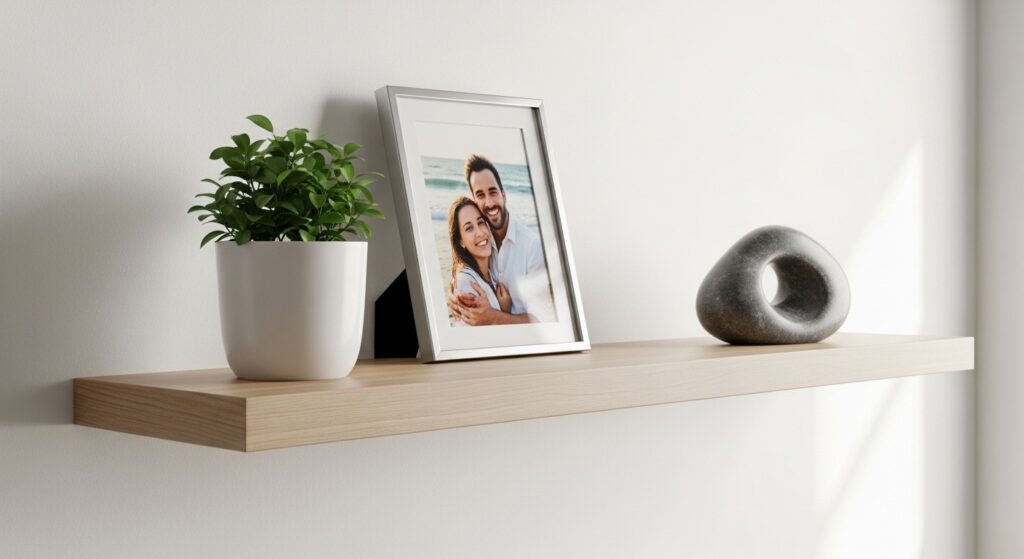
Plants deserve a mention here too. A trailing plant on a floating shelf, a small sculptural dried arrangement, a few simple botanical prints in matching frames — they all bring warmth and a bit of life to a modern wall without complicating the aesthetic. Sometimes a single well-placed plant does more than a piece of art ever could.
- Matching frames (even in different sizes) pull together personal photos instantly
- One sentimental piece, presented well, says more than a dozen small items
- Floating shelves let you mix and rotate art, plants, and small objects as your taste evolves
Common Mistakes to Avoid
Even when you have the right ideas, a few easy missteps can undermine the whole thing. These four come up again and again:
- Making it feel cold and sterile — Modern doesn’t mean empty. If your room has started to feel clinical, the fix is usually texture, a plant, or one meaningful personal item. Something warm and human always helps.
- Going too matchy-matchy — Matching every frame, finish, and color exactly tends to read as rigid rather than refined. Aim for cohesion — similar tones, complementary styles — rather than identical everything.
- Forgetting about comfort — A room that looks good in photos but feels uncomfortable to actually sit in has missed the point. Your decor choices should support the livability of the space, not work against it.
- Leaving out personal touches entirely — A perfectly styled room with zero personality is just a showroom. Give yourself permission to include at least one thing that actually means something to you.
Frequently Asked Questions
Q1: What exactly defines modern living room style?
Modern style is grounded in clean lines, simple geometric forms, and a functional approach to decorating — where everything has a purpose and ornamentation is minimal. It tends toward neutral, calm color palettes with the occasional carefully chosen accent. Unlike ‘contemporary’ design, which shifts with whatever’s trending, ‘modern’ refers to a more specific aesthetic rooted in mid-century principles. That’s part of why it feels so enduring — it doesn’t date the way trend-driven styles tend to.
Q2: How do I make a modern room feel cozy instead of cold?
The answer is almost always layers — specifically, warm layers. Chunky knit throws, linen cushions, natural wood accents, and soft area rugs all add physical warmth to a space that might otherwise feel sparse. Lighting matters enormously here too: table lamps and floor lamps create a much warmer atmosphere than overhead lighting alone. On the walls, choosing art with organic shapes, warm tones, or nature-inspired imagery keeps the modern look intact while making the room feel genuinely inviting.
Q3: What colors actually work well in modern living rooms?
The foundation is almost always a neutral — warm white, off-white, light gray, or a soft cream. From there, earth tones like terracotta, warm tan, and muted olive green work beautifully as supporting colors or accent choices. If you want something with more presence, a deep single accent wall in forest green, navy, or warm charcoal can be striking. The important thing is keeping the overall palette to two or three main tones so the space reads as considered rather than scattered.
Q4: Does achieving a modern look have to be expensive?
Not at all — and this is one of the most appealing things about modern design. Because it’s built on simplicity and restraint, you’re working with fewer pieces overall. One quality statement item on a wall almost always outperforms a collection of cheaper pieces. Thrift stores, estate sales, and online art print shops regularly turn up modern-looking frames and artwork at very reasonable prices. Even a single wall painted in a bold accent color can completely change the feel of a room for a relatively small investment.
Your Walls Are Ready When You Are
Modern living room wall decor isn’t about following a rigid set of rules — it’s about slowing down and making deliberate choices. You don’t need to redo everything at once. In fact, it’s often better not to. Pick your focal wall. Find one piece that genuinely excites you. Hang it at the right height and in the right spot. Then step back and let it settle before you do anything else.
Small decisions made with care add up to a room that feels thoughtful and complete. That’s the whole idea. You don’t need more — you need better. Start there, and the rest tends to fall into place on its own.
Keep exploring: Contemporary Living Room Ideas – Modern living Room Ideas