
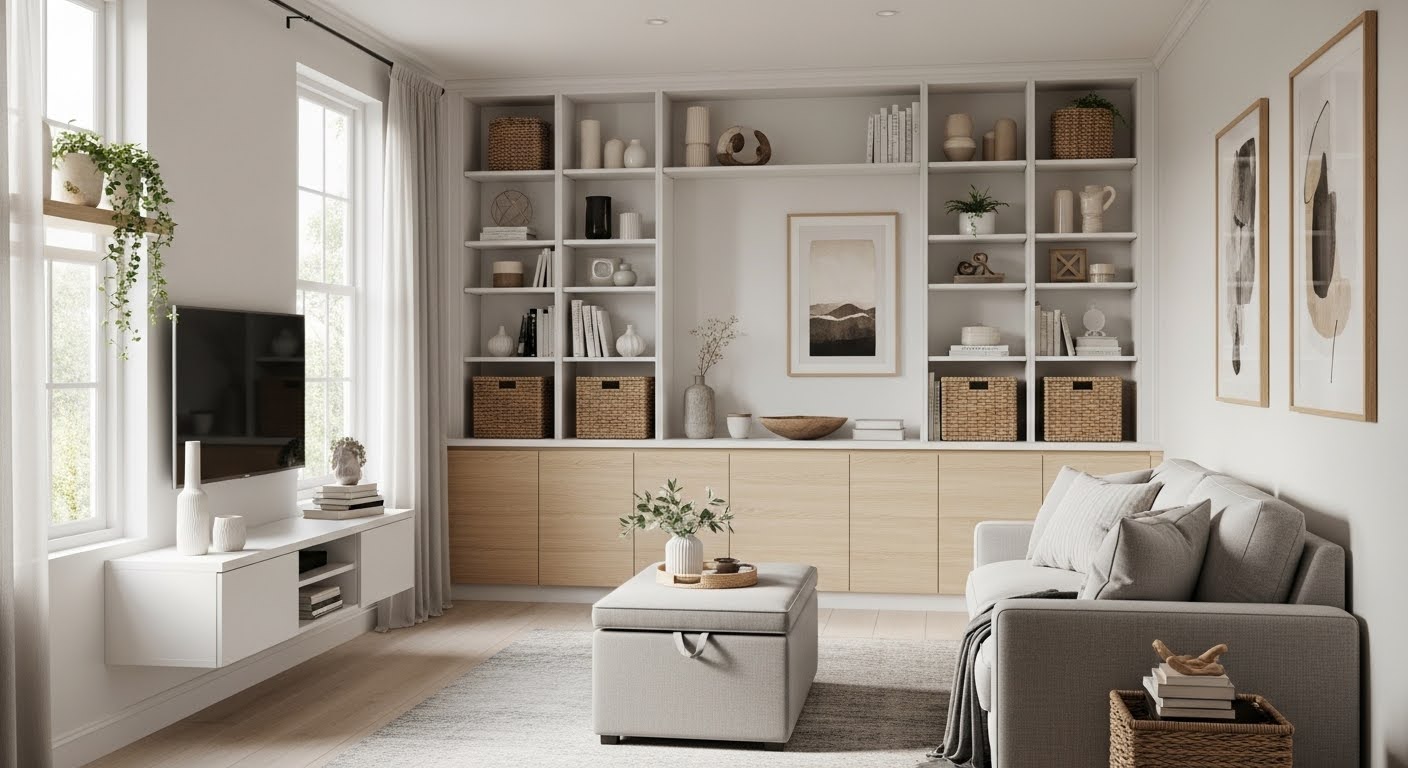
Small Apartment Living Room Ideas: Maximize Every Inch
You love your apartment. You genuinely do. But that living room? It can start to feel less like a cozy retreat and more like a game of furniture Tetris — and somehow the pieces never quite line up. If you’ve ever stood in your doorway wondering how people pull off stylish small spaces, you’re in exactly the right place.
Living in a small apartment doesn’t mean settling for cramped or cluttered. Whether you’re in a studio, a one-bedroom with a tiny sitting area, or renting a place where you can’t touch the walls without your landlord raising an eyebrow, there are real solutions waiting for you. No design degree required.
In this guide, you’ll find the best small apartment living room ideas that actually work in the real world — not just in perfectly staged photos. We’ll cover renter-friendly wall tricks, furniture that earns its footprint, storage ideas you haven’t thought of yet, and tips that won’t drain your bank account. Let’s get into it.
Quick Summary
WHO THIS IS FOR
Apartment renters, first-time homeowners, small-space dwellers
TIME TO READ
8 min
TOP 3 TAKAWAYS
01 Work With What You Have
Before you spend a single dollar, do a slow walk around your living room and really look at it — like a stranger seeing it for the first time. What’s the first thing your eyes land on? What feels heavy, what feels crowded, and honestly, what’s just sitting there collecting dust without adding anything to the space?
Here’s something that surprises most people: the fastest way to refresh a small living room isn’t buying new things. It’s removing the wrong things. Take everything out that isn’t fixed in place, then only bring back what you genuinely love and actually use. You’ll be amazed how much the room breathes.
While you’re at it, measure everything — the room itself and any furniture you plan to keep. Note where the natural light comes in, where people walk when they move through the space, and what your eyes naturally settle on. Those details will guide every single decision from here.
- Sketch a rough floor plan before moving anything — even a quick pencil sketch helps
- Find the room’s natural focal point (window, TV wall, or architectural feature) and build outward from there
- Give every item a job. If something isn’t functional or genuinely loved, it doesn’t get a spot
02 Renter-Friendly Wall Solutions
Blank walls in a rental can feel like a dead end — especially when drilling feels off-limits. But here’s the thing: your walls don’t have to stay bare. Adhesive picture-hanging strips, removable hooks, and no-drill systems have genuinely improved. They hold real weight, and they come off cleanly when it’s time to move.
One of the best moves in a rental is simply leaning large artwork or a mirror against the wall rather than hanging it. This actually looks very deliberate and current. A large leaning mirror in particular does double duty: it reflects light back into the room and makes the whole space feel wider than it actually is.
Removable wallpaper is a game-changer for renters. Apply it to a single wall, and you’ve instantly added texture, color, and personality — with zero permission needed. When you move, it peels away without leaving a mark. One accent wall can completely reframe the character of the room.
- Adhesive picture rails let you rearrange a gallery wall without touching the paint
- A large mirror — leaned or lightly hung — visually doubles the room’s perceived size
- Peel-and-stick wallpaper on just one wall creates a focal point with no landlord conversation required
- Adhesive-backed floating shelves add display and storage space without a drill
03 Furniture That Moves With You
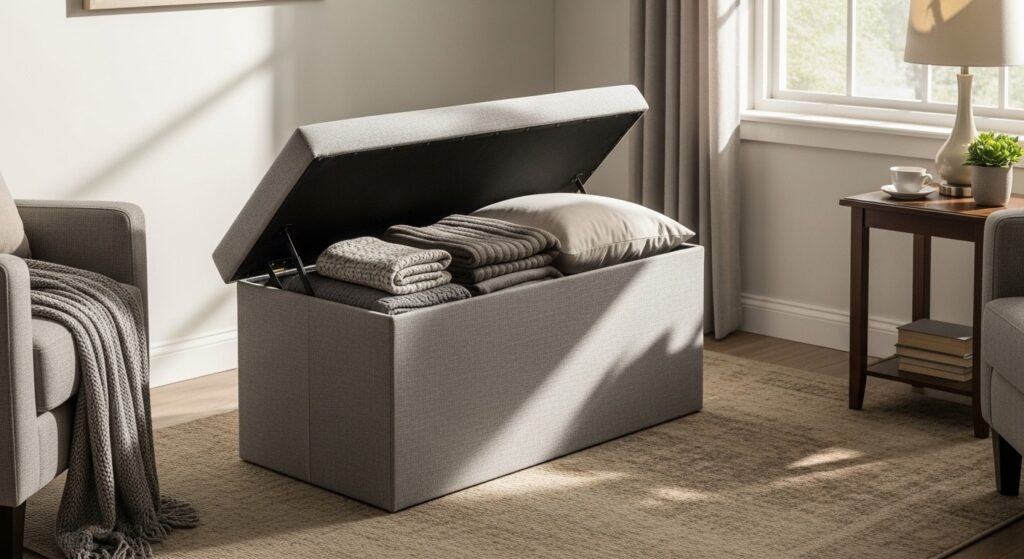
In a small apartment living room, every piece of furniture has to justify the floor space it takes up. The most valuable pieces are the ones that do more than one thing. A storage ottoman replaces a coffee table while hiding everyday clutter inside it. A daybed serves as a sofa during the day. A nesting table set takes up the footprint of one small table but expands to handle a room full of guests.
Always look for furniture with visible legs. When pieces sit directly on the floor, they create a visual weight that makes rooms feel heavier and smaller. Raised legs let you see more floor — and more visible floor means a more spacious room, even if the actual square footage hasn’t changed.
Be ruthless about scale. A generous sectional might be your dream sofa, but in a 300-square-foot studio it’ll dominate the entire room. A loveseat or apartment-sized sofa paired with a couple of lightweight chairs gives you just as much seating without the visual bulk.
- Nesting tables and folding chairs fold away when you don’t need them — no permanent footprint
- A storage bench works as a coffee table, extra seating, and hidden storage all at once
- Lighter-toned wood legs on seating and tables keep the room feeling airy, not heavy
| “The most stylish small rooms aren’t full of expensive things. They’re full of intentional things — each piece chosen because it earns its place.” |
04 Storage Solutions for Rentals
Clutter is the number one enemy of a small living room. When surfaces overflow, even a well-decorated space looks chaotic. The answer isn’t getting rid of all your stuff — it’s finding storage that feels intentional, like it belongs in the room rather than looking like an afterthought.
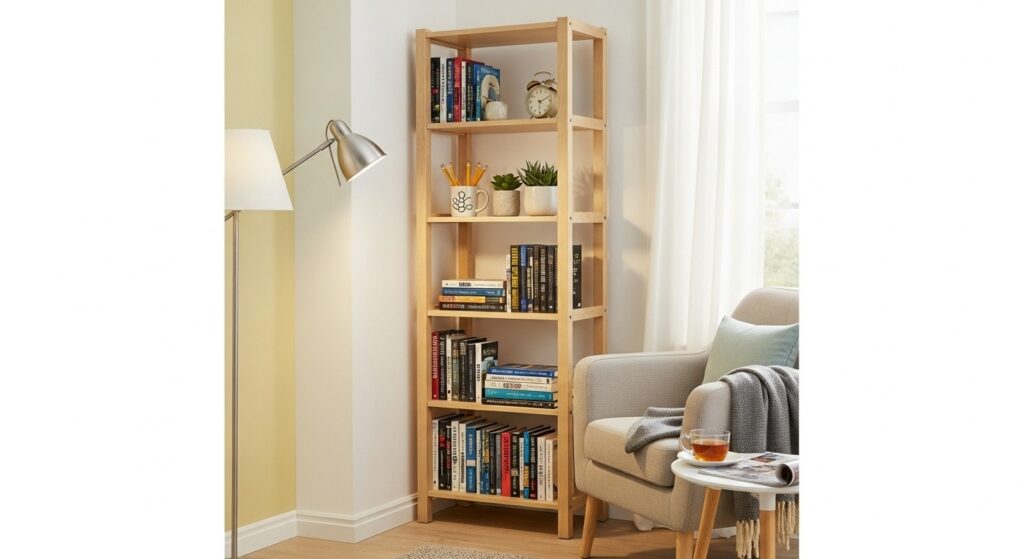
Think vertically. A floor-to-ceiling bookshelf or tall shelving unit draws the eye upward, makes ceilings feel higher than they are, and gives you a huge amount of storage without eating into your floor plan. Style the shelves with a mix of books, plants, baskets, and objects so they look curated rather than like a storage unit.
Use your furniture to hide the everyday stuff. Ottomans with removable lids, sofas with under-seat drawers, and coffee tables with shelves below all tuck away the things that would otherwise pile up on surfaces. Out of sight really does mean out of mind — and out of the visual noise.
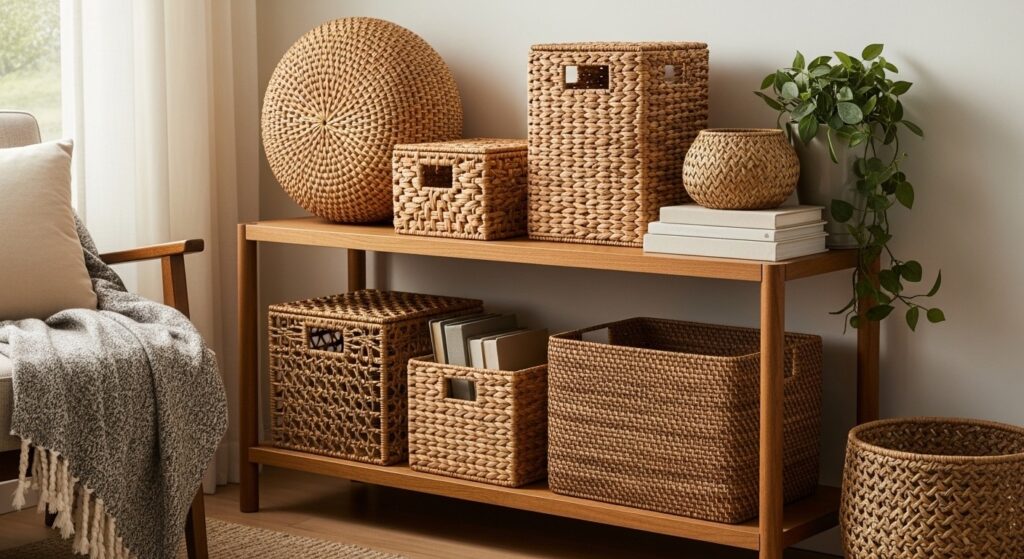
- Use matching baskets or boxes on open shelves for a tidy, intentional look
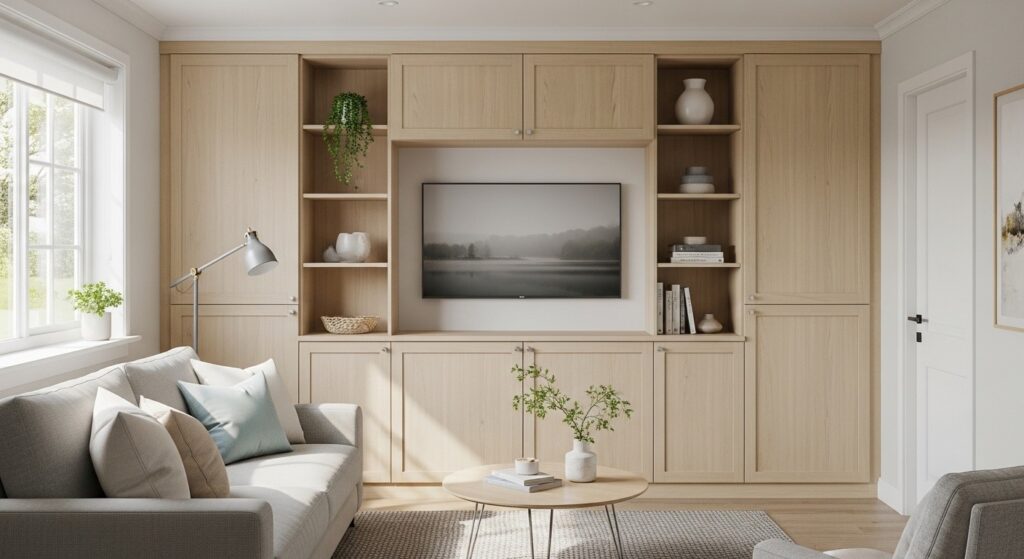
- A media console with closed doors hides cables and equipment cleanly — no cable chaos on display
- Flat storage bins that slide under the sofa work surprisingly well for blankets and seasonal items
- A hook near the entry keeps bags and coats off the sofa and out of the living room entirely
| Keep Reading:→ 50 Small Living Room Ideas→ Small Living Room Storage Ideas |
05 Define Zones Without Walls
If you’re dealing with a studio apartment living room situation — where one open room has to function as multiple areas — the question becomes: how do you make it feel like separate spaces without actually building walls? The answer is zoning, and it works much better than most people expect.
A rug is your most powerful zoning tool by far. Place it under your seating arrangement and it instantly creates a visual anchor for the living area, separate from wherever you eat or sleep. The rug draws an invisible line that the eye just naturally respects — no walls required.
Lighting does a lot of heavy lifting here too. A floor lamp positioned near the sofa or beside an armchair signals ‘this is the living room’ even in an open-plan space. You can also use a low bookshelf or a row of plants as a soft boundary — just enough separation to feel defined, without blocking any light.
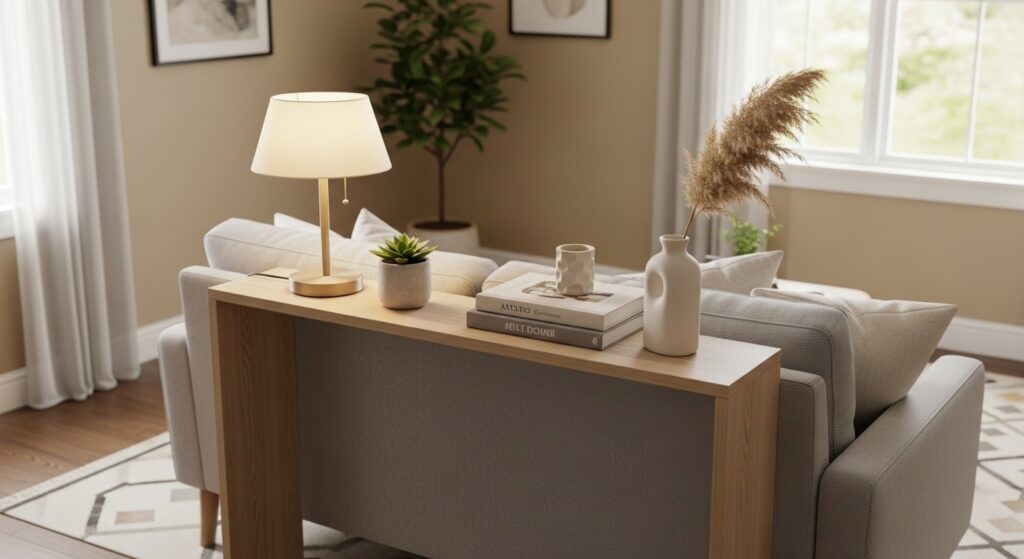
- Go bigger than you think on rug size — a too-small rug is one of the most common small-room mistakes
- A pendant light above the seating area (hung from a ceiling hook) reinforces the zone beautifully
- Low shelving, plant stands, or a sofa table can define a boundary without blocking a single window
06 Make Small Look Spacious
There are a handful of visual tricks that genuinely make rooms look larger, and none of them require construction. They just require smart decisions about color, light, and placement. A few of these together can transform how a room feels without changing a single measurement.
Light, neutral walls help a lot. That doesn’t mean everything has to be bright white — warm creams, soft sage, and gentle beige all work beautifully. The key is using texture (linen, jute, woven throws, boucle cushions) to add depth and interest instead of dark colors, which absorb light and can make the room feel like it’s closing in.
Mirrors deserve their own mention. A large mirror placed opposite a window essentially multiplies your natural light. Get the placement right and a narrow room feels wider, a dark corner feels bright, and a low-ceilinged space suddenly feels taller. One good mirror does the work of a lot of expensive fixtures.
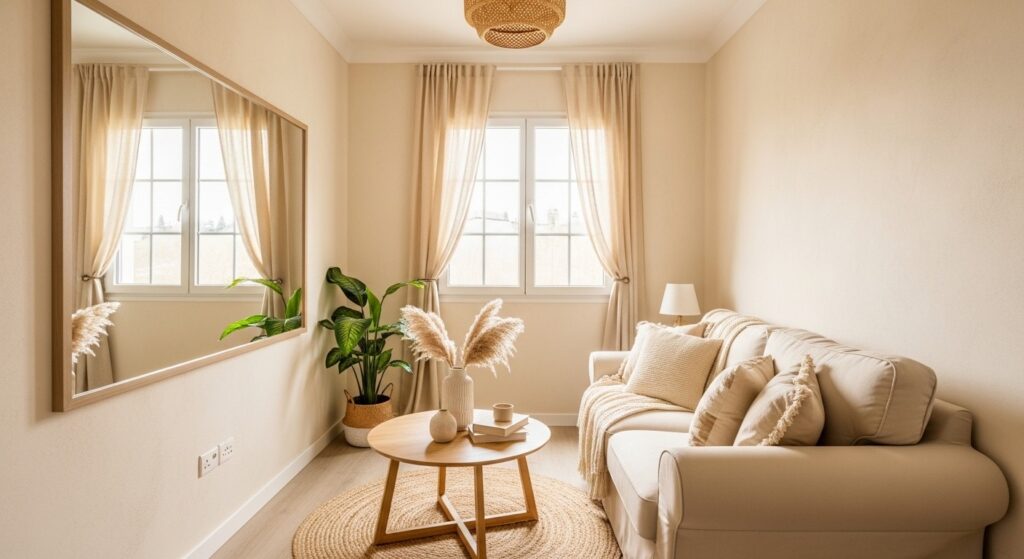
- Hang curtains as close to the ceiling as possible — it lifts the perceived ceiling height dramatically
- Sheer or lightweight curtains let natural light flood in without sacrificing privacy
- Paint built-in shelves the same color as the wall so they blend in and read as architecture, not clutter
- The more floor you can see, the bigger the room feels — keep it clear wherever possible
07 Budget Tips for Apartment Living
You don’t need a big budget to make a real difference in your living room. Some of the most impactful changes cost almost nothing — rearranging what you already own, thrifting a piece and giving it a fresh coat of paint, swapping in new cushion covers on an old sofa. It’s less about how much you spend and more about where you put your energy.
When you do have money to spend, put it toward the things you interact with every single day: a comfortable sofa, good layered lighting, and a quality rug. These three things set the tone for everything else in the room. Everything decorative — throw pillows, art, candles, plants — can come from thrift stores or be swapped seasonally without breaking the budget.
Secondhand stores, online resale marketplaces, and even items left out on the street can yield incredible finds. An old dresser with new handles and a coat of paint becomes a genuinely stylish media console. A set of mismatched chairs unified by the same cushion fabric becomes a curated moment. Creativity and patience cost nothing.
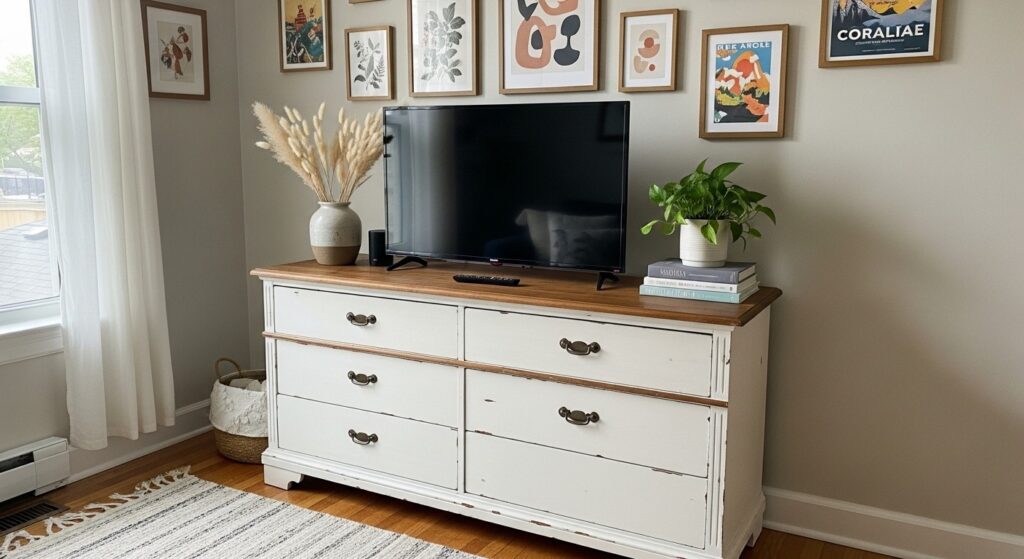
- Splurge on: sofa, rug, layered lighting — these get daily use and set the room’s whole tone
- Save on: throw pillows, art prints, side tables, accessories — thrift or DIY these wherever you can
- Learn one basic skill — furniture paint, reupholstery, frame matting — and it pays off for years
- Online resale platforms are where the real deals are; be patient and check often
08 Temporary Updates That Pack Punch
Renting doesn’t mean you’re stuck with whatever the landlord left behind. Temporary updates — things you add today and take with you when you move — can completely change the feel of a living room. The trick is choosing things that look intentional and permanent even though they’re not.
Peel-and-stick floor tiles can go over boring or dated flooring and look remarkably convincing. Removable wallpaper on a single wall transforms a room in an afternoon. Fabric panels hung from ceiling rods (attached with adhesive hooks) soften hard walls and add warmth without a single hole.
Even swapping out a light fixture can shift the whole mood of a room. Just store the original carefully and swap it back before you move out. A well-chosen pendant or a cluster of hanging bulbs changes how the space feels in the evening in a way that almost nothing else can match.
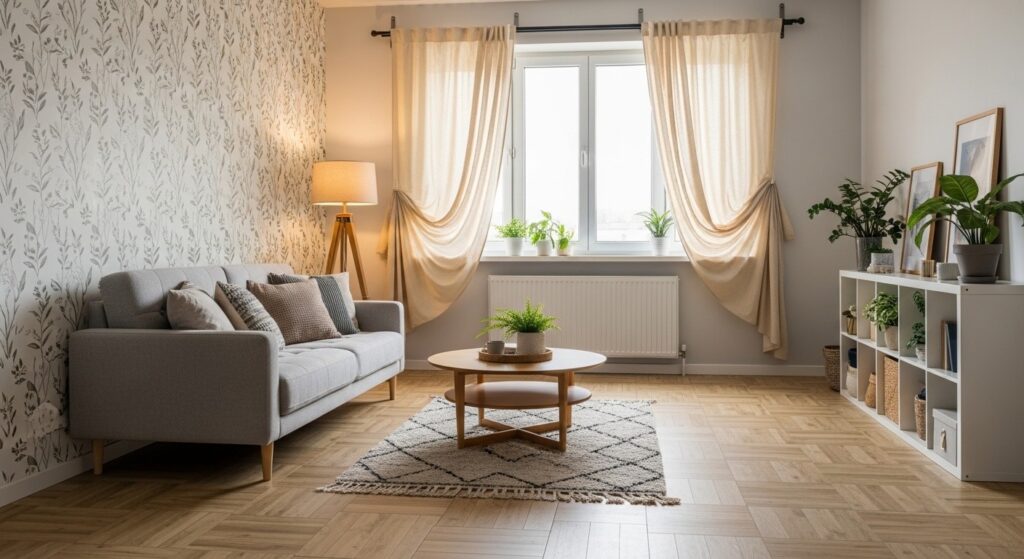
- One accent wall in removable wallpaper = the biggest visual bang per dollar in any rental
- Temporary floor tiles over dated flooring look far more convincing than you’d expect
- Swap light fixtures for the duration of your lease — just keep the originals in a labeled bag
- Fabric wall hangings add texture and personality with zero wall damage whatsoever
Common Mistakes to Avoid
Even with good intentions, a few common missteps can undo all your hard work. Here’s what to watch out for — and how to sidestep every one of them.
- Mistake 1: Pushing all furniture against the walls.
It feels logical — surely that clears more floor space? But it actually makes rooms feel like waiting areas. Floating furniture slightly away from walls creates intimacy and, counterintuitively, makes the space feel bigger.
- Mistake 2: Using oversized furniture.
A large sofa might be what you’ve always wanted, but if it fills 80% of your floor plan, it owns the room. Choose appropriately scaled pieces, and resist the urge to fill every corner just because something technically fits.
- Mistake 3: Ignoring vertical space.
Most people decorate from the floor up to about eye level and stop there. Get up higher — tall shelves, ceiling-height curtains, artwork hung higher than usual — and you’ll dramatically change how the room feels.
- Mistake 4: Too many small decor items.
A dozen tiny objects scattered across a room read as clutter, not curation. Group similar items together into one styled vignette, or choose one or two larger statement pieces instead.
- Mistake 5: Poor lighting.
Relying on a single overhead light is one of the fastest ways to make a room feel flat and impersonal. Layer it: overhead, a floor lamp, a table lamp, and something at a lower level. Depth in lighting creates warmth in the room.
Frequently Asked Questions
Q: What’s the most important element to focus on first in a small apartment living room?
Start with the furniture layout, not the decor. No amount of throw pillows will fix a floor plan that doesn’t work. Measure your space, map traffic flow, and position your largest piece — usually the sofa — so it creates a natural gathering area. Once the layout feels right, every other decision becomes much simpler. Think of it as the room’s foundation: everything else stacks on top of it.
Q: How do I start this project without feeling overwhelmed?
Begin with a full declutter before you spend anything. Remove everything that isn’t fixed in place and only bring back what you love and actually use. You’ll immediately see the room differently. From there, move one step at a time — layout first, then lighting, then walls, then accessories. Small, deliberate changes add up quickly and save you from impulse purchases you’ll later regret.
Q: What’s a realistic budget range for a small apartment living room refresh?
A meaningful refresh can happen anywhere from around $200 to $2,000 or more depending on where you’re starting from. If you already have solid furniture, a few hundred dollars covering a new rug, updated lighting, and some fresh accessories can go a long way. If you’re starting from scratch or replacing the sofa, plan for more. Shopping secondhand aggressively can cut that figure in half — and you often end up with more characterful pieces than you’d find at a big-box store.
Q: How long does it take to properly refresh a small apartment living room?
A full refresh typically takes two to eight weeks when you’re making considered choices rather than buying everything at once. The layout change and initial declutter can happen in a weekend. Sourcing furniture and decor — especially if you’re shopping secondhand or waiting on deliveries — takes the most time. A good approach is to live with early changes for a week before making final calls; rooms often show you what they need once you spend time in them.
Q: What mistakes should I avoid in a small apartment living room?
The biggest one is buying too much. Small spaces suffer more from excess than from absence. Beyond that, watch out for furniture pushed flat against every wall, a rug that’s too small for the seating area, and relying on one overhead light. These three errors are the most common, and fixing them — often without spending anything extra — can transform a room more than any shopping trip.
Your Small Space, Your Stylish Home
Living in a small apartment doesn’t mean living with less — it means living with more intention. Every decision carries more weight in a compact space, which means the wins feel that much more satisfying when they land. You don’t need extra square footage to have a living room that’s beautiful, functional, and genuinely reflects who you are.
Start with one thing. Rearrange your furniture tonight. Put up that leaning mirror this weekend. Order a rug that actually fits the space properly. Small actions compound into a room that feels like home the moment you walk through the door. You’ve got more to work with than you think.