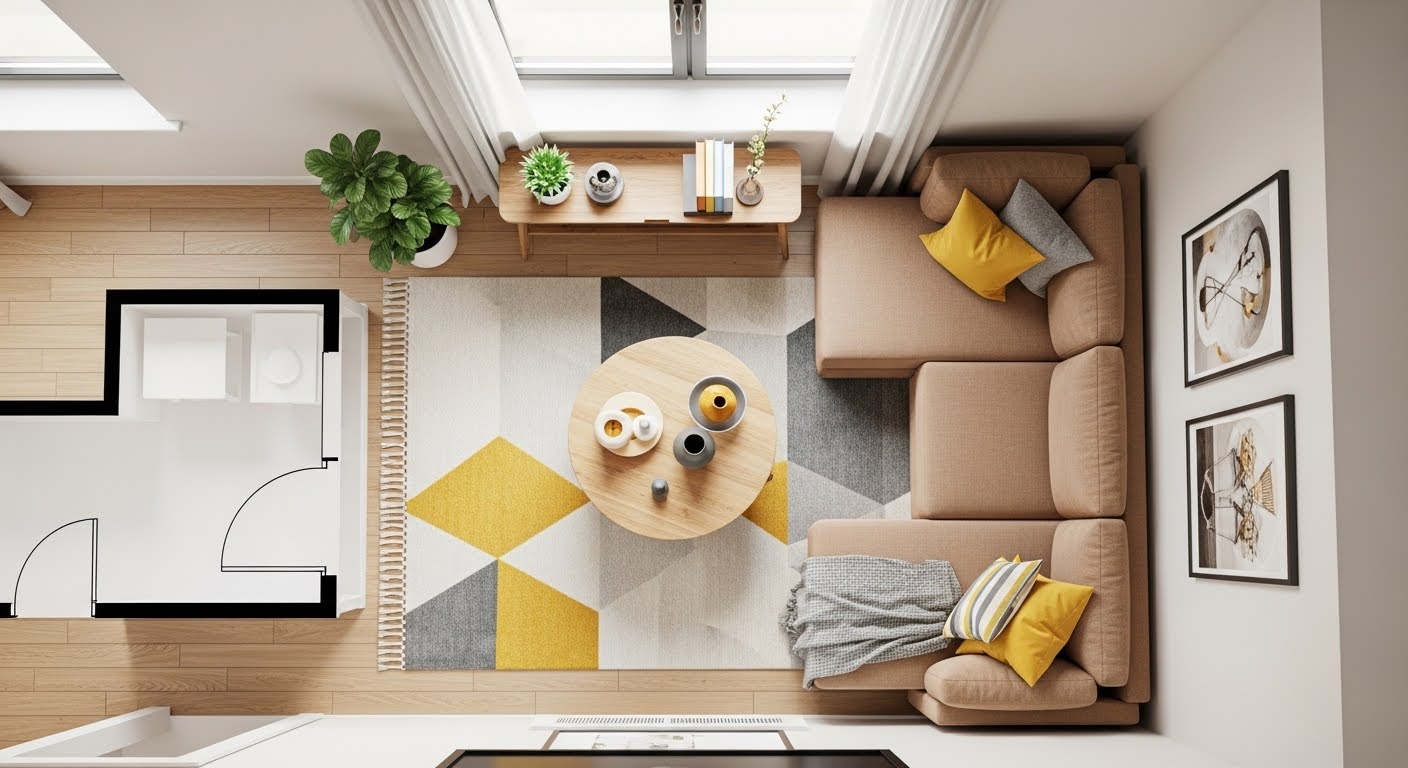
Small Living Room Layout Ideas: 10 Floor Plans That Work
You’ve tried pushing the sofa against the wall. You’ve squeezed in a coffee table, angled the armchair, and pointed everything at the TV. And still — something feels off. The room looks cramped, or awkward, or just kind of uninviting. Sound familiar? You’re not alone.
Working with a small living room is genuinely tricky. The internet is full of gorgeous inspiration photos, but most of them were shot in spaces that are anything but tiny. The good news is that a tight floor plan doesn’t mean you have to sacrifice comfort or style. It just means you need to approach the layout a little differently.
In this guide, you’ll find 50 small living room floor plans that actually work in real homes — not just in magazines. We’ll walk through furniture arrangement ideas for small rooms, talk about the most common layout mistakes people make, and answer the questions that come up most often. Grab a tape measure. Let’s get into it.
| QUICK SUMMARY | ||
| Who This Is For Apartment renters, first-time homeowners, and anyone trying to make the most of a compact living space. | Time to ReadAbout 8 minutes | Top 3 Takeaways1. Sketch your floor plan first2. Don’t push everything against walls3. Build a real conversation area |
Quick Summary
WHO THIS IS FOR
Apartment renters, first-time homeowners, and anyone trying to make the most of a compact living space.
TIME TO READ
8 min
TOP 3 TAKAWAYS
1. Measure Your Room First
Before you move a single chair, take ten minutes to measure your space properly. Write down the length and width, but also note where the doors swing open, where the windows fall, and where any fixed elements like radiators or built-in shelves interrupt the walls. These things can’t be moved, so your layout has to work around them.
A simple sketch on grid paper goes a long way. Use one square per foot, mark your furniture as rough rectangles, and see what fits before you start lifting anything. If sketching on paper feels tedious, free apps like Planner 5D or RoomSketcher do the same thing on your phone. It takes less time than you’d expect and saves a lot of frustration later.
One more thing to keep in mind: traffic flow. You need at least 30 to 36 inches of clear walkway through any living room so people can move comfortably. And 18 inches between a sofa and a coffee table is about the minimum for actually reaching your drink. These numbers should be your non-negotiables when testing any small living room layout.
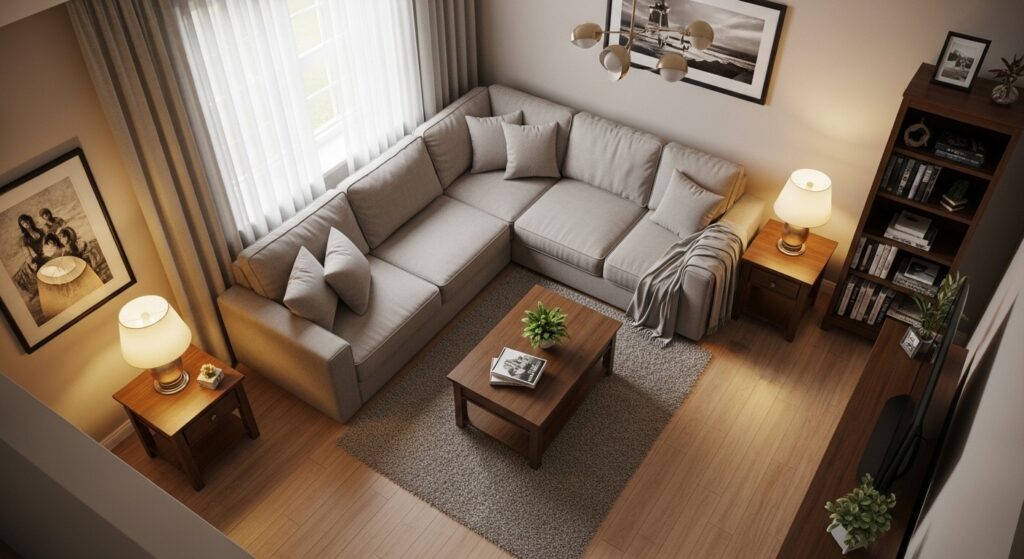
Quick checklist before you start:
- Measure length, width, and all doorway widths
- Note windows, radiators, outlets, and built-ins on your sketch
- Mark two or three possible traffic routes through the room
- Use a free app or grid paper to test furniture placements before moving anything
2. The L-Shape Layout
This is one of the most reliable small living room floor plans out there, and it works because it makes a seating area feel intentional without cramming the room. The idea is simple: a sofa along one wall, a loveseat or a pair of chairs running perpendicular to it. That right angle creates a defined zone while keeping one side of the room completely open.
It works especially well in square rooms and open-plan spaces where you want to visually carve out the living area from a dining zone. The open corner gives the room breathing room, and an area rug anchored in the crook of the L ties everything together beautifully. If your room is more narrow than square, try running the longer piece of the L along the longest wall.
When you’re choosing pieces for this layout, keep them within the same color family. They don’t need to match exactly, but they should look like they belong together. A round or oval coffee table centered in the L softens the angular arrangement and makes it feel more relaxed.
L-Shape layout tips:
- Works best in square rooms and open-plan living areas
- Place the longer piece along the longest available wall
- Leave the fourth wall or open corner free for movement
- Anchor with a rug that extends under the front legs of both seating pieces
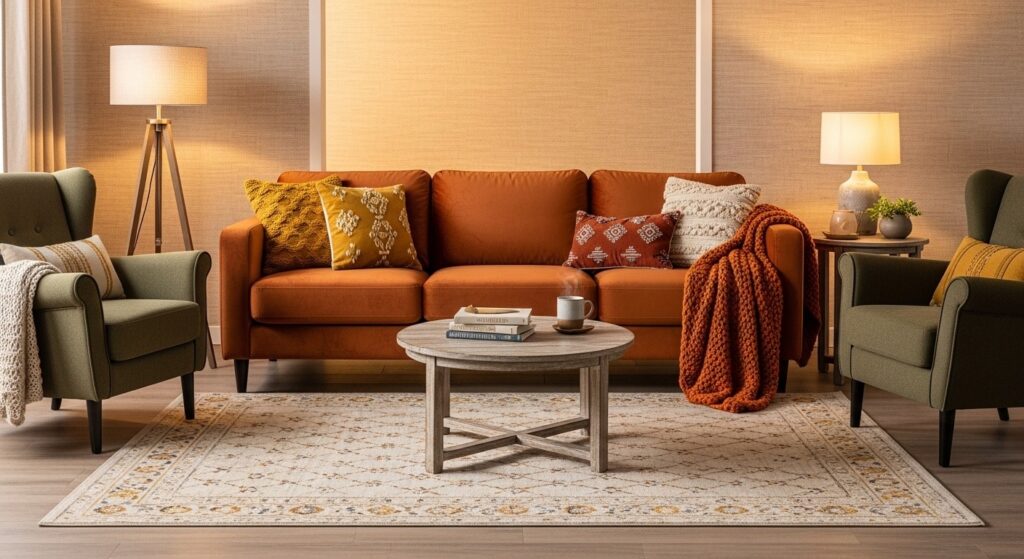
3. The Symmetrical Layout
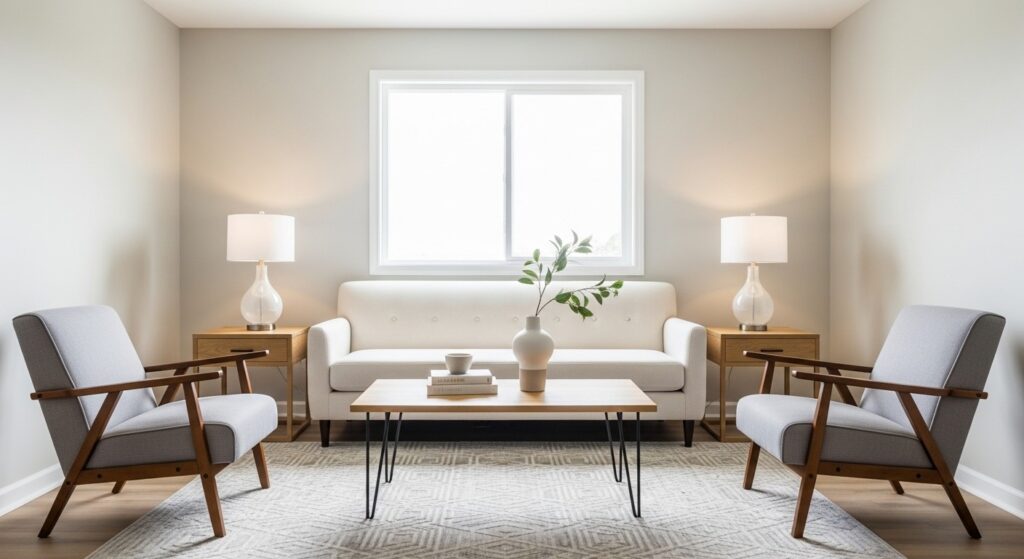
There’s a reason designers keep coming back to symmetry. It feels calm, balanced, and considered — and in a small room, that sense of order can make the space feel more put-together without needing a lot of square footage. The basic setup is two matching chairs or loveseats facing each other across a central coffee table, with the sofa on the wall opposite the room’s main focal point.
This layout suits rooms with something worth looking at — a fireplace, a large window, a gallery wall. It also works beautifully in narrow rectangular rooms where the eye needs help understanding the proportions. The mirrored arrangement naturally draws attention inward, which can make a tight space feel wider than it really is.
The one thing to watch out for is stiffness. Perfectly matched furniture can start to feel a bit formal if you’re not careful. Loosen it up with mismatched throw pillows, one trailing plant placed off to one side, or a rug with an organic shape. The goal is balanced bones with a bit of personality layered on top.
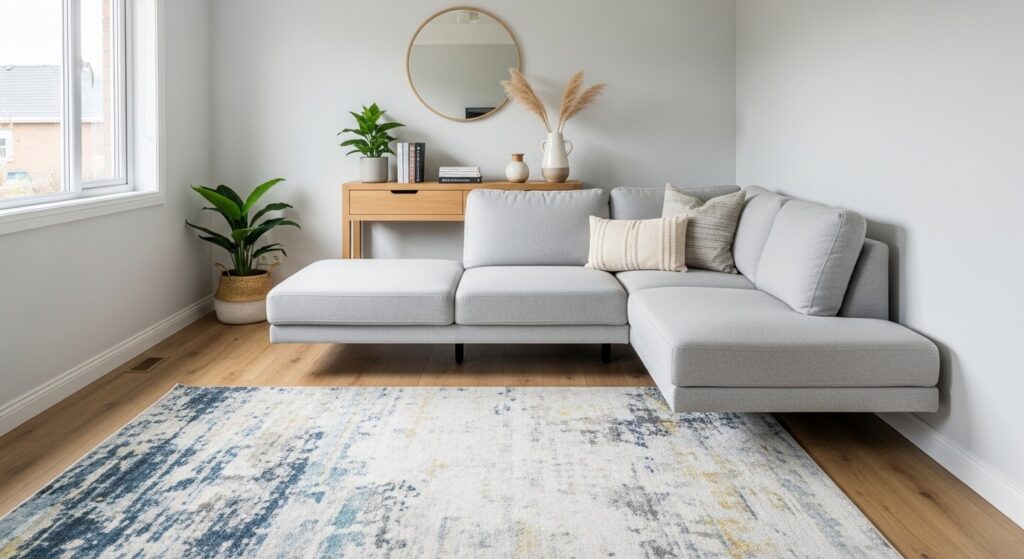
4. The Floating Furniture Layout
Here’s the tip that surprises almost everyone: pull your furniture away from the walls. It feels completely backwards — shouldn’t you push everything back to create more space? But floating your furniture actually makes a room feel larger, not smaller. When there’s a small gap between the sofa back and the wall behind it, the eye registers more depth in the space.
A floating layout means positioning your main seating group toward the center of the room, anchored by a rug, with roughly 6 to 12 inches between the sofa and the wall behind it. Side tables and floor lamps can still sit near the perimeter. The result looks intentional and curated rather than pushed-aside, which changes how the whole room reads.
This works especially well in rooms where you walk in directly facing the seating area. It creates that welcoming, settled-in feeling right away. A great trick is to place a narrow console table directly behind the sofa — it fills the visual gap, gives you a surface for a lamp and a plant, and turns that awkward strip of space into a real design moment.
| Pro tip: A console table tucked directly behind a floating sofa fills the gap, adds a surface, and turns that strip of empty space into a real design feature. |
5. The Corner Conversation Layout
Instead of treating a room corner as wasted space, this layout makes it the anchor. You place the sofa at an angle across one corner — or tuck a pair of chairs into the corner facing outward — and orient the remaining seating to face inward. The result is a cozy, gathered feel that works really well in rooms where no single wall is quite long enough for a full sofa.
Using the corner frees up more linear wall space and opens up the rest of the room for movement. It’s also a practical solution when the TV is on the opposite wall and you want the seating to face both the screen and each other naturally, without everything pointing in one rigid direction.
The key here is scale. Low-profile furniture works much better in a corner arrangement than chunky, high-backed pieces. Stick to streamlined sofas with slimmer arms, and use a round or oval coffee table in the center. The round shape softens the angular setup and makes the whole grouping feel more relaxed.
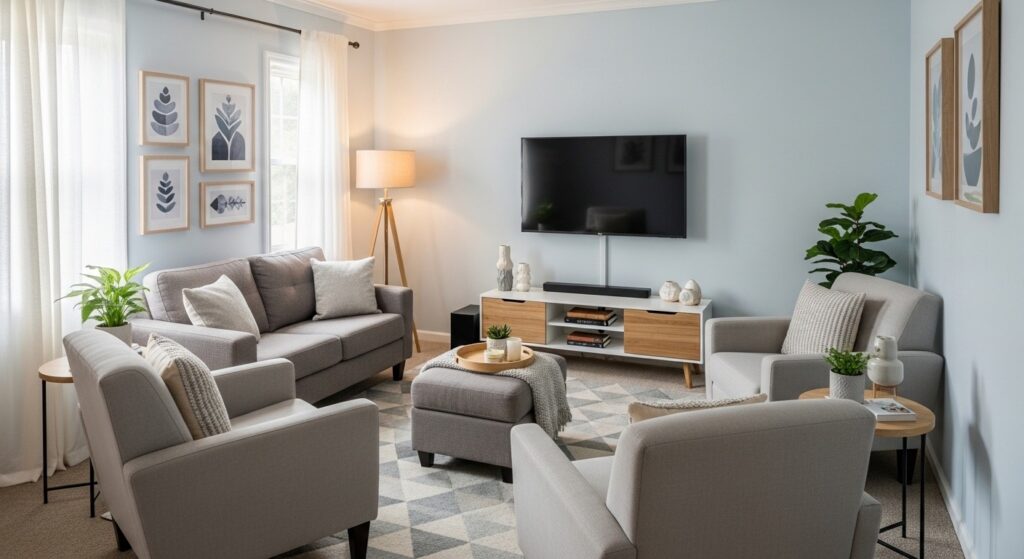
6. The TV-Focused Layout
In most small living rooms, the television is the room’s clear focal point — and working with that rather than against it makes layout decisions a lot simpler. The TV-focused arrangement organizes all seating to face the screen at a comfortable viewing angle. Sofa directly opposite the TV wall, chairs flanking the sides at a slight angle, coffee table centered in between.
One of the most common mistakes in this setup is placing the TV too high. For comfortable, relaxed viewing, the center of the screen should sit at roughly seated eye level — around 42 to 48 inches from the floor for most standard sofas. A screen that’s too high means everyone cranes their neck, which gets uncomfortable fast and makes the room feel oddly proportioned.
Where possible, mount the TV on the wall to reclaim the floor space beneath it. A low, slim media console keeps the area tidy and visually grounded. If you want to add a bit of flexibility for conversation, two chairs placed at a slight angle on either side of the sofa can face both the TV and each other — giving you a room that transitions easily between movie nights and actual conversation.
TV-focused layout notes:
- Ideal screen height: center at 42 to 48 inches from the floor
- Wall-mounting the TV opens up the floor and keeps things clean
- Keep the media console low and narrow to maintain visual space
- Comfortable viewing distance: roughly 1.5 times the screen’s diagonal measurement
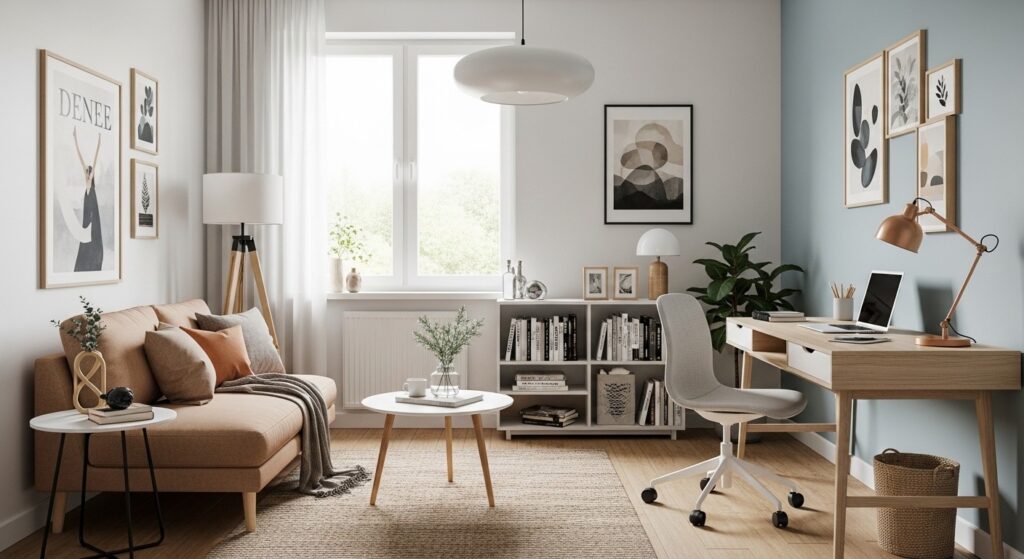
7. The Work-From-Home Layout
These days, a lot of small living rooms are doing double duty. They’re relaxing in the evening and working spaces during the day — and getting that balance right is one of the trickier layout challenges in a compact home. The goal is to give each activity its own visual territory so one doesn’t bleed into the other.
Carve a dedicated desk zone into one corner or along a single wall, separate from the main seating area. If possible, position the desk so it faces the wall with its back toward the living area — that way, you’re not staring at a pile of work papers from your sofa every evening. A tall bookcase, a curtain panel, or even just a shift in rug placement can act as a visual boundary between the two zones.
Lighting does a lot of heavy lifting here. Use a focused desk lamp over the work area and warmer, softer bulbs in the living zone. When you switch the desk lamp off at the end of the day and turn on the floor lamp beside the sofa, your brain registers the shift. It’s a small thing, but it genuinely helps the room feel less like a home office and more like a home.
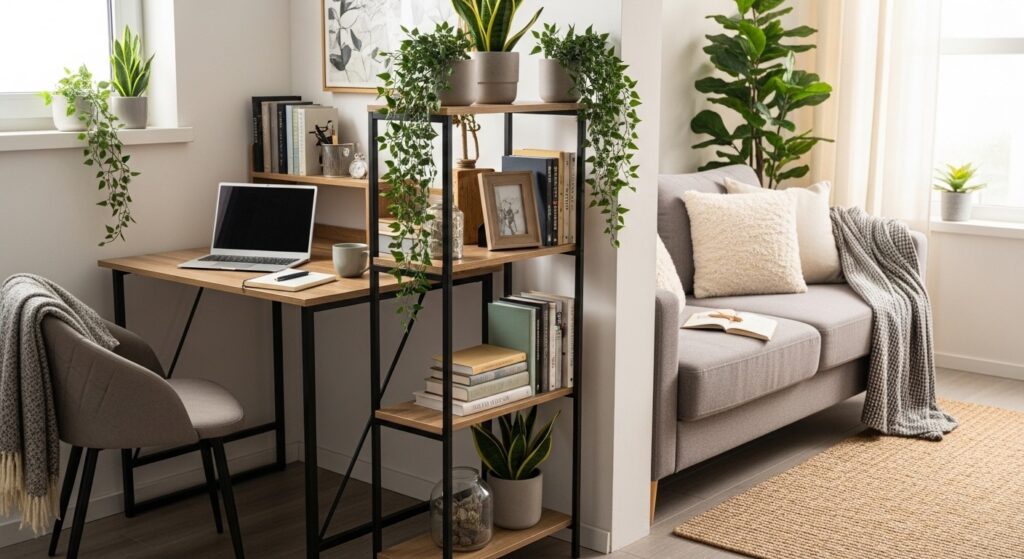
WFH layout tips:
- Keep the desk facing a wall, back turned to the seating area
- Use a bookcase, curtain, or rug boundary to visually separate the zones
- Separate lighting for each area reinforces the mental switch between work and rest
- A tidy desk matters more in a small room — surface clutter reads across the whole space
8. Common Layout Mistakes to Fix
Even the right furniture can look wrong in a room if the arrangement is off. These are the five small room layout problems that come up most often — and what to do about each one.
| 01 | Pushing All Furniture Against the WallsIt feels logical but it actually makes rooms look smaller and more clinical. Pull pieces a few inches inward, anchor them with a rug, and watch how much more intentional the grouping looks. |
| 02 | Using Furniture That’s Too Big for the SpaceA sofa built for a family room will overwhelm a small apartment lounge every time. Scale matters a lot. Downsizing to a piece that actually fits the room makes everything feel more spacious, not less. |
| 03 | Ignoring the Vertical SpaceMost people stop decorating at eye level, but walls extend upward and that space is valuable. Tall shelving, a mirror that leans against the wall, or a hanging plant draws the eye upward and makes ceilings feel higher than they are. |
| 04 | Too Many Small Decor PiecesA cluster of tiny objects creates visual noise. In a small room, that noise reads as chaos. Edit your surfaces down, group things in threes, and let some areas of the room breathe completely empty. |
| 05 | Relying on a Single Overhead LightOne ceiling fixture leaves corners flat and dark, which shrinks a room visually. Layer your lighting — a floor lamp, a table lamp, and the overhead source working together give the space warmth and dimension. |
Frequently Asked Questions
Q1: What is the best sofa for a small living room?
The short answer: one that’s actually sized for the room. Look for sofas with clean lines, slim arms, and legs that lift the piece off the floor. That visible gap underneath does a surprising amount of work — it lets light pass through and makes the whole room feel more open. A tight-back sofa (where the back cushions are fixed, not separate) also tends to read as less bulky than a version with loose back pillows.
A two-seater or a compact three-seater works in most small living rooms. Sectionals can work too, but only if the room is genuinely square and spacious enough to float one properly. Avoid sofas with floor-length skirts — they cut off the visual line of the floor and make the furniture feel heavier than it is.
As for color, lighter upholstery in linen, cream, or soft grey will visually recede into the room. A darker sofa can absolutely work as a focal piece, but you’ll want lighter walls and a paler rug to keep the overall feel balanced.
Q2: How do I make my small living room look bigger?
A few things work really well together. First, commit to a light, cohesive color palette. When walls, large furniture, and rugs stay in the same tonal family, the eye doesn’t stop and restart at visual breaks — the room reads as one continuous, larger space. Second, position mirrors across from windows so they bounce natural light and create the illusion of depth.
Third, choose furniture with visible legs and use glass or acrylic for coffee tables and side tables. Transparent materials take up physical space but not visual space — your eye passes through them rather than stopping at them. Fourth, hang curtains as close to the ceiling as possible and let them extend wide of the window frame itself. It makes the window look taller and the room feel higher.
And finally: less stuff. A small room with a handful of considered objects always looks bigger than the same room filled with lots of little things. Editing your decor regularly and storing what you’re not actively using makes a real, noticeable difference.
Q3: What colors make a small room look larger?
Light, cool tones do the most work. Soft whites, pale grey, warm cream, and very light sage all reflect light and push walls back visually. That said, you don’t have to go all-white. A single deeper accent wall can actually help a room feel larger by adding a sense of depth — as long as the remaining walls stay light enough to balance it.
For rooms with good natural light, a warm off-white or creamy white works beautifully without feeling clinical. For darker rooms, a warm mid-tone like dusty putty or faded sage tends to feel cozy rather than closed-in — which matters a lot when you’re spending time in a small space.
One rule that consistently holds: keep the ceiling at least as light as the walls, or go a shade lighter. Paint the ceiling the same warm white as the walls and you’ll be surprised how much taller the room suddenly feels.
Q4: Should I use a rug in a small living room?
Absolutely — and most people choose one that’s too small. The most common rug mistake in a small living room is picking a size that sits only under the coffee table, leaving the sofa and chairs floating on bare floor. This fragments the space and paradoxically makes the room feel smaller. Go big enough for at least the front legs of all your seating to rest on the rug.
A rough guide: an 8×10 works well for most standard living room groupings, even in smaller rooms. A 5×8 is typically only right for the most compact spaces. If the rug is undersized, your furniture will look unanchored — hovering rather than grounded.
For small rooms, low-pile or flat-weave rugs tend to work better than thick, high-pile options. They’re easier to read visually and they don’t fight with other textures in the room. A subtle pattern or simple texture reads as calm and cohesive, which is exactly what a small space needs.
Q5: How do I arrange furniture in a small living room?
Start by identifying the room’s focal point — a window, TV, fireplace, or feature wall — and orient your main seating toward it. Sketch the layout on paper using your room’s actual measurements before you move anything. This one step saves more time and effort than almost anything else.
Place your largest piece first, almost always the sofa, then build outward from there. Think about conversation: seats in a living room should be no more than 8 to 10 feet apart for easy talking. Keep the coffee table close enough to the sofa to actually use — 18 inches is about the maximum before it starts to feel too far away. And always leave at least one clear 30 to 36-inch pathway through the room.
Finally, resist the urge to fill every surface and corner. Empty space in a small room isn’t wasted — it’s what makes the room feel like it can breathe. The layouts that work best always feel a bit edited, not maxed out. Less really is more here.
Final Thoughts: You Have More to Work With Than You Think
Small living rooms aren’t a design problem to power through. They’re a space to work thoughtfully, and the difference between a cramped room and a cozy one usually comes down to a few deliberate choices — not more square footage. The layouts in this guide work because they reflect how people actually live in their homes: moving around, sitting together, watching something, or just needing a quiet corner to think.
Whether the L-shape layout clicked for you, or you’re ready to try floating your sofa away from the wall, the most important step is just to start. Grab a tape measure, sketch your floor plan, and try one idea at a time. You don’t have to get it perfect on the first attempt — you just have to get it moving.