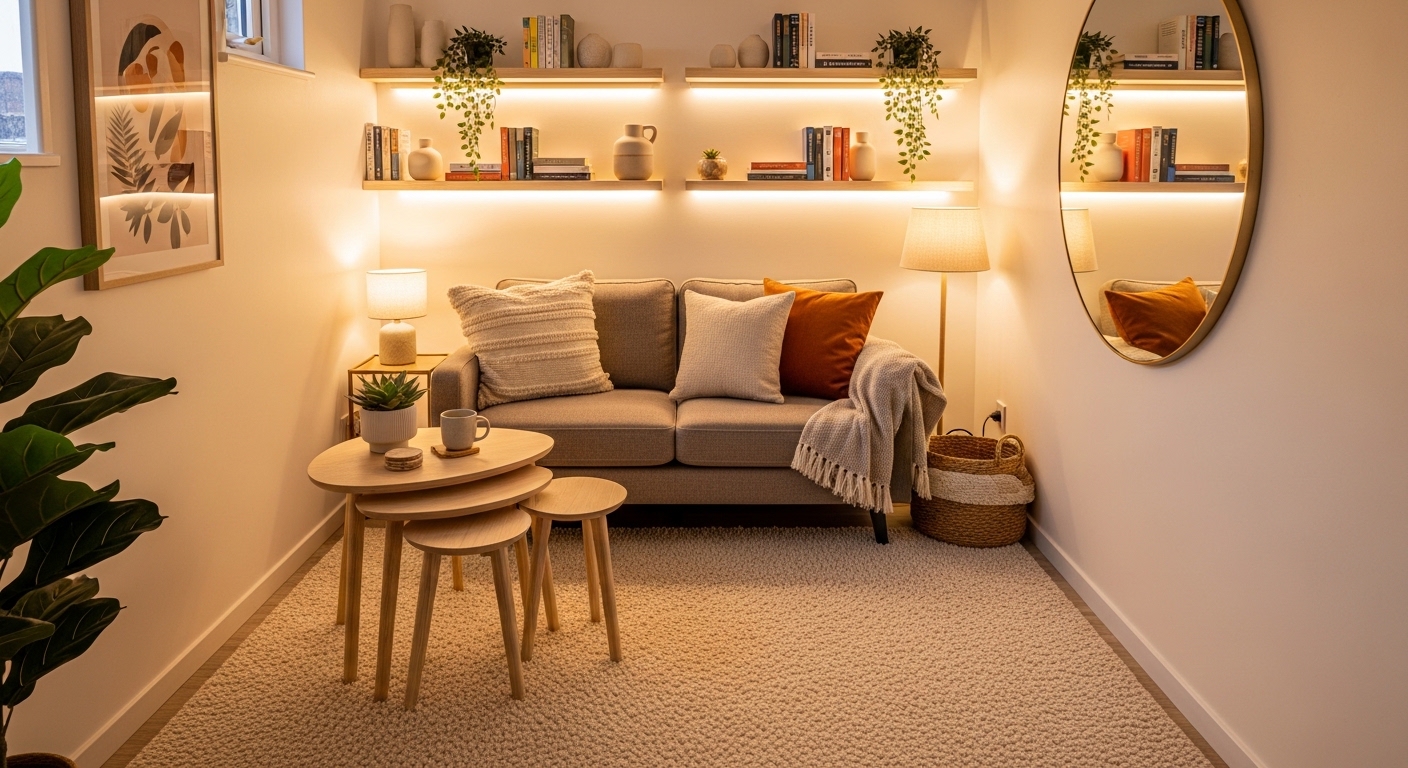
Cozy Small Living Room Ideas: Big Comfort, Tiny Space
You walk into your small living room and something just feels off. Maybe it feels a bit cold, or a bit cluttered. Maybe it looks fine in daylight but kind of sad by evening. You’ve scrolled through enough inspiration photos to know what you want — but everything in those pictures seems designed for spaces twice the size of yours. Sound familiar?
Here’s something worth saying early: small doesn’t mean uncomfortable. A compact living room actually has a genuine advantage over a large one — it’s far easier to make feel warm and intimate. You’re not trying to fill a vast space; you’re working with something naturally human in scale. You just need the right cozy small living room ideas to unlock that potential.
From choosing warm colors that work with your space (not against it) to layering textures, scaling your furniture properly, and getting your lighting right — this guide covers everything. It’s practical, it’s straightforward, and every idea here is something you can actually do. Let’s get into it.
Quick Summary
WHO THIS IS FOR
Apartment renters, first-time homeowners, and small-space dwellers who want a living room that actually feels inviting.
TIME TO READ
8 min
TOP 3 TAKAWAYS
1. Small Space Cozy Challenges
The first thing to get out of your head is that a small living room is a problem to solve. It’s not. The real challenge is the instinct to fight the size — to try and make a small room look bigger, when what you actually want is to make it feel better. Cozy and spacious are two completely different goals, and for a compact room, cozy wins every single time.
Small rooms tend to feel either cold or cluttered when they haven’t been designed with intention. Without the right layers of warmth — light, texture, colour, familiar things — they can feel more functional than livable. The good news is that every one of those problems has a solution, and none of them require a renovation budget.
Before you change anything, spend a moment thinking about how you actually use this room. Do you read here? Watch films in the evening? Have one or two friends round occasionally? Your real habits should shape your cozy small living room ideas far more than any trend you’ve seen online.
A few things to think about before you start:
- Define your main activity in the room before buying or moving anything
- Work with the small size rather than constantly trying to disguise it
- Focus on how the room feels when you’re sitting in it, not just how it looks in photos
2. Warm Colors That Don’t Shrink
Paint your small room white to make it feel bigger — you’ve probably heard that one before. And it’s not entirely wrong. But it often produces a room that feels clinical and cold rather than cozy. The better approach is to choose warm whites, soft creams, dusty pinks, earthy taupes, or muted terracottas. These are the shades that create a genuine warm small living room without making the walls feel like they’re closing in.
The key is staying within a warm undertone family throughout the room. Pair a warm off-white wall with an accent in sage or rust — maybe a cushion cover, a vase, or even a single painted alcove. That contrast creates depth and interest without creating visual noise. For more color palette inspiration, check out our guide to Cozy Living Room Ideas.
One spot people consistently overlook: the ceiling. Painting it a warm cream rather than stark white makes an enormous difference. Instead of a bright flat lid above your head, you get something that feels soft and enveloping — like the room is gently wrapping around you.
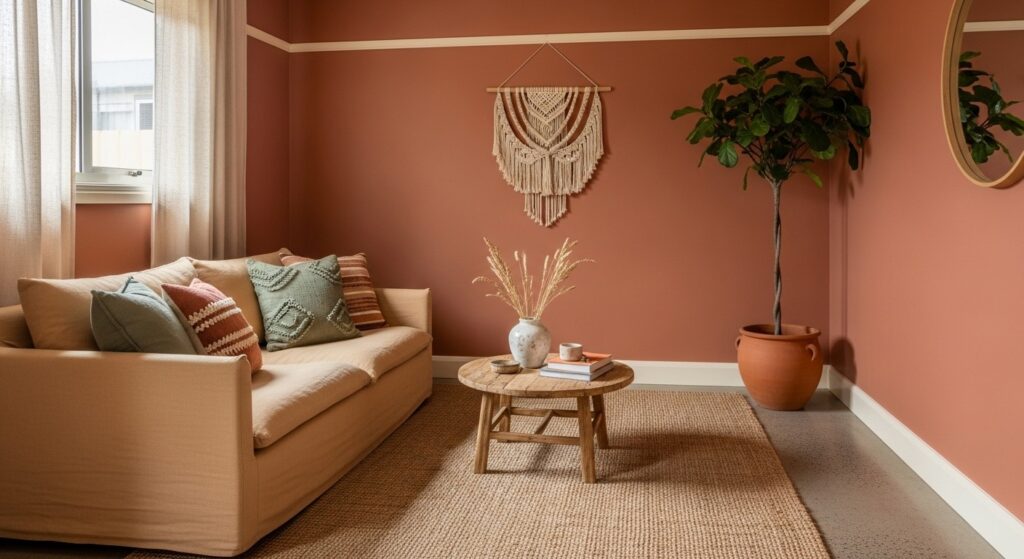
- Choose paint with warm (yellow or red) undertones rather than cool (blue or grey) ones
- Test your colour choice in the evening under artificial light, not just during the day
- Try a deeper shade on one wall to add a sense of depth
- If you can’t repaint yet, warm up white walls with amber-toned accessories first
3. Lighting for Intimacy
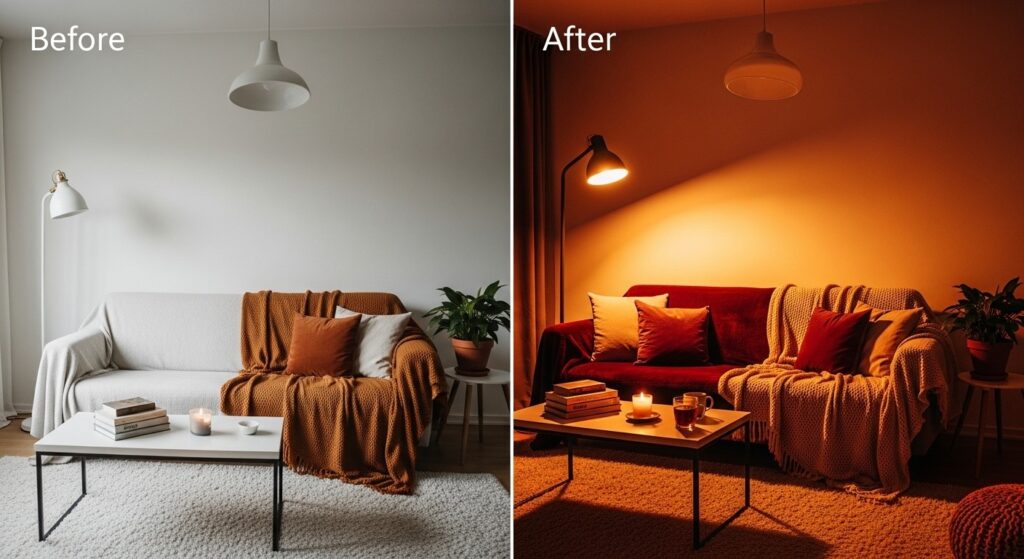
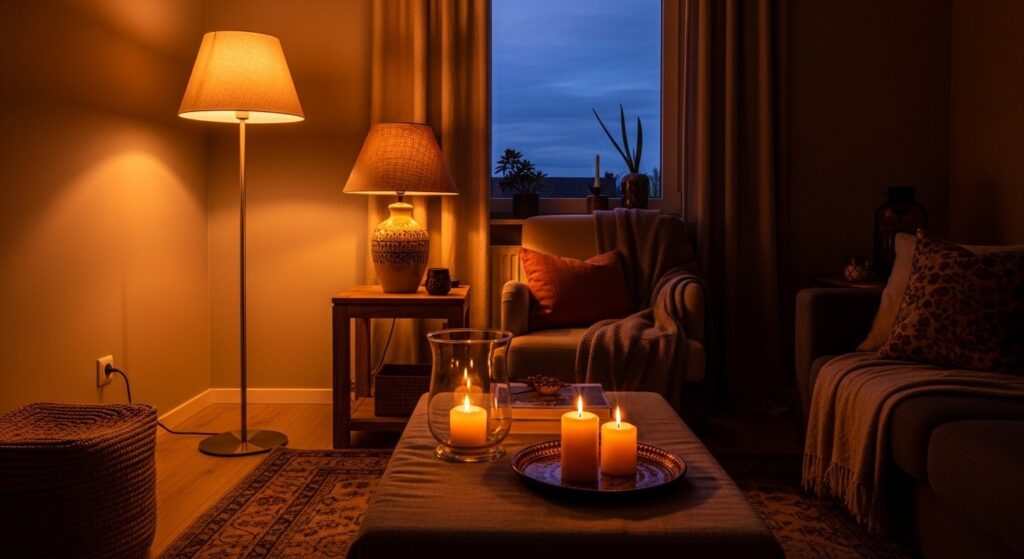
If you have one bright overhead light in your living room and nothing else, that’s the single biggest thing standing between you and a cozy space. Overhead lighting flattens a room. It removes atmosphere and makes everything feel functional rather than lived-in. The goal is layered lighting — several sources at different heights working together to create a gentle, enveloping glow. Our Small Living Room Lighting Ideas guide goes deep on this if you want more detail.
Think: a floor lamp in a corner, a table lamp beside your sofa, and maybe a set of warm candles or a string of Edison bulbs on a shelf. These create pools of light that give the room texture and dimension after dark. For bulbs, aim for the 2700K to 3000K range — this is the warm yellow zone that feels closest to natural firelight and is far more inviting than the blue-white light of cooler bulbs.
If you own your place (or can get permission), a dimmer switch is one of the best small investments you can make. It’s often a straightforward weekend job and it completely transforms how the room feels at different times of day.
- Use at least three light sources in any small living room
- Position lamps at or below seated eye level, not just at ceiling height
- Candles and fairy lights are real lighting layers — use them
- Swap every bulb in the living area to warm white (2700K) — it makes an immediate difference
4. Plush Textures in Small Doses
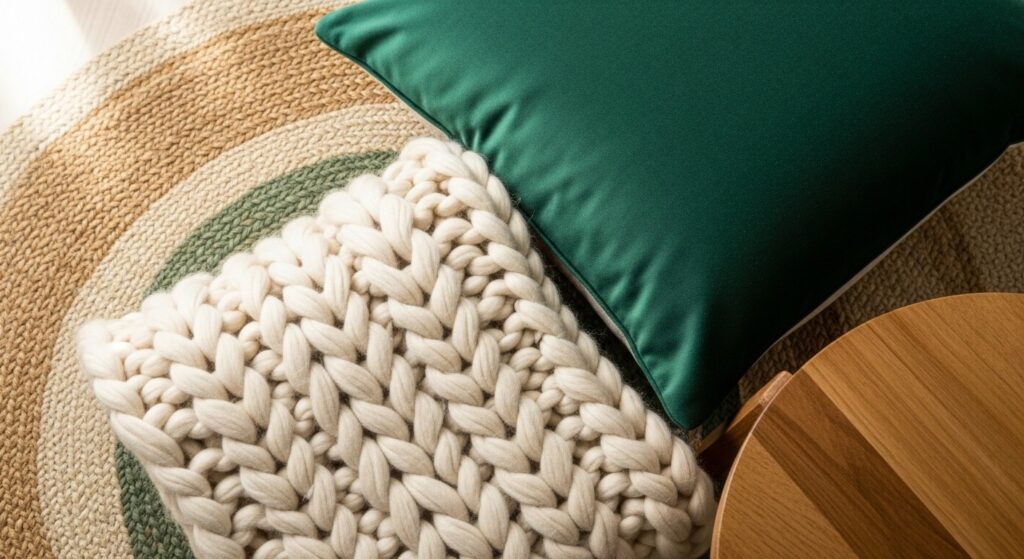
Texture might be the most underappreciated element of small cozy room decor. A smooth, flat room — even a beautifully decorated one — will always feel slightly clinical. When you layer different materials and textures together, the room starts to feel rich and deeply comfortable in a way that’s hard to explain but easy to feel. Think chunky knit throws, velvet cushions, a wool rug, a linen sofa cover. Different materials, layered together.
The phrase “small doses” is doing a lot of work here. You don’t need every surface covered with stuff. Two or three strong textural layers do far more than five competing ones. A single chunky knit blanket draped casually over the arm of your sofa adds more warmth and personality than a pile of six mismatched cushions ever will. Edit as you go.
Natural materials — wood, jute, linen, wool, rattan, cotton — read as inherently warm. There’s something about organic, unprocessed materials that manufactured finishes simply can’t replicate. Even one or two natural elements alongside your existing furniture can shift the whole feel of the room.
- Stick to three or four texture types at most to avoid a sensory jumble
- Include at least one natural material: wood, jute, linen, wool, or rattan
- Drape rather than stack — one neatly folded throw reads cleaner than a pile
5. Furniture Scale for Comfort
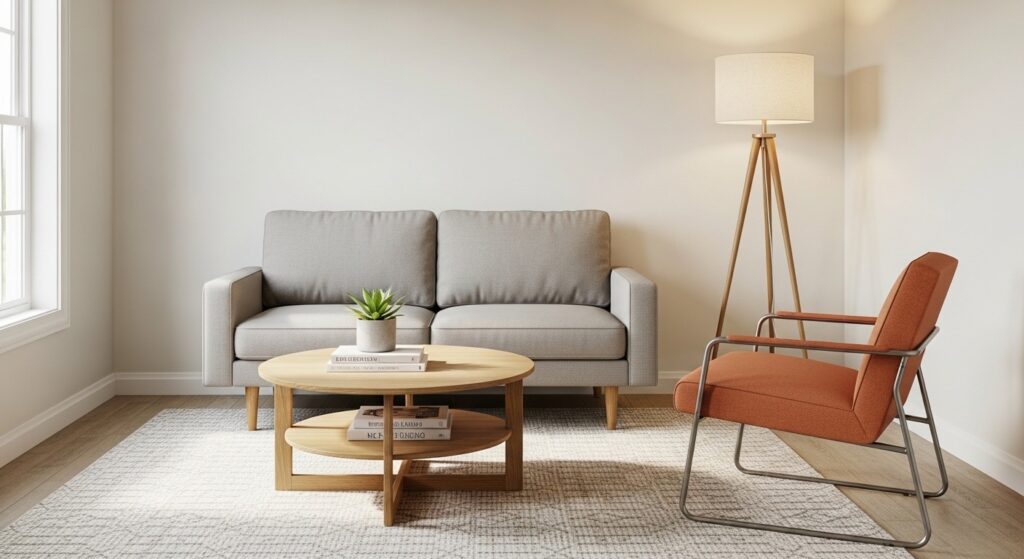
Well-scaled furniture is the foundation of a comfortable tiny space. A sofa that’s too large for your room doesn’t feel luxurious — it feels like an obstacle. Measure your floor before you shop. Seriously, measure it and note it down. Look for pieces that were designed with apartment living in mind: slightly shorter arms, lower backs, and compact footprints that don’t eat the whole room. See our round-up of 50 Small Living Room Ideas for specific style ideas that work well in tight spaces.
Furniture on legs is your friend. Sofas and chairs that sit on visible legs rather than flush to the floor allow light and sight lines to pass underneath, which makes the space feel more open and airy. The floor reads as continuous rather than blocked, and that visual continuity makes a room feel larger than it is.
Multifunctional pieces are worth prioritising too. An ottoman that doubles as storage, a coffee table with a lower shelf, a sofa with hidden drawers underneath — every piece that does two jobs saves both space and money. In a compact room, single-purpose furniture is a luxury you can’t always afford.
- Tape out your furniture dimensions on the floor before buying anything new
- Choose sofas with visible legs for an airier feel
- A round coffee table takes up less visual space than a rectangular one
- One good armchair beats two cramped ones every time
6. Creating a Reading Nook
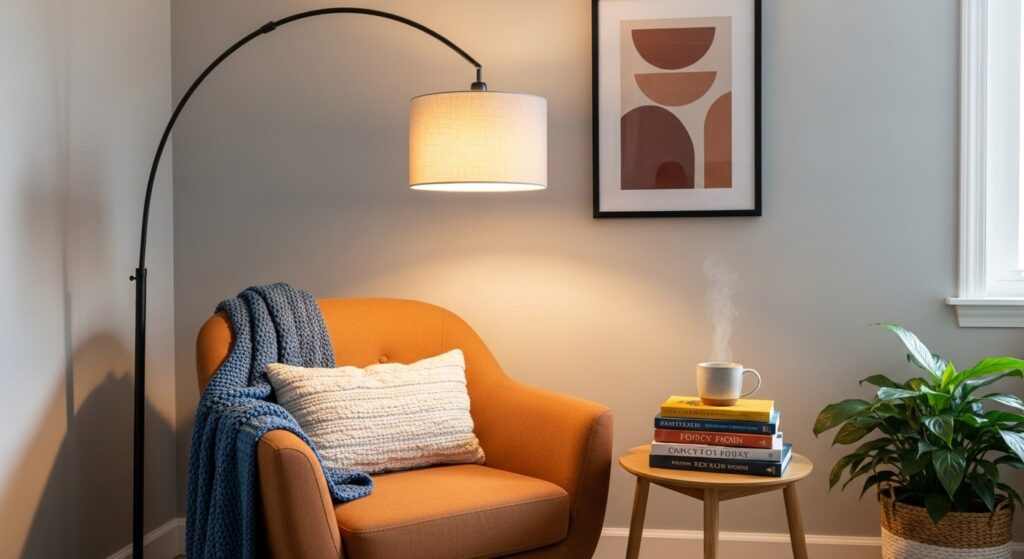
Even a tiny living room can contain a reading nook — and creating one might be the single best cozy upgrade you can make. A nook doesn’t require a built-in alcove, a bay window, or a home renovation. It just needs three things: a comfortable chair, a lamp, and a small surface for your book and your drink. That’s genuinely the whole formula.
Position it in a corner, near a window, or anywhere that feels slightly set apart from the main seating area. A floor lamp positioned behind and over the chair provides focused, warm reading light. A small side table or even a neatly stacked pile of books beside the chair, and you’ve created a purposeful, separate zone within your small space.
The psychological effect is surprisingly powerful. A reading nook gives a small room a sense of layers and zones — the room has character and intention rather than just furniture. It’s one of those changes that makes a room feel larger, not by adding space, but by using the space you have more thoughtfully.
7. Seasonal Cozy Layers
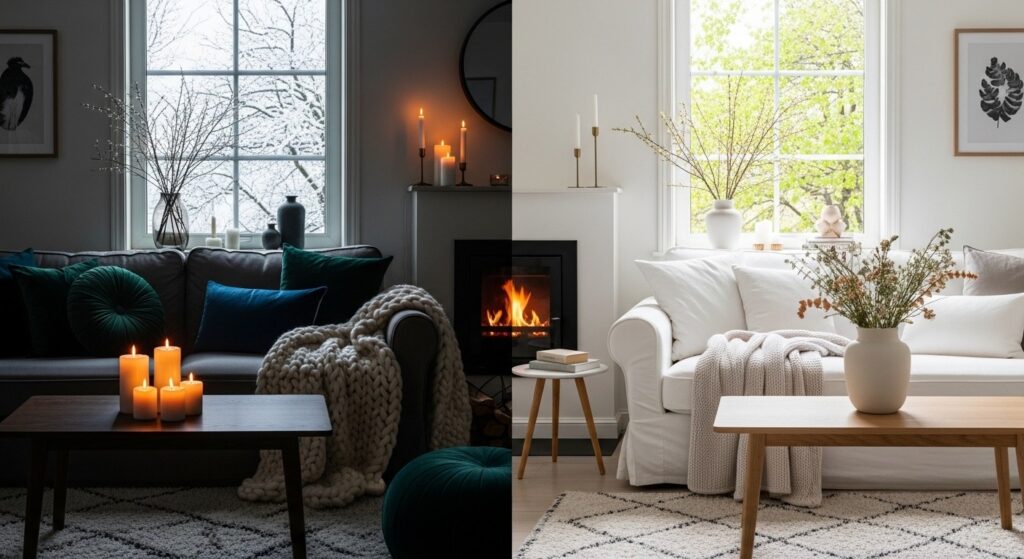
Here’s one of the most underrated cozy small living room ideas: rotate your soft furnishings with the seasons. In autumn and winter, layer on the chunky throws, swap light cushion covers for velvet or wool ones, and bring in a heavier rug. Come spring and summer, switch to cotton and linen, lighter tones, and a more open feel. Your room stays fresh all year, and your cozy factor never drops.
Seasonal swaps also solve a classic small-space storage problem neatly. Instead of keeping every textile in the room at once, you rotate them in and out. Fewer things on display at any one time means a less cluttered, calmer-feeling space — and it costs nothing if you’re working with things you already own.
A single afternoon of seasonal restyling — new cushion covers, a different throw, maybe moving a lamp or swapping a vase — can make you genuinely fall in love with your room again. It’s a free refresh that works every time.
- Store off-season textiles in vacuum bags under your sofa or bed to save space
- Swap cushion covers rather than whole cushions — much easier to store
- Scent shifts with the seasons too — candles and diffusers reinforce the mood change
8. Storage That Stays Cozy
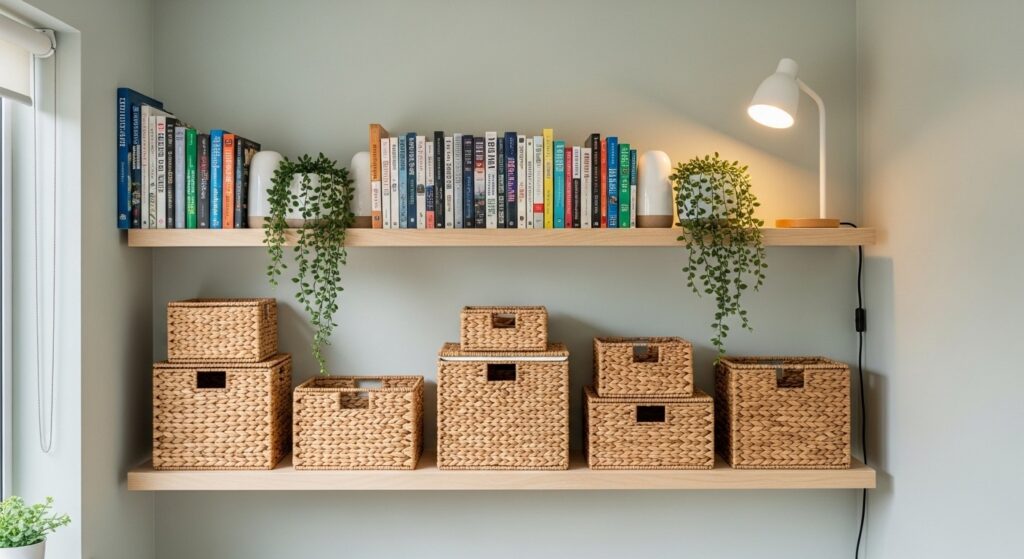
Storage and cozy don’t have to be at odds. Ugly, utilitarian storage — plastic boxes, open shelves piled with random items, wire baskets full of tangled things — actively fights the warmth you’re trying to build. But storage that looks intentional is a different thing entirely. Woven baskets, lidded boxes in natural materials, shelving styled with a thoughtful mix of books and objects — this kind of storage adds to the atmosphere rather than draining it.
Think vertically. Your walls above furniture height are often completely wasted in a small room. Floating shelves going high up the wall draw the eye upward and give you useful display and storage space without eating into your floor plan. Style them with a curated mix: books with spines outward in a rough colour grouping, a small trailing plant, and a few meaningful objects. Leave at least a third of the shelf empty so it can breathe.
One rule that helps more than any other: one in, one out. Every new item that enters your small space should replace something that leaves. This isn’t minimalism — it’s just practical maintenance. It’s the difference between a room that stays comfortable and one that slowly tips into feeling cluttered despite your best efforts.
- Use woven baskets instead of plastic bins for blanket and magazine storage
- Mount shelves as high as you can — above door height if possible
- Leave roughly 30% of any shelf empty to avoid a cluttered look
- A storage ottoman does the job of a coffee table and a blanket box — two things, one footprint
Read More – Cozy Living Room Ideas
Common Mistakes to Avoid
Even with great intentions, these five missteps quietly undermine a small cozy room. Worth knowing before you start:
| 01 | Pushing all furniture against the walls | It feels logical but backfires badly. A room where every piece is flush to a wall ends up feeling like a waiting area, not a living space. Pull your sofa a few inches forward. Float the furniture a little. That small gap creates warmth and makes the arrangement look intentional. |
| 02 | Using oversized furniture | A huge sectional sofa doesn’t feel luxurious in a small room — it feels suffocating. Scale your pieces to your actual floor plan. A well-chosen two-seater and a comfortable armchair will serve you far better than one enormous sofa you’re constantly squeezing past. |
| 03 | Ignoring vertical space | Most people stop decorating at eye level. Everything hugs the floor and the walls above go bare. High shelving, ceiling-height curtains, and tall bookcases all draw the eye upward — and that simple trick makes any room feel bigger and more considered. |
| 04 | Too many small decorative items | Collections of tiny objects read as clutter, especially in a compact space. One or two meaningful, larger pieces make a far stronger impression than ten forgettable little things scattered across every surface. Edit ruthlessly. |
| 05 | Relying on a single overhead light | A lone ceiling light flattens the whole room and kills any sense of atmosphere. Layer your light sources — a floor lamp here, a table lamp there, some candles on a shelf — and your room will feel completely transformed come evening. |
Frequently Asked Questions
| Q | What is the best sofa for a small living room? |
| The best sofa for a small living room is one that fits your actual space, not your wish list. Look for a two-seater or compact three-seater with a shallow seat depth (around 85 to 90cm) and visible legs — both features keep the room feeling open. A lower back also helps the room breathe visually. Sectionals are generally a tough call in compact rooms unless your layout genuinely has room for them without blocking walkways. Measure your floor plan carefully and tape out the sofa dimensions before you commit to buying — it saves a lot of heartache. |
| Q | How do I make my small living room look bigger? |
| Focus on visual tricks that create the illusion of depth and height. Hang curtains as close to the ceiling as you can and let them fall to the floor — this dramatically elongates the wall. Use mirrors to reflect light and create a sense of depth, particularly opposite a window. Choose furniture with legs to keep the floor visible. Keep your colour palette cohesive and limit strong contrasts, as too many competing colours make a space feel fragmented. Most importantly, keep surfaces clear — visible floor space reads as square footage, and every cleared surface makes the room feel calmer and larger. |
| Q | What colors make a small room look larger? |
| Light, warm neutrals tend to work best. Soft cream, warm white, pale sand, and muted greige — all with warm undertones rather than cool blue or grey ones — make a room feel both spacious and inviting. If you want something more distinctive, a warm mid-tone like dusty sage or muted terracotta can work beautifully without closing in the walls. One useful tip: paint the ceiling the same colour as the walls, or just one shade lighter. This removes the visual “lid” effect and makes the room feel taller. Avoid dark accent walls unless your goal is deliberate intimacy rather than the illusion of size. |
| Q | Should I use a rug in a small living room? |
| Yes, absolutely. The most common rug mistake in small rooms is choosing one that’s too small. A rug that only sits under the coffee table makes a room look smaller and disconnected. Instead, choose a rug large enough for the front legs of your sofa and chairs to sit on it — this anchors the seating area and creates a cohesive, considered look. A natural fibre rug in jute, wool, or cotton adds both warmth and texture without overwhelming the space. In a very small room, go low-pile to keep the floor feeling open while still adding softness underfoot. |
| Q | How do I arrange furniture in a small living room? |
| Start by identifying your focal point — usually the television, a fireplace, or a significant window — and orient your main seating toward it. Pull furniture away from the walls rather than pushing everything to the edges; floating pieces slightly creates a conversational, intimate arrangement that feels purposeful. Keep pathways clear (at least 60 to 70cm) so movement around the room stays easy and unobtrusive. Use a rug to define and anchor your seating zone. If you have one sofa and want additional seating, one or two armchairs placed at a slight angle often works better than a matching loveseat, which can make the room feel symmetrical in a rigid way. |
Your Small Living Room Can Be Your Favourite Room
A small living room isn’t a compromise — it’s a genuine opportunity. When you work with the space instead of against it, layering warmth through texture, light, colour, and the things that matter to you personally, you end up with something that a large open room rarely achieves: a space that feels enveloping, intentional, and entirely yours. Every cozy small living room idea in this guide is a starting point, not a rulebook. Mix them, adapt them, and trust what feels right for the way you actually live.
Start with one change this week. Maybe it’s swapping your ceiling light for a floor lamp. Maybe it’s draping a throw over the sofa or pulling the furniture slightly away from the walls. Small changes compound into real transformations — and your comfort in your own home is absolutely worth the effort.