50 Small Living Room Ideas That Actually Work (2026)
If you’re staring at your small living room wondering how on earth you’re supposed to make it feel livable, stylish, and comfortable all at once — you’re not alone. Millions of apartment dwellers, first-time renters, and compact-space homeowners face the exact same challenge every day. The good news? A small living room doesn’t have to feel like a compromise. It just needs the right approach.
Here’s the thing: most small living room design mistakes don’t come from the room itself. They come from applying big-home rules to small spaces. Oversized sofas, wall-to-wall furniture arrangements, dark paint colors, and heavy curtains can make even a decently sized room feel like a closet. Once you understand how to work with your space instead of against it, everything changes.
In this guide, you’ll discover 50 practical small living room ideas that actually work in real apartments and small homes. These aren’t just pretty Pinterest images — these are strategies you can implement this weekend, on any budget, without hiring a designer. Let’s dig in.
────────────────────────────────────────────────────────────
Quick Summary
WHO THIS IS FOR
Apartment renters, first-time homeowners, and anyone living in a small space
TIME TO READ
15 min
TOP 3 TAKAWAYS
1. Start With a Floor Plan (Even a Rough Sketch Works)
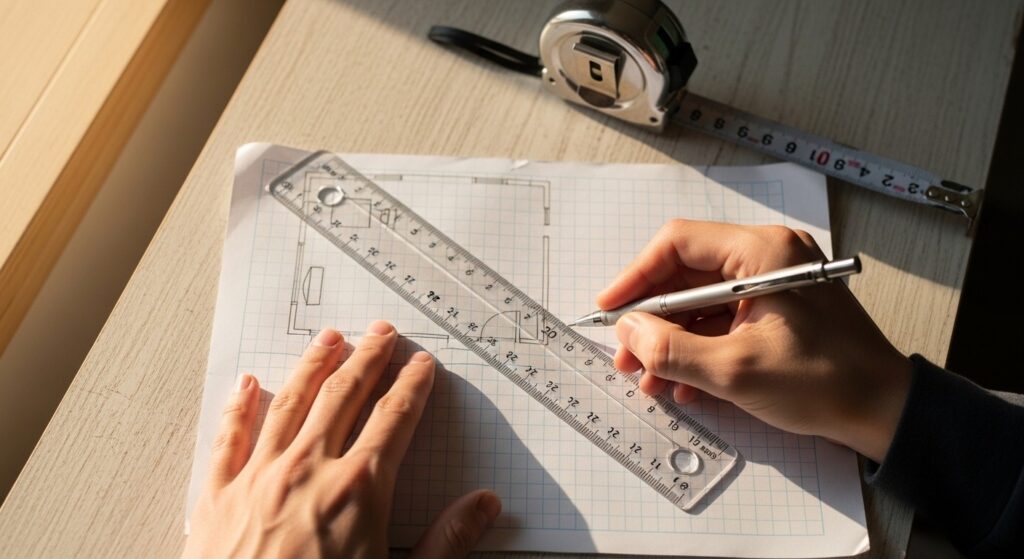
Before you move a single piece of furniture, grab a piece of paper and sketch your room. You don’t need design software or a ruler. Just draw the walls, note where the doors and windows are, and measure the room’s dimensions. This five-minute step can save you hours of frustration and prevent costly furniture mistakes.
Once you have your sketch, think about traffic flow first. You need at least 30 to 36 inches of clear walkway between furniture pieces. In a small living room, this single rule helps you decide immediately whether that sectional will actually fit or whether you need to rethink the layout entirely.
Use graph paper or a free app like Planner 5D or Roomstyler to test furniture arrangements digitally before you commit. Try at least three different layouts. You’ll almost always find that one arrangement opens the room up dramatically more than the others.
Here are a few popular small living room layout options to test on your sketch:
- L-shape layout: sofa against one wall, loveseat or chairs on the adjacent wall
- Floating furniture: pull seating away from walls toward the center
- Single-wall layout: all seating on one wall facing a focal point like a TV or fireplace
- Diagonal arrangement: angle a sofa or rug to create visual interest and break up a boxy room
- Conversation pit style: chairs and a sofa facing each other around a central coffee table
2. Choose Furniture That Fits Your Scale
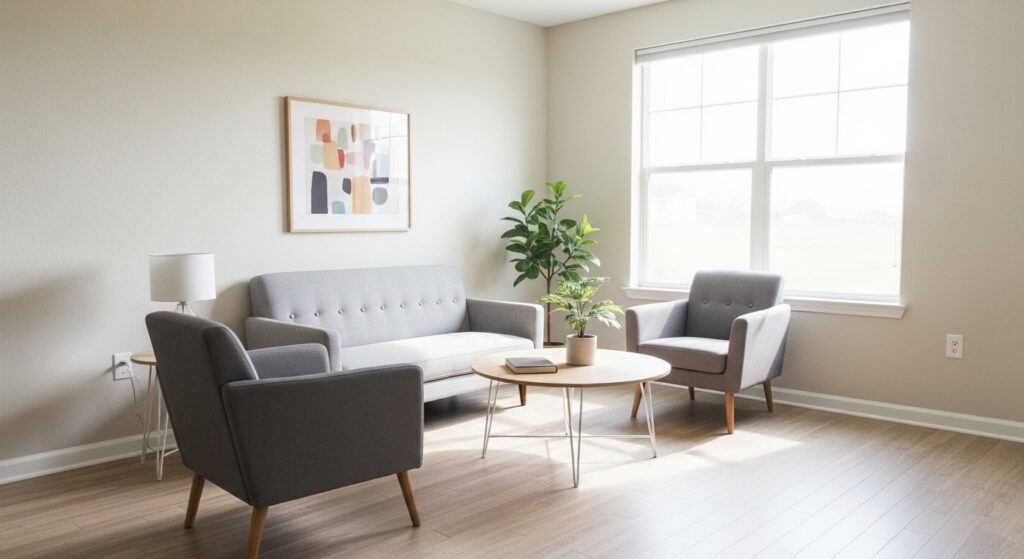
This is probably the most important small living room design rule of all: scale your furniture to your room, not to your wishlist. A massive sectional that looks incredible in a showroom can eat up 80% of your floor space and make your living room feel like a furniture storage unit.
Look for sofas that are 72 to 84 inches wide for small living rooms. Anything over 90 inches starts to dominate the space. Apartment-sized sofas are specifically designed for tight spaces, and many furniture brands now offer entire compact living room collections worth exploring.
Choose furniture with legs instead of pieces that sit directly on the floor. Sofas, chairs, and tables with visible legs create a sense of airiness because you can see the floor beneath them. That visual continuity makes your room feel larger.
Smart furniture scale choices for small living rooms:
- Apartment sofas (72–84 inches wide) instead of full-size sectionals
- Armless chairs or slipper chairs instead of bulky recliners
- Nesting tables instead of a large coffee table
- Benches at the end of a sofa instead of a second loveseat
- Low-profile furniture that keeps sightlines open
- Furniture with tapered legs for visual lightness
3. Use Vertical Space for Storage
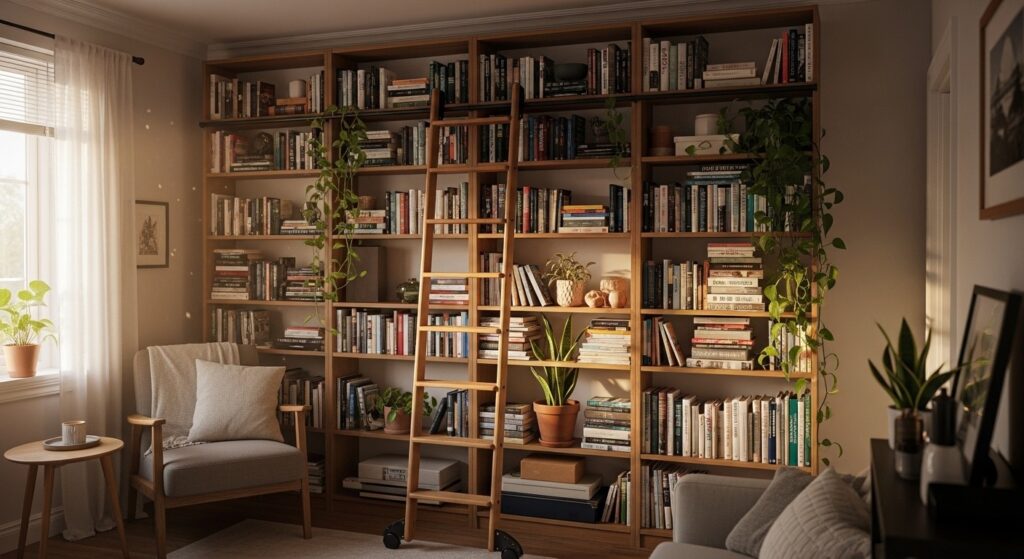
Most people think about square footage when it comes to small spaces, but the real untapped resource in a tiny living room is vertical space. Your walls go all the way up to the ceiling, and that space is almost always underused. Bookshelves, wall-mounted cabinets, and floating shelves that reach the ceiling draw the eye upward and give you enormous storage without sacrificing floor space.
Install shelves as high as you can reach comfortably. Use the top shelves for items you don’t need daily — decorative baskets, seasonal items, or less-used books. Keep frequently accessed items at eye level and below. This creates a functional, organized vertical wall that acts like a built-in.
Wall-mounted TV units with built-in shelving are another excellent option. They clear your entertainment area of bulky TV stands, open up floor space, and give you storage for media components, books, and decor — all in one streamlined wall unit.
Vertical storage ideas that work in small living rooms:
- Floor-to-ceiling bookshelves on one full wall
- Floating shelves installed 12 inches below the ceiling
- Wall-mounted media consoles with open shelving
- Tall, narrow storage cabinets in corners
- Over-door organizers for remotes and small items
- Pegboards painted to match the wall for functional wall art
4. Let Natural Light Do the Heavy Lifting
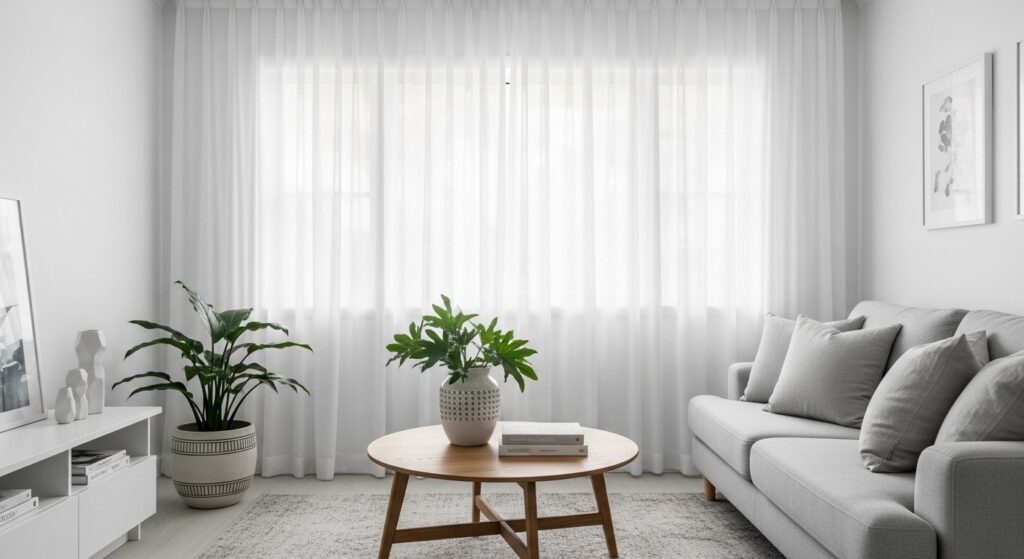
Natural light is one of the most powerful tools in small living room design, and it costs absolutely nothing to use. A well-lit room feels bigger, more open, and more welcoming than a dim one of the same exact size. Your job is to maximize whatever natural light your windows bring in.
Start by removing or replacing heavy curtains. Swap thick drapes for sheer linen panels that filter light without blocking it. If privacy isn’t a concern, go curtain-free for a few weeks and notice how different your room feels. Hang curtain rods all the way to the ceiling, even if your windows are smaller, to make the windows appear taller and let in more light at the top.
Keep furniture away from windows so light can travel deeper into the room. Avoid placing tall bookshelves or high-backed sofas directly in front of windows. Every inch of blocked light is an inch of perceived space you’re giving up.
Light-maximizing tips for small living rooms:
- Swap heavy drapes for sheer or semi-sheer curtains
- Mount curtain rods 4 to 6 inches above the window frame and close to the ceiling
- Use wide curtain panels so they frame — not cover — the window
- Keep windowsills clear of clutter and plants that block light
- Clean your windows regularly — dirty glass reduces light transmission significantly
- Add a mirror opposite the largest window to bounce light around the room
5. Pick a Light Color Palette
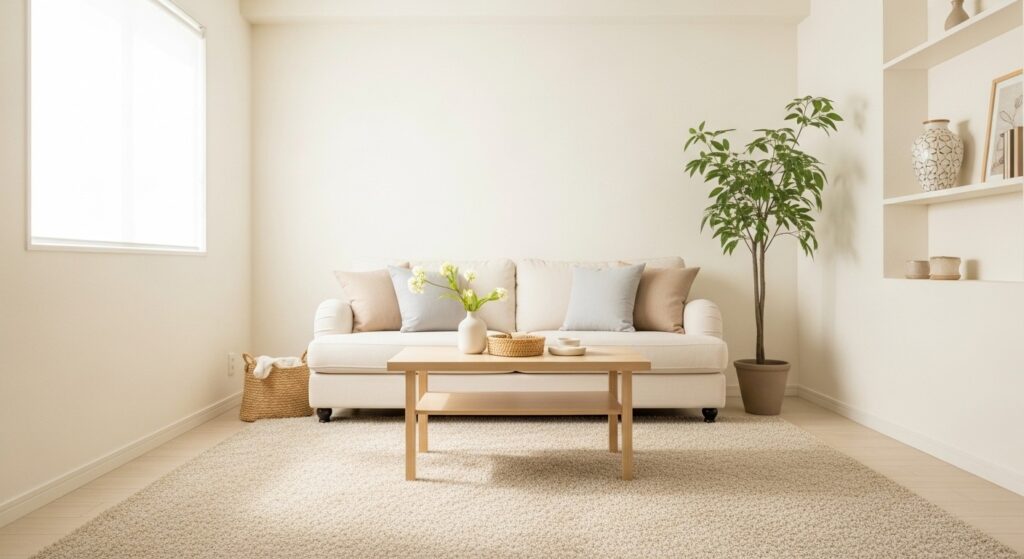
Color is one of the quickest, most budget-friendly ways to transform a small living room. Light colors reflect light and make walls feel like they’re receding, which creates the visual illusion of more space. Dark colors absorb light and make walls feel like they’re closing in — the exact opposite of what you want in a compact room.
The classic choice is white or off-white, but you have plenty of options. Soft creams, warm greiges (gray-beige), pale sage greens, and dusty blues all keep a room feeling open while adding personality. The key is staying in the light-to-mid tonal range. If you want a bolder color, use it as an accent — a single wall, throw pillows, or artwork — rather than on all four walls.
Paint your ceiling the same color as your walls, or go one shade lighter. This trick eliminates the visual boundary between wall and ceiling, making the room feel taller. Painting the ceiling a contrasting color (especially a dark one) does the opposite and visually lowers the ceiling.
Color palette ideas for small living rooms:
- Warm white walls + natural wood + cream textiles
- Pale sage green walls + white woodwork + terracotta accents
- Soft greige walls + navy throw pillows + brass hardware
- Bright white walls + rattan furniture + lots of greenery
- Dusty blue walls + white ceiling + linen upholstery
6. Add Mirrors Strategically
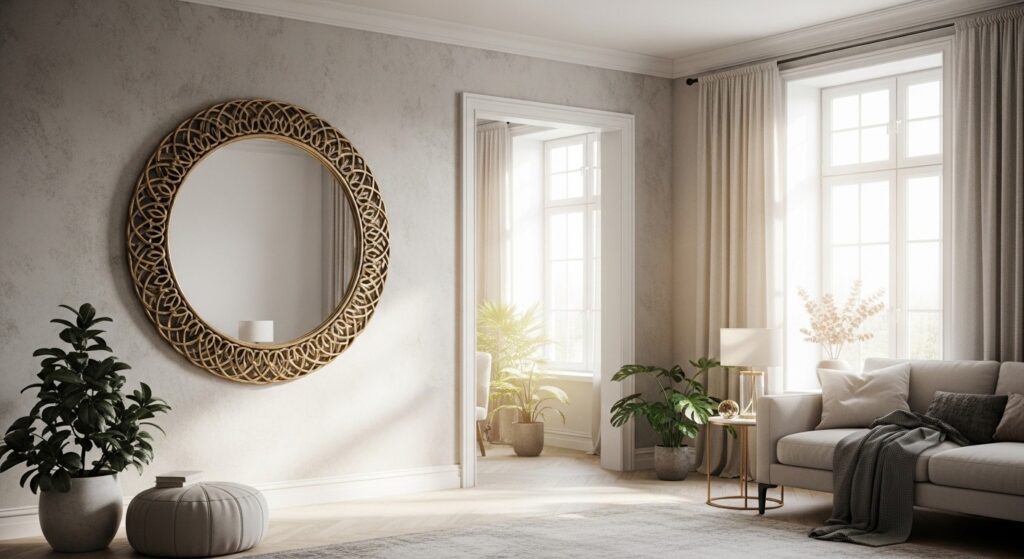
Mirrors are the cheat code of small living room decor. A well-placed mirror reflects light, bounces color around the room, and creates a convincing illusion that your space extends beyond its actual walls. Used correctly, a single large mirror can make a room feel almost twice its real size.
The most effective placement is opposite a window so the mirror reflects natural light directly back into the room. A large mirror on this wall acts like a second window. If that’s not possible, place it where it reflects your favorite part of the room — a pretty corner, a plant, or a lamp — which creates depth and visual interest.
Go big rather than small with mirrors. A large statement mirror (at least 24 by 36 inches, or bigger) makes more impact than a gallery wall of small decorative mirrors. Lean an oversized mirror against the wall for an effortless, high-impact look that doesn’t require any drilling.
Mirror placement strategies for small living rooms:
- Large floor mirror leaning against the wall opposite a window
- Full-length mirror in a corner to open up that area
- Mirrored furniture like a console table or side table
- Gallery wall of mirrors in varied frame shapes for a curated look
- Mirrored backsplash behind open shelving to add depth
7. Multi-Functional Furniture is Your Best Friend
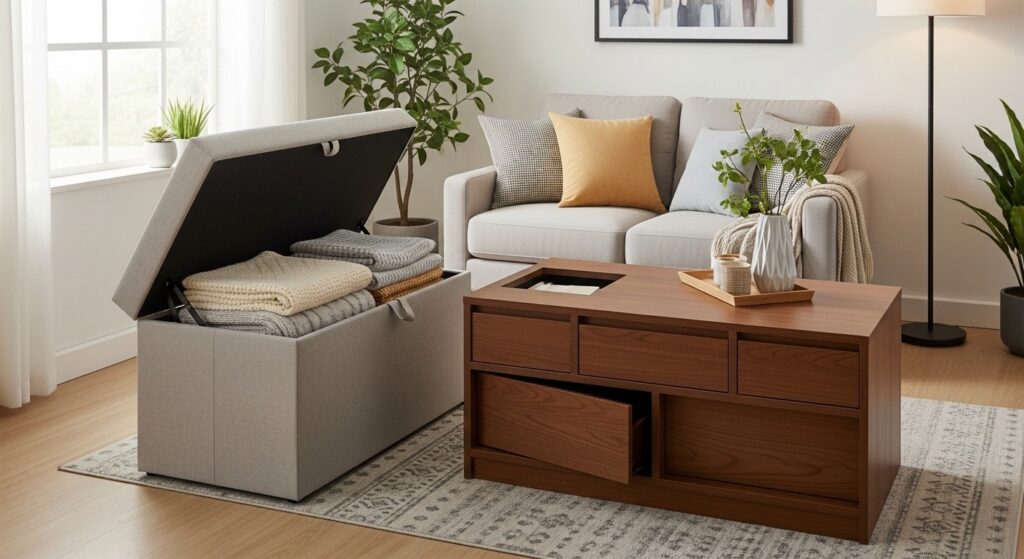
In a small living room, every piece of furniture needs to earn its place. Multi-functional furniture pulls double or even triple duty — it looks great, serves its primary function, and solves a storage or space problem at the same time. Once you start thinking this way, you’ll see opportunities everywhere.
A storage ottoman is one of the best investments for a tiny living room. It works as a coffee table, extra seating, and a place to stash blankets, remotes, and board games. A sofa with built-in storage underneath gives you hidden space for books, extra pillows, or seasonal decor. A console table behind the sofa doubles as a desk and a display surface.
Think about every furniture purchase in terms of problems it solves. Does it seat people AND store things? Does it work as a surface AND fold flat when not needed? Multi-functional compact living room ideas pay off especially well in studio apartments where every square inch counts.
Top multi-functional furniture picks for small spaces:
- Storage ottomans that serve as coffee tables and seating
- Sofas with pull-out storage or built-in shelving arms
- Nesting coffee tables that tuck away when not in use
- Console tables behind sofas used as desks or serving stations
- Storage benches along a wall that add seating + hidden storage
- Murphy beds with attached sofa for studio-apartment living rooms
- Folding chairs stored in a closet, pulled out only for guests
8. Declutter Ruthlessly (Keep Only What You Love)
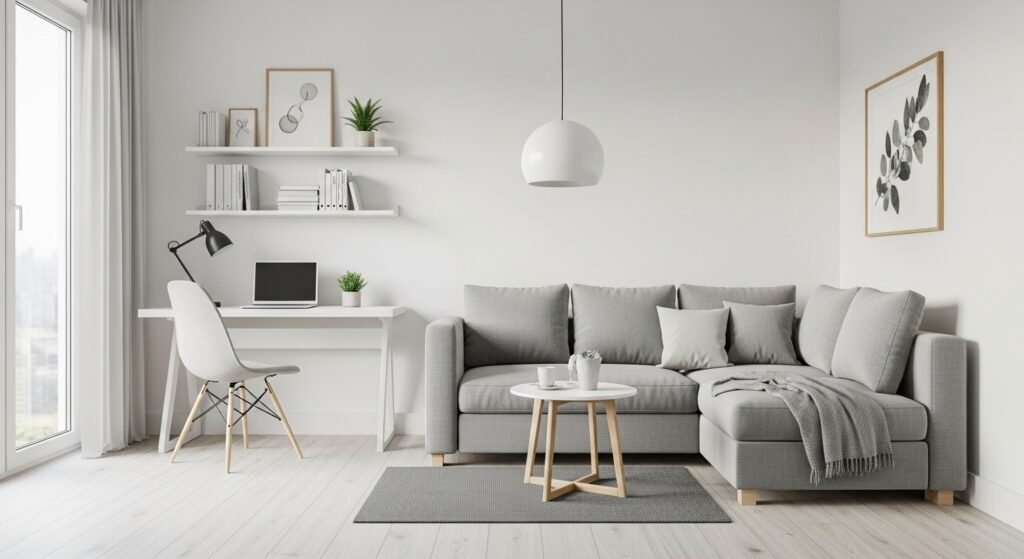
This is the step most people skip, and it makes everything else harder. You can implement every design trick in this article, but if your living room is full of stuff you don’t need, it will still feel cluttered and cramped. Decluttering isn’t just about tidying up — it’s a foundational step in making a small space feel bigger.
Go through every item in your living room and ask yourself: Do I use this regularly? Do I genuinely love it? Does it serve a real purpose here? If the answer is no, it goes. Books you haven’t touched in years, decor pieces you kept out of habit, furniture that doesn’t function well — all of it is taking up physical space and visual energy.
A good rule of thumb for small living room decor is to display fewer, better things. Instead of 12 small decorative objects on your shelves, choose three or four that you genuinely love and give them room to breathe. The empty space around a beautiful object is part of its presentation. Visual clutter makes rooms feel smaller; intentional curation makes them feel considered.
Decluttering checklist for your small living room:
- Remove all items that don’t belong in the living room
- Clear every surface and only put back what you truly love
- Donate furniture you’ve been keeping ‘just in case’
- Replace small decor items with one or two statement pieces
- Find hidden storage for everyday clutter: remotes, chargers, magazines
9. Use Rugs to Define Zones
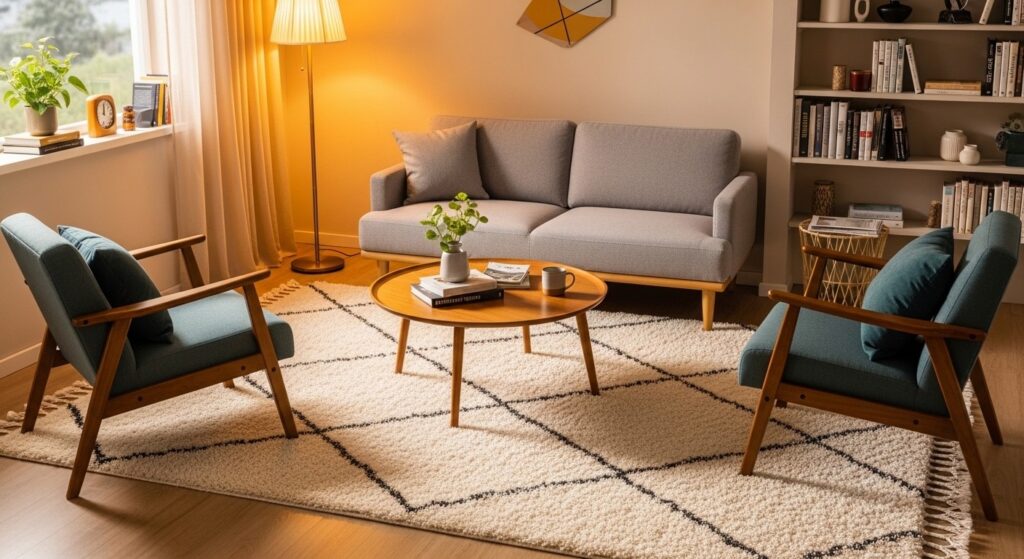
A well-chosen area rug does something that paint and furniture can’t: it visually defines and anchors your seating area. In an open-plan apartment or a room that flows into a dining area, a rug is what tells both your eyes and your brain where the living room begins and ends. It creates a room within a room.
Size is everything when it comes to rugs in small living rooms. The most common mistake is choosing a rug that’s too small — one that only sits under the coffee table creates a floating, disconnected look. Go bigger than you think you need. A rug that has at least the front legs of all your seating pieces on it will anchor the whole arrangement and make the room feel larger, not smaller.
For color and pattern, a rug with a low-contrast, tonal pattern in lighter colors will feel more open than a bold, high-contrast design. That said, a well-placed patterned rug can also add personality and draw the eye in a good way. The trick is keeping the rest of your decor relatively calm if your rug is bold.
Rug sizing guide for small living rooms:
- 5×8 feet: works for very small living rooms with minimal furniture
- 6×9 feet: most common size for small to medium living rooms
- 8×10 feet: ideal for open-plan spaces that need a defined zone
- Rule: all front furniture legs should sit on the rug minimum
- Round rugs work well under round coffee tables for visual harmony
10. Floating Shelves Over Bulky Bookcases
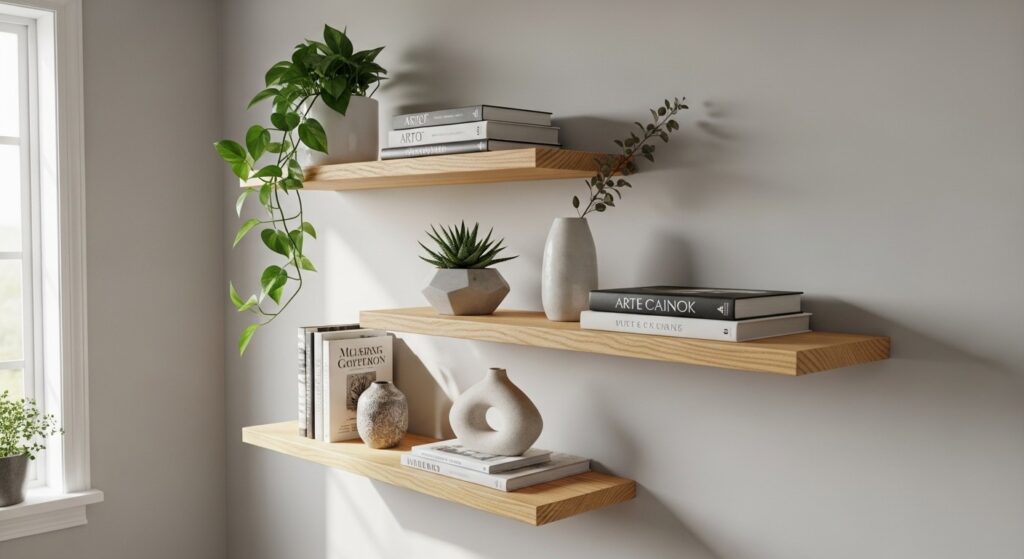
Traditional bookshelves and standalone bookcases take up valuable floor space and can make a small room feel crowded and heavy. Floating shelves give you all the storage and display space of a bookcase without any of the visual bulk. They attach directly to the wall, leave the floor clear, and can be arranged in almost any configuration.
Install floating shelves in a staggered, asymmetric arrangement for a modern look, or in a clean grid pattern for a more structured feel. Mix books with plants, small art pieces, and decorative objects for a styled, intentional look. Leave some space on each shelf — overcrowded shelves look cluttered even if each individual item is beautiful.
Floating shelves also work beautifully flanking a TV wall. Install two or three shelves on each side of the TV, fill them with a mix of function and style, and you create a built-in look for a fraction of the cost of actual built-ins. This is one of the highest-impact changes you can make to a small living room for a low budget.
Floating shelf styling tips:
- Mix vertical books, horizontal stacks, and objects for visual variety
- Add a small trailing plant for organic texture
- Use shelf brackets that complement your decor style — minimalist, industrial, or wood
- Vary the depth of shelves for more visual interest
- Keep one or two shelves partially empty to avoid a cluttered look
11. TV Placement Ideas That Save Space
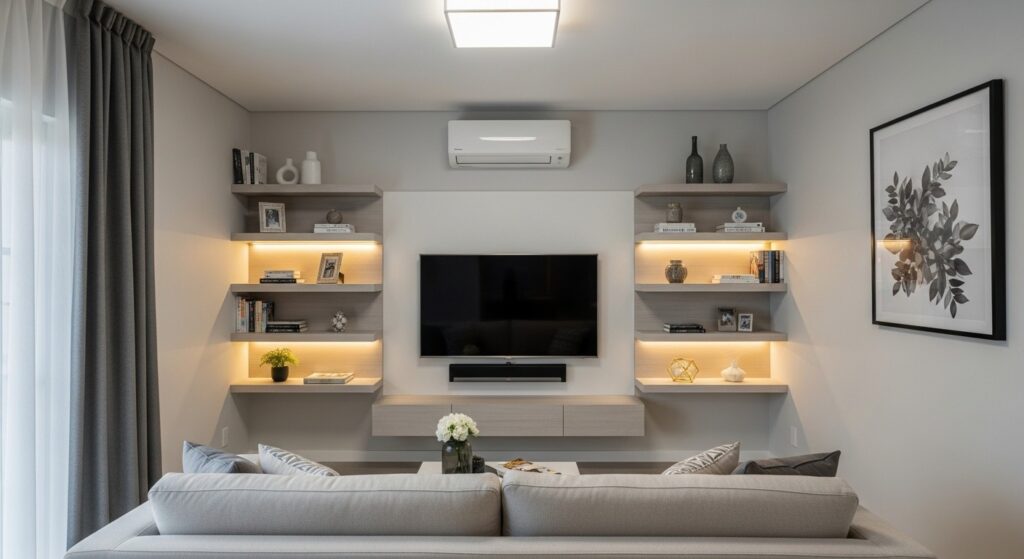
The TV is often the heaviest piece of visual weight in a living room, and where you put it affects everything else — your furniture arrangement, your storage options, and how spacious the room feels. In a small living room, a wall-mounted TV is almost always the better choice over a traditional TV stand.
Mount your TV on the wall at the right height: the center of the screen should be at eye level when you’re seated, which is typically 42 to 48 inches from the floor. Many people mount their TVs too high, which causes neck strain and makes the TV feel disconnected from the seating area. When it’s at the right height, the room feels more cohesive.
Use the wall space around your mounted TV intelligently. Add floating shelves or a slim wall unit on either side for storage. Run cables through the wall or use a cable management cover for a clean finish. A messy tangle of cables makes any room feel disorganized, but it’s even more distracting in a small space where your eyes have nowhere else to go.
TV placement options for small living rooms:
- Wall-mount on the main focal wall, centered with the sofa
- Recessed TV cabinet built into the wall (if renovation is possible)
- Slim media consoles (under 16 inches deep) when floor placement is needed
- Corner TV mounts for awkward room layouts
- TV on a swivel arm bracket for flexible viewing angles
12. Budget-Friendly Small Living Room Hacks
You don’t need a big budget to make a small living room look and feel amazing. Some of the highest-impact changes you can make cost very little or nothing at all. The key is knowing which changes give you the most return on your investment of time and money.
Rearranging your existing furniture is the most budget-friendly hack of all. Pull the sofa away from the wall. Angle a chair. Move a bookshelf. Sometimes a completely different layout is hiding in a room you’ve had for years, and it doesn’t cost a thing to find it. Second, a fresh coat of light-colored paint is the single most transformative thing you can do for under a hundred dollars. It changes everything — the mood, the perceived size, and the overall vibe of the room.
Thrift stores and online marketplaces are goldmines for small living room furniture. You can find beautiful side tables, lamps, mirrors, and accent chairs for a fraction of the retail price. Since you’re working with a smaller space, you only need a few key pieces — which means you can afford to invest in slightly better quality secondhand items rather than buying cheap new furniture.
Budget hacks for small living room makeovers:
- Rearrange furniture for free — try three new layouts before buying anything
- Paint the room in a fresh light color (one of the cheapest and biggest changes you can make)
- Shop thrift stores and online marketplace apps for furniture and decor
- Add a large mirror from a discount home store to a key wall
- Swap outdated throw pillows and blankets to instantly refresh the sofa
- Add a floor lamp to brighten a dark corner for under $30
- Hang curtains high and wide to make windows look bigger
- Use removable wallpaper or peel-and-stick tiles on a feature wall
Common Mistakes to Avoid
Even the best small living room design ideas fall flat if you make these common mistakes. Here’s what to watch out for:
- Pushing all furniture against the walls: This actually makes a room feel smaller and more awkward. Floating furniture slightly away from the walls creates a more cohesive, conversational arrangement and makes the room feel intentional.
- Using oversized furniture: A sofa that’s too big dominates the room and leaves no visual breathing room. Scale your furniture to the room’s actual dimensions, not the size you wish the room was.
- Ignoring vertical space: If your walls are empty above eye level, you’re leaving your best storage and design opportunities unused. Go vertical with shelves, artwork, and hanging plants.
- Too many small decor items: A dozen small objects create visual noise. Replace collections of tiny things with fewer, larger pieces that have more impact and are easier to keep tidy.
- Poor lighting choices: Relying on a single overhead light makes a small room feel flat and institutional. Layer your lighting with floor lamps, table lamps, and accent lighting to add warmth and depth.
Frequently Asked Questions About Small Living Room Ideas
Q1: What is the best sofa for a small living room?
The best sofa for a small living room is one that’s proportionate to your space — typically 72 to 84 inches wide. Look for apartment-sized sofas or loveseats with a clean, low-profile design and legs that lift the sofa off the floor. Avoid sectionals unless your room is at least 12 by 15 feet and you’ve measured carefully to ensure the sofa won’t block traffic flow. Sofas in light upholstery colors (cream, light gray, or warm beige) also reflect light and feel less visually heavy than dark-colored options.
Q2: How do I make my small living room look bigger?
The most effective ways to make a small living room look bigger are: use light paint colors on the walls and ceiling, add at least one large mirror opposite a window, choose furniture with legs and a low profile, remove heavy curtains in favor of sheer panels, and declutter aggressively so surfaces feel clear and open. Consistent flooring throughout the room (avoiding rugs that are too small) also helps by creating uninterrupted sightlines. Finally, proper lighting — layered with floor lamps and table lamps, not just overhead — adds warmth and depth that makes a room feel more expansive.
Q3: What colors make a small room look larger?
Light, cool, or neutral colors tend to make small rooms feel larger because they reflect light and make walls appear to recede. Soft whites, warm off-whites, pale creams, light grays, and muted sage greens are all excellent choices for compact living room design. Painting the ceiling the same color as the walls (or one shade lighter) eliminates the visual ‘box’ effect and makes the room feel taller. If you want to introduce a darker or bolder color, limit it to one accent wall or incorporate it through accessories like pillows, a rug, or artwork rather than painting all four walls.
Q4: Should I use a rug in a small living room?
Yes — a rug is actually essential in a small living room. The right rug anchors your seating area, adds warmth and texture, and defines the living zone in an open-plan space. The key is getting the size right. A rug that’s too small floats awkwardly under the coffee table and makes the room feel disjointed. Choose a rug large enough that at least the front legs of all your main seating pieces sit on it. In terms of color, lighter rugs with low-contrast patterns tend to keep the room feeling open, while a bold patterned rug can be used as a statement piece if the rest of your decor is calm and neutral.
Q5: How do I arrange furniture in a small living room?
Start by identifying your focal point — usually the TV, a fireplace, or the largest window — and arrange your seating to face it. Pull your sofa and chairs slightly away from the walls rather than pushing everything to the perimeter. This creates a more intimate, conversational layout and actually makes the room feel larger. Make sure you have at least 30 inches of clear walking space between furniture pieces. Use the floor plan sketch technique described earlier in this guide, and test at least two or three different arrangements before committing to one. Sometimes rotating the entire seating direction by 90 degrees reveals a much better use of the space.
Final Thoughts
Decorating a small living room isn’t about fighting against your space — it’s about understanding what it needs and working with it thoughtfully. Whether you start with a fresh coat of paint, rearrange your existing furniture, or invest in one really well-chosen mirror, every single step you take adds up. You don’t have to do everything at once.
Pick two or three ideas from this guide that feel most achievable right now and start there. Notice how the room responds. Small changes in a small space have an outsized effect — and once you see the difference, you’ll be motivated to keep going. Your small living room can be your favorite room in the house. It just takes a little intention and the right strategies.