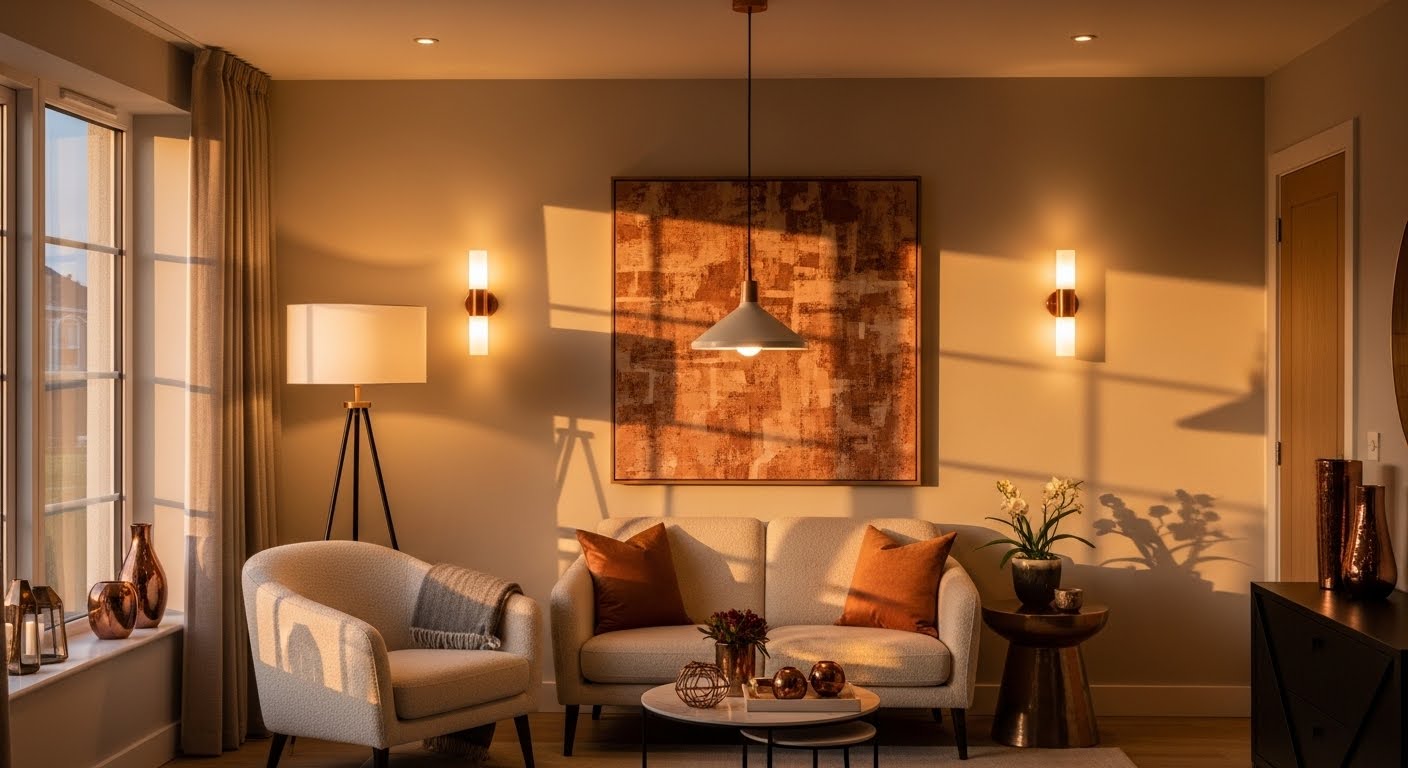
Small Living Room Lighting Ideas: Brighten Without Clutter
You know that feeling when your living room just looks dim no matter how many lamps you pile in? You’re definitely not alone. Small living room lighting ideas are one of the most searched topics among apartment dwellers — and honestly, that makes total sense. Getting light right in a compact space is genuinely tricky. The wrong setup makes a small room feel like a cave. The right one makes the exact same square footage feel open, warm, and completely livable.
Here’s the thing a lot of people don’t realize: your lighting problem usually isn’t about buying more stuff. It’s about buying the right things and placing them with a little intention. Most small spaces end up under-lit in some areas and over-cluttered in others — and nine times out of ten, both problems trace back to the same root cause.
In this post, you’ll find practical, beginner-friendly lighting ideas for small spaces that won’t eat up your floor plan or your budget. We’ll walk through everything from making the most of natural light, to layering artificial sources, to choosing between table and floor lamps — and even adding smart lighting without spending a fortune. Let’s get into it.
Quick Summary
WHO THIS IS FOR
Apartment renters, first-time homeowners, and small-space dwellers
TIME TO READ
6 min
TOP 3 TAKAWAYS
1. Why Lighting Matters in Small Spaces
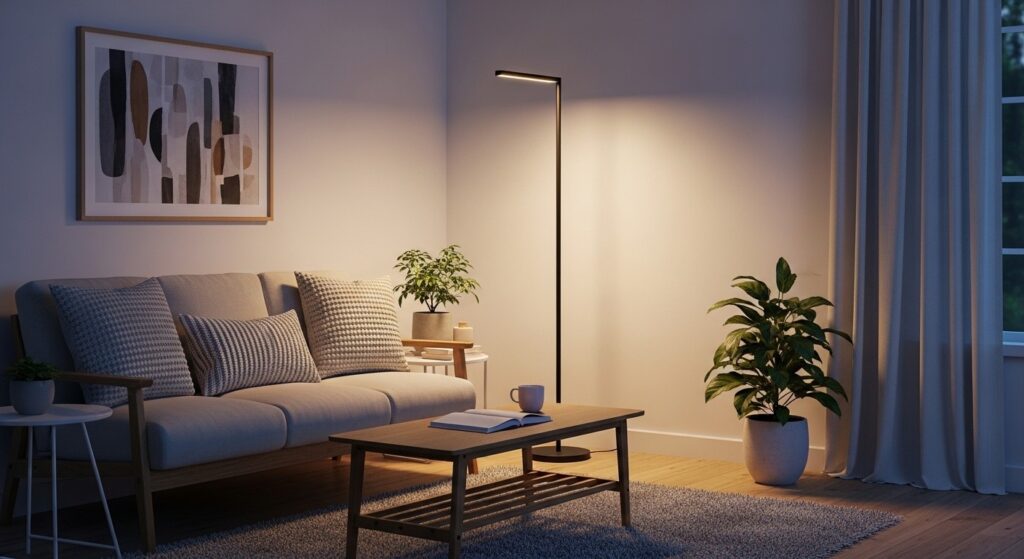
Lighting does so much more than help you see. It actually shapes how large or small a room feels — and in a small living room, that matters a lot. A single overhead bulb throws flat light and harsh shadows everywhere, which tends to make tight spaces feel even more compressed. Thoughtful lighting for small spaces creates visual depth, draws the eye around the room, and makes your brain perceive more space than is technically there.
Think about it this way: a dimly lit corner reads like a wall closing in on you. But soften that same corner with an upward-facing lamp, and suddenly it feels like a cozy destination. That shift doesn’t cost you any extra square footage — it’s purely about placement and a little bit of intention.
Good lighting also has a real effect on your mood and how much you actually enjoy spending time in a room. It’s one of the best returns on investment you can make in a small space, especially if you’re renting and can’t change the walls or floors.
A few things worth keeping in mind:
- A single overhead light flattens everything and makes the ceiling feel lower
- Layered lighting creates depth and pulls the eye naturally around the room
- Warm bulb tones (2700–3000K) make small spaces feel inviting rather than clinical
2. Natural Light Maximization Tips
Before you spend a single dollar on lamps, take a good look at what you already have. Natural light is the best kind — it’s free, it’s flattering, and it makes any room feel bigger almost automatically. The goal isn’t just to let it in; it’s to bounce and extend it as far as possible throughout the day.
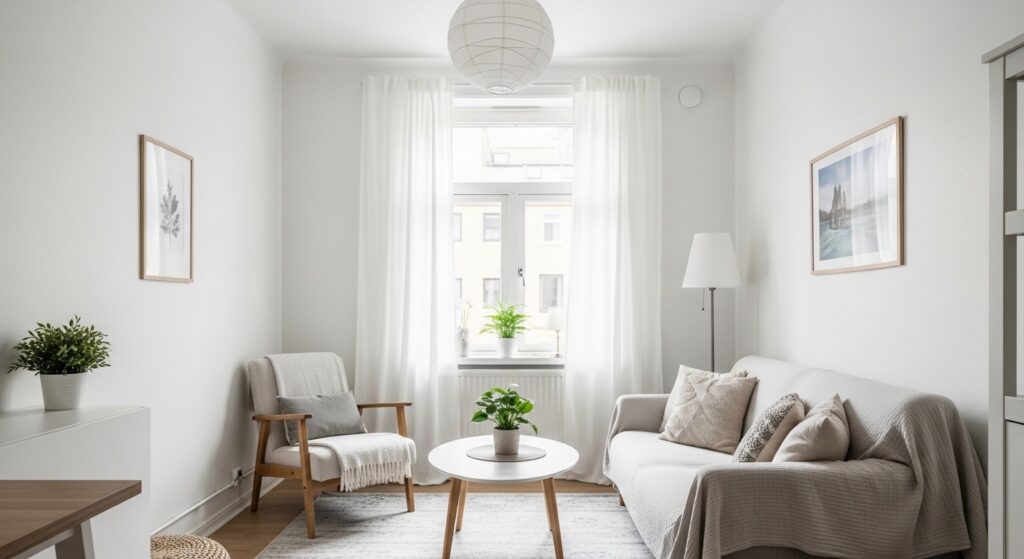
Start by swapping out heavy curtains for sheer panels or a simple roller blind. A window that’s half-covered is giving you half the light. Hang your curtain rods high (close to the ceiling) and wide (past the window frame on both sides), so when they’re open, the full window is exposed and your ceiling looks taller. It’s such a simple move, but it genuinely transforms a room.
Mirrors are your second-best tool here. A large mirror placed on the wall opposite a window reflects natural light deep into the room and creates the illusion of an extra window. It’s one of those small-space tricks that sounds too simple to work — and then you try it and can’t believe the difference.
- Hang curtains ceiling-to-floor to make windows look bigger and ceilings look higher
- Use light-colored walls to reflect rather than absorb natural light
- Keep windowsills clear — every object sitting there blocks some of the light coming in
- For best reflection, place a mirror roughly 5–8 feet from the window
3. Overhead Lighting Options
Most apartments come with one center ceiling fixture. And most renters just… leave it as-is. Totally understandable, but it’s also a missed opportunity. Your overhead light sets the baseline tone of the whole room, so it’s worth spending a few minutes thinking about what it’s actually doing for you.
If you can swap the bulb (and you almost always can), go for a warmer, dimmable option right away. A bright cool-white bulb running at full power in a small room is nobody’s idea of cozy. Semi-flush ceiling lights are a great fit for low-ceilinged spaces — they give you solid room coverage without drooping into your sightline or making the ceiling feel lower than it already is.
If you want something with more personality but can’t do any real installation, plug-in pendant lights are genuinely renter-friendly and they look custom. They hang from a ceiling hook, plug into a nearby outlet, and require zero wiring. You can find them in all kinds of styles, and they instantly make a room feel more considered.
- Semi-flush mount fixtures work best for ceilings under 8 feet
- Plug-in pendants need no electrician and are renter-safe
- Always choose dimmable options — it gives you full control over the room’s mood at any hour
4. Table Lamps vs Floor Lamps
This is the question almost every small-space dweller gets stuck on, and honestly, both options have a real place in the best lights for tiny rooms. They serve different purposes, though — and putting the wrong type in the wrong spot creates visual clutter without adding much useful light.
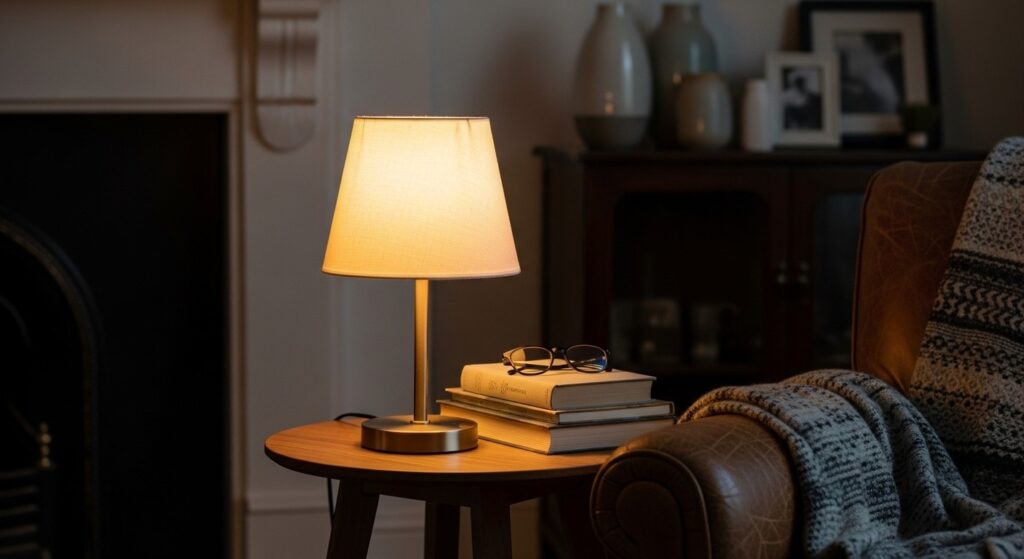
Table lamps are all about intimacy. They light a specific zone — a reading nook, a side table, a shelf — and they add warmth right at eye level. The downside in a small room? They take up surface space. If your side table is already doing a lot of work, adding a lamp just adds to the visual pile-up. Use table lamps where you need focused light and where you can actually spare the surface real estate.
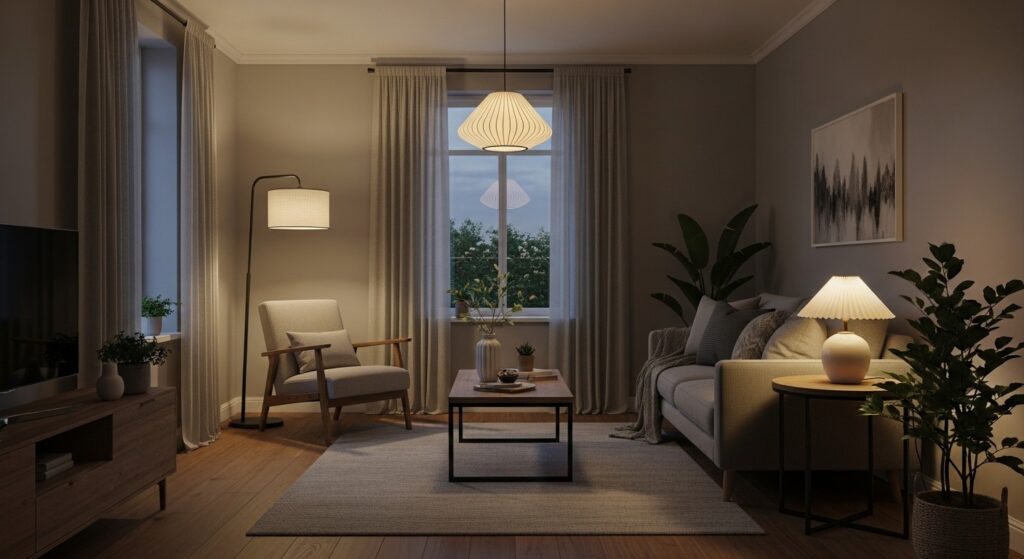
Floor lamps are the opposite trade-off: they take a bit of floor space, but they free up every surface. A slim arc floor lamp can sweep out over a sofa and light your entire seating area without touching a single table. In a truly tiny room, a narrow-profile floor lamp behind the sofa often does the work of both a table lamp and an overhead upgrade in one shot. For small room lamp ideas, it’s hard to beat.
- Arc floor lamps are ideal for small sofas and loveseats
- Table lamps on floating shelves light the room without using floor or surface space
- Avoid wide lampshades in tight corners — go for narrow, drum, or cone shapes instead
Reading More- Minimalist Living Room Ideas
5. Wall Sconces for Space Saving
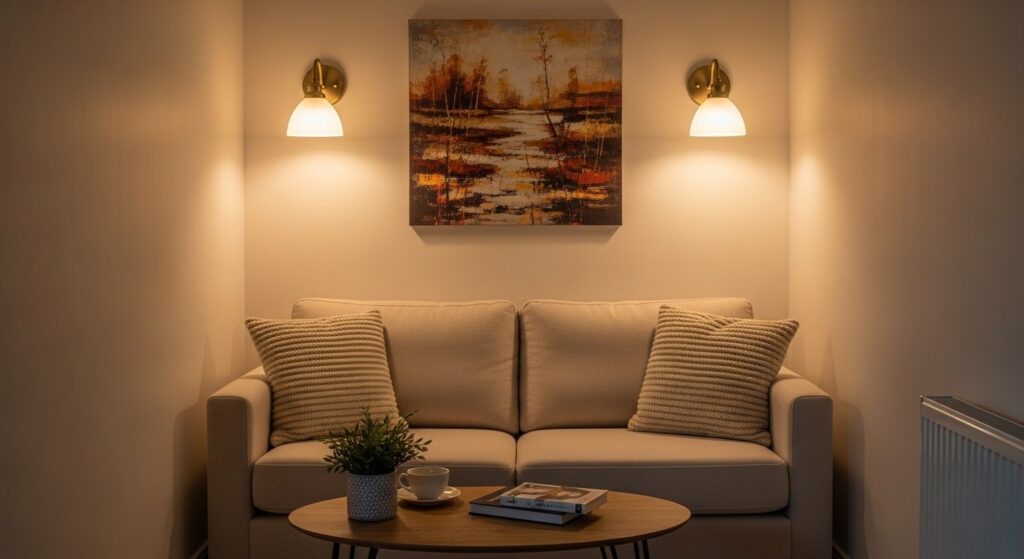
Wall sconces might be the most underrated lighting option for small living rooms, and a lot of renters skip them because they assume installation is required. Here’s good news: plug-in wall sconces are widely available, they look great, and they need zero electrical work. You mount a small bracket, run the cord neatly along the wall or baseboard, and plug it in. Done.
Sconces free up both your floor space and every horizontal surface at once. They deliver light at mid-wall height — exactly where a table lamp would sit — without taking up any room on a table or the floor. Flanking a sofa with two sconces instead of two side tables with lamps creates a noticeably cleaner, more intentional look that most people can’t quite put their finger on but immediately notice.
From a design standpoint, sconces also add some vertical interest to otherwise bare walls. That draws the eye upward, which makes the room feel taller. Whether you go minimal, industrial, or warm brass, sconces tend to look more built-in than freestanding lamps — which is exactly the vibe you want in a small space.
- Plug-in sconces need no electrician and are fully renter-safe
- Mount them at roughly 60–65 inches from the floor for the best light spread
- Use a cord cover strip to hide the cable — it’ll look completely intentional
- Upward-facing sconce styles make low ceilings appear taller
6. Layered Lighting Basics
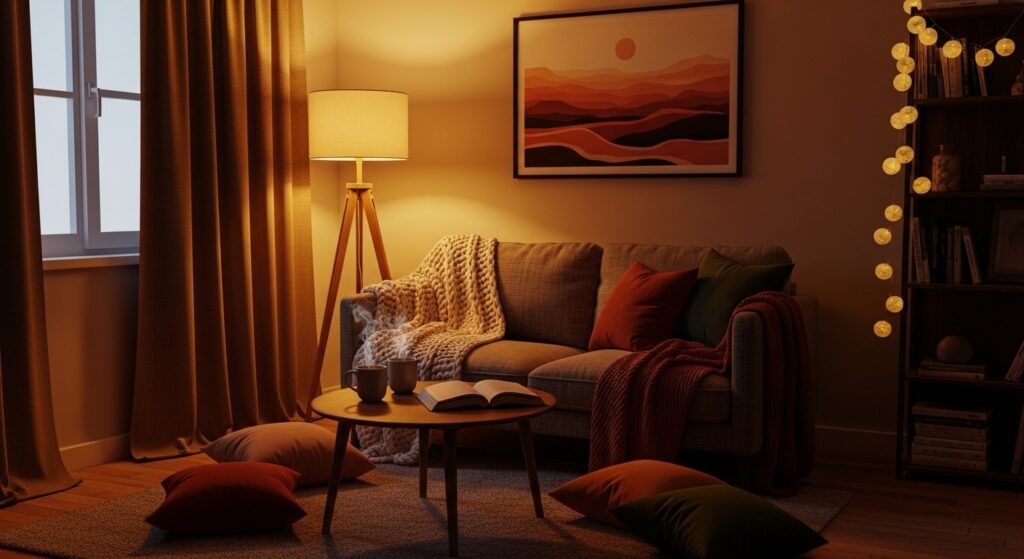
Layered lighting is the trick that professional designers rely on, and it’s honestly simpler than it sounds. The idea is to have three types of light working in the same room at once: ambient (general fill light), task (focused light for reading or working), and accent (decorative or mood light). When all three are present, the room gains a richness and depth that a single light source just can’t create.
In a small living room, ambient usually comes from your overhead fixture or a tall floor lamp. Task light is your reading lamp or a directional sconce next to the sofa. Accent might be LED strip lights tucked behind the TV unit, a string of warm fairy lights along a shelf, or even a few candles. You don’t need them all blazing at the same time — that’s actually the beauty of the layered approach. Come evening, turn off the overhead light and run just the floor lamp and accent lights for a calm, cozy atmosphere.
The mistake most people make is leaning only on overhead ambient light. That creates a flat, one-dimensional look and, oddly enough, makes small spaces feel more cramped rather than less. Start with just two layers and build from there. Even one well-placed floor lamp changes the whole feel of a room.
Your three layers at a glance:
- Ambient: Ceiling fixture, tall floor lamp, or a large table lamp
- Task: Reading lamp, directional wall sconce, or adjustable desk light
- Accent: String lights, LED strip behind the TV, candles, or backlit shelving
- Add a dimmer to at least one layer for maximum flexibility throughout the day
7. Smart Lighting on a Budget
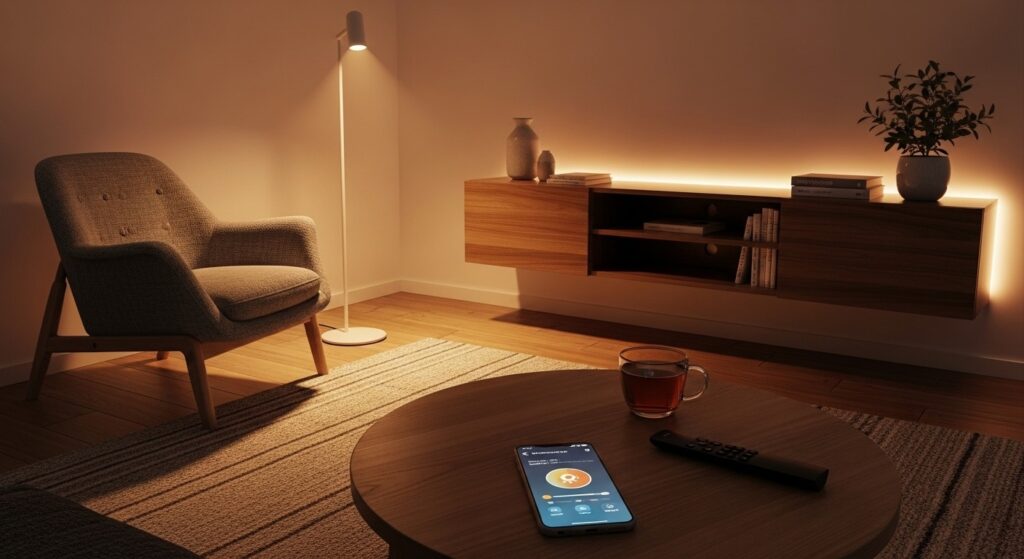
Smart lighting has a reputation for being expensive, but you really don’t need a full system to get the benefits. A single smart bulb in your main lamp can change how you use a room. You can adjust the warmth and brightness straight from your phone, set schedules, and flip from a bright work mode at 2pm to a warm, dim evening mode with one tap. It sounds like a small thing until you actually have it.
If smart bulbs feel like too much upfront investment, start with a smart plug attached to any existing lamp. It won’t let you dim or change the color temperature, but you can automate when it turns on and off, and control it from your phone — which is surprisingly handy when you’re already in bed and the lamp is across the room.
For renters who want real ambiance without any commitment, LED strip lights are the most budget-friendly accent option out there. Tuck them behind a TV unit, underneath a floating shelf, or along the back panel of a bookcase. They peel off cleanly when you move out, cost very little, and add a warm backlighting effect that makes any small room look pulled-together and intentionally designed.
- One smart bulb in your main lamp is enough to get started
- A smart plug works with any lamp you already own — no new hardware needed
- LED strips under shelves add great accent lighting for a small upfront cost
- Warm white (around 2700K) is the sweet spot for a cozy small-space feel
8. Common Mistakes to Avoid
Even with the best intentions, small-space lighting goes sideways in very predictable ways. Here are the five most common pitfalls — and how to sidestep each one.
Pushing all furniture against the walls.
This creates a big empty center but leaves dead, dark zones around the edges. Try floating your furniture slightly inward and using lamps to light the perimeter instead.
Using oversized lamps.
A giant statement floor lamp in a 10×12 room takes up visual real estate and throws off the proportions of everything else. Scale matters here — look for slim, vertical profiles.
Ignoring vertical space.
Lights placed only at floor and table level keep everything feeling low and flat. Add a wall sconce or an upward-facing lamp to pull the eye toward the ceiling and make the room feel taller.
Too many small accent lights without an anchor.
A dozen tiny accent lights scattered around the room without a strong main light source creates visual chaos. Build from one solid foundation first, then layer in accents.
Using the wrong bulb temperature.
Bright, cool-white bulbs (5000K and above) make small living rooms feel sterile and harsh. Stick to warm white tones in the 2700–3000K range for living areas, and always go dimmable when you can.
9. Frequently Asked Questions
Q1: What is the best sofa for a small living room?
The best sofa for a small living room is one that’s actually sized for the space — typically a loveseat or a compact two-seater that doesn’t take over the entire floor plan. Look for sofas with visible legs rather than a solid base that runs to the floor; exposed legs create a sense of visual breathing room and make the piece feel lighter and less heavy. Deep, oversized sectionals are tough to make work in a small room, no matter how good the lighting is.
Lighter upholstery in neutral tones reflects light better than dark fabrics and helps keep the room feeling airy. If you need more seating, a pair of small armchairs or a compact bench along one wall tends to be more flexible than a large sofa. For layout inspiration, our guide to 50 Small Living Room Ideas has sofa arrangements tailored to tight spaces.
Q2: How do I make my small living room look bigger?
Lighting is genuinely the fastest, most affordable thing you can change. Layered lighting — especially adding a floor lamp and a wall sconce or two — creates depth and dimension almost immediately. Beyond that, mirrors, a light cohesive color palette, and keeping surfaces relatively clear all work together to push the walls back visually.
Furniture placement makes a huge difference too. Resist the urge to push every piece against the wall — a slightly floating arrangement with lamps in the corners makes the room feel more thoughtfully designed and less like a waiting room. Tall vertical elements like a narrow bookcase or high-hung curtains draw the eye upward and make the ceiling feel higher. Our Small Living Room Color Ideas guide breaks this down even further.
Q3: What colors make a small room look larger?
Light, neutral tones are your best allies here. Soft whites, warm creams, pale grays, and gentle blush tones all reflect light and give walls a sense of distance. The key is choosing tones with a warm undertone rather than going stark white, which can feel cold and clinical, especially under artificial light.
One underrated trick: paint your ceiling the same shade as your walls, or a touch lighter. This blurs the visual line between wall and ceiling, which makes the whole room feel taller. If you want a bolder look, a single feature wall in a deeper tone can actually add character without shrinking the space — particularly when you’ve got good layered lighting in the room. See our Small Living Room Color Ideas guide for full palette breakdowns.
Q4: Should I use a rug in a small living room?
Yes, absolutely — just size up rather than down. The most common rug mistake in small rooms is choosing something too small. A rug that only tucks under the coffee table creates a disconnected, choppy look and makes the room feel more fragmented, not less. Aim for a rug large enough for all front legs of your furniture to sit on it, at minimum.
A properly sized rug anchors the whole seating area into one cohesive zone, which makes the space feel intentional and larger all at once. Stick to lighter, low-pile options in simple patterns or solid tones — busy, large-scale patterns can feel overwhelming in a tight space. And if you’re in doubt between two sizes, go with the larger one. For cozy room styling including rug ideas, check out our Cozy Small Living Room Ideas guide.
Final Thoughts
Getting the lighting right in a small living room doesn’t need a renovation, a big budget, or any design experience. It really does start with three things: making the most of the natural light you already have, adding at least two layers of artificial light, and making sure your bulbs are warm and dimmable. Once you’ve got those basics sorted, everything else in the room — your furniture, your colors, your little finishing touches — looks better almost automatically.
Think of your lighting as the room’s mood dial. The same space can feel like a productive, light-filled afternoon spot at 2pm and a relaxed, cozy retreat by 8pm. That flexibility is everything when one room has to serve multiple purposes. Start with one change — even just one well-placed lamp — and see how much it shifts the feel of the space. You might be surprised.