Small Living Room Storage Ideas: Hide the Clutter
If your living room feels like it’s working against you, you’re not imagining it. Stuff piles up fast — on the coffee table, behind the sofa, in corners you’ve stopped looking at. And in a small apartment, there’s nowhere to hide it. The room that’s supposed to help you unwind starts to feel like a problem you can never quite solve.
Here’s what actually helps: small living room storage ideas that do the hiding for you. Not just a shelf here or a basket there, but a proper strategy — one that uses every inch of your space and keeps the room looking calm even when life doesn’t. Storage solutions for small spaces work best when they’re invisible. The goal is a room that feels pulled together, not one that shouts ‘organized chaos’.
In this post, you’ll find seven practical, renter-friendly ideas for decluttering your small room without making it feel even more cramped. Each section is something you can actually act on — no major renovations, no huge budgets. Just smarter choices that make your living room work properly for the first time.
Quick Summary
WHO THIS IS FOR
Apartment renters, first-time homeowners, and anyone navigating a compact living space.
TIME TO READ
6 min
TOP 3 TAKAWAYS
Reading more- Smart Apartment living room ideas
1. Audit What You Actually Need
Don’t buy a single basket or shelf before doing this step. Walk through your living room and ask honestly — does this thing belong here? Most living rooms quietly collect stuff that should live in a bedroom, a cupboard, or the bin. Getting honest about that is the single most effective way to declutter a small room, and it costs you nothing.
Sort everything into three groups: keep it here, move it to the right room, or let it go. You’ll be surprised how much visual noise disappears just from that second category. A pile of cables on the coffee table looks like chaos. Those same cables in a side table drawer? They simply don’t exist.
Once your living room only holds what actually belongs there, the storage problem shrinks dramatically. You’re not hiding more stuff — you’re storing less stuff better. That’s a very different goal, and a much more achievable one.
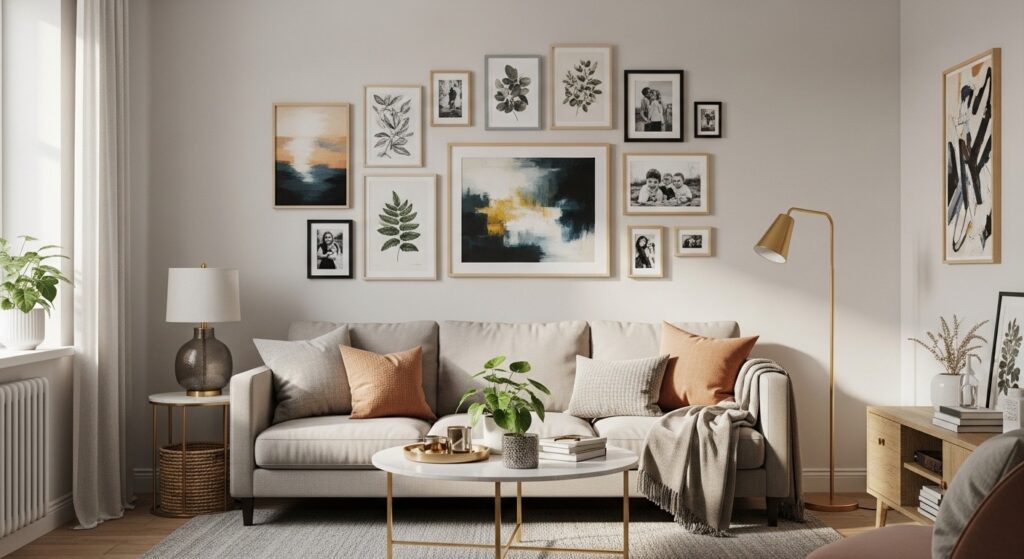
Quick tips for auditing your space:
- Set a 30-minute timer and tackle one room at a time — don’t try to reorganize your whole apartment in a day.
- Ask yourself: ‘Would I buy this again right now?’ If the answer’s no, it goes.
- Relocate items to their correct rooms before deciding you need more storage solutions.
2. Hidden Storage Furniture
The smartest investment you can make in a small living room is furniture that does two jobs quietly. A coffee table with a lift-top lid or built-in drawers looks completely normal from the sofa — but inside, it’s hiding remotes, books, spare throw blankets, and whatever else tends to drift onto your surfaces. Nobody looking at it has any idea what’s inside, and that’s exactly the point of hidden storage in a living room.
Sofas with storage built under the seat cushions are worth looking for. They’re increasingly easy to find, and the amount they can hold — off-season pillows, board games, extra linens — is genuinely impressive. Side tables with a covered lower compartment work the same way on a smaller scale. The whole category of dual-purpose furniture has leveled up in recent years, which means your options now actually look good.
The rule to live by: every piece of furniture in a small room should justify its footprint. If it only does one thing, it needs to do that one thing exceptionally well. If it quietly does two things, it earns its place.
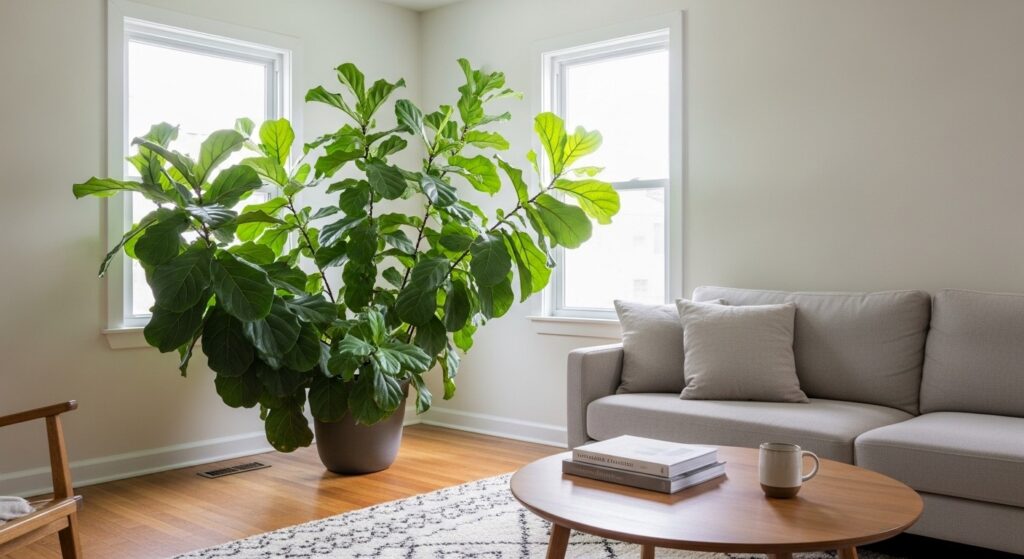
What to look for:
- Lift-top coffee tables hide clutter and double as a makeshift desk for working from home.
- Media consoles with closed doors are almost always a better call than open shelving if you have cables or tech equipment.
- Nesting tables are great — they tuck together when you don’t need them, freeing up floor space immediately.
3. Vertical Storage Solutions
Your walls go all the way to the ceiling. In a small living room, that’s a lot of unused real estate. Most people store things at eye level and below, leaving a huge stretch of empty wall doing absolutely nothing. Vertical storage solutions let you expand your capacity without expanding your floor plan — which is the whole game in a compact space.
Floor-to-ceiling bookshelves make one of the highest-impact changes you can make in a small room. They draw the eye upward, which makes the ceiling feel higher and the room feel taller. And they hold an enormous amount of things while keeping your floor entirely clear. Ladder shelves work on the same principle but at a smaller scale — they’re lightweight, typically renter-friendly, and easy to reposition.
As you go up the wall, think in zones. Keep things you reach for every day at eye level and below. Push rarely-used items to the upper shelves. The room stays functional without turning into a stepstool obstacle course.
Vertical storage tips:
- Always anchor tall shelving to the wall — it’s a safety requirement, not just a renter tip.
- Use baskets or bins on upper shelves to keep visual lines clean from below.
- Ladder shelves fit brilliantly into corners where standard furniture simply won’t go.
4. Behind-the-Door Options
The back of your living room door is prime storage space that most people completely ignore. A slim pocket organizer hung over the door can hold remotes, charging cables, small notebooks, or a folded throw blanket — and it all disappears the moment the door swings open. It sounds simple because it is, and it genuinely works.
For renters especially, this approach is a favourite because it needs zero wall holes. Many door organizers simply hook over the top of the door. Some sit flush enough that the door still closes fully without any gap. If your living room has a closet, the inside of that door is even better — it can hold a whole command center of organized storage without anyone ever seeing it.
The one thing to watch: keep it functional, not chaotic. A door organizer with clearly defined pockets stays tidy long-term. One that becomes a general dumping ground just relocates the problem behind a closed door.
Before you buy:
- Check your door clearance — some organizers add enough bulk to prevent the door from closing fully.
- Give each pocket a category and stick to it. This is what keeps the system working after week one.
- The back of a media console door or TV cabinet works the same way for smaller items like batteries and cables.
5. Ottoman and Bench Storage
A storage ottoman might be the single most versatile piece of furniture a small living room can have. It works as a coffee table, an extra seat when friends come over, a footrest after a long day, and a storage chest — all in one object. Lift the lid and you’ve got a hidden home for blankets, board games, craft supplies, or whatever tends to pile up fastest in your space.
Storage benches are just as useful, especially along a wall or at the foot of a sofa. They offer seating without the bulk of an armchair, and the interior takes the overflow that would otherwise end up in a corner pile. A bench near the entry side of your living room also catches bags and dropped-off items before they migrate further into the room.
Pay attention to the lid mechanism when you’re choosing. A hinged lid that stays open on its own is far more useful day-to-day than one you have to hold up with a spare hand. It’s a small detail, but it determines whether you actually use the storage or just stop bothering after a couple of weeks.
Ottoman tips:
- Round ottomans tend to be better for traffic flow in small rooms — no sharp corners to navigate around.
- Place a tray on top of any storage ottoman to create a stable surface for drinks or books.
- In a very small room, a storage bench can double as a TV stand with the media equipment tucked below.
6. Floating Shelves Done Right
Floating shelves look effortless in home magazines. In real life, they go wrong fast. The secret is restraint. A shelf crammed wall to wall with mismatched objects doesn’t read as organized — it reads as a longer horizontal pile. The same edit you did in Step 1 applies here: only put up what you love or actively use, and leave space between items to breathe.
For storage rather than display, mount shelves higher on the wall and use matching baskets or bins to keep similar things together. The functional stuff stays contained, the shelf looks intentional, and you can tuck one or two small decorative items at the end of each row to soften the look. Suddenly it reads as a designed storage solution, not a shelf full of random things.
If you’re putting up several shelves, group them in odd numbers — three or five — and vary the heights slightly. Shelves at identical heights across an entire wall can start to feel more like an office than a home. Staggered heights feel more considered and personal.
Floating shelf tips:
- Use a level. A shelf that’s even slightly off looks wrong no matter how well you style it.
- Mount into wall studs for shelves you plan to load with books or heavier baskets.
- Keep the lowest shelf at eye level or above so the floor stays clear and the room feels open.
7. Basket and Box Organization
Baskets are the quiet heroes of small space living. A pile of books or remotes on an open shelf looks like clutter. Those same items tucked into a woven basket look like a considered choice. The container does the heavy lifting — it gives miscellaneous items a single, defined footprint and tells the eye that someone is in charge of this room.
Use lidded baskets or boxes for things you want genuinely hidden: cables, smaller accessories, the collection of ‘I don’t know where else this goes’ items. Open-top baskets work better for things you reach into often, like throws or magazines — replacing a lid every time gets old quickly. Match the type to how often you need access.
The matching rule matters more than most people realize. Three different baskets in three different materials and colors look cluttered even when they’re organized inside. Three baskets in the same family of texture or tone look put-together. You don’t need expensive ones — you just need consistent ones.
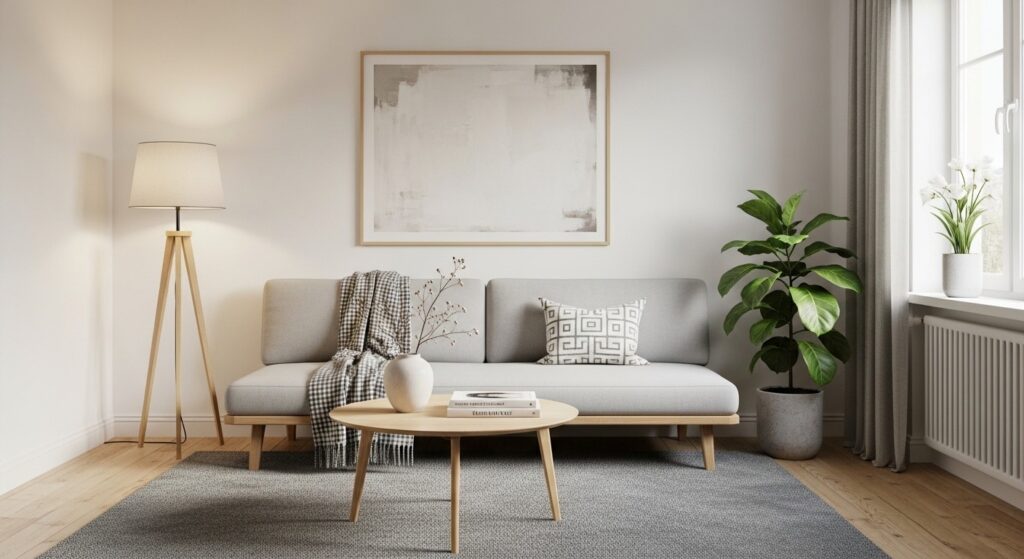
Basket tips:
- Label baskets on the inside — it helps everyone in the household find things and put them back.
- Flat-lidded boxes stack, which means you can double your storage in the exact same footprint.
- A large floor basket beside the sofa for throws looks intentional rather than cluttered, and it’s one of the easiest small wins in the room.
Common Mistakes to Avoid
Even with great storage solutions in place, a few habits can quietly undermine all of it. Watch out for these:
- Pushing all furniture against the walls. It feels logical in a small room, but it often makes spaces feel more institutional than cozy. Floating furniture slightly away from walls creates depth and a better sense of flow.
- Using oversized furniture. A sofa that fills a room wall to wall leaves zero visual breathing room. Choose pieces scaled to your actual space — a smaller sofa that fits well is always more comfortable to live with than a large one that dominates everything.
- Ignoring vertical space. Floor space fills up fast. The stretch of wall above eye level is almost always underused. Before adding anything new at floor level, ask whether it could go up instead.
- Too many small decor items. A collection of ten small objects reads as clutter even when it’s intentional. Group items in clusters of two or three, and edit ruthlessly — fewer, larger objects almost always look more considered.
- Poor lighting choices. A single overhead light flattens a small room and highlights every messy corner. Layer a floor lamp, a table lamp, and some ambient shelf lighting — it makes the room feel larger, warmer, and far more inviting.
Frequently Asked Questions
Q1: What is the best sofa for a small living room?
The short answer: something scaled to your actual floor space. Most small living rooms do better with a sofa in the 70–80 inch range rather than the standard 90 inches. Look for clean, straight arms rather than wide rolled ones — they eat seat space without adding any real comfort. And if you can find a sofa with visible legs, choose it. Legs lift the visual weight off the floor and make the room feel airier than a sofa that grazes the ground.
Modular sofas can actually work well in compact rooms because you configure them around your specific layout, rather than forcing a standard shape into an awkward space. In terms of colour, a sofa that sits close to your wall colour visually recedes into the room — which makes the whole space feel bigger. A dark sofa against a light wall tends to dominate everything else.
Q2: How do I make my small living room look bigger?
Start with the floor and the ceiling. A clear floor — achieved through smart storage and furniture with legs — creates the feeling of more square footage even when the dimensions haven’t changed. Tall curtains hung close to the ceiling and extended wide past the window frame make windows read as larger and ceilings feel higher. Both are free or low-cost adjustments.
Mirrors are one of the oldest tricks going and they still work. A large mirror on one wall effectively doubles the perceived depth of a room. Place it facing a window and you also bounce daylight through the space. Beyond that, keep your colour palette relatively cohesive and on the lighter side — when walls, larger furniture, and floors share a similar tonal family, the eye moves through the room without stopping, which reads as open and spacious.
Q3: What colours make a small room look larger?
Light, warm neutrals — soft whites, creamy beiges, warm greiges, gentle sage greens — tend to open up small rooms the most. They reflect light rather than absorbing it. Cool whites can feel stark in north-facing rooms, so lean toward warm undertones unless you get excellent natural light throughout the day.
One approach worth trying: paint the walls, trim, and ceiling in the same shade or close tonal variations. This dissolves the hard edges of a small room and makes it feel like a continuous, flowing space rather than a box. It works in both directions — a deep, enveloping tone can feel cozy rather than claustrophobic if it’s applied consistently. As for accent colours, keep them deliberate: one or two pulled into cushions, a rug, or a throw is plenty.
Q4: Should I use a rug in a small living room?
Yes — but size is everything. The most common mistake is going too small. A rug that only fits under the coffee table and doesn’t reach the front legs of the sofa makes a room feel choppy and disconnected. A properly sized rug — large enough for at least the front legs of all the main seating to sit on — anchors the space and makes it feel deliberately designed.
For pattern, a large-scale single print can actually hold its own in a small room as the one statement piece. Small, busy patterns tend to add visual noise and make rooms feel more cluttered. A solid rug or one with simple texture reads calmly and lets the rest of the room breathe. Beyond looks, a rug adds warmth and absorbs sound in compact spaces — which matters more than people expect until they remove one and hear the difference.
The Bottom Line
A small living room doesn’t have to feel like a storage problem you’re always losing. The strategies in this post — editing ruthlessly, choosing dual-purpose furniture, going vertical, using containers consistently — add up to a room that works harder for you without looking like it’s trying. The best hidden storage in a living room is the kind nobody notices. The room just feels calm, and that’s the whole point.
Start with the audit. Then pick one or two ideas from this list and act on them this week, rather than trying to overhaul everything at once. Small, consistent improvements beat grand reorganization projects every single time — mainly because you’ll actually finish them. Your living room is probably closer to organized than you think. It just needs a few smarter homes for the things already in it.