Small Living Room Decor Ideas: Style Without Overwhelm
You love the idea of a well-put-together living room. But every time you try to make it happen, something feels off. The space looks cramped, the furniture doesn’t flow, or it just doesn’t feel like you. If you’ve been staring at small living room decor ideas online and wondering how on earth anyone actually pulls that off in a real apartment — this post is for you.
Here’s the thing: small rooms have more potential than most people give them credit for. A lot of the frustration you feel isn’t about the size of your space. It’s about a handful of fixable habits — things like choosing furniture that’s slightly too big, adding too many pieces too quickly, or skipping the planning stage altogether. None of these are permanent problems.
In this guide, you’ll find seven practical strategies for decorating small living rooms without losing your mind in the process. From picking the right focal point to knowing what to take out (not just what to add), these small room styling tips will help you create a space that finally feels calm, cohesive, and genuinely yours.
Quick Summary
WHO THIS IS FOR
Apartment renters• First-time homeowners• Small space
TIME TO READ
6 min
TOP 3 TAKAWAYS
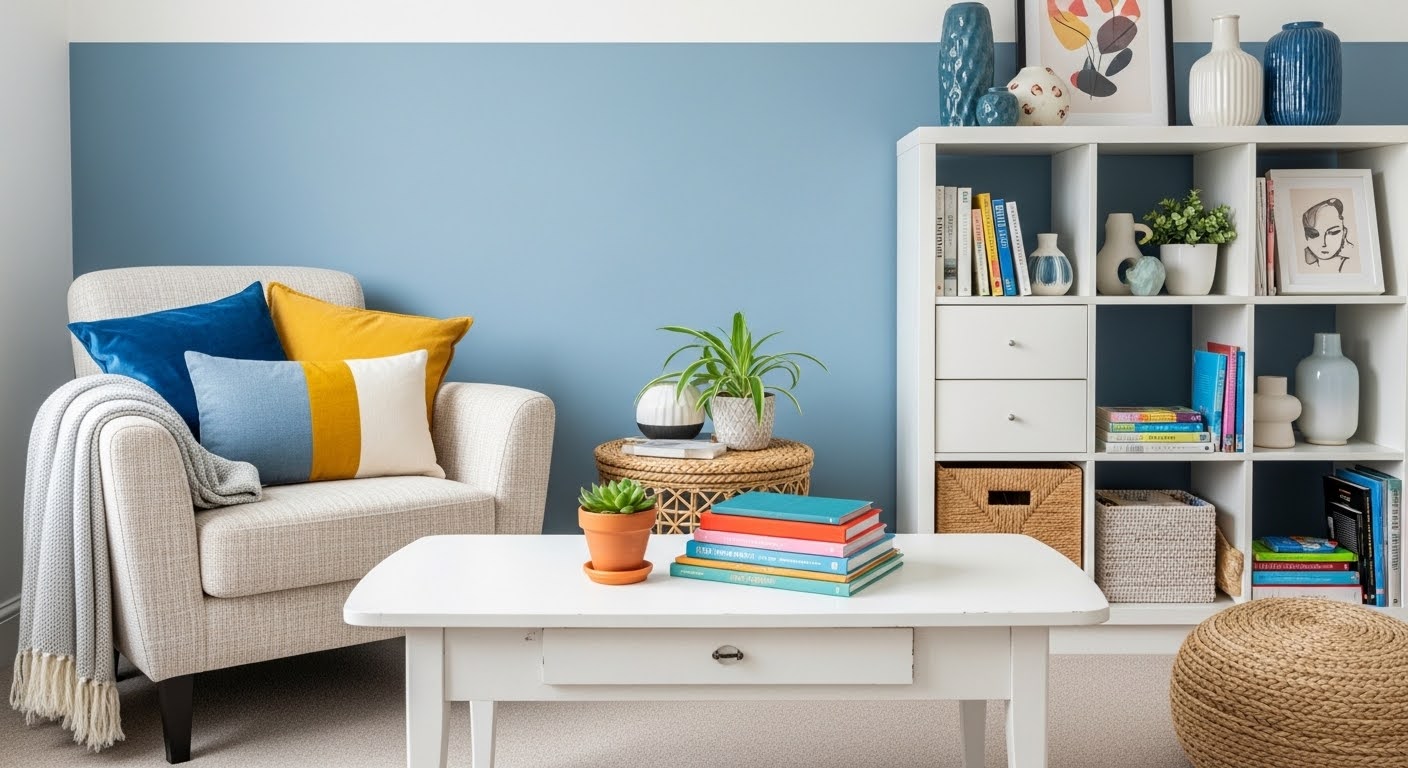
The Less-Is-More Philosophy
When you’re working with a small living room, the urge to fill it up is completely understandable. More things, more personality, right? Not quite. In smaller spaces, the opposite is almost always true — a room with fewer, well-chosen pieces reads as intentional. A room packed with things you sort-of-love just reads as cluttered.
Less-is-more doesn’t mean cold or stark, though. Think of it more like editing a paragraph: you keep the sentences that pull their weight and cut the ones that don’t. Every piece in your room should serve a purpose, bring genuine warmth, or add something visually interesting. If it doesn’t do at least two of those things, it probably belongs somewhere else.
A good place to start? Remove before you add. Walk through your current room and take out three to five things — anything you’re on the fence about. Live with the edited version for a week. You’ll quickly figure out which pieces the room actually misses, and which ones you don’t even notice are gone.
Quick tips:
- Aim for three to five standout pieces per room rather than fifteen smaller ones
- Try to limit each surface to one small arrangement of items at a time
- If everything in the room is competing for attention, nothing stands out
Choosing a Focal Point
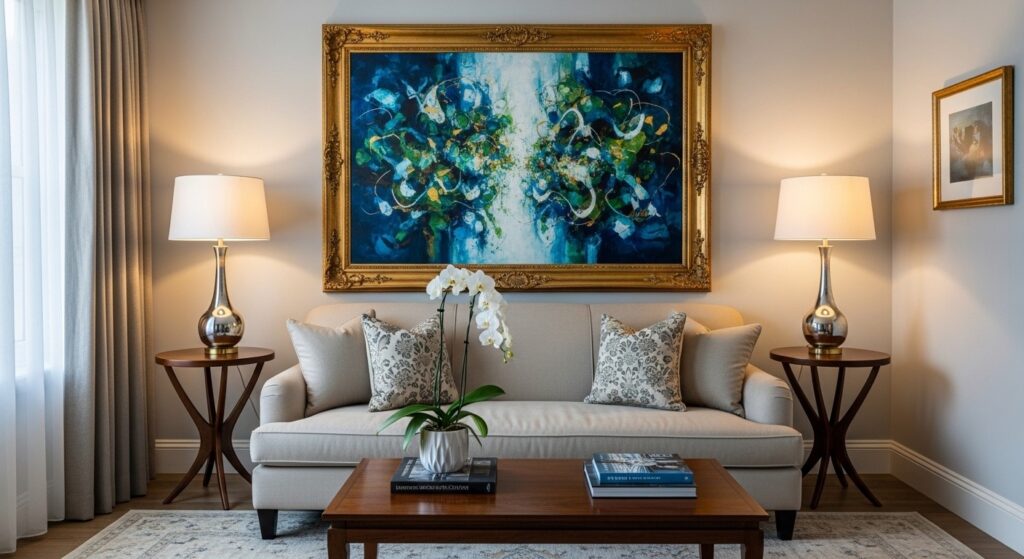
Every room that feels polished has one thing the eye is drawn to first. In a small living room, this matters even more — a clear focal point creates a sense of order and makes the whole space feel thought-through rather than just accumulated. It could be a fireplace, a large piece of art, a gallery wall, or even a beautifully styled bookshelf. The medium matters less than the intention.
Once you’ve identified your focal point, let it lead the room. Arrange your seating so it faces toward or acknowledges that point. This naturally creates a sense of flow and makes even a compact space feel like it has a defined purpose. For ideas on making art or wall arrangements your anchor, check out our guide to Wall Decor Ideas.
No natural focal point? You can absolutely create one. Lean a large mirror against a wall, hang an oversized piece of art, or use paint to define one wall as an accent. Even a well-curated shelf can do the job. The key is committing to it — half-measures rarely land.
Quick tips:
- Choose one focal point — not two, not three. One.
- Arrange furniture so it faces or frames your focal point naturally
- Keep the area around it fairly uncluttered so it can actually do its job
Scale and Proportion Basics
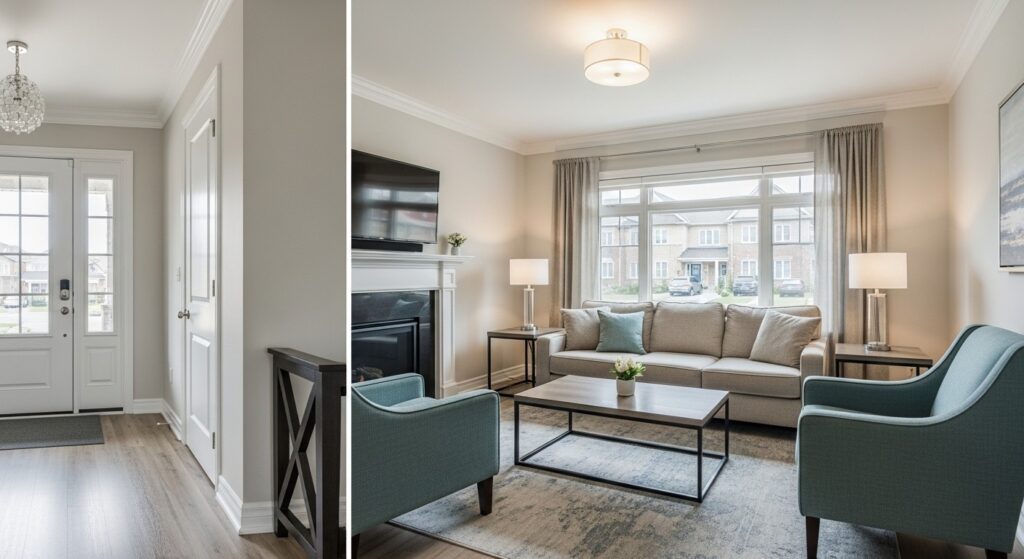
Scale trips people up more than almost any other design principle. A sofa that’s just a few inches too deep can make a small room feel suffocating. Decorative objects that are too small look like they’re hiding. Getting proportion right isn’t about following rigid measurements — it’s about learning to see the room as a whole rather than a collection of individual pieces.
The golden rule: measure before you shop. Know your room’s dimensions and bring them with you or write them in your phone. If you’re not sure whether a piece will work, tape its footprint out on your floor before ordering. A slightly smaller sofa — say a two-seater instead of a three — often transforms a small room far more than any decor update.
“In tight spaces, one right-sized sofa beats three wrong-sized chairs every time.”
For smaller decor items like vases, books, and candles, use the rule of odds: group items in threes at varying heights. That combination of rhythm and variety is what separates a styled surface from a surface that just has stuff on it.
Mixing Textures Effectively
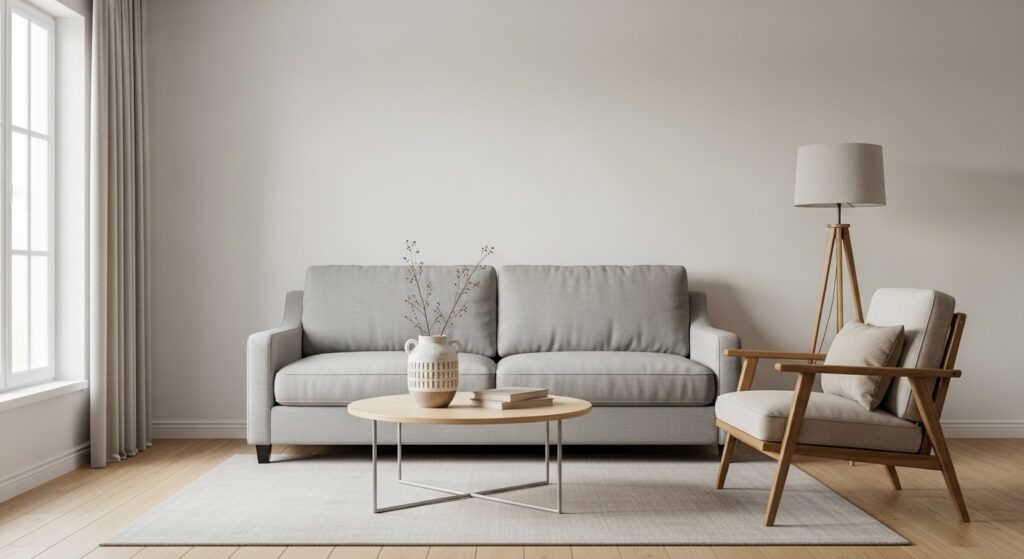
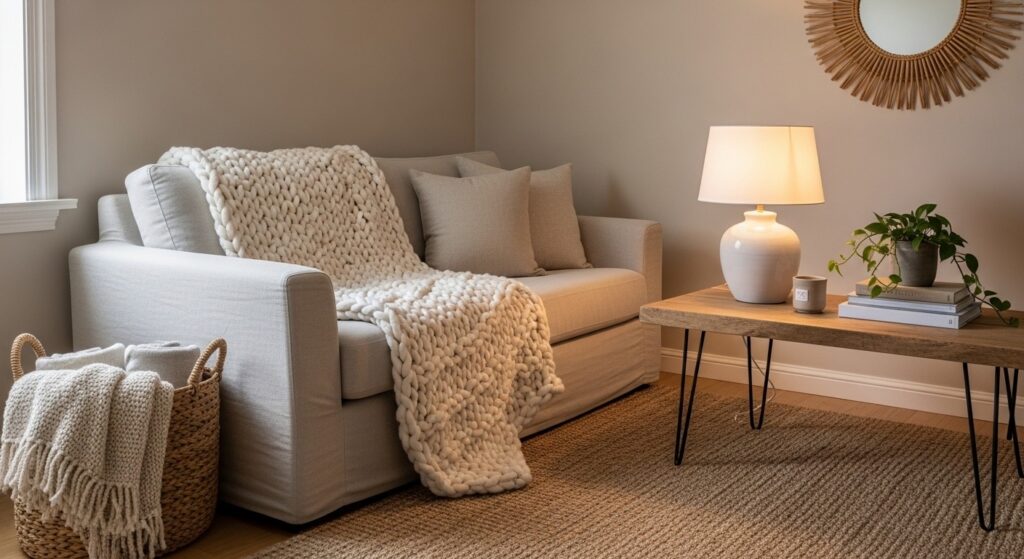
Texture might be the most underrated tool in the small-space stylist’s toolkit. When square footage is limited and adding more furniture isn’t an option, texture adds depth, warmth, and visual interest in a way that doesn’t take up any physical space at all. The trick is choosing textures that contrast — rough against smooth, soft against structured, matte against a little sheen.
Think about the layers your room already has. A linen sofa pairs beautifully with a chunky knit throw, a smooth ceramic lamp base, and a natural fiber rug. Each texture contributes something different without adding any visual bulk. You get richness without clutter — which is exactly what decor for tiny spaces needs.
Stick to two or three textures and repeat them intentionally. If you have a rattan side table, bring in a woven basket somewhere else. If a velvet cushion adds a bit of sheen, echo it with a metallic frame or glossy vase. Repetition is what turns a collection of individual items into a cohesive room.
Quick tips:
- Build around three textures: one soft, one natural, one hard or smooth
- Repeat each texture at least twice so the room feels intentional, not random
- Layered textures add warmth — especially helpful in rooms that don’t get much natural light
Color Coordination Tips
Color is one of those small room styling tips that sounds simple until you’re standing in a paint aisle holding seventeen swatches wondering what went wrong. The most common misconception is that small rooms have to stay light and neutral. That’s not actually true. What matters is how consistently and confidently you use color throughout the space.
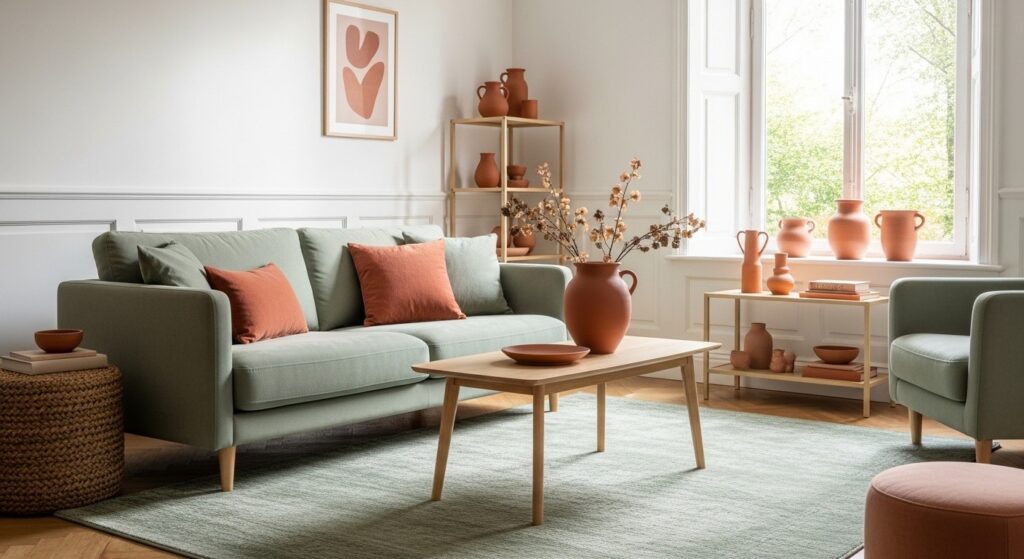
Try the 60-30-10 rule. Choose one dominant color for roughly 60% of the room — your walls, your largest furniture piece. Then a secondary color for about 30% — think rug, curtains, or an accent chair. And a pop color for the remaining 10%: cushions, a vase, a piece of art. Three colors, used with intention, always beat seven colors used without a plan.
And don’t be afraid of depth. A small room done in a confident, tone-on-tone palette — all dusty sage, say, or all warm terracotta — can feel just as open as a white room. Often more so, because the eye doesn’t have to work to make sense of it. If you’re nervous about committing, start with your 10% accent color and build outward from there.
Quick tips:
- 60% dominant (walls + largest furniture), 30% secondary, 10% accent pop
- Both light and dark colors can work — consistency matters more than the shade itself
- Tone-on-tone palettes (same hue, different intensities) feel calm and spacious
Personal Touches That Work
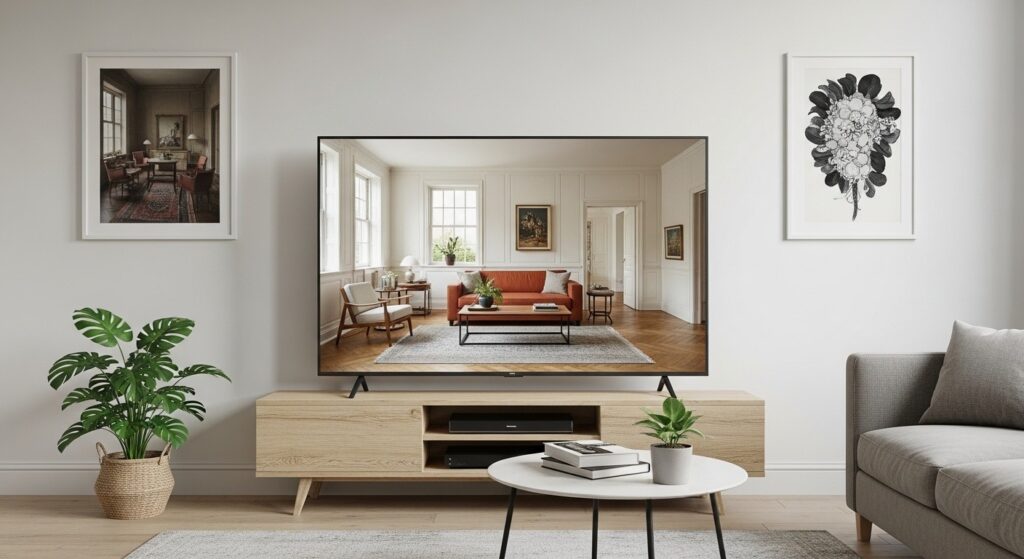
A room that looks like a catalog page is technically nice to look at — but it’s not somewhere you’d actually want to spend a Sunday afternoon. Personal touches are what make a styled room feel like home. In a small space, though, you have to be selective. You can’t display everything that matters to you, but you can display a few things that represent who you are, well.
Pick three to five objects with real meaning — a piece of art from a trip you still think about, a plant you’ve kept alive for two years (a bigger win than it sounds), a stack of books that reflects how you think. Style them with intention rather than filling every shelf with sentimental clutter. For ideas on keeping things personal without tipping into busy, our Minimalist Living Room Ideas guide is a good starting point.
One underused strategy: rotate your personal touches seasonally. Put some things away and bring others out every few months. It keeps the room feeling fresh without any new purchases, and it prevents the slow accumulation of stuff that tends to quietly take over small spaces over time.
What to Edit Out
Knowing what to take away is just as powerful as knowing what to add — maybe more so. In small living rooms, certain items quietly drain the room’s energy even when they seem fine on their own. The most common ones block sightlines, fragment the visual flow, or add noise without meaning. You often don’t even notice them until they’re gone.
Start with the floor. Multiple small rugs that don’t connect, furniture legs pointing in every direction, visible power cords — these all make a room feel more chaotic than it actually is. One well-chosen rug that grounds your seating area does more work than three smaller ones scattered around the room. Less floor clutter, more perceived space.
Then look at your surfaces. If every shelf, table, and windowsill has something on it, nothing stands out — it all blurs together into visual noise. Edit down until what remains actually catches your eye. Five beautiful things will always make more of an impression than fifty forgettable ones. For more room-by-room ideas on making the most of your space, see our full guide: 50 Small Living Room Ideas.
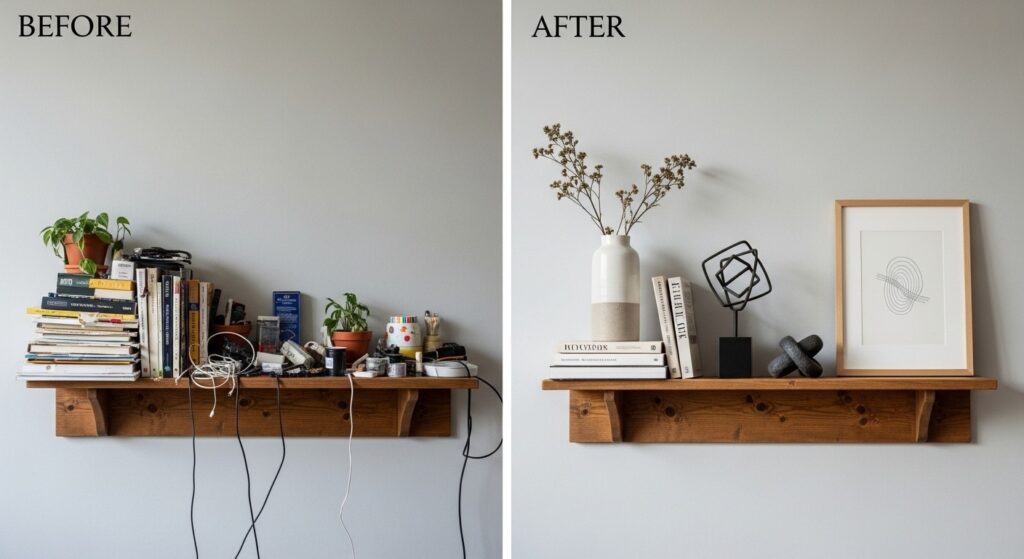
Quick tips:
- Remove anything that doesn’t serve a practical purpose or bring genuine warmth
- Clear as much floor space as you can — it’s the fastest way to make a room feel larger
- Edit each surface down to one small grouping of items maximum
- Tuck away or manage cords — visual noise isn’t always physical objects
| 📎 Keep Reading→ 50 Small Living Room Ideas→ Small Apartment Living Room ideas |
Common Mistakes to Avoid
| 1 | Pushing all furniture against the wallsThis one’s counterintuitive, but floating your sofa even a few inches away from the wall creates depth and makes the room feel more designed. The wall-to-wall furniture arrangement tends to look like a waiting room rather than a living space. |
| 2 | Using furniture that’s slightly too largeA sofa that fills an entire wall, or a coffee table that you have to navigate around, eats up both floor space and visual breathing room. Measure before you buy, and seriously consider scaled-down versions of pieces you love. You’ll miss the extra width less than you think. |
| 3 | Ignoring vertical spaceThe wall space above eye level is valuable real estate in a small room. Tall bookshelves, curtains hung near the ceiling (not just above the window), and pendant lights that draw the eye upward can all make a room feel taller and airier. |
| 4 | Too many small decor itemsA collection of seventeen small objects looks like clutter, no matter how carefully you’ve chosen each one. Swap clusters of small things for one or two larger statement pieces. Bigger, fewer items always read better in compact spaces. |
| 5 | Relying on a single overhead light sourceOne ceiling light flattens a room and makes it feel small and clinical. Aim for at least three light sources at different heights — a floor lamp, a table lamp, and your overhead — and use warm-toned bulbs. Layered lighting makes a small room feel inviting, not cramped. |
Frequently Asked Questions
| Q: What is the best sofa for a small living room?The best sofa for a small living room is one that fits your floor plan without dominating it. Look for sofas with exposed legs rather than a solid base — the visible floor space underneath gives the room a lighter, more open feel. Apartment-depth sofas (usually around 32–34 inches deep) are worth seeking out, as they give you comfortable seating without pushing you out of the room. A neutral or tonal color will help the sofa recede visually rather than jump forward. And always tape out the footprint on your floor before ordering — it sounds tedious, but it will save you from a very expensive mistake. |
| Q: How do I make my small living room look bigger?A few things consistently make a difference. Mirrors are one of the most effective tools — a large mirror placed opposite a window reflects light and creates the impression of extra depth. Keeping your color palette consistent across walls, trim, and large furniture reduces the visual fragmentation that makes rooms feel smaller than they are. Furniture with legs rather than solid bases lets more floor show, which helps. Curtains hung near the ceiling (rather than right above the window frame) pull the eye up and make ceilings feel taller. And clearing your floors as much as possible is, honestly, the single fastest change you can make. |
| Q: What colors make a small room look larger?Light colors — creams, soft whites, warm pastels — reflect more light and tend to make walls feel farther away. But the more important factor is consistency: a room where the walls, trim, and large furniture sit within the same tonal family always reads as more spacious than one with a lot of contrast bouncing around. That said, a deeply saturated, tone-on-tone room can feel just as open as a pale one — sometimes more so, because the eye settles quickly instead of jumping between competing colors. The real problem in small rooms usually isn’t dark color; it’s too many different colors creating visual noise. |
| Q: Should I use a rug in a small living room?Yes — and the most common mistake is going too small. A rug that only fits beneath the coffee table creates a floating-island effect that actually fragments the room. Choose one large enough for the front legs of your sofa and chairs to sit on it; this grounds the seating area and makes it read as a cohesive zone rather than a random arrangement of furniture. For style, low-pile rugs in solid colors or simple patterns tend to work best in small spaces — they add warmth and texture without competing with everything else. If the room gets a lot of use, a durable flatweave is both practical and good-looking. |
You’ve Got This
Pulling together a small living room doesn’t require a renovation, a design degree, or a budget that makes your eyes water. What it does require is clarity — about what you want the room to feel like, which pieces are earning their keep, and where you can afford to let go. Once you have that, the rest clicks into place faster than you’d expect.
Start with just one thing from this guide. Move the sofa a few inches, hang a piece of art, clear a shelf. Small, deliberate changes compound. Come back next week and make one more. Within a month, you’ll have a living room that feels designed rather than just decorated — and more importantly, it’ll feel like yours.