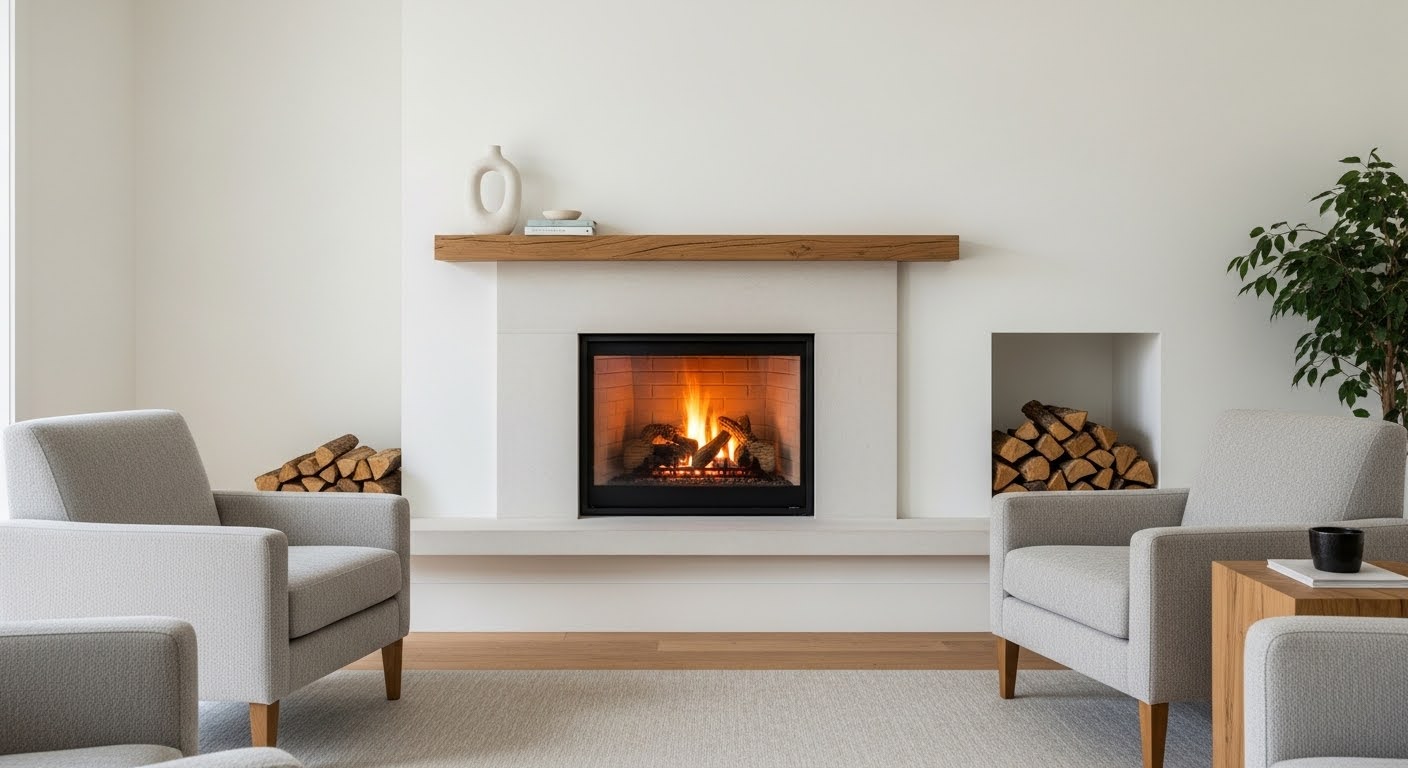
Fireplace Living Room Ideas: The Heart of the Home
You walk into your living room and the fireplace just… sits there. It’s the biggest architectural feature in the whole space — the thing that should make everything feel warm and pulled-together — but somehow it ends up either completely ignored or buried under a pile of stuff that has no real business being there. You know it should be the star of the room. It just isn’t yet.
And honestly? That’s one of the most common decorating frustrations out there. Most beginners — and plenty of experienced decorators, too — look at their living room with fireplace and feel genuinely stuck. The space has so much potential, but the starting point isn’t obvious. Do you begin with the mantel? Rethink the furniture layout? Deal with whatever’s going on above the surround first? It’s easy to spin your wheels for weeks without making any real progress.
Here’s the thing, though: you really don’t need a big budget or years of experience to pull this off. With a handful of clear fireplace living room ideas — and a little bit of patience with yourself — you can absolutely transform this space into something that feels intentional, cozy, and completely yours. This guide covers everything from mantel styling tips to hearth decor, furniture placement, what to do with a non-working fireplace, and simple seasonal refresh ideas. Let’s dig in.
Quick Summary
WHO THIS IS FOR
Everything you need before you start decorating. Home decor beginners and anyone looking to refresh their living room
TIME TO READ
8 min
TOP 3 TAKAWAYS
01 Fireplace as Focal Point
Here’s the golden rule of any living room with fireplace: the fireplace wins. Always. It’s already the most dominant architectural element in the room, so your job isn’t to compete with it — it’s to support it. Every decision you make from here, whether that’s paint color, furniture placement, or what goes on the walls, should be made with the fireplace in mind first.
The best way to see your fireplace clearly? Strip everything away from it. Completely. Empty mantel, bare surround, nothing on the hearth floor. Step back and take a fresh look at the room. It sounds almost too simple, but it works every time — once you remove all the visual noise, you can actually see what the space needs. Which existing pieces feel right, and which ones are quietly fighting for attention.
Once you have that fresh perspective, pick a style direction that genuinely excites you. Warm and rustic with lots of texture? Clean and modern with breathing room? Layered and eclectic with a mix of eras and materials? Whatever it is, write it down, save some reference images, and let every decision you make going forward point back to that one clear vision. That’s what makes a room feel designed rather than just assembled.
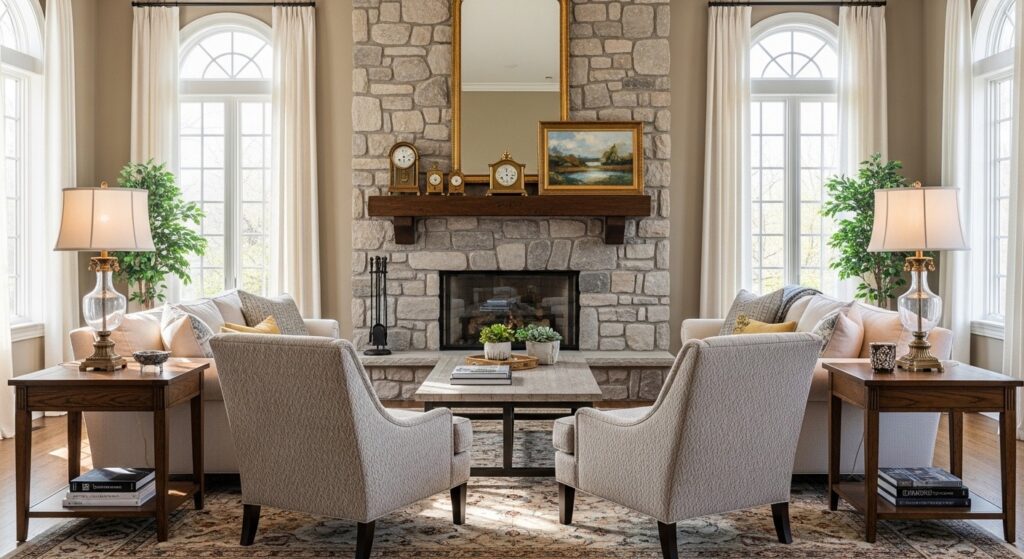
A few things to keep in mind as you get started:
- Clear everything out before you start rearranging — a blank slate makes the whole process much easier.
- Try painting the wall behind the fireplace a shade or two deeper than the rest of the room. It pulls the eye straight there.
- Avoid placing large furniture pieces that cut off the view to the fireplace from any main seating area.
- Symmetry on either side of the mantel — matching lamps, chairs, or wall sconces — is one of the quickest ways to make the fireplace feel purposeful.
02 Mantel Styling Basics
Let’s talk about the mantel, because this is where most people either go too far or not far enough. Pile on every candle and keepsake you own and it looks chaotic. Put up one small vase and nothing else and it looks unfinished. The sweet spot is somewhere in the middle: a curated group of about 5 to 7 objects that feel like they belong together, arranged with a bit of intention.
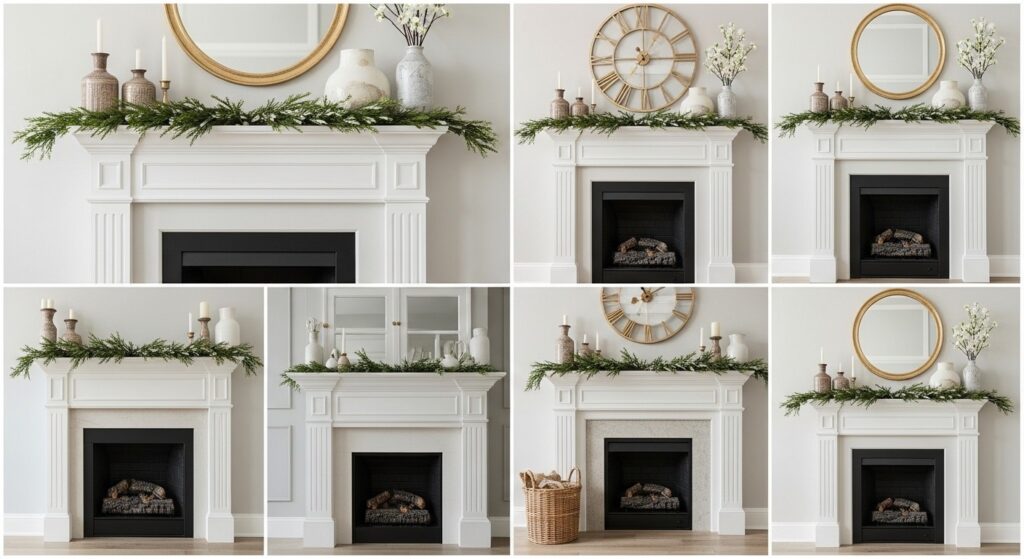
Think about layering in three zones. Start at the back with your tallest anchor piece — maybe a large mirror, a leaning frame, or a statement print that fills the space confidently. In front of that, bring in some mid-height pieces: a ceramic vase, a small lantern, a sculptural object. Then at the very front, add the smallest and most detailed items — a few candles, a small plant, a tiny dish or book. The depth this creates is what makes a mantel feel genuinely styled rather than just cluttered.
Material variety matters a lot here too. Try mixing at least three or four different materials — wood, ceramic, metal, something natural like dried botanicals or a woven element. Matching sets almost always look a bit flat. And don’t be afraid of negative space. Gaps between objects aren’t a mistake. They’re part of the composition, and they give the eye somewhere to rest.
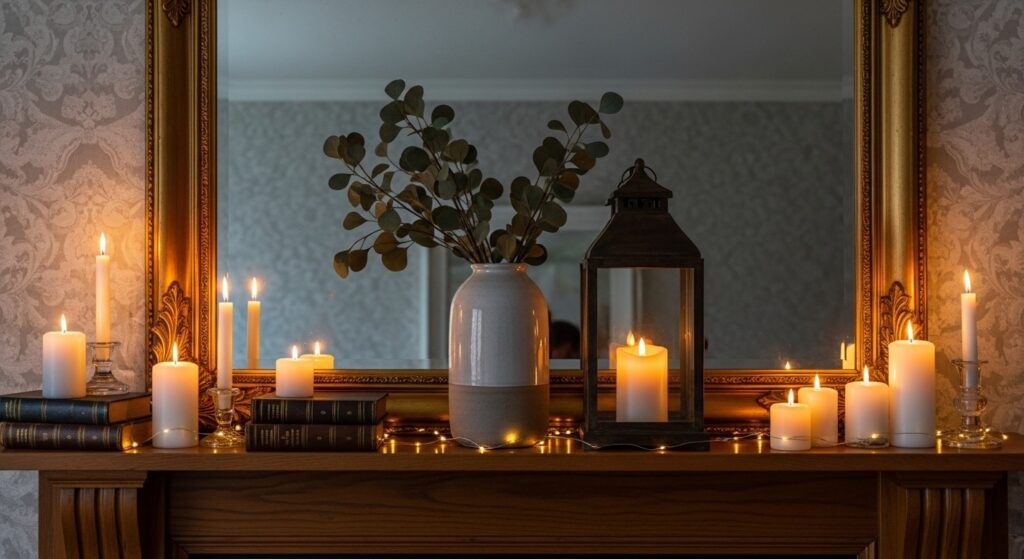
| Tip: Group objects in odd numbers — three or five together almost always looks more natural than two or four. |
Here’s a simple framework to follow when building your mantel:
- Anchor piece at the back: A mirror, framed artwork, or a large leaning print sets the backdrop.
- Mid-height layer: Vases, lanterns, small sculptures — these are your visual middle ground.
- Front details: The smallest, most personal objects go here, closest to the viewer.
- Color rule: Keep it to three colors maximum across the whole arrangement.
- Seasonal swap: Change out one or two pieces each season to keep things feeling fresh without starting over.
03 Above the Mantel Options
The wall directly above your mantel is valuable decorating territory. Whatever you put up there will do a lot of heavy lifting for the whole room’s visual tone, so it’s worth thinking through your options before you commit to anything. The three most reliable choices — a large mirror, a single oversized artwork, or a gallery wall — each create a pretty different feel, so it really comes down to what suits your space and style.
Mirrors are the most forgiving option for beginners, and honestly one of the most universally effective. A good-sized mirror above a fireplace reflects light, makes the room feel bigger, and works in just about any style — traditional, transitional, modern, you name it. If your living space is on the smaller side, this is especially worth considering. Just make sure to size it generously. A mirror that’s too small above a fireplace looks like an afterthought, and that’s the last thing you want.
If you’re going the artwork route, resist the urge to hang a few smaller pieces side by side — go big with one statement piece instead. Aim for something that’s roughly two-thirds the width of the mantel. That proportion tends to look confident rather than dwarfed by the surrounding architecture. And if a gallery wall calls to you, great — but map it out on paper first. Deciding where every frame goes before you start drilling holes saves a lot of patching later.
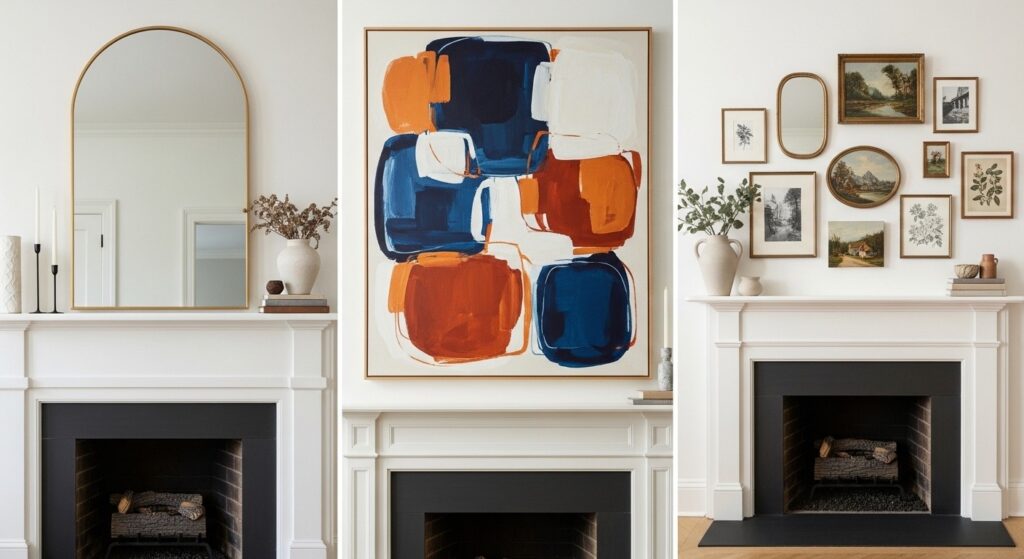
Quick breakdown of the most popular choices:
- Mirror: Ideal for smaller rooms, darker spaces, or anywhere you want to bounce more light around.
- Single large artwork: Best when you want a bold, clean statement without a lot of visual busyness.
- Gallery wall: Works well in eclectic or collected spaces — just keep a cohesive theme running through all the pieces.
- Architectural treatment: Adding shiplap, tile, or a brick-look finish behind the fireplace is a bigger project, but the textural payoff can be incredible.
04 Hearth Decor Ideas
The hearth — that floor-level zone around the firebox itself — gets overlooked by almost everyone. Most people style the mantel, hang something above it, and then completely forget about the three or four feet of space below. But the hearth is actually one of the most effective places to add warmth and texture to a room, and it doesn’t take much to make a real difference.
When your fireplace isn’t running, think about styling the inside of the firebox too. Stacked birch logs are a classic — they look warm and organic even when no fire is going. A cluster of pillar candles in different heights creates a similar cozy glow without any fire at all. A decorative fireplace screen with an interesting shape or finish adds another layer of detail, and it’s especially useful if the inside of your firebox is looking a little rough around the edges.
As for the floor space in front — a hearth rug is one of those small additions that has a disproportionately big impact. It grounds the whole area and gives it a sense of definition. Pair that with a woven basket for extra storage, a simple set of fireplace tools if you use the fireplace regularly, or a small stack of oversized books for a casual, lived-in feel. Just keep flammable textiles well away from any active flames.
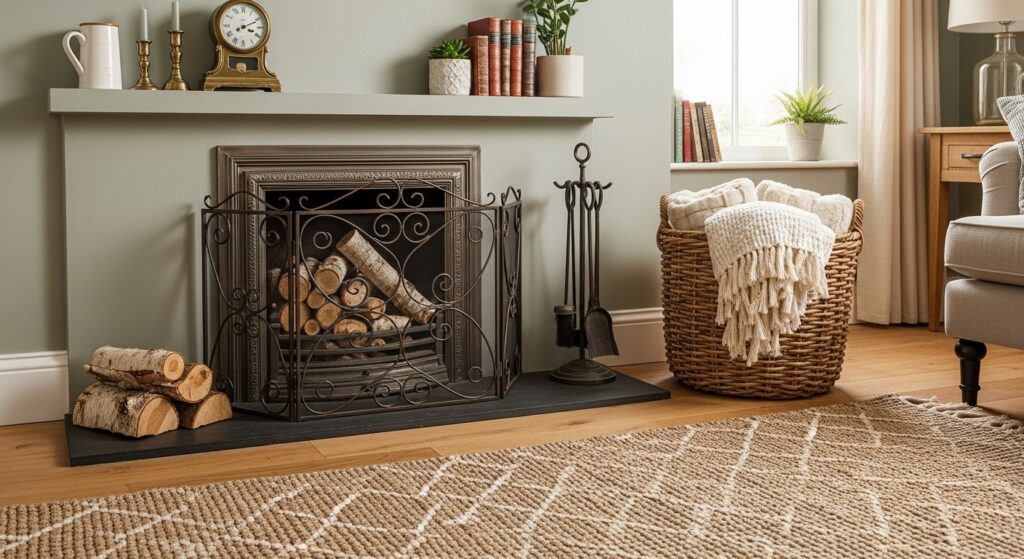
Easy hearth styling ideas worth trying:
- Stack a few birch logs inside an unused firebox — real or faux both work beautifully.
- Group pillar candles in clusters of three or five at different heights inside the firebox.
- Add a decorative screen with a shape or finish that adds visual interest.
- Use a woven basket nearby for firewood — it’s practical and it looks great.
- Layer a hearth rug that complements your main area rug without perfectly matching it.
05 Furniture Around Fireplaces
How you arrange the furniture around your fireplace determines whether the whole room feels inviting or just kind of awkward. The goal is simple enough: everyone sitting in the room should be able to see the fireplace comfortably, and the seating should feel like it’s gathering around it rather than scattered throughout the space. Think of the fireplace as the natural center of conversation in the room.
The classic layout that works in the widest range of rooms is a sofa facing the fireplace, anchored by a coffee table, with a pair of armchairs on either side. That U-shape creates a warm, conversational feel that draws the fireplace in as the focal point. If your room is too small for that full setup, even a single sofa angled toward the fireplace reads much better than anything pushed flat against a wall. And speaking of walls — please, float your furniture inward. Pressing everything to the perimeter of a room almost always makes it feel smaller and more rigid, not bigger.
One question that comes up constantly: should the TV go above the fireplace? It can work if you use a tilting mount so you’re not craning your neck at an uncomfortable angle. But honestly, many designers — and plenty of homeowners who’ve tried it — find that keeping the TV somewhere else entirely just makes the room feel better. A fireplace-only focal wall is calmer, more elegant, and easier on the eyes. Something worth considering.
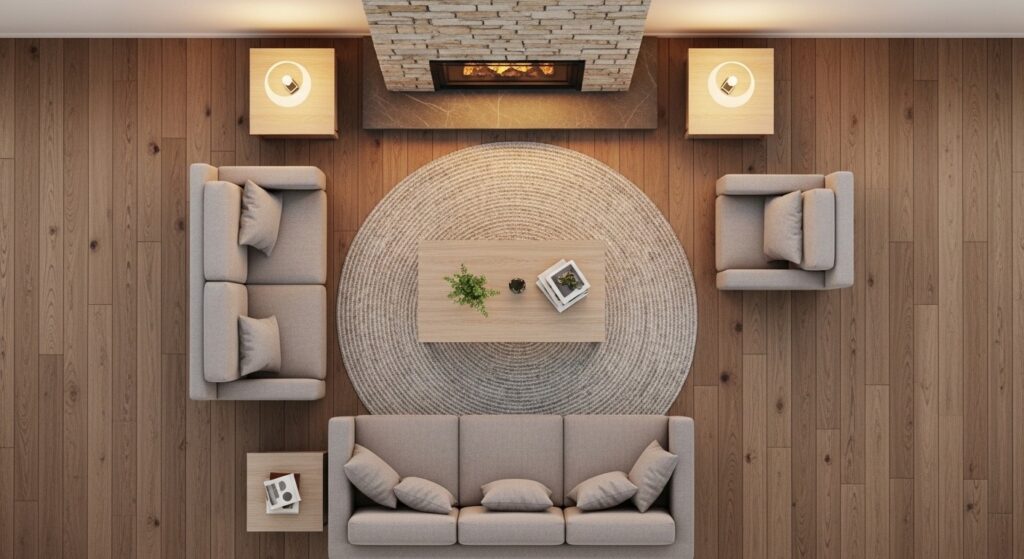
Layout principles that make a real difference:
- Float your seating inward toward the fireplace — don’t line everything up against the walls.
- Keep all seating within roughly 8 to 10 feet of the fireplace so it still feels like a connected grouping.
- A coffee table anchors the seating zone and makes the arrangement feel deliberate.
- Matching side tables or small accent tables on each side of the fireplace create natural symmetry.
06 Non-Working Fireplace Ideas
A sealed or purely decorative fireplace is genuinely not a problem — it’s actually a pretty great design opportunity once you reframe how you’re thinking about it. You get all the visual impact of the architectural feature with none of the upkeep, and you have complete creative freedom over what goes inside. The only real goal is making the space look like you meant it to look that way.
One of the most popular approaches is to fill the firebox itself with something that has visual height and texture. Dried pampas grass or tall dried branches are both stunning and surprisingly low maintenance. A curated stack of art books adds a relaxed, collected feel. String lights tucked inside the firebox create a warm, soft glow that works beautifully on an evening when you want ambiance without any real fire. A cluster of pillar candles at different heights is another option that photographs especially well.
If you’re open to something a bit more involved, painting the interior of the firebox a bold accent color is one of those surprisingly impactful upgrades that costs almost nothing. Deep charcoal, forest green, and matte black are all beautiful choices that make whatever you place inside really pop. You could also add a tile surround or swap in a decorative insert — neither requires structural changes, and both take a forgotten corner of the room and turn it into something genuinely interesting.
Great non-working fireplace styling ideas:
- Fill the firebox with dried botanicals, a stack of books, or a grouped candle display.
- Add string lights inside for a soft, ambient glow without any heat or flames.
- Paint the firebox interior a bold contrasting color — it transforms the whole area instantly.
- Install a decorative tile surround for a more architectural, permanent upgrade.
- Treat the firebox as a display niche for small ceramics, sculptures, or a single statement plant.
07 Electric and Gas Options
No working fireplace? Genuinely not a dealbreaker. Electric and gas inserts have come a long way in the last decade, and the better ones are nearly impossible to tell apart from a real fire in everyday use. For renters and apartment dwellers especially, an electric insert is one of the most practical ways to add real ambiance to a living room — no permits, no installation process, just plug it in and enjoy.
Electric inserts are designed to fit into existing fireboxes or mount directly to the wall as standalone units. Most of the current-generation models let you adjust the flame color, brightness, and heat output independently, which means you can run the flame effect in warmer months purely for the visual atmosphere without heating up the room. In a well-styled surround with a thoughtful mantel above it, a quality electric insert looks convincingly like the real thing.
Gas inserts are a bigger commitment — they do require a professional to install — but they deliver the most realistic fire experience you can get without actually burning wood. If you’re renovating a space or in a position to invest, it’s worth getting a quote. The warmth is consistent, the flame is beautiful, and the operation is as simple as a light switch. Over time, most people who install them find they use the living room differently. Cozier, somehow.
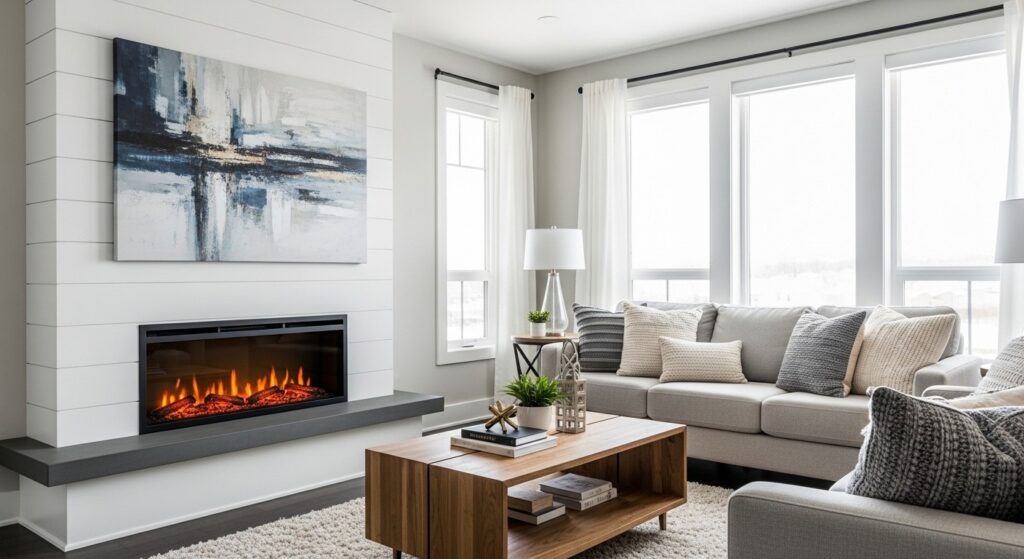
What to know about each type:
- Electric inserts: Renter-friendly, no installation needed, plug-and-play convenience.
- Wall-mount electric units: Work well in spaces without an existing firebox to work with.
- Gas inserts: Most realistic flame and heat — professional installation required.
- Look for adjustable flame color and independent heat controls when comparing options.
- Check the BTU output if actual warmth matters to you, not just the visual effect.
08 Seasonal Fireplace Decor
One of the genuinely underrated things about having a fireplace in your living room is the built-in excuse it gives you to refresh the space four times a year. You don’t need to repaint, rearrange furniture, or buy anything particularly expensive. Just swap out the mantel and hearth styling with each season and the whole room feels like it’s had a mini makeover. It’s one of the most budget-friendly ways to keep a home feeling current and alive.
Fall and winter are naturals for the fireplace. Thick pillar candles, dried botanicals, pine cones, sprigs of evergreen, and warm tones in terracotta, amber, and cream all lean into the season without trying too hard. Spring is a good time to lighten everything up — fresh blooms in simple vases, softer ceramic tones, a bit more open space on the mantel. Summer can be minimal and breezy: a single statement plant, a piece of driftwood, or a clean architectural arrangement that feels more modern and airy.
The trick to making this easy is keeping a small storage box — one for each season, or at least one for winter and one for everything else. When you switch things over, it takes maybe 20 minutes and you end up with a room that feels genuinely considered all year round. It’s one of those habits that seems small but makes a surprisingly big difference in how much you enjoy being in the space.
Season-by-season quick guide:
- Fall: Dried botanicals, small pumpkins or gourds, warm amber and terracotta tones throughout.
- Winter: Evergreen garland, stockings hung with care, layered candles, soft metallics as accents.
- Spring: Fresh-cut flowers or stems, lighter ceramic vessels, pastel tones and airy fabrics.
- Summer: Minimal arrangement, coastal textures like rope or shell, a single lush plant.
09 Common Mistakes to Avoid
Even with a solid plan and a good sense of what you’re going for, a few classic mistakes tend to trip people up right at the start. Here are the four most common ones — and the simple fix for each.
- Not measuring before you buy. This one is responsible for so much wasted time and money. A mirror that’s too small above a mantel looks like a mistake. Artwork that’s slightly too wide looks overwhelming. Before purchasing anything — art, mirrors, fireplace screens, rugs — tape out the exact dimensions on the wall or floor. Spend two minutes doing this and you’ll thank yourself for it later.
- Ignoring what’s already in the room. Your existing furniture, flooring, and wall colors are already telling a visual story. If you introduce fireplace decor that speaks a completely different design language, the room just won’t feel cohesive, no matter how nice the individual pieces are. Work with what you have, not against it. Build on the story that’s already there.
- Chasing trends instead of your own taste. That layered, maximalist mantel look might be everywhere right now, but if you’re genuinely more of a minimalist, you’ll resent it inside of a week. Decorate for the person who actually lives there and enjoys the space every day. Trends are a useful starting point for inspiration, but they’re a terrible North Star for your actual home.
- Skipping the planning phase. ‘I’ll figure it out as I go’ is how you end up with a cluttered collection of mismatched candles, two pieces of art that fight with each other, and a basket you bought on impulse that doesn’t quite work anywhere. Take 20 or 30 minutes upfront to sketch out your vision, save some reference images, and shop with a list. That bit of planning pays off many times over.
10 Frequently Asked Questions
What’s the most important element to focus on first?
Start with the mantel. It’s the most visible surface in the whole setup and getting it right sets the tone for every other decision in the room. Once you have a mantel that feels balanced and intentional — good height variation, cohesive palette, a mix of textures — everything else starts to fall into place a lot more naturally. Think of it as the anchor that the rest of the room organizes around.
How do I start this project without getting overwhelmed?
Clear everything away from the fireplace first, then spend some time gathering inspiration images — 10 or 15 is usually plenty. Don’t start looking for what to buy. Look for the feeling you want the room to have. Once you’ve identified a few recurring threads across your saved images (maybe it’s always warm tones, or always minimal arrangements, or always a lot of natural texture), those threads become your decision-making filter. Shop only after you have that clarity, and only for what you’re clearly missing.
What’s a realistic budget for refreshing a fireplace living room?
More than you might think is possible with very little. Rearranging what you already own plus adding a few well-chosen accessories — candles, dried botanicals, a secondhand mirror — can run $50 to $100 and make a visible difference. A mid-range refresh with new artwork, a decorative screen, a quality rug, and some candle holders tends to land somewhere between $200 and $500. If you’re thinking about an electric insert, a tile surround, or a fresh coat of paint, budget from $600 upward depending on scope. Either way, start small, see how far styling alone takes you, and build from there.
How long does this kind of project usually take?
A simple mantel refresh using things you already own? 30 to 60 minutes, honestly. If you’re sourcing new pieces, add a week or two for browsing and deciding before any physical arranging begins. A bigger project — new paint, new furniture arrangement, new artwork — usually fills a full weekend comfortably. The part people tend to underestimate is the planning phase, which might take a few evenings of browsing and sketching. But that’s also genuinely the most valuable part of the whole process.
What are the most important mistakes to avoid?
Skipping measurements is the most consistently costly one. Buying pieces without knowing your exact wall dimensions leads to pieces that feel off-scale and underwhelming — and returns are a hassle. The other big one is decorating the fireplace as if it exists in isolation from the rest of the room. Your fireplace decor needs to feel like it grew naturally from the same design language as your furniture and walls. And try not to buy everything at once. Live with what you have, see what the room tells you it needs, and add pieces gradually with intention.
Ready to Make It the Heart of Your Home?
Here’s the honest truth: your fireplace is already most of the way there. The architecture is doing its job — you just need to help it along with some intentional styling choices. And you really don’t need to do everything at once. One well-layered mantel, one small furniture rearrangement, one hearth refresh — these things add up fast. Before long you’ve got a room that feels genuinely designed rather than just decorated.
So pick one idea from this guide and start there. Maybe it’s clearing everything off the mantel and rebuilding it with the layering principle in mind. Maybe it’s floating the sofa a couple of feet inward. Maybe it’s painting the inside of a non-working firebox a deep, beautiful color and seeing what happens. Whatever it is, start this weekend. The room you’re picturing is closer than you think — and it starts with just one good decision.
Keep exploring:
- Cozy Living Room Ideas — warm, layered spaces that feel like home
- Modern Living Room Ideas — clean, calm, and effortlessly collected
- Wall Decor Ideas — from gallery walls to statement pieces