
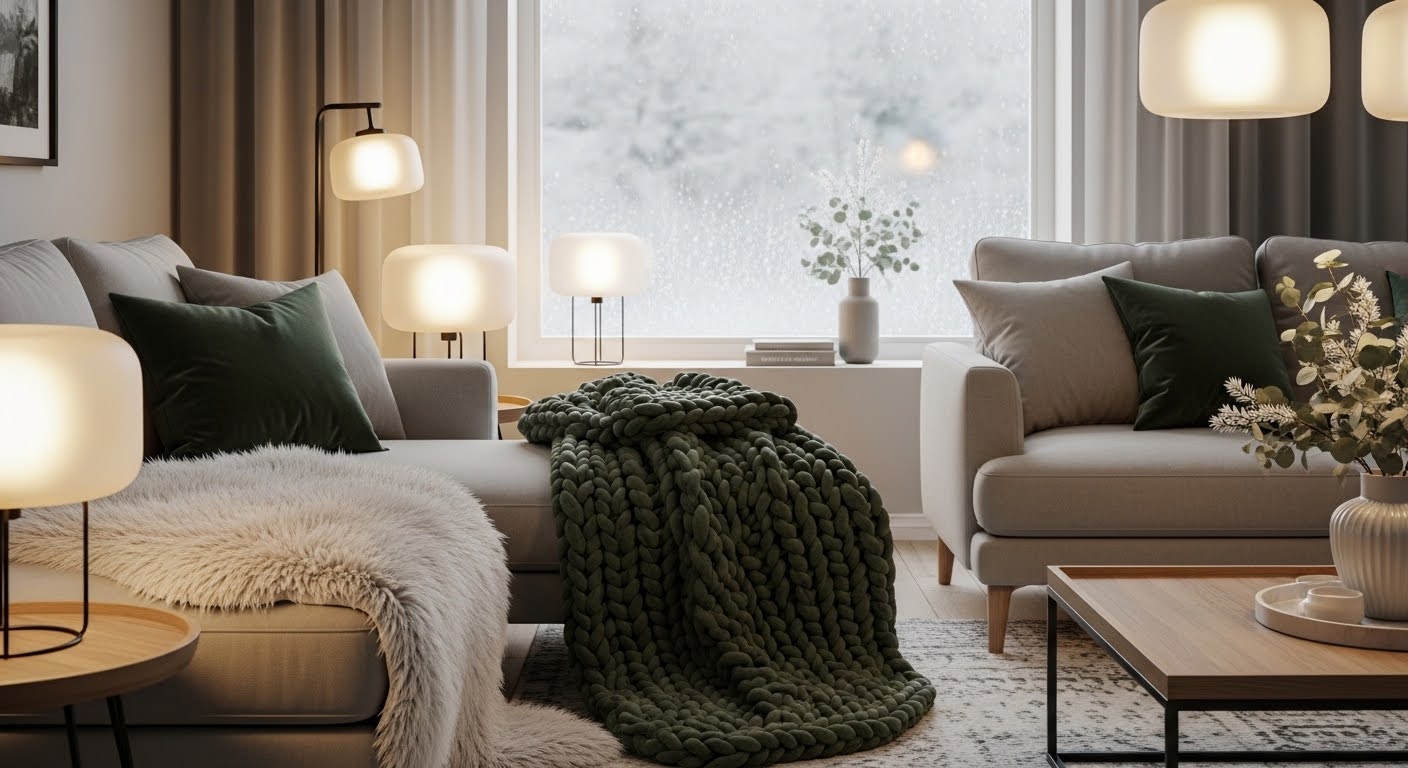
Winter Living Room Ideas: Cozy Season Essentials
When the temperature drops and the days get shorter, your living room becomes the heart of your home. But if yours feels more like a cold waiting room than a cozy retreat, you’re far from alone. Most of us scroll through beautifully styled winter rooms online and then look around at our own space wondering where it all went wrong. Especially in a small apartment, that gap can feel pretty discouraging.
Here’s the thing though: you don’t need a big renovation, a huge budget, or even a lot of square footage to get that warm, lived-in feeling. What you mostly need is to know which details actually matter and how to layer them the right way. Sometimes it’s as simple as swapping a lightbulb or folding a throw differently.
That’s exactly what this guide covers. You’ll find practical, beginner-friendly winter living room ideas that work in real homes. From textures that instantly make a room feel warmer to lighting changes that shift the whole mood of a space, these are the things that actually move the needle. Let’s get into it.
Quick Summary
WHO THIS IS FOR
FORComfort-seekers, homebodies, andanyone wanting a warmer home this season.
TIME TO READ
6 min
TOP 3 TAKAWAYS
RELATED READING: Cozy Living Room Ideas · Fireplace Living Room Ideas · Fall Living Room Decor
1. Winter Cozy Essentials
Every genuinely warm winter living room starts with a short list of high-impact pieces that do most of the heavy lifting. Think of these as your foundation. A chunky throw folded over the sofa arm. A warm lamp at eye level. Something that adds physical warmth to the floor, whether that’s a rug or a soft mat under the coffee table. Get these things right and everything else falls into place.
What makes these essentials work so well is that they hit more than one sense at a time. A textured knit throw looks warm even before you reach for it. A flickering candle makes a room feel alive in a way overhead lights never can. When you layer a few of these sensory details together, the room stops feeling decorated and starts feeling inhabited.
You don’t have to add everything at once. Start with two or three pieces that you’re actually excited about and build from there as the season settles in.
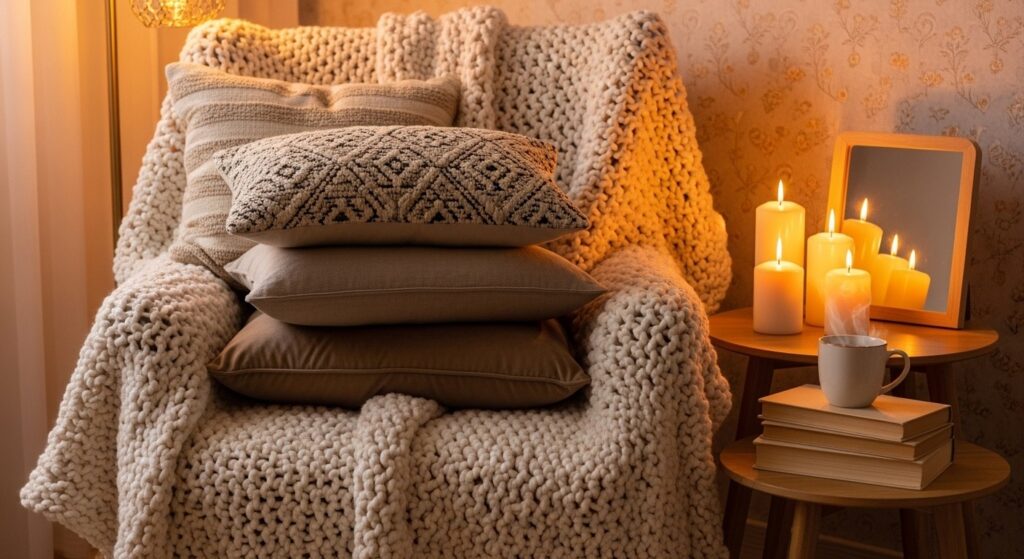
- A large area rug to anchor your seating zone and take the chill off bare floors
- At least two throw blankets — one neatly folded, one casually draped
- Cushions in warm-toned covers: amber, rust, cream, or deep green
- A candle cluster or wax warmer as a low focal point
- A side table or tray to hold drinks and small seasonal objects
2. Holiday vs Everyday Winter Decor
There’s a useful distinction that most home decor advice skips over: holiday living room decor and everyday winter decor are not the same thing. Holiday decor marks specific occasions. Everyday winter decor carries you through the whole season, from the first cold snap all the way into early spring.
Once you build a solid everyday winter base, you can add holiday accents on top and then remove them after the celebration without the room feeling stripped and sad. Think of holiday pieces as accessories rather than the whole look. A set of festive cushions, a seasonal wreath, a few special candles — these slot in and out without disturbing the room underneath.
This approach is especially valuable in small spaces, where over-decorating for a specific holiday tends to make daily life feel cluttered and a little exhausting.

Everyday winter base: warm textiles, muted tones, natural elements, ambient lighting
Holiday layer: a wreath, seasonal color accents, festive candles, one or two statement pieces
- After the holidays, remove the layer and your room still looks warm and finished
3. Warm Textiles and Throws
Textiles are probably the single most effective tool in the winter decor toolkit. Swapping out lightweight cushion covers for heavier woven or velvet versions instantly changes how a room reads, and it costs almost nothing if you already own the cushions. The same logic applies to your sofa. A warm-toned throw draped across the back can completely shift a piece of furniture from summer mode to winter-ready.
The goal isn’t just to add more things, though. It’s to vary the texture. A chunky knit blanket alongside a smooth velvet cushion alongside a woven cotton throw creates that layered quality that makes a room feel genuinely cozy rather than just staged. Variety in texture gives both your eyes and your hands something interesting to engage with.
If you’re working with a smaller room, keep your textile colors within two or three coordinating tones so the layers look intentional rather than mismatched.

- Chunky knit or waffle-weave throws for sofas and armchairs
- Velvet or corduroy cushion covers in rust, forest green, or deep ochre
- A large area rug in a warm neutral to replace any lighter warm-weather rugs
- Heavier curtains in linen, velvet, or cotton twill to hold warmth in the room
4. Winter Light Strategies
Nothing undermines winter coziness faster than harsh overhead lighting. Cool white or bright ceiling fixtures are great for getting things done, but they’re terrible for creating atmosphere once the sun goes down. In winter, your lighting needs to come down. Table lamps, floor lamps, and candles at eye level or below create a completely different mood than a single overhead source ever can.
The color temperature of your bulbs makes a surprising difference too. Swap any cool-white or daylight bulbs for warm-white ones in the 2700K to 3000K range. This is a two-dollar change that can make your entire room feel noticeably warmer, especially in the evenings. It’s one of those low-effort adjustments that always pays off more than you’d expect.
The real goal is to have options. Overhead lighting for when you need to see clearly, lamps for relaxed evenings, candles for atmosphere. Being able to shift between these throughout the night is what gives a room real flexibility.
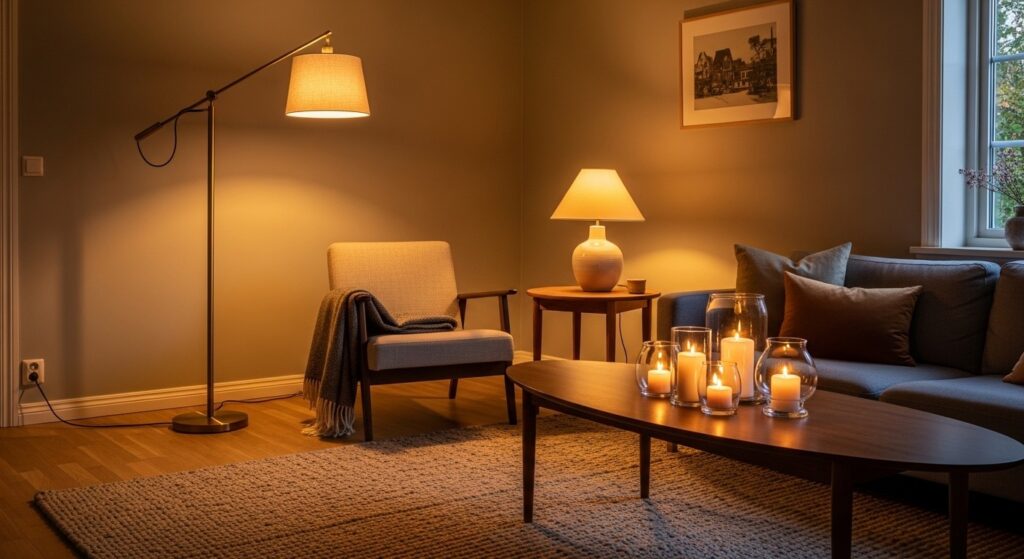
- Replace cool-white bulbs with warm-white (2700K) throughout the room
- Add a floor lamp in a dim corner to eliminate cold, shadowy areas
- Run string lights along a shelf, mantel, or window frame for soft fill light
- Group candles in odd numbers (three or five) for a more composed, natural-looking arrangement
5. Neutral Winter Palette
A winter color palette doesn’t have to mean dark, dramatic walls. If you’re renting and can’t paint, the most practical approach is to let your accessories and textiles do the work. Creamy whites, soft taupes, warm beige, aged linen, and muted terracotta all read as warm without requiring any kind of commitment. They’re also easy to build on as the season progresses.
For accent colors, think deep green, rust, burgundy, or navy. The key is using them with restraint. Pick one or two and repeat them in small doses throughout the room: a cushion over here, a vase over there, a throw in the corner. Repetition is what transforms a collection of individual items into something that looks considered.
If you want to make a bigger statement without painting, a temporary wallpaper panel in forest green or charcoal behind a sofa or bookshelf can create a striking backdrop. It’s fully reversible and does a lot for a room’s coziness factor.

Base tones: cream, warm white, soft taupe, aged linen
Mid tones: camel, dusty blush, light terracotta
Accents: deep green, rust, burgundy, charcoal, or muted gold
- Use the 70/20/10 rule: 70% base tones, 20% mid tones, 10% accent
6. Natural Winter Elements
Nature is one of the most affordable and overlooked sources of winter decor. Pinecones, dried branches, preserved eucalyptus, winter berries, raw wood — these things bring a grounded, seasonal quality to a room without looking overdone or try-hard. A lot of them you can find on a walk, at a local market, or at a craft store for very little money.
When you group natural elements together on a tray, shelf, or mantel, they start to feel like a deliberate arrangement rather than a random collection. Vary the heights within the group: a tall branch in a ceramic vase, a medium-sized candle next to it, a small bowl of pinecones in front. Different levels create visual movement and give the eye somewhere interesting to travel.
Natural elements also make excellent year-round winter pieces. A wreath made of dried botanicals, for example, works all the way through the cold months and never reads as specifically tied to one holiday.
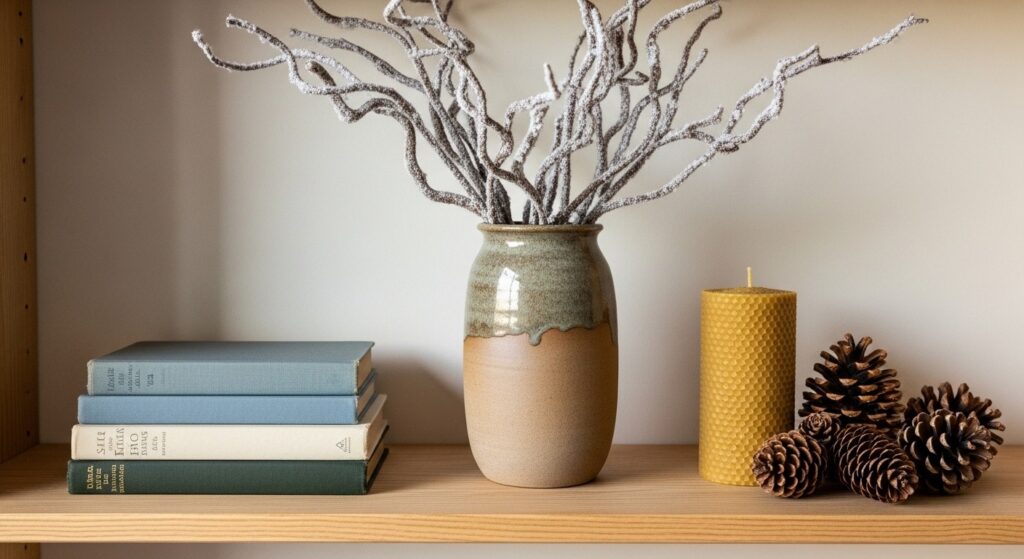
- Dried branches or birch logs in a tall floor vase or beside the fireplace
- A bowl or tray of pinecones as a simple coffee table centerpiece
- Preserved greenery such as eucalyptus, olive branches, or juniper in a vase
- Raw wood accents: a cutting board used as a tray, a wooden bowl, a log slice as a coaster
7. Post-Holiday Winter Decor
January has a particular kind of flatness to it. The decorations come down, the days are still short, and there’s often nothing visually warm left in the room. If you’ve built a solid everyday winter base, though, this doesn’t have to be a problem. Your room still looks intentional and comfortable even without a single festive item in sight.
The simplest refresh after the holidays is a straightforward swap. Replace obviously seasonal pieces with more neutral versions of the same thing. Trade a deep red throw for a camel or rust one. Swap a holiday-scented candle for something woodsy or unscented. Bring in a fresh bunch of dried botanicals or a new plant if you want a bit of life in the room.
January is also a great time to edit things down a bit. The holidays tend to bring extra items into a home, and clearing them out afterward can genuinely improve how a room feels. A slightly more edited room in the depths of winter tends to feel calm and restful rather than bare. Most of us need that in January more than we realize.
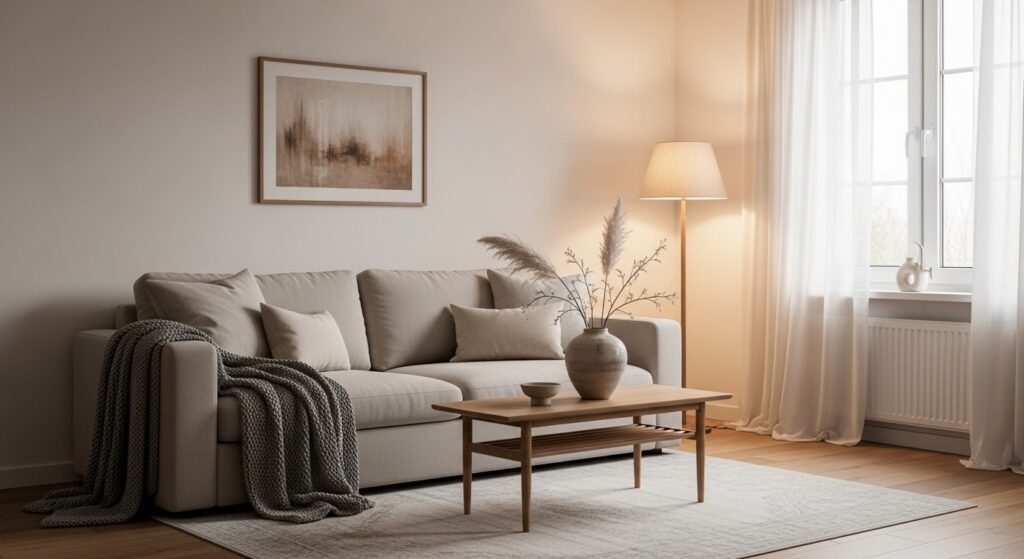
- Swap holiday-specific colors for your everyday winter palette
- Add a new plant, such as a trailing pothos or a sculptural succulent
- Rearrange a few items rather than buying anything new — fresh placement gives a fresh feeling
- Use January as a natural reset: remove anything that no longer feels right in the space
Common Mistakes to Avoid
These are the four things that tend to undermine winter decor most often. All of them are easy to fix once you know what you’re dealing with.
1. Adding too much stuff. More is not the same as warmer. A room full of things can feel busy and overwhelming rather than cozy. Before you add anything new, take a pass through your current setup and remove what isn’t working. You’ll often find the room already looks better before you’ve spent a penny. Edit first, then add selectively.
2. Blocking natural light. Heavy curtains pulled shut all day make a room feel closed-off and dim rather than cozy. Keep them open during daylight hours to make the most of the natural light you have, then draw them at dusk to keep the warmth in. Natural light is still your best asset even in the middle of winter.
3. Using the wrong bulbs. Cool-white or daylight bulbs make a warm room feel clinical, almost regardless of what else you do. Swap them for warm-white bulbs in the 2700K range. It’s one of the cheapest and highest-impact changes you can make. The difference in the evening especially is pretty striking.
4. Ignoring scale. A tiny cushion on a large sofa disappears. A small rug on a big floor looks like a bath mat. Make sure your textiles and decor items are proportional to the room they’re going into. When in doubt, go a size bigger. Oversized throws, larger rugs, and fuller pillow arrangements all read as more intentional and more inviting.
Frequently Asked Questions
What makes a living room feel cozy?
Coziness is really a multi-sensory thing. It’s not just about how a room looks but how it feels, and sometimes even how it smells. The main ingredients are warmth, texture, soft lighting, and a sense of enclosure. A room with bright overhead light and bare, smooth surfaces will always feel colder than one with layered warm lighting, soft materials, and a few textured accents. Personal touches matter too. Framed photos, handmade objects, items that actually mean something to you: these details signal that a space is lived in and loved, which is really the heart of what cozy means.
How do I add warmth without creating clutter?
The secret is intentional layering rather than just accumulation. Choose fewer, larger, or more textural pieces instead of lots of small ones. One oversized throw does more than three small ones. One well-placed floor lamp does more than a cluster of tiny accent lights. Before you buy anything new, edit what you already have. Remove pieces that don’t contribute to the feeling you’re going for. Trays and bowls are your best friends here too: they group small objects together so they read as a composed arrangement rather than random stuff sitting around.
What colors create a cozy atmosphere?
Warm neutrals and earthy mid-tones consistently feel cozy because they reflect warm light rather than bouncing it back harshly. Cream, warm white, camel, soft terracotta, aged linen, and warm taupe are all excellent starting points for a winter living room. For accents, deep greens, burgundy, rust, ochre, and warm charcoal add depth without making the room feel cold. The key detail is the undertone: colors with yellow, orange, or red undertones feel warmer, while those with blue or gray undertones feel cooler. Even if you can’t change your walls, choosing accessories in warm-toned colors will noticeably shift how a room feels.
Can a minimalist room still feel cozy?
Absolutely. Minimalism and coziness are not opposites at all. The difference between a cold minimal space and a warm one usually comes down to texture and lighting. A room with cool lighting, smooth surfaces, and no soft elements will feel stark no matter how well designed it is. Add a chunky rug, a textured throw, warm-toned lighting, and one or two natural elements and the same room starts to feel intentionally calm and genuinely inviting. Minimalist rooms often become the coziest of all when done thoughtfully, because every piece you choose has room to be seen and appreciated.
Wrapping Up
Creating a cozy winter living room is less about following a formula and more about tuning into what makes your particular space feel warm and personal to you. The ideas in this guide, from layering textures to rethinking your lighting to building a seasonal base that lasts all winter, are all starting points. You get to decide how far to take them and which ones actually fit your home, your budget, and your life right now.
The most important thing is just to start somewhere. Pick one section from this guide and act on it this week. Swap a lightbulb, drape a new throw over the sofa, move a lamp to a different corner. Small changes stack up quickly, and before long your living room will feel like the warm, welcoming place that winter deserves.
→ Read next: Cozy Living Room Ideas · Fireplace Living Room Ideas · Fall Living Room Decor