Fall Living Room Decor Ideas: Seasonal Warmth
Every year around the time the air gets that first real bite of chill, I find myself doing the same thing: standing in the middle of my living room, holding a candle and some throw pillows, having absolutely no idea where to start. Sound familiar? There’s something about fall that makes you want to completely reimagine your space — but the gap between that feeling and actually doing something about it can be surprisingly wide.
If you’re working with a small apartment or a room that pulls double duty as an office, a dining area, or something else entirely, the challenge gets even bigger. You might be renting, which rules out painting walls. Maybe your furniture isn’t exactly what you’d choose if you were starting from scratch. That’s totally fine. Some of the most inviting fall living rooms I’ve ever seen were in small, rented spaces — it’s all about working with what you have.
In this guide, I’m going to walk you through the practical side of fall living room decor: where to start, what actually matters, how to use color and texture without overwhelming a small space, and — maybe most importantly — what to put away before you bring anything new in. Let’s make your living room feel like somewhere you actually want to spend the next few months.
Quick Summary
WHO THIS IS FOR
Comfort-seekers, homebodies, and anyone who wants their living room to feel warmer this season.
TIME TO READ
6 min
TOP 3 TAKAWAYS
1. The Less-Is-More Philosophy
Here’s the honest truth about fall decorating: your first instinct is almost always to add too much. And I get it. The seasonal section at any home goods store is genuinely tempting. But there’s a reason rooms that look warm and intentional in photos tend to have fewer things in them, not more.
The real goal with autumn living room ideas isn’t to fill your space with seasonal items — it’s to shift the feeling of the room. You can do that with just two or three thoughtful changes. Swap out your light summer throw for something heavier. Replace a bright pillow cover with something in a warmer tone. Move your furniture a few inches closer together. Those small edits can transform a space more effectively than a full cart of new purchases.
Before you bring anything in, put some things away first. Sounds counterintuitive, but editing creates room for what you’re adding to actually breathe and be noticed. A single beautiful object on a clear surface will always outperform ten objects competing for attention.
- Work in groups of three or five — odd numbers feel natural, even numbers feel stiff
- Clear a surface completely before restyling it; don’t just layer on top
- Put summer items into storage before unpacking anything autumn-related
2. Choosing a Focal Point
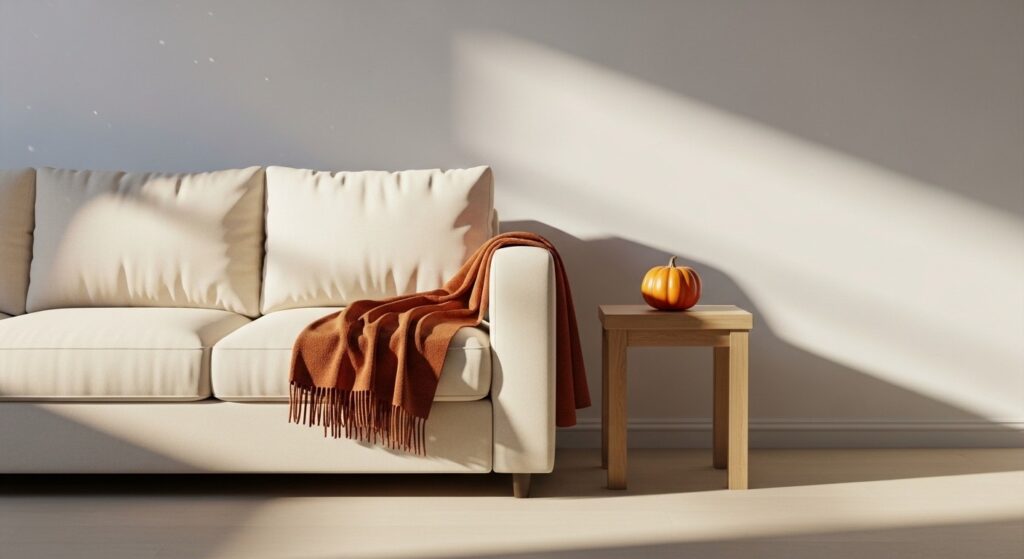
One of the quietest mistakes people make when decorating is trying to give every surface equal attention. The result is a room that feels busy but somehow flat — like there’s nowhere for your eye to land. Every well-put-together room has a focal point: one spot that anchors everything else.
In most living rooms it’s pretty obvious what that spot should be. A fireplace. A large window. A statement sofa or media console. Once you identify yours, the rest of the decision-making gets much easier, because now you have a starting point. Style that one area with care, and then let the rest of the room support it rather than compete with it.
Resist the urge to spread seasonal items everywhere at once. A beautifully styled mantel surrounded by a calm, uncluttered room will always feel more intentional than a fully decorated space where everything is fighting for attention at the same volume.
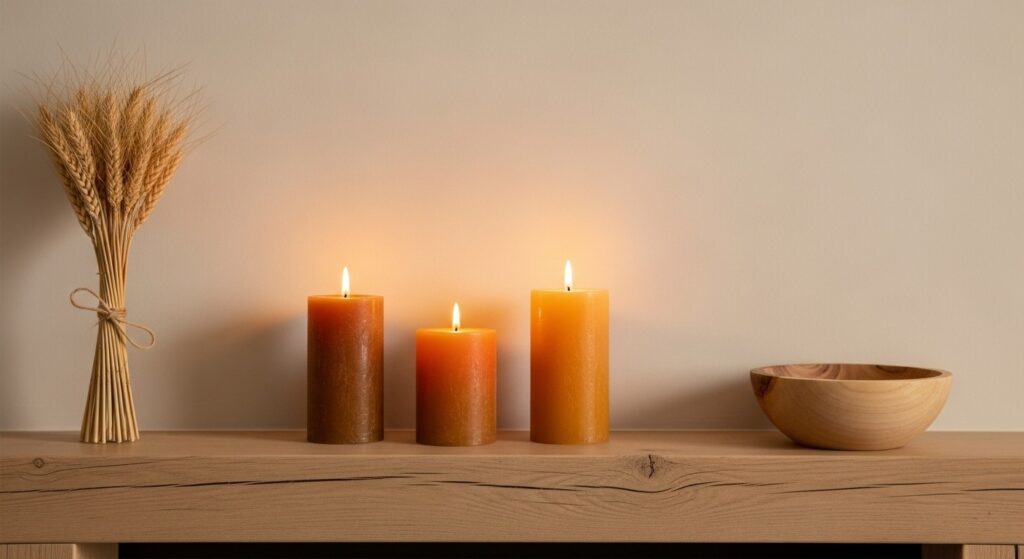
- Fireplace or mantel: Layer candles at varying heights, add a small natural element like dried botanicals or pinecones, keep it uncrowded
- TV console or media unit: Work the surface beside or below it — warm-toned objects at different heights, a trailing plant if you have one
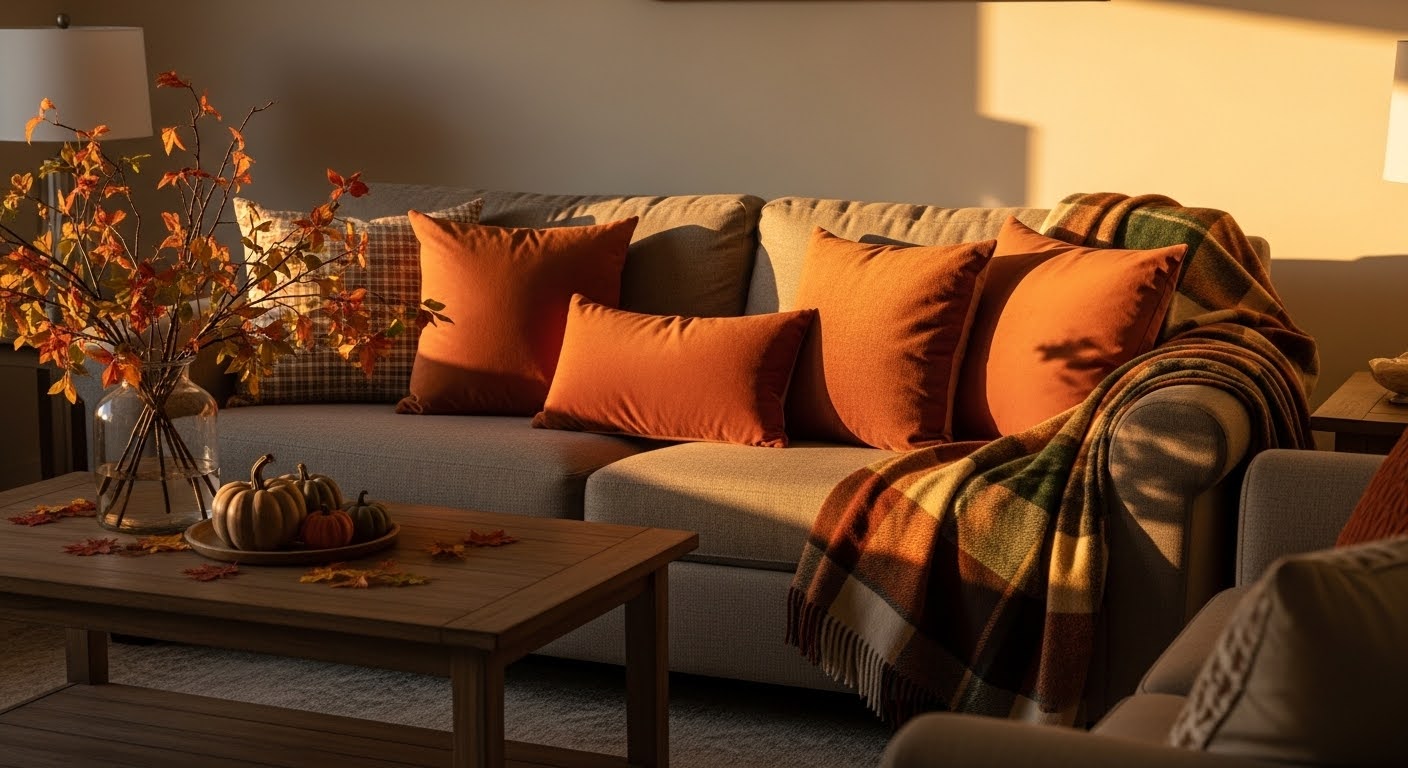
- Sofa: Treat it as your main color statement; pillows and a throw carry a lot of visual weight and are easy to swap seasonally
3. Scale and Proportion Basics
This is the section most decorating guides skip, and I think it’s one of the most useful things to understand. Scale is how big something is relative to your room. Proportion is how pieces relate to each other. When both are off, a room feels wrong — even if you can’t immediately say why.
In compact spaces, oversized seasonal pieces tend to overwhelm. A huge wicker lantern or an enormous dried branch arrangement that looks gorgeous in a large open-plan home can make a small living room feel chaotic. The goal isn’t to think small — it’s to think in proportion to what you’re working with.
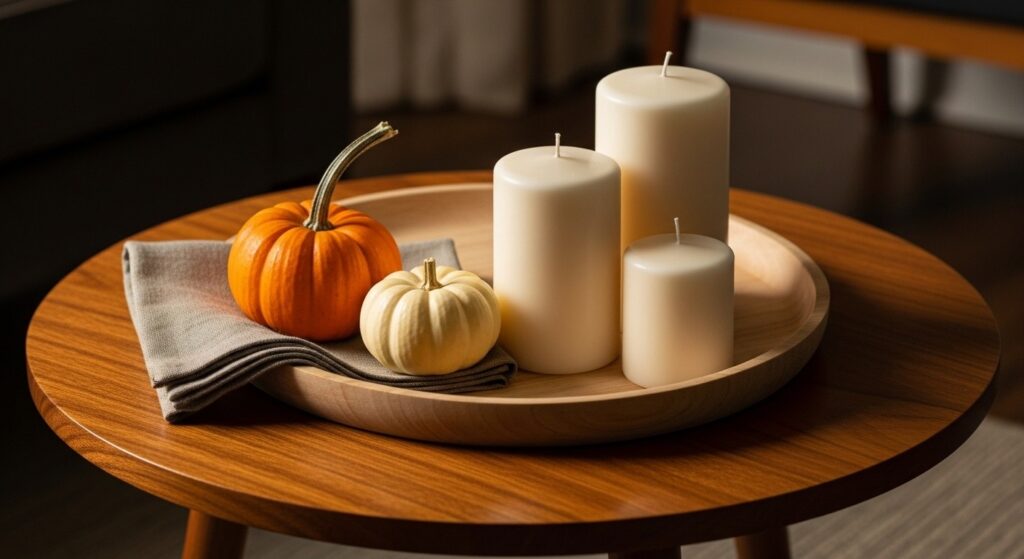
A practical rule: the tallest item in any grouping should be roughly two-thirds the height of the surface it’s sitting on. And when you arrange a few objects together, vary the heights deliberately — tall, medium, low. That rhythm is what makes a vignette feel considered rather than random.
- In tight spaces, smaller pumpkins (roughly 3 to 6 inches) look more deliberate than large ones
- Use a tray to visually contain a coffee table arrangement — it defines the grouping and keeps things from spreading
- For wall pieces, aim for eye level: around 57 to 60 inches from the floor to the center of the piece
4. Mixing Textures Effectively
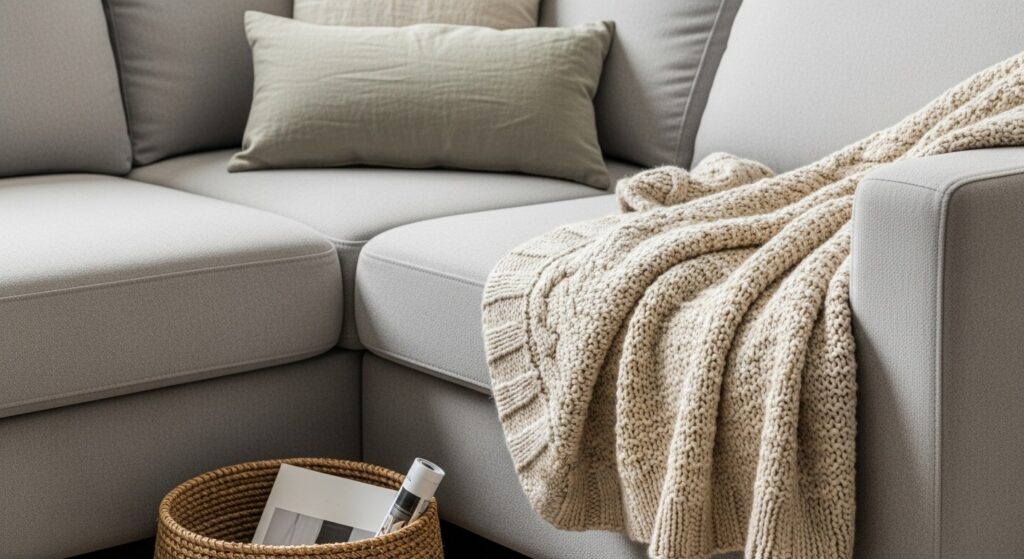
If I had to pick one thing that makes a fall living room actually feel like fall — not just look like it — it would be texture. A chunky knit throw. A rough jute rug under a soft velvet cushion. The contrast between a smooth ceramic vase and a loosely woven basket. That layering of materials is what triggers the physical sensation of warmth, even before you’ve lit a single candle.
The trick is to mix textures with different visual weights. Pair something light and open-weave (a linen pillow, a sheer curtain) with something dense and tactile (a wool blanket, a ceramic pot). That contrast creates depth. A room where everything has the same texture — all smooth or all soft — ends up feeling one-dimensional regardless of the color scheme.
And here’s the practical part: you probably don’t need to buy much. One new throw in a heavier fabric, or a single pair of velvet pillow covers, can shift the entire feel of a sofa when layered with what you already have. Texture is one of the most budget-friendly ways to update a space.
- Rough and natural: Jute rug, wicker basket, raw wood, woven placemats
- Soft and cozy: Knit throw, flannel blanket, velvet cushion, faux fur accent
- Smooth and grounding: Ceramic candle holder, glazed vase, lacquered tray, polished stone
- Try to include at least three distinct textures in any styled corner or vignette
5. Color Coordination Tips
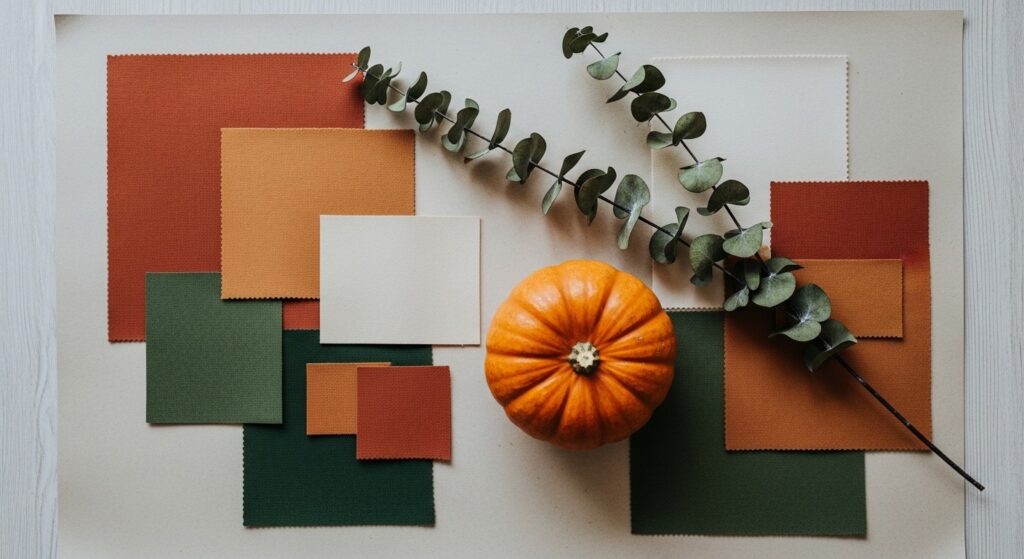
When most people think of fall colors, they immediately picture orange and black — which is perfectly valid, but it’s really just one interpretation of the season. Autumn actually gives you a much wider palette to work with: deep burgundy, terracotta, warm mustard, forest green, camel, rust, and rich chocolate brown. The common thread isn’t any specific hue; it’s warmth. Colors that feel like they belong to a season of slow evenings and early sunsets.
Start by looking at the undertones of what’s already in your room. If your sofa is cool gray, a bright pumpkin-orange will fight it. But sage green, dusty plum, or muted wine might feel like a natural extension. If you have warm wood floors or a tan-toned rug, you’ve already got a warm base to build on — amber, rust, and olive will all feel at home.
Keep your palette to two or three colors maximum. One dominant tone, one supporting shade, and a neutral anchor (cream, warm white, or tan works well). Then repeat each color at least twice around the room — once on the sofa, once on a table surface, for example — so it reads as intentional rather than accidental.
- Warm neutrals as your foundation: Cream, tan, warm white, oatmeal
- One statement color: Terracotta, rust, deep burgundy, or mustard
- One grounding accent: Forest green, navy, deep plum, or charcoal
- Echo each color at least twice in the room so it feels like a deliberate choice
6. Personal Touches That Work
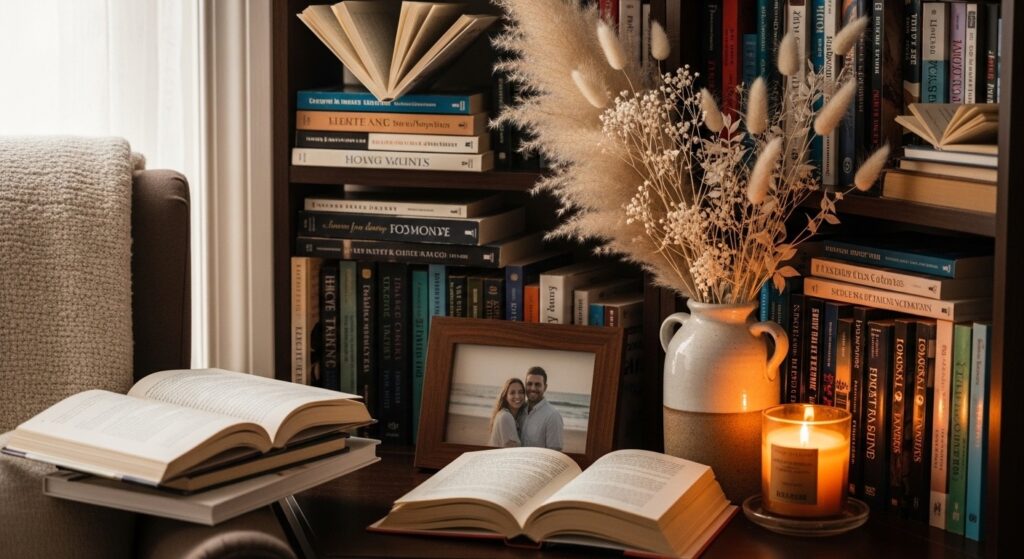
There’s a real difference between a room that looks styled and a room that feels like home. The gap between those two things is almost always personal objects. A candlestick that belonged to your grandmother. A ceramic bowl you picked up at a market years ago. A stack of books you’re genuinely working through. These things don’t just decorate a space — they tell the truth about who lives there, which is what makes a room actually inviting.
You don’t have to go shopping to add personal touches. Take a slow walk through your own home first. A wooden cutting board leaned casually against the kitchen backsplash, moved to a living room shelf for the season. A glass bottle you’ve been meaning to recycle, filled with a few dried branches or stems. A blanket that lives in your bedroom most of the year, draped over the sofa for fall. These things cost nothing and tend to look better than purpose-bought seasonal decor.
In a small space especially, a few meaningful objects will always outperform a collection of generic ones. The room doesn’t need to be full to feel warm. It just needs to feel like yours.
- Display things that have actual history or meaning to you — they photograph well and feel genuine
- Books are underrated decor: stack them, lean them, use them as risers under objects
- Natural and foraged elements — pinecones, dried leaves, seed pods, branches — add warmth at zero cost
7. What to Edit Out
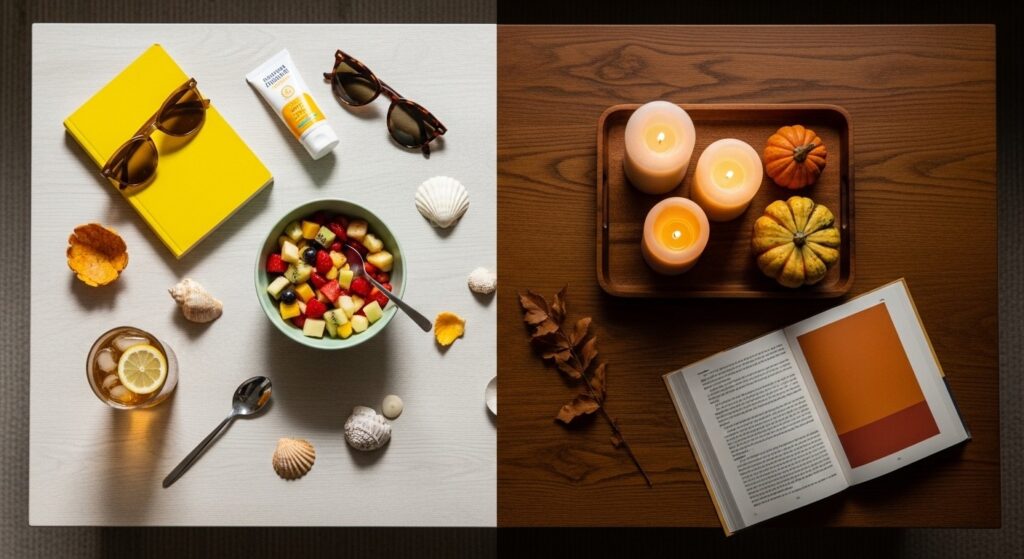
Decorating well is at least half about subtraction. This is the part people tend to skip — or rush through — and then wonder why the new seasonal pieces don’t quite land. If your summer accessories are still out, they’re actively working against your fall palette, no matter how carefully you’ve chosen everything else.
Box up anything that reads as light, bright, or cool: white and pale blue pillows, coastal or beach-themed objects, lightweight linens, anything with a summery print. This doesn’t mean throwing them away — these things will be exactly right again in seven or eight months. For now, store them and give your fall pieces room to do their job.
While you’re at it, deal with the everyday clutter that accumulates on surfaces over time. Remote controls, charging cables, stacked mail, random items that landed somewhere temporarily and stayed. You don’t need to be a minimalist — you just need to contain the visual noise. A small basket with a lid, a shallow tray on the coffee table, a designated spot for everyday items can make a huge difference in how a room feels, especially when you’re trying to shift its whole atmosphere.
- Remove: bright white, ocean blue, and pastel-toned textiles and accessories
- Store: any coastal, beach, or distinctly summery decorative items
- Contain: visible cables, charging stations, mail, and general surface clutter
- Consider moving furniture: pulling seating pieces closer together creates an immediate sense of coziness
Common Mistakes to Avoid
Most decorating missteps aren’t about taste — they’re about process. Here are the four that come up again and again, especially with first-time seasonal decorators:
- Skipping measurements. It sounds obvious, but buying a rug or a large decorative piece without measuring first is one of the most common and frustrating mistakes. A rug that’s too small will make your seating area feel disconnected. One that’s too large leaves you with no floor breathing room in a compact space. Measure before you shop, always.
- Ignoring what’s already there. Your sofa, your floors, your existing rug — these are the loudest voices in the room. If you bring in fall decor that works against their undertones, it will always look like an afterthought. Work with your existing palette rather than trying to override it.
- Following trends over your own instincts. Social media is full of beautiful, highly styled spaces. Some of them will feel right for you, and some won’t. Knowing the difference is genuinely useful. Trend awareness can spark ideas; it shouldn’t dictate your entire approach. Your space should feel like you, not like a screenshot.
- Skipping the planning phase. Even a very loose plan — a quick sketch of which surfaces you’re styling, a rough color palette on your phone — will save you significant time and prevent a lot of mid-project frustration. Five minutes of planning up front is worth an hour of moving things around later.
Your Questions Answered
What’s the most important element to focus on first?
Textiles. Specifically, your throw blanket and your pillow covers. These two things change the visual character of a sofa — which is usually the largest and most prominent piece in a living room — faster than almost anything else. Get those right and the rest of the palette practically suggests itself. Think of them as the starting point rather than the finishing touch.
How do I actually get started without feeling overwhelmed?
Pick one surface. Literally one. Your coffee table, a side table, or a single shelf. Clear it off completely, style it the way you want it to look, step back, and live with it for a day or two before doing anything else. This sounds slow, but it’s actually faster in the long run. You build momentum, your eye gets calibrated, and by the time you move to the next area you have a much clearer sense of what you’re going for.
What kind of budget should I expect?
It really depends on what you already own. Some people do a meaningful seasonal refresh for nothing by rotating items between rooms and pulling things from storage. If you do want to buy a few things, a quality throw blanket and one or two pillow covers will give you the highest visual return on your budget. That small investment — typically somewhere in the range of $30 to $80 for both — can carry the whole look without needing much else.
Realistically, how long will this take?
A simple refresh — editing out summer items, rearranging what you have, and styling two or three surfaces — usually takes two to four hours on a weekend afternoon. If you’re making bigger changes like rearranging furniture or waiting for new items to arrive, plan for a full weekend and build in some breathing room. The upfront planning time always pays for itself. Even fifteen minutes spent thinking it through before you start will noticeably reduce how long the actual work takes.
One Last Thing Before You Start
Fall home decorating doesn’t require a large budget, a big space, or any particular design experience. What it really requires is a willingness to be a little intentional — to think about what you want the room to feel like, identify one place to begin, and then actually begin. The warm, inviting living room you’re picturing is genuinely within reach, and probably closer than you think.
Give yourself permission to take it slowly. Style one area. See how it feels. Adjust. You’re not trying to produce a finished magazine spread in a single afternoon — you’re trying to create a space you’ll actually enjoy spending time in over the next few months. That’s a much more forgiving and enjoyable goal than perfection.
Keep exploring:
→ Cozy Living Room Ideas
→ Wall Decor Ideas