Textured Living Room Ideas: Depth Through Materials
Something about your living room just feels off. You repainted, swapped out the furniture, maybe even hung a few new frames — but it still feels like a showroom rather than a home. That nagging feeling? It usually comes down to one thing: texture. Most people overlook it completely, and it shows. Texture is what makes a room feel layered and alive, the kind of space that actually invites you to sit down and stay a while.
If you’re renting a small apartment or just getting started with decorating, this might all sound a bit intimidating. Mixing materials, layering fabrics, balancing surfaces — it sounds like something that requires a design degree. It really doesn’t. Adding texture to your living room is one of the most forgiving, beginner-friendly upgrades you can make, and unlike painting or replacing furniture, you can do it gradually, one piece at a time, without blowing your budget.
This guide walks you through everything: why texture makes such a difference, which materials work best in small spaces, how to layer them without the room feeling crowded, and what to watch out for along the way. By the time you reach the end, you’ll have a clear plan — one you can actually start this weekend.
Quick Summary
WHO THIS IS FOR
Home decor beginners and anyone who wants to refresh their living room — especially in a small apartment
TIME TO READ
5 min
TOP 3 TAKAWAYS
Why Texture Matters
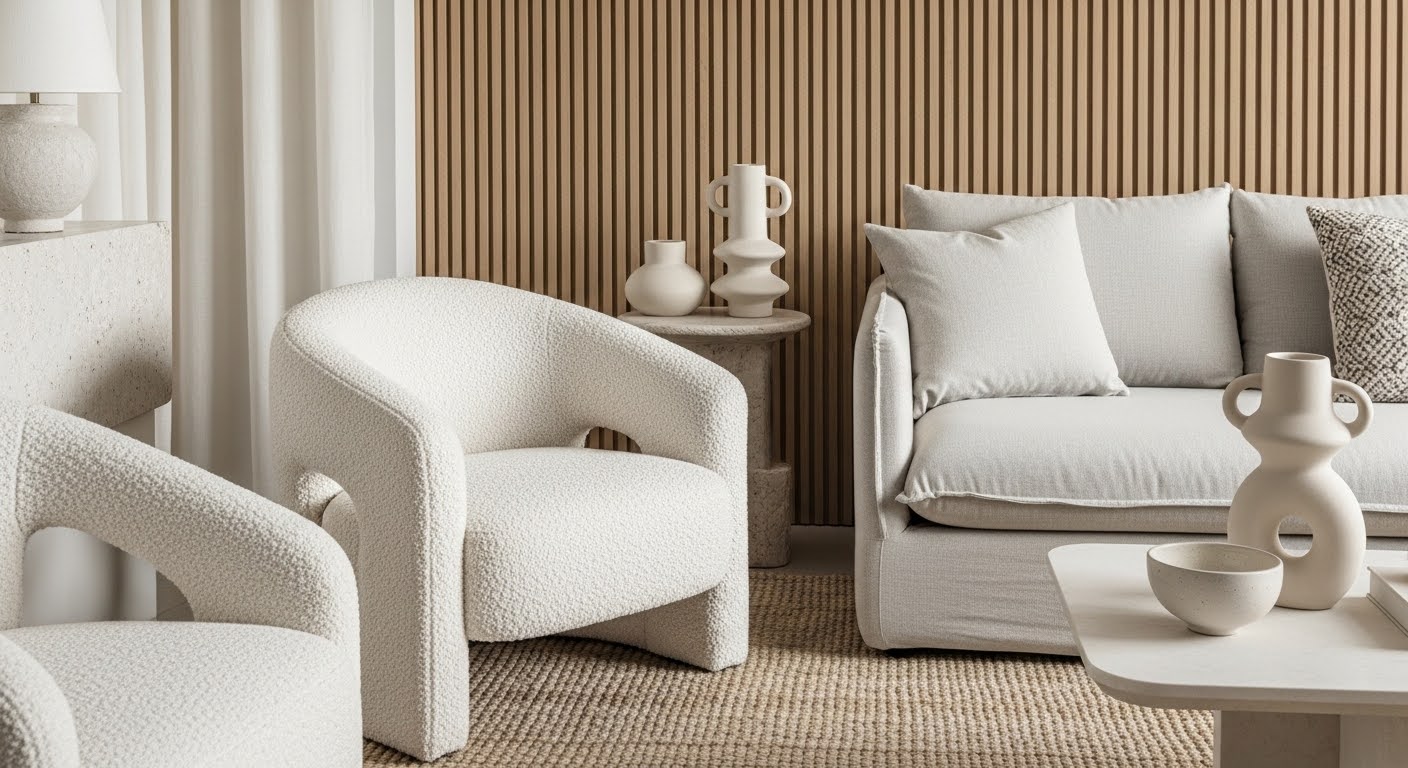
Here’s a simple way to think about it: color gives a room personality, furniture gives it function, but texture gives it soul. It’s that hard-to-name quality in rooms that feel genuinely comfortable — the reason you walk into some spaces and immediately want to curl up on the sofa. Texture creates visual depth, which is a fancy way of saying your eye has interesting places to travel even in a small room.
There’s also an emotional side to this that doesn’t get talked about enough. Rough linen on a cushion feels grounding and warm. A smooth ceramic vase feels composed and calm. When you mix those different sensory signals in the same room, something clicks. The space stops feeling decorated and starts feeling considered. That’s the shift you’re going for.
And here’s the part small-space folks will appreciate: texture doesn’t take up floor space. You can completely transform the atmosphere of a compact living room without moving a single piece of furniture. That’s a pretty rare thing in home decor.
Mixing Different Materials
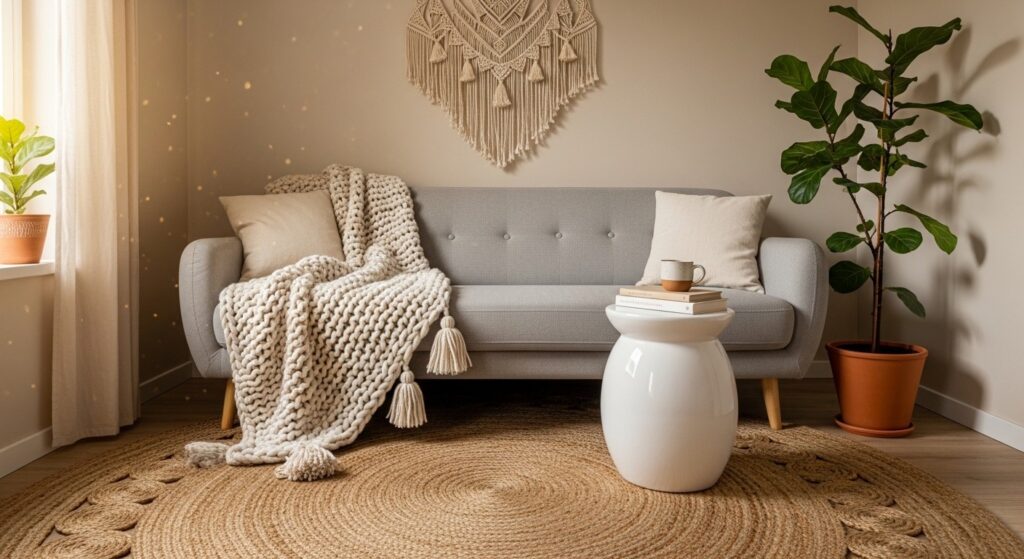
The rule that makes mixing materials much less intimidating: aim for at least three different types in the same room. One rough, one soft, one smooth. That trio gives your eye somewhere to move and keeps the room from feeling like it was assembled from a single catalogue page.
What surprises a lot of people is how well unlikely pairings work. A chunky knit throw draped over a smooth leather sofa, for example — each material makes the other look better because of the contrast. You don’t need everything to match. You just need everything to stay within a cohesive colour palette while the textures do the interesting work.
A few combinations that consistently work well, even for beginners:
- Linen sofa + rattan side table + smooth ceramic lamp base
- Velvet cushions + raw wood shelf + woven basket for storage
- Cotton rug + glass coffee table + a chunky knit throw
- Leather accent chair + jute rug + soft linen curtains
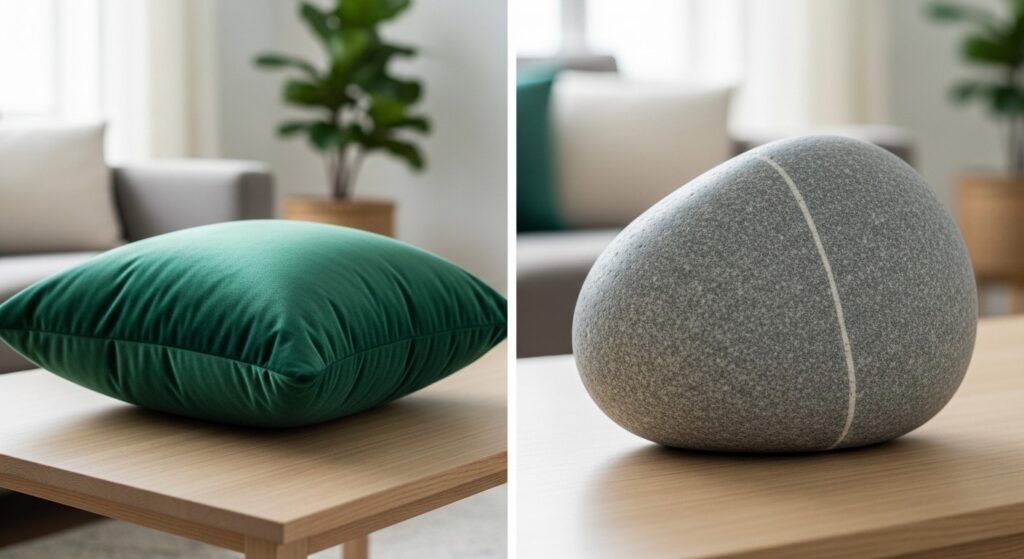
Soft vs Hard Textures
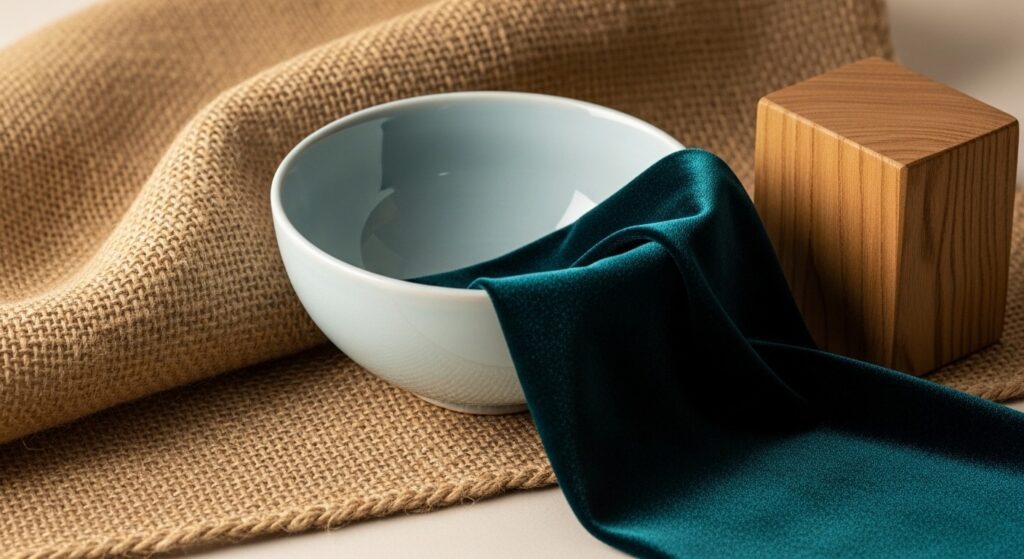
Thinking in terms of soft versus hard is one of the most useful frameworks you can use when decorating. Soft textures — velvet, linen, cotton, wool — absorb both light and sound. They make a room feel warmer, quieter, and more enveloping. If you want a room that feels like a deep exhale at the end of a long day, lean into soft textures.
Hard textures — wood, stone, ceramic, metal — do the opposite. They reflect light, add structure, and give a room a sense of permanence. Too many soft textures and a room can feel shapeless; too many hard ones and it starts to feel cold and institutional. The sweet spot is somewhere in between.
A starting ratio that works well for most living rooms: roughly 60% soft, 40% hard. That’s not a rigid rule — it’s just a helpful anchor when you’re staring at your space trying to figure out what’s missing.
- Soft examples: throw blankets, upholstered sofas, fabric curtains, area rugs
- Hard examples: wooden side tables, stone coasters, ceramic planters, metal floor lamps
Natural Textures to Use
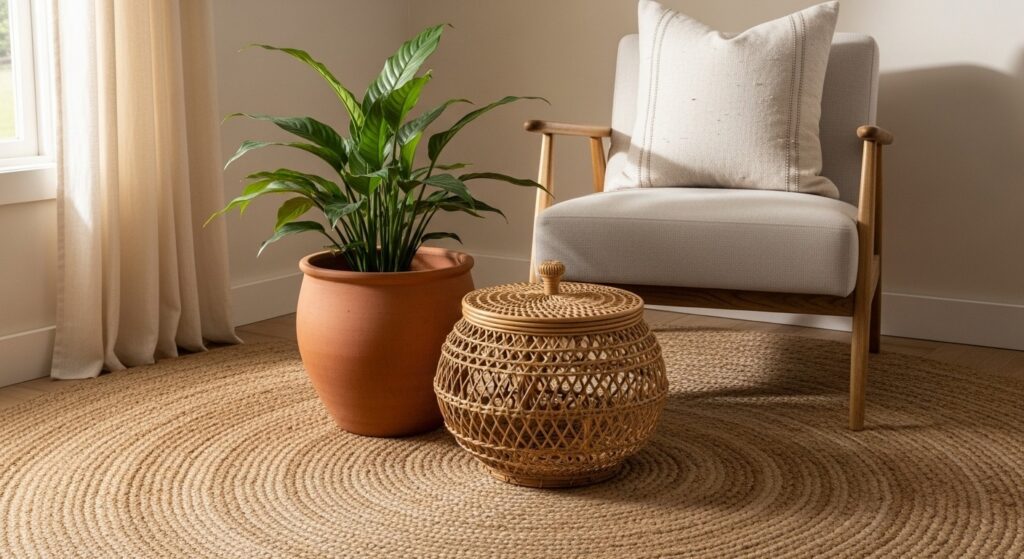
If you’re not sure where to start with materials, natural ones are the most forgiving entry point. They come pre-loaded with texture — visible grain, organic weave, subtle variation — so they do the work for you. They also tend to look better with age rather than worse, and they play nicely with almost every decorating style, whether you’re going for a minimal, boho, or modern look.
Even a single natural element can shift the whole feel of a room. A jute rug underfoot. A rattan side table. A small terracotta planter on the windowsill. None of those things are expensive or complicated, but together they build a warmth that synthetic materials rarely replicate.
Natural textures that work especially well in smaller living rooms:
- Jute and sisal rugs — earthy warmth underfoot, no visual bulk
- Rattan and bamboo — lightweight, airy, and textural without feeling heavy
- Linen and cotton fabrics — beautifully imperfect weaves that soften any sofa
- Raw or live-edge wood — organic grain that adds interest even in small shelf form
- Terracotta and unglazed ceramics — matte, porous, and quietly lovely
Textile Layering
Textiles are the fastest and most reversible way to add texture to a living room. Changed your mind? Fold it up and try something else. For renters, this is genuinely liberating — you can completely transform a space without a single nail hole or paint stroke.
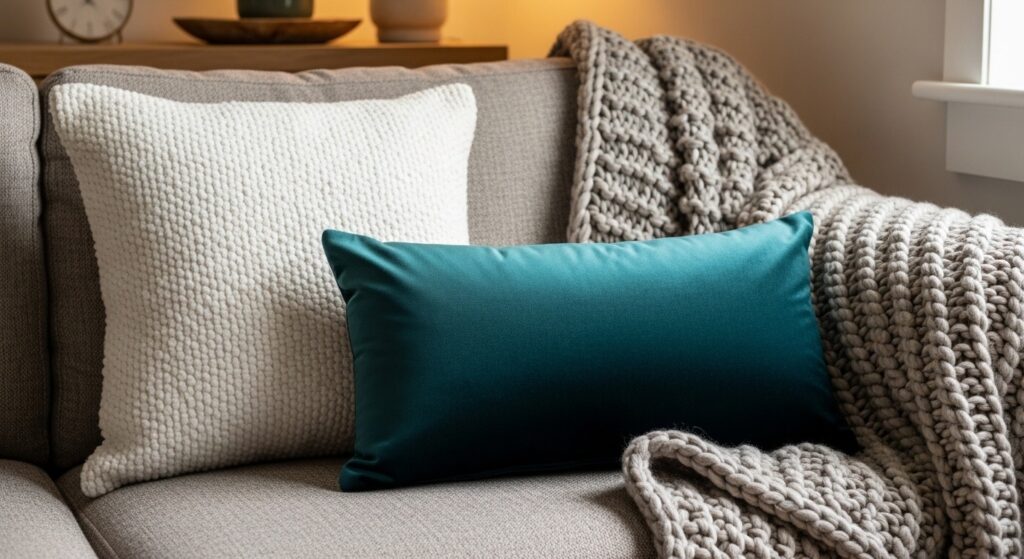
The most effective approach is to build from the floor up. Your rug anchors everything; choose it first. Then move to your sofa — the largest upholstered surface in the room. Add cushions in a mix of fabrics, maybe a smooth velvet next to a nubby boucle or a crisp cotton. Drape a throw over one arm of the sofa in a contrasting weave. Let things look slightly relaxed. That natural, lived-in quality is exactly what makes a room feel genuinely inviting rather than staged.
The layering order to follow:
- Layer 1: Area rug (sets the base texture for the whole room)
- Layer 2: Sofa fabric (your biggest upholstered surface)
- Layer 3: Cushions in two or three different fabric types
- Layer 4: Throw blanket in a contrasting weave or material
- Layer 5: Curtains — often forgotten, but hugely impactful
Texture Without Clutter
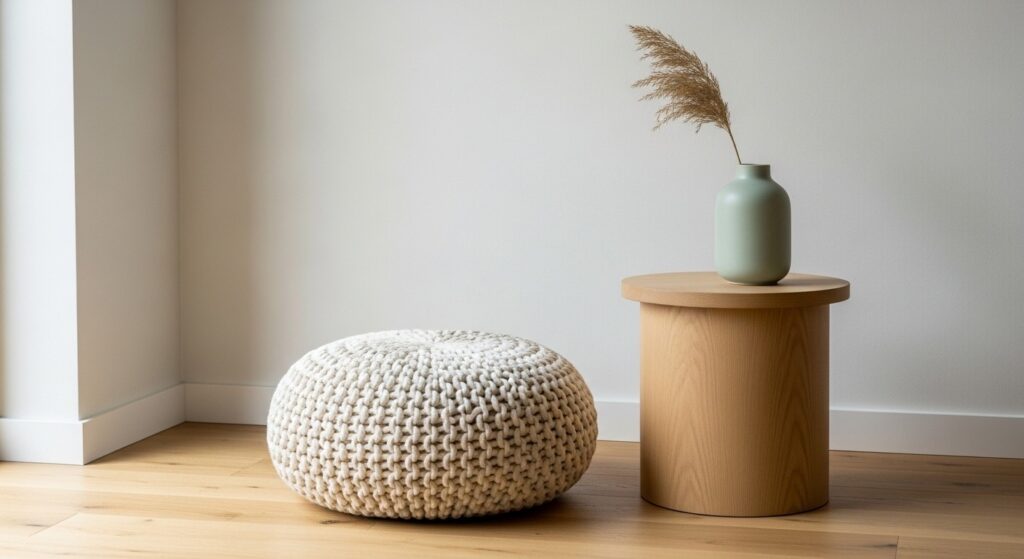
The biggest concern people have when they start thinking about texture is that more stuff means more mess. That concern is valid — but only when texture is added without intention. The fix isn’t complicated: every piece you bring in should serve both a visual and a practical purpose. A woven basket is decoration and storage. A wooden tray on the coffee table is an anchor for the space and a surface for everyday items. When objects do double duty, the room stays feeling considered rather than crowded.
It’s also worth being selective about quantity. Three dominant textures in a room will almost always look better than six. Give each material space to breathe. One beautifully textured object placed thoughtfully will do far more for a small room than a collection of five cheaper versions piled together.
A few practical rules that help keep texture clean and intentional:
- Stick to three main textures — beyond that, rooms start to feel busy
- Spread texture across the room, not all in one corner
- Choose quality over quantity where your budget allows
- Swap pieces out seasonally rather than continuously adding new ones
Common Mistakes to Avoid
Most of these are easy to sidestep once you know about them. The four that come up most often for beginners:
1. Not measuring first. A rug that’s too small for your seating area will make the whole room feel disjointed, no matter how beautiful the weave is. Measure your space — and your furniture footprint — before buying anything.
2. Ignoring existing elements. Your room already has texture in the sofa fabric, the floors, the walls. Ignoring those and adding more on top creates conflict rather than harmony. Take stock of what’s already there before reaching for anything new.
3. Chasing trends over personal taste. Some materials are everywhere right now. That doesn’t mean they belong in your room. The spaces that feel most cohesive are always built around what the person actually loves, not what’s currently popular on social media.
4. Skipping the planning phase. Buying things on impulse without a material palette in mind almost always leads to a collection of pieces that don’t quite work together. Spending even twenty minutes sketching out your plan before you shop makes a real difference.
Frequently Asked Questions
| What’s the most important element to focus on first? |
| Start with the rug. It’s the foundation of every well-layered living room — it anchors the space, connects your furniture visually, and sets the material tone for everything that sits above it. A jute, wool, or woven cotton rug instantly introduces warmth and texture without requiring you to change anything else. Once your rug feels right, all the other decisions get much easier. You’re simply building upward from a solid base. |
| How do I start without feeling overwhelmed? |
| Treat it like a slow build rather than an overhaul. Start by noticing what you already own — the texture in your sofa, your floors, your curtains. Then identify the single biggest gap. If everything in the room is soft, add one hard element, like a wooden tray or a ceramic lamp. If everything is smooth, bring in one woven or knitted textile. Make one change, live with it for a week, then decide on the next move. That approach works far better than trying to do everything at once. |
| What’s the typical budget range for adding texture? |
| It really depends on how much you want to change. A straightforward refresh — new cushion covers, a throw blanket, a woven basket or two — can come in well under a hundred dollars. A mid-range update that includes a quality area rug and a few accent pieces typically runs somewhere between two and five hundred. The good news is that texture doesn’t require expensive furniture. Small, well-chosen accessories in natural materials often make the biggest visual impact for the least cost. |
| How long does it take to achieve a well-textured living room? |
| The most beautiful textured rooms tend to develop over months, not days. You might add a rug one weekend, find the right side table six weeks later, and stumble across a perfect cushion cover three months after that. This is actually a good thing. It gives you time to live with each piece before adding the next, so every addition is intentional rather than impulsive. If you want faster results, focus on the three highest-impact items first: rug, cushions, and curtains. Those three alone can transform a flat room in a single afternoon. |
Ready to Start Layering?
Adding texture to your living room isn’t a complicated project. You now know why it matters, which materials to reach for, how to balance soft and hard surfaces, and how to keep everything feeling clean rather than chaotic. The move now is to start small. Pick one thing: a new rug, a different cushion cover, a simple woven basket. Get that right, then build from there.
The best living rooms aren’t assembled in an afternoon. They grow over time, shaped by pieces you genuinely connect with. Be patient with the process, stay curious about materials, and trust that your space will find its character. It always does.
| KEEP EXPLORINGThese posts pair well with what you just read:→ Layered lighting for living room→ Modern Living Room Ideas→ Neutral Living Room Ideas |