
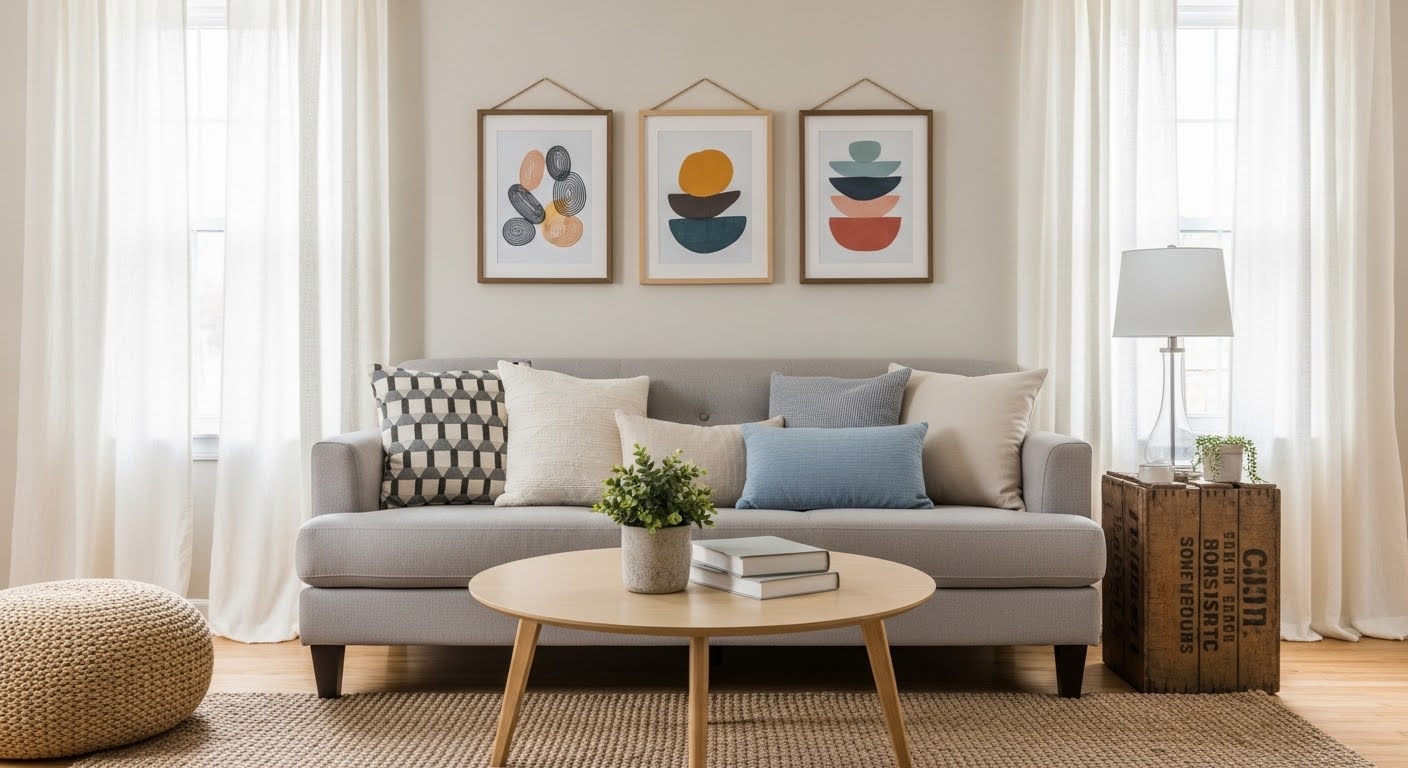
Budget Living Room Ideas: Style Without Spending (2026)
Here’s a thought that might actually be a relief: most stunningly styled living rooms you see online didn’t require a huge budget. They required a plan. That’s it. A bit of patience, a few smart choices, and the willingness to look at your space differently. You already have more to work with than you probably think.
Maybe you’re renting your first apartment and working with whatever the previous tenant left behind. Maybe you’ve just moved into a new place and the rooms feel cold and unfinished. Or maybe you’ve lived in the same space for years and you’re just done looking at the same tired layout. Whatever the situation, a tight budget isn’t the obstacle it seems like.
This guide is packed with budget living room ideas that actually work — not vague inspiration, but real, practical steps you can take this week. From a single paint color that transforms a whole room, to rearranging what you already own (which costs nothing), you’ll walk away with a clear plan and plenty of motivation to get started.
Quick Summary
WHO THIS IS FOR
Budget-conscious decoratorsDIY beginnersFirst-time renters & homeowners
TIME TO READ
13 min
TOP 3 TAKAWAYS
1. Setting a Realistic Budget
Before you do anything else — before you start browsing, pinning, or even daydreaming — write down a number. A real one. Not a wishful one. A practical budget for refreshing your living room can be anywhere from $50 to $500 depending on what you own already and how much actually needs replacing. The key is being honest with yourself about the difference between what you want and what the room genuinely needs.
Once you have your overall number, divide it into categories. Think about paint, textiles, lighting, furniture, and smaller decor items separately. This simple step stops you from spending your whole budget on one thing and realizing too late that you’ve got nothing left for anything else. A basic notes app works perfectly fine — you don’t need anything fancy.
And here’s a tip that sounds boring but pays off every single time: build a small buffer into your plan. Something like 10 to 15 percent of your total. That way, when you stumble across a great secondhand lamp that’s just slightly over what you expected, you’re not blowing the whole budget over one find.
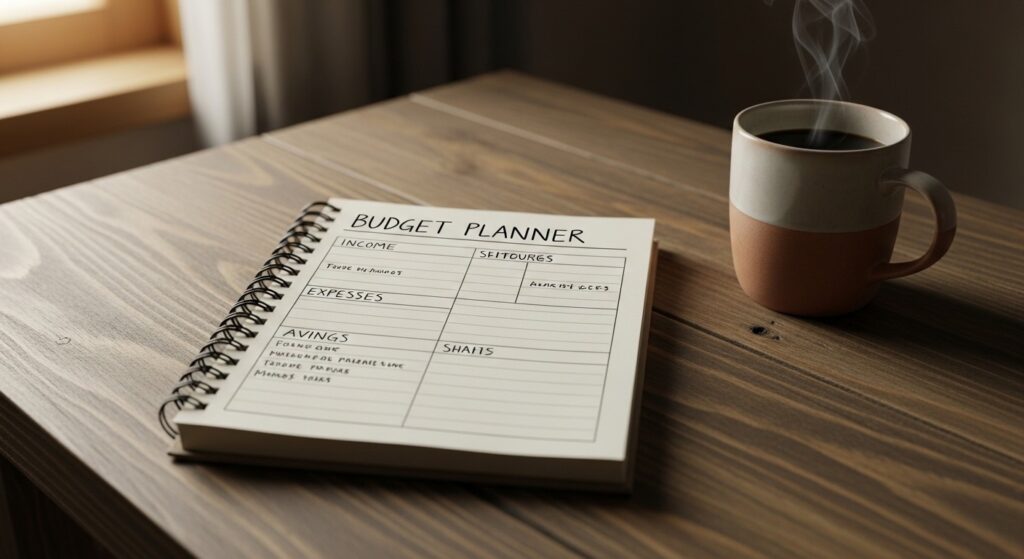
Budget ranges to think about:
- $50–$100 — Paint an accent wall, freshen up with new throw cushions
- $100–$250 — Full room repaint, new lighting, a decent rug
- $250–$500 — Secondhand furniture piece, a complete accessory refresh
- $500+ — One quality anchor piece (sofa or coffee table) plus styling
2. Prioritizing Your Spending
This is where a lot of people go wrong. They spread their budget evenly across everything and end up with a room that feels half-done everywhere rather than polished anywhere. The smarter move is figuring out what your room’s actual biggest problem is — and throwing your money at that first.
Take a step back and look at the space honestly. Is it dark and gloomy? Is the furniture layout awkward? Does everything feel visually mismatched? Naming the real issue saves you from decorating around it indefinitely. That single shift in thinking is what separates an affordable living room decor refresh that works from one that just adds more clutter.
A good general rule: spend on the things you interact with daily, and save on the things you just look at. Your sofa gets used every single day, so quality there matters. A decorative bowl on a shelf? That’s clearance-aisle territory. Prioritize the functional and anchor pieces; style the rest cheaply.
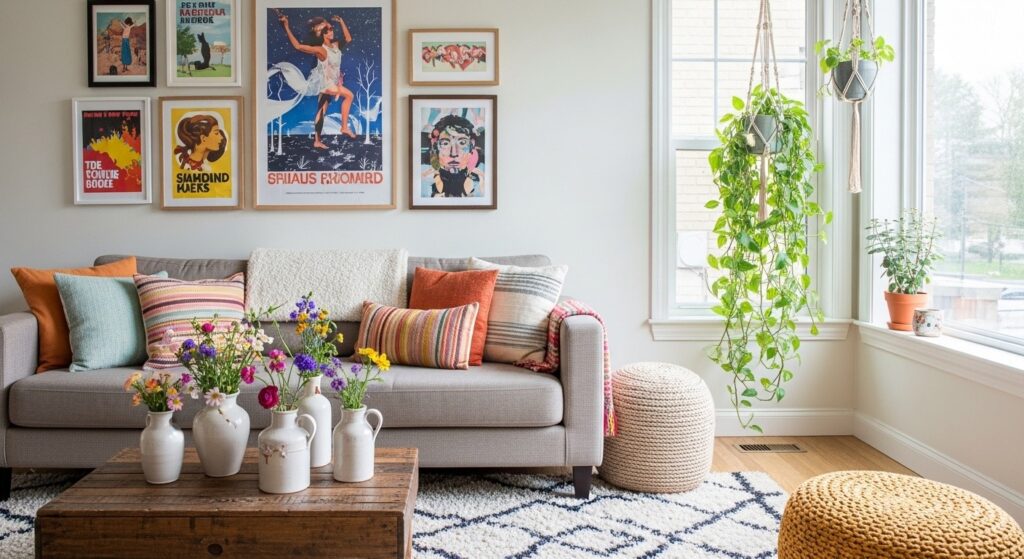
Worth spending a bit more on:
- Good overhead and ambient lighting — it changes the feel of everything
- A rug that anchors your seating area and ties the room together
- One solid, neutral-toned sofa or main chair
Keep the budget lean here:
- Throw pillows and blankets — easy to find secondhand
- Vases, trays, candles, and decorative objects
- Wall art (you can get this for free — more on that later)
3. DIY vs Buy: When to Choose
DIY is tempting because it sounds like the automatic budget answer. But it isn’t always. Once you factor in the cost of supplies, the time it takes, and the risk of something not turning out the way you hoped, buying an inexpensive ready-made item can actually be the smarter call. So think it through before you grab the glue gun.
That said, there are certain projects where DIY absolutely wins. Painting old furniture, creating a gallery wall, hanging curtains, making simple floating shelves — these are areas where materials are cheap and the visual payoff is genuinely high. You don’t need any experience to repaint a side table with chalk paint and make it look intentional and modern.
Where DIY tends to go sideways is with anything structural. A wobbly handmade curtain rod, uneven shelving that isn’t properly fixed, furniture that isn’t built safely — these aren’t worth the effort or the risk. Stick to decorative projects and leave anything structural to professionals or to secondhand finds that are already built properly.
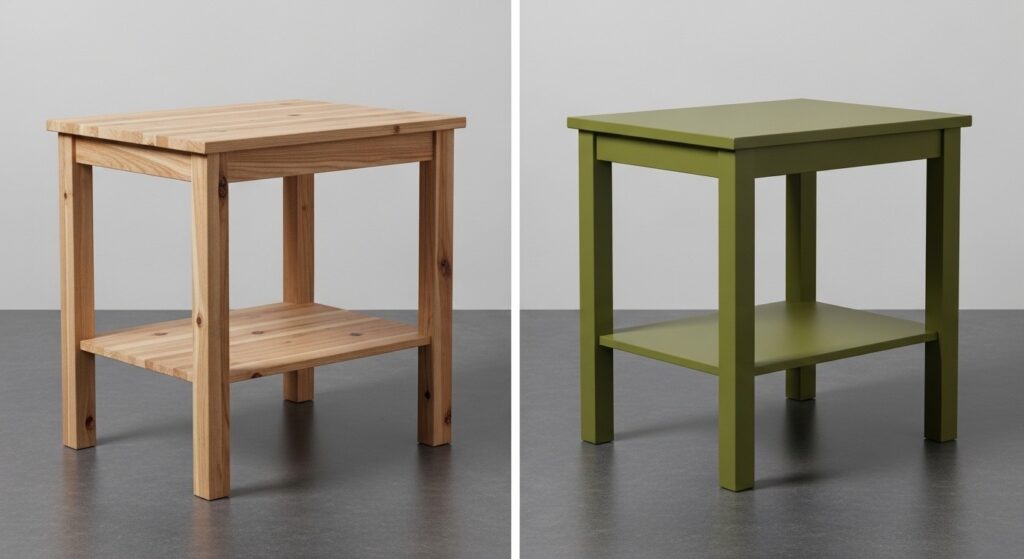
DIY projects that are well worth your time:
- Repainting old or dated furniture in a fresh, modern color
- Gallery walls using free downloadable artwork
- Simple curtain panels sewn or assembled from fabric
- Floating shelves with basic wooden planks and wall brackets
- Restyling a bookshelf with what you already own
4. Thrifting and Secondhand Shopping
If you haven’t done much thrift shopping for your home yet, you’re genuinely missing out. Walk into a well-stocked charity shop or browse a local online marketplace, and you’ll find lamps, frames, mirrors, ceramics, and sometimes even sofas that — with a quick clean or a coat of paint — look like they belong in a styled interior. The difference between a cluttered thrift store find and a stylish decor piece is often just intention.
The trick is showing up regularly, because inventory turns over all the time. Early weekday mornings tend to be best for new stock. Always bring a tape measure (or at least your room measurements saved in your phone), so you don’t fall for something that won’t actually fit. For a more in-depth guide on finding the best pieces, check out our post on
The trick is to visit early and often. New stock arrives regularly, and the best pieces go fast. Bring your room measurements, stay patient, and keep an open mind — that odd-shaped lamp might be exactly what your corner needs, once you swap the shade.
Online secondhand platforms have genuinely transformed the experience. Local buy-and-sell groups, neighborhood apps, and online marketplaces let you search by specific item type, filter by location, and even negotiate the price — all without leaving your house. Some of the best bargains come from people who are moving and simply want things gone quickly.
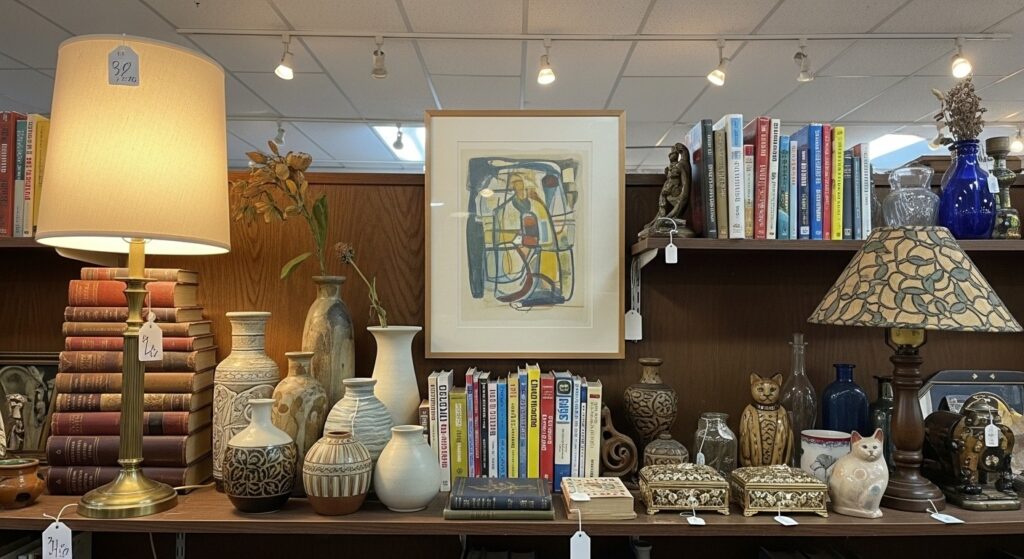
Items always worth picking up secondhand:
- Solid wood furniture — holds up well and repaints beautifully
- Mirrors — often expensive new, frequently very affordable used
- Table and floor lamps with good shapes (just replace the shade)
- Neutral-toned ceramics, vases, and bowls
- Picture frames — paint them to match and build a cohesive gallery wall
5. Paint: Biggest Impact, Lowest Cost
Honestly, if you do nothing else on this list, paint your room. A single can of good-quality paint costs somewhere around $30 to $50. Paint the entire room yourself, and you’re still likely under $100. No other change you can make to a living room delivers that kind of return on investment. It affects how large the room feels, how warm it looks, and the entire atmosphere of the space.
Color choice matters more than people realize. Light, airy tones make smaller rooms feel open and breathable. Deeper, richer colors — navy, forest green, terracotta — create a sense of warmth and intimacy that a big bright room can carry really well. Not ready to commit to a full repaint? A single accent wall behind your sofa adds visual depth and personality for a fraction of the effort.
And don’t overlook painting furniture. A tired wooden bookcase in matte black instantly looks purposeful and contemporary. Old picture frames, terracotta pots, even fabric can be refreshed with the right kind of paint. It is genuinely the most versatile tool in your cheap living room makeover kit.
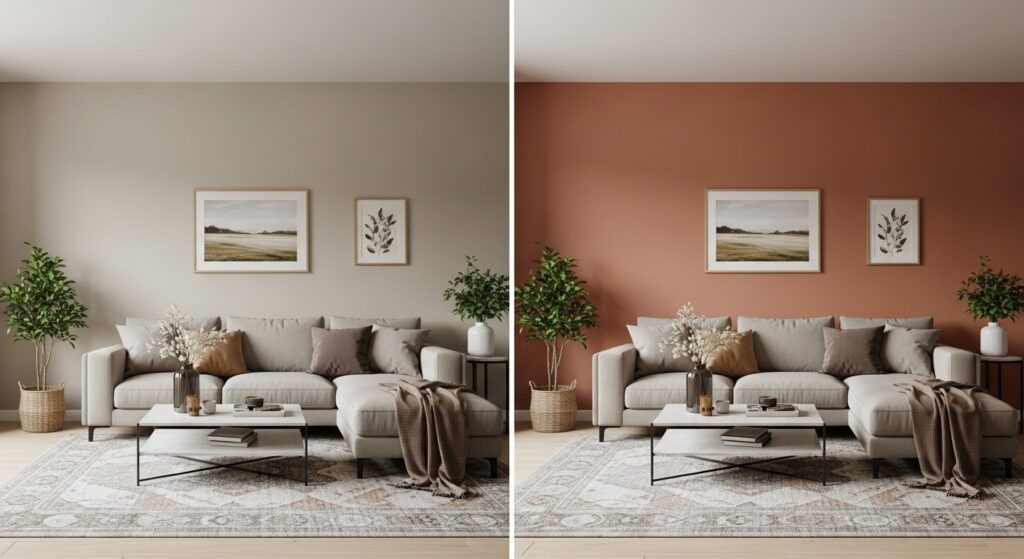
Tips for painting like a pro (even as a beginner):
- Test two or three color samples on your actual wall before committing
- Painter’s tape around trim and edges saves you a lot of stress
- Two thin coats almost always look better than one thick one
- Eggshell finish works well for living rooms — easier to wipe down than matte
- Painting the ceiling a bright white (even if the walls are already white) makes a room feel taller
6. Rearranging What You Have
Free. Completely and entirely free. And yet, moving your furniture around might be the most impactful thing on this entire list. A different layout can make your room feel twice as spacious, twice as welcoming, and twice as intentional — without spending a single cent. It’s one of those things that sounds too simple to matter, and then you try it and can’t believe you waited so long.
The single most common rearranging mistake people make is pushing all the furniture flat against the walls. It feels logical — leave space in the middle — but it actually makes rooms feel smaller and more awkward. Pull things away from the walls. Let your sofa float. Create a conversation grouping rather than a lineup. This one change tends to make everything else look better almost automatically.
While you’re at it, declutter. Take everything off your surfaces and shelves, and only put back what you genuinely love or use. A sparse, intentional arrangement almost always looks more stylish than a crowded one. Editing is a skill, and it costs absolutely nothing to practice it.
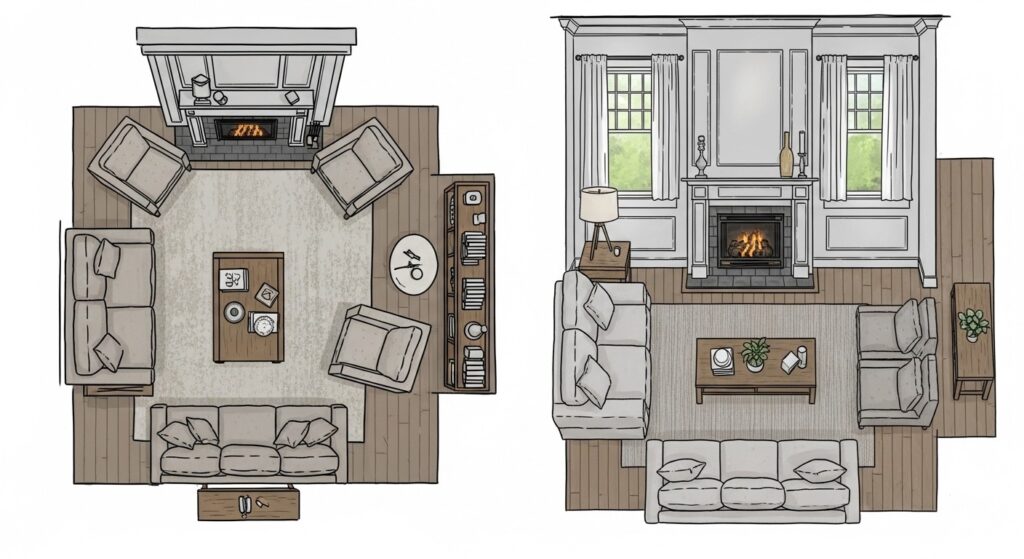
Rearranging tips that genuinely make a difference:
- Leave 12 to 18 inches between your sofa and the wall — yes, really
- Create a clear conversation zone rather than seating lined up around the room
- Make your sofa (not just the TV) a visual focal point
- Use a rug to define and anchor your seating area
- Rotate decor and art from other rooms to give the space a fresh feel
7. Affordable Furniture Sources
You really don’t need a high-end furniture store. Some of the most attractive, well-designed pieces available today come through discount retailers, online marketplaces, and end-of-season clearance events. The trick is knowing where to look and having enough patience to wait for the right find rather than settling in a rush.
Discount furniture stores and outlet centers are worth a visit — not just online, but in person. Floor models and open-box items are often significantly reduced and in perfectly good condition. Signing up for email lists from your preferred stores means you’ll catch sales before they’re publicised. A little advance notice on a good markdown goes a long way.
Flat-pack furniture deserves more credit than it gets. The design and quality have improved substantially, and with the right styling touches — a well-chosen rug underneath, books stacked on the shelves, a plant on top — it can look considerably more expensive than it was. The key is treating it as a canvas to style, not just a piece of furniture to place.
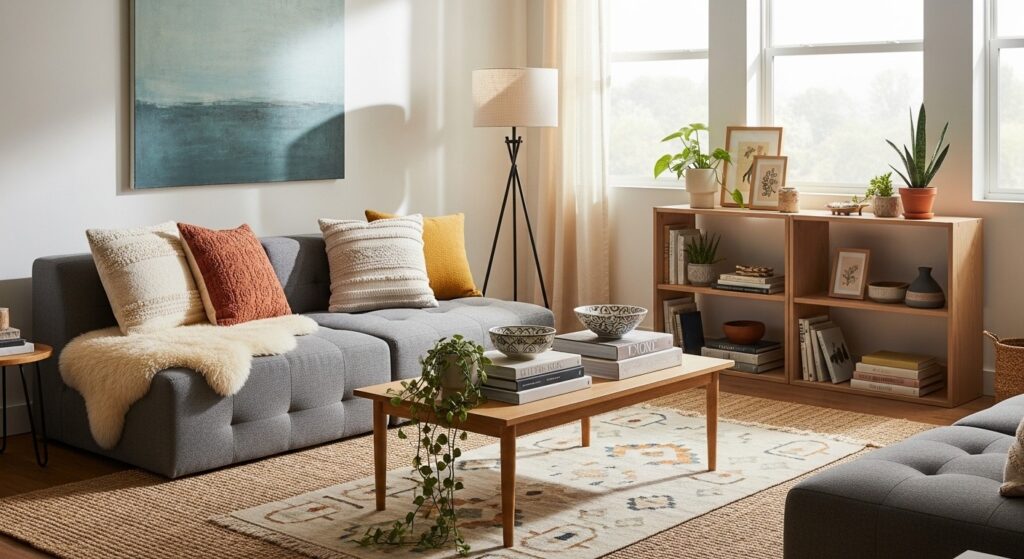
Where to find affordable furniture:
- Facebook Marketplace and local buy-sell groups
- Estate sales and moving sales — sellers often price to sell fast
- Discount furniture outlets and warehouse clearance events
- Flat-pack retailers during their seasonal sales
- Charity furniture stores and community reuse shops
8. Budget Lighting Upgrades
Lighting is probably the most underestimated element in home decorating. It doesn’t matter how carefully you’ve chosen your furniture or how nice your rug is — if the lighting is harsh, flat, or wrong for the room, the whole space will feel off. Conversely, warm, layered lighting can make even a very simply decorated room feel cozy and thoughtfully put together.
The problem with most rental apartments and starter homes is that they rely entirely on one overhead light source. That single overhead fixture tends to wash everything out and make spaces feel more like offices than living rooms. Adding a floor lamp, a couple of table lamps, or even some candles introduces layers of light that feel warmer and more inviting at a fairly minimal cost.
You don’t need to spend much to make a noticeable difference here. Swapping out your lightbulbs for warm-toned alternatives (look for the 2700K label on the packaging) is an inexpensive change that most people can’t believe they didn’t make sooner. A secondhand lamp with a new shade can cost very little and look great. Even a simple plug-in wall sconce or a string of warm lights can completely shift the atmosphere.
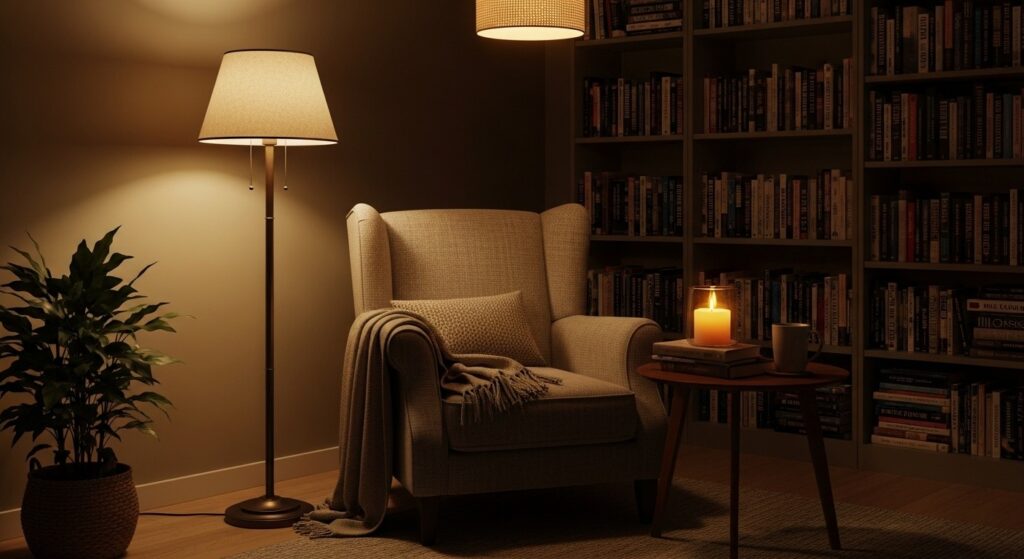
Lighting upgrades that cost very little:
- Swap cool-white bulbs for warm 2700K versions throughout the room
- Add a plug-in wall sconce — no electrician needed
- Use warm string lights or Edison-style bulbs for a relaxed nook
- Replace a bare ceiling bulb with a simple paper lantern or drum shade
- Battery-powered LED candles add warmth with zero fuss
9. Free Decor Ideas
Before you spend anything, try this first. Some of the best decorating ideas are completely free, and working through this section before you open your wallet might surprise you. You can do more with what you already have than most people realize.
Nature is a genuinely good decorator and it charges nothing. A branch from the garden in a plain glass bottle. Stones arranged on a tray. Dried grasses or wildflowers in an old jar. These kinds of organic elements bring texture and life into a room in a way that manufactured decor often can’t quite replicate. Swap them with the seasons and your room always feels current.
Free downloadable artwork has made wall decor remarkably accessible. Major museums around the world — including well-known institutions in New York, Amsterdam, and Washington D.C. — offer high-quality art image downloads at no cost. Print them at home or at a local copy shop, frame them in secondhand frames, and you have a gallery wall that looks deliberate and curated.
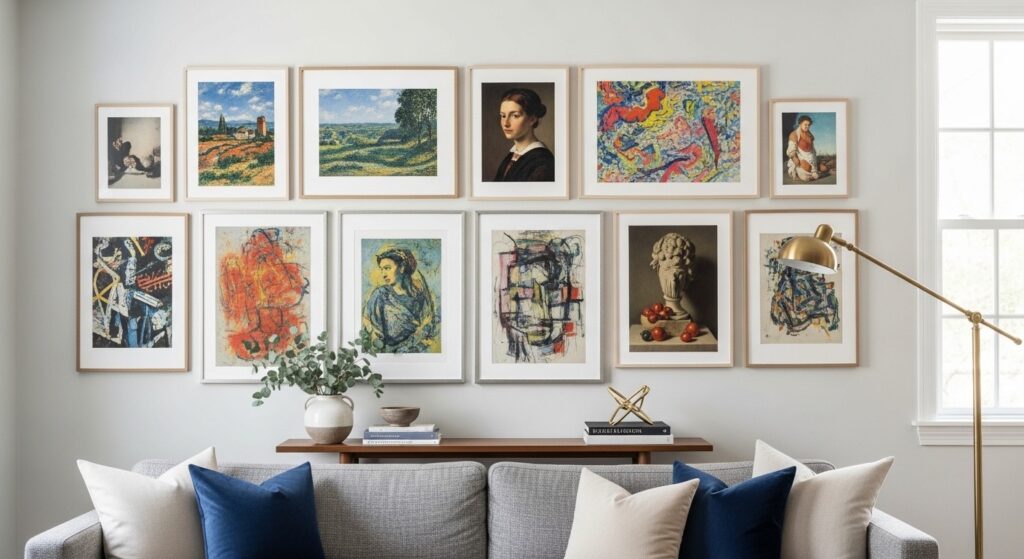
Free decor ideas you can try this weekend:
- Restyle your bookshelves — pull everything out and rearrange with intention
- Download and print artwork from public museum digital collections
- Bring natural elements indoors: branches, stones, dried grasses
- Move decor from other rooms into the living room for a fresh arrangement
- Fold and drape a throw blanket in a new way — small change, noticeable effect
- Clear every surface and only put back what genuinely earns its place
10. Splurge vs Save Guide
Knowing where to spend and where to hold back is genuinely one of the most valuable skills in budget decorating. It’s not about going as cheap as possible on everything — that approach backfires. It’s about understanding which purchases will define your room’s quality and which ones barely matter.
Your sofa, your main area rug, and your window treatments are the three areas worth spending a little more on. These are the pieces that set the visual and functional tone of the entire room. A low-quality sofa that looks worn within a year, a cheap rug that slides and pills, curtains that bunch on the floor or let in too much light — any one of these undermines everything else you’ve done. They’re worth getting right.
Everything else? Save freely. Throw pillows, candles, small plants, accent tables, decorative objects — these are the elements you’ll swap out as your taste shifts or as seasons change. Spending a lot on these is rarely a sound decision. Find them secondhand, on clearance, or through the free ideas covered earlier in this guide.
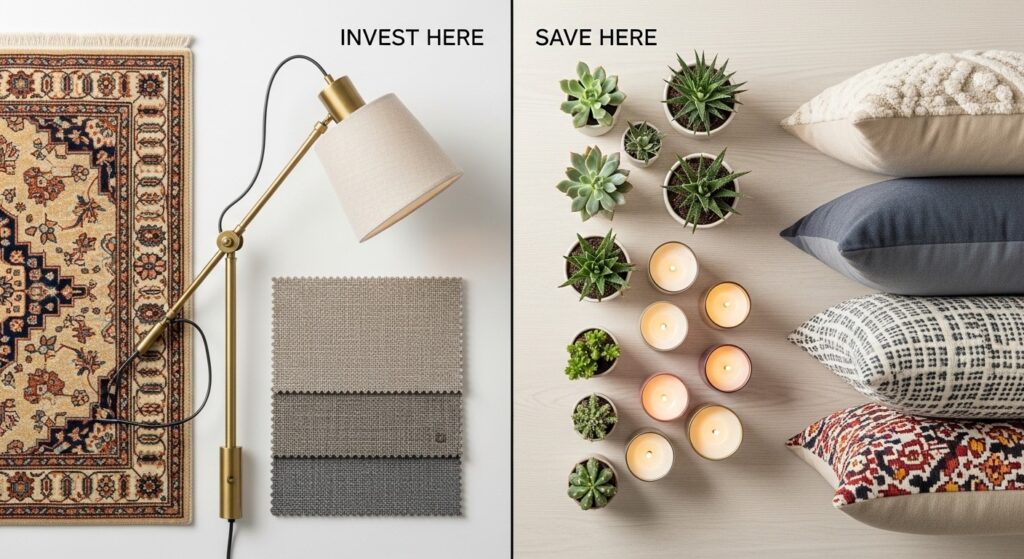
Worth investing in:
- The sofa — you use it every day, so comfort and durability matter
- A well-sized area rug — it visually anchors the whole room
- Curtains with good length and weight — cheap curtains are very hard to hide
Save on these instead:
- Throw cushions and blankets — great secondhand
- Candles, small trays, and decorative objects
- Side tables and accent furniture
- Wall art and picture frames
11. Phased Room Makeover
You absolutely do not have to do this all at once. In fact, a phased approach is genuinely better — not just financially, but creatively. When you space out the changes over a few months, you actually live in the room at each stage. You notice what it needs. You make better decisions because you’re not rushing.
The first phase is always free: clean properly, edit ruthlessly, and rearrange. Get everything clutter-free and see what the room looks like when it can breathe. Most people are genuinely surprised by how different their space feels after this step alone. Once the canvas is clear, you can see what actually needs attention.
From there, the second phase covers the big-impact items — paint and lighting. Phase three brings in textiles and any thrifted finds. Phase four is the finishing layer: plants, art, the small touches that make a room feel like yours. Spreading these out over weeks or even months keeps spending measured and decisions thoughtful. For a step-by-step walkthrough, our [Budget Living Room Makeover] post goes into more detail.
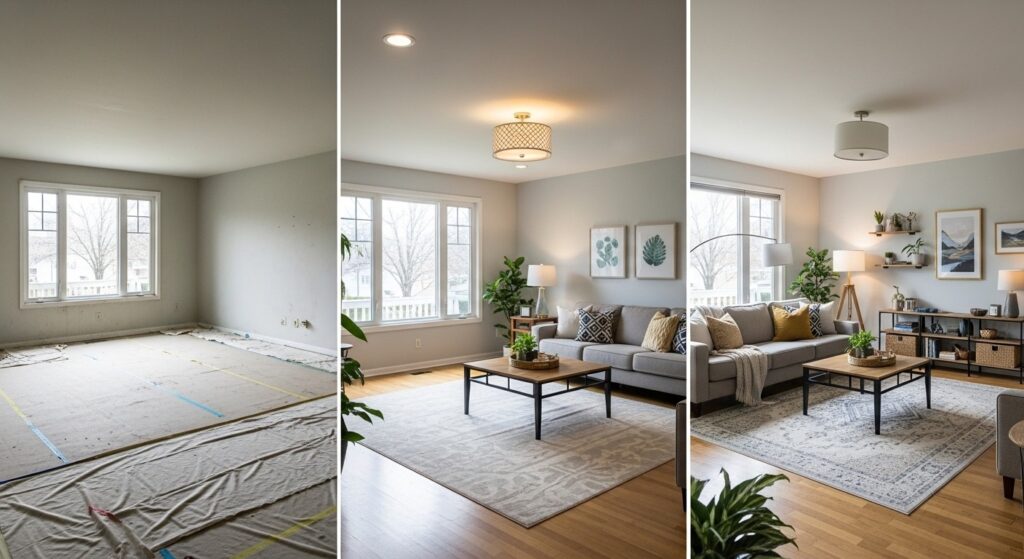
A simple four-phase timeline:
- Phase 1 — Week 1 (Free): Declutter, clean, rearrange the furniture
- Phase 2 — Month 1 (Under $100): Paint and lighting upgrades
- Phase 3 — Month 2 to 3 ($100–$300): Rug, textiles, secondhand finds
- Phase 4 — Month 4 onward ($50–$200): Art, plants, final styling touches
12. Maintaining Budget Style
Getting your room looking the way you want it is one thing. Keeping it that way — without a continuous stream of purchases — is the longer game. And it starts with building a few simple habits that make maintaining the space feel easy rather than like a project.
Rotating decor seasonally is one of the most effective habits you can build. Pack away what doesn’t suit the current season, bring out pieces that do, and swap in a few inexpensive new items when the mood strikes. It keeps the room feeling fresh without any significant spending. Think of it a bit like refreshing a wardrobe — same core pieces, different arrangement and accents.
The other habit is learning to sit with empty space. A styled room breathes. Not every shelf needs to be full, not every corner needs something in it. When you feel the urge to add something new, pause and ask: is this replacing something, or is it just more? That question alone will save you money, prevent clutter, and keep your room looking considered. For ongoing ideas, our [DIY Living Room Decor] guide is a good one to bookmark.
Habits that make budget decorating sustainable:
- Do a monthly ‘edit’ — pull out what isn’t working and store or donate it
- Always check secondhand options before buying anything new
- Give yourself a 48-hour pause before any non-essential purchase
- One in, one out — when something new comes in, something old leaves
Common Mistakes to Avoid
Even with a solid plan and good intentions, it’s easy to slip into a few traps. Here are the five most common ones — worth knowing before you start.
- Buying cheap things that don’t last. A $10 lamp that needs replacing in two months isn’t a deal. It’s a disappointment. Cheap and good value are not the same thing. Secondhand quality almost always beats brand-new budget.
- Shopping without a plan. Walking into a store — or opening a shopping app — without a clear colour palette and your room dimensions is how you end up with a pile of things that look fine individually but not together.
- Forgetting what you already own. Before spending anything, do a full inventory of what you have. Other rooms, storage boxes, things living in corners — you almost certainly have more usable pieces than you realize.
- Chasing trends instead of building timeless foundations. Fast-moving trends look dated surprisingly quickly. A neutral, well-built base with easy-swap accent pieces is always the smarter, more affordable long-term strategy.
- Trying to do everything at once. Decision fatigue is real, and it leads directly to impulse purchases. Take your time. Phase the changes. Let each decision settle before moving to the next one.
Frequently Asked Questions
How much should I realistically spend on a living room refresh?
Honestly, it depends on what you’re starting with — but a meaningful change can happen for between $100 and $300 if you focus on the highest-impact moves, like paint and lighting. A more complete makeover that includes a secondhand furniture piece, a decent rug, and updated accessories tends to come in somewhere around $300 to $600 when done thoughtfully. Set a firm number before you start, treat it seriously, and phase the spending so it doesn’t hit all at once.
What one change makes the biggest difference for the least money?
Paint. It’s not even close. A single room repaint costs $30 to $50 in materials when you do it yourself, and the effect — on the perceived size, warmth, and personality of the room — is dramatic. The second-highest-impact change is lighting. Switch to warm-toned bulbs and add one floor lamp, and you’ll barely recognize the atmosphere of the room. Both together for under $100 is genuinely hard to beat.
Is secondhand furniture actually worth it?
For the right pieces, absolutely. Solid wood furniture, lamps, mirrors, side tables, and shelving are almost always worth buying used — they’re well-built and straightforward to refresh. With upholstered furniture like sofas and armchairs, it’s worth being a bit more careful: check the structure carefully, look for any sign of damp, and inspect the seams and cushions before committing. With a bit of patience and a discerning eye, secondhand shopping consistently offers better value for money than buying new at the lower end of the market.
Where should I spend a little more, if I’m going to?
Three places: your sofa, your main area rug, and your curtains. These three elements have an outsized effect on how put-together a room looks and feels. A sofa that’s uncomfortable or looks tired within two years, a rug that slides around and pills, curtains that are the wrong length — any of these undermine everything else in the space. Invest modestly in these and save confidently on everything else.
How long does a budget room makeover actually take?
If you phase it out thoughtfully, anywhere from one to four months — and that’s the ideal approach, not just a budget constraint. The free phase (decluttering, cleaning, rearranging) can genuinely happen this weekend. Painting takes a couple of days. Sourcing good secondhand pieces takes longer because the best finds require patience. Rushing the whole process almost always results in purchases you later wish you hadn’t made. Slow is better, and the finished result reflects it.
Wrapping Up
A living room that looks good and feels like yours does not require a lot of money. It requires a clear starting point, a bit of creativity, and the willingness to make decisions intentionally rather than reactively. Paint your walls. Rearrange your furniture. Spend a Saturday afternoon at a thrift shop. These are not small things — they are, for most people, genuinely transformational.
Start with just one idea from this guide. Not all twelve, not even three. Just one. Pick the one that feels most doable right now and actually do it this week. The best version of your living room is already within reach.
Want to take the next step? Read our detailed Budget Living Room Makeover guide for a full project walkthrough, or explore our Textured Living Room Ideas ideas for hands-on inspiration. And if thrift shopping is calling your name, our Thrift Store Finds for the Living Room post is a great next read.