
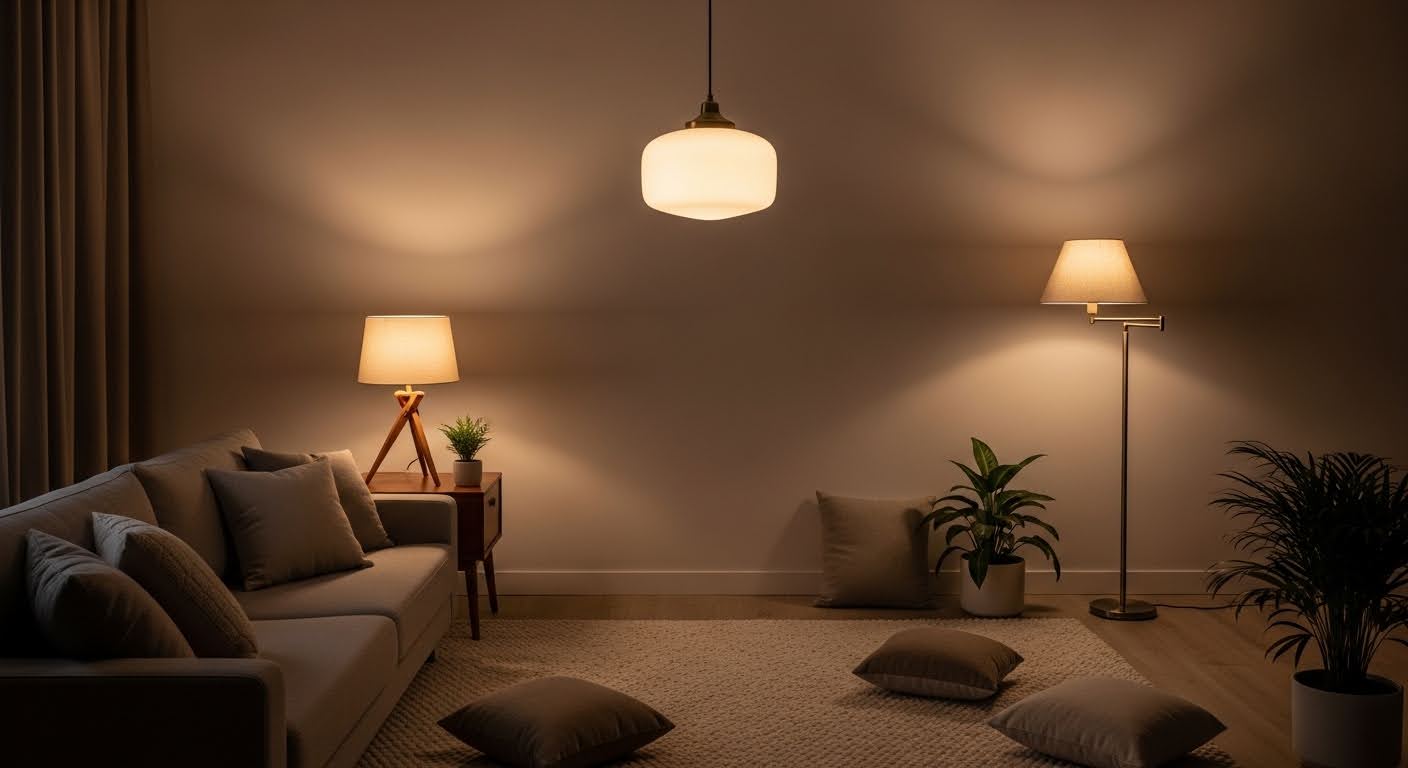
Layered Lighting for Living Rooms: Create Ambiance
You know that feeling when you step into someone’s living room and it just feels right? The light is warm, everything looks intentional, and you immediately want to sit down and stay a while. It is rarely about the furniture or the paint color. Nine times out of ten, it comes down to the lighting.
Most of us set up one overhead light and move on. And honestly? That is completely understandable. Lighting can feel like one of those design topics that requires either a big budget or a degree in interior decorating. But it really does not. If your living room feels flat, too bright, or somehow never quite comfortable, layered lighting is almost certainly the missing piece.
This guide is for beginners and small-space apartment dwellers who want a real, practical system — not vague advice. By the time you finish reading, you will know exactly how to build a layered lighting living room from scratch, what to prioritize, and how to do it without tearing anything apart or spending a fortune.
Quick Summary
WHO THIS IS FOR
Home decor beginners and apartment dwellers ready to upgrade their space
TIME TO READ
5 min
TOP 3 TAKAWAYS
Why Lighting Matters in Small Spaces
Here is something most people do not realize: in a small room, bad lighting does not just look bad — it actively makes the space feel smaller. A single overhead bulb flattens everything. It kills depth, washes out color, and makes a room feel more like a waiting area than a home.
Good lighting does the opposite. It creates zones, adds height, and draws the eye to the parts of the room you want noticed. Ambient lighting in your living room essentially sets the emotional temperature of the space. Think about how differently you feel sitting under a harsh white bulb versus the soft glow of a lamp beside the couch. Nothing else in the room changes — but everything feels different.
For small apartments especially, lighting is one of the most powerful tools available because it takes up almost no physical space. You can define a reading corner, open up a dark wall, or make a low ceiling feel taller — all without moving a single piece of furniture.
Natural Light Maximization Tips
Before spending anything on new fixtures, look at what you already have. Natural light is free, endlessly flattering, and the single best foundation for any layered living room light setup. The goal is simple: let in as much as possible during the day, then layer artificial sources thoughtfully after dark.
Start with your window treatments. Heavy curtains are the most common culprit for dark apartments. Swap them out for sheer panels or light-filtering shades and you might be surprised how much brighter the room gets — even on an overcast day. Also try hanging your curtain rod a few inches above and outside the window frame. It sounds minor, but it makes the window look significantly larger.
Mirrors are genuinely transformative here. A large mirror positioned across from a window reflects daylight back into the room and effectively doubles what you are working with. Pair that with light-colored walls or furniture near the windows and the natural light bounces even further into the space.
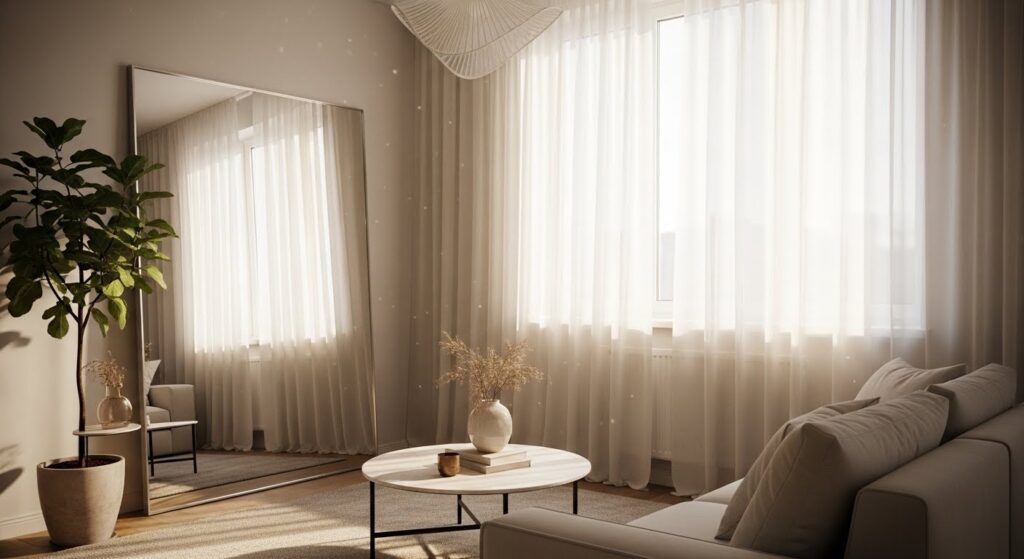
Easy wins for natural light:
- Move heavy furniture away from windows so light travels further into the room
- Keep window sills clear — even a small amount of clutter blocks more light than expected
- Hang curtain rods 4–6 inches above and beyond the actual window frame
- Clean your windows a couple of times a year — it makes a bigger difference than most people think
Overhead Lighting Options
Overhead lighting is the starting point — but it should not be the whole story. Most apartments come with one basic ceiling fixture, and while that gives you a baseline level of ambient lighting in your living room, relying on it alone creates that flat, unflattering effect we talked about earlier. The fix is not necessarily a new fixture. Sometimes it is just a better bulb and a dimmer switch.
Swapping to a warm white bulb (look for around 2700K on the packaging) and installing a dimmer makes an immediate difference. Dimmers let you go from bright and practical during the day to soft and relaxed in the evening — using the exact same fixture. They are genuinely one of the best value upgrades in home lighting, and most are straightforward to install.
If you do want to upgrade the fixture itself, semi-flush mounts work well in rooms with lower ceilings, while pendant lights add visual interest above a reading nook or a console table. The key is to choose something with a diffuser or shade rather than a bare bulb design — diffused light spreads more evenly and removes harsh glare.
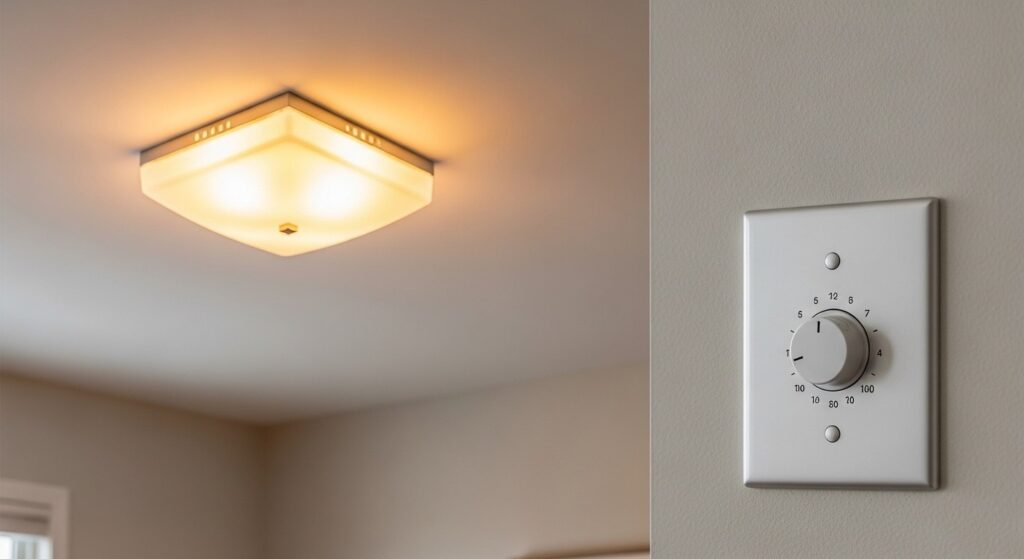
Overhead options worth considering:
- Flush mount fixtures — the safest choice for low or standard ceilings
- Semi-flush mounts — a step up in style without taking up vertical space
- Pendant lights — best used over a specific spot rather than as general room lighting
- Dimmer switches — compatible with most existing fixtures and genuinely worth it
Table Lamps vs. Floor Lamps
This is where things start to get interesting. Table lamps and floor lamps form the middle and lower layers of your lighting setup — and they are responsible for most of that warm, inviting mood that makes a room feel truly lived in. Without them, even the nicest overhead fixture leaves a room feeling incomplete.
Table lamps are ideal for side tables, bookshelves, or console tables. They define the boundaries of a seating area and create a cozy, intimate atmosphere. Running low on surface space? Swing-arm table lamps that clamp to a shelf or mount to a wall give you the same effect without occupying any horizontal surface at all.
Floor lamps are brilliant for small spaces because they use vertical room instead of floor area. A tall arc lamp can light an entire seating zone from above while its base tucks neatly behind the sofa. Torchiere-style lamps (the ones that point upward) bounce light off the ceiling, which softens shadows and warms the whole room rather than just a single spot. The result feels much more natural than direct overhead light.
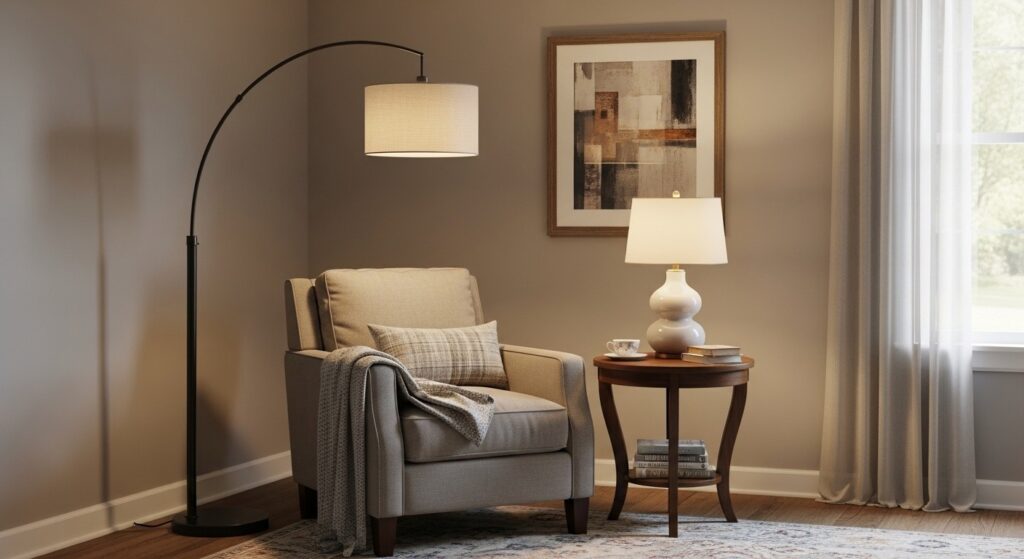
Quick guide to choosing:
- Table lamp: great when you have a surface to use and want focused, warm light near a seating area
- Floor lamp: better when you need coverage over a wider zone, or when surface space is limited
- Use both if possible — they genuinely complement each other rather than competing
Wall Sconces for Space Saving
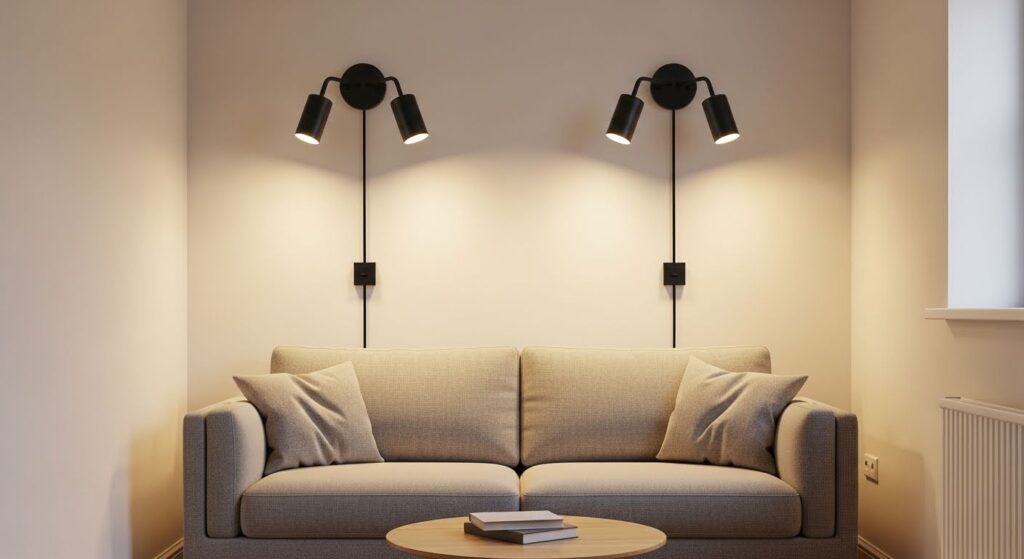
If floor lamps feel too bulky and table lamps require surfaces you do not have, wall sconces might be your answer. They mount flat against the wall, take up zero floor or shelf space, and add a layer of warm light at eye level — exactly where it tends to look best. In small apartments, every square foot matters, and sconces are one of the smartest ways to light a room without giving up any of it.
The easiest version for renters and beginners is the plug-in wall sconce. No electrician needed. You mount a small bracket, run the cord along the wall (a slim cord cover keeps it tidy), and plug it in. Placed on either side of a sofa or above a media console, they immediately make a room look more considered and put-together.
Sconces also work beautifully as accent lighting — positioned to graze across a gallery wall, highlight a bookshelf, or cast a soft glow behind a piece of furniture. That kind of targeted light is what turns a plain wall into a feature.
Layered Lighting Basics
Alright — here is where it all comes together. The classic approach to living room light layers uses three types: ambient, task, and accent. Each serves a different purpose, and when you combine all three, the room suddenly has depth, dimension, and the kind of flexibility you can actually live with.
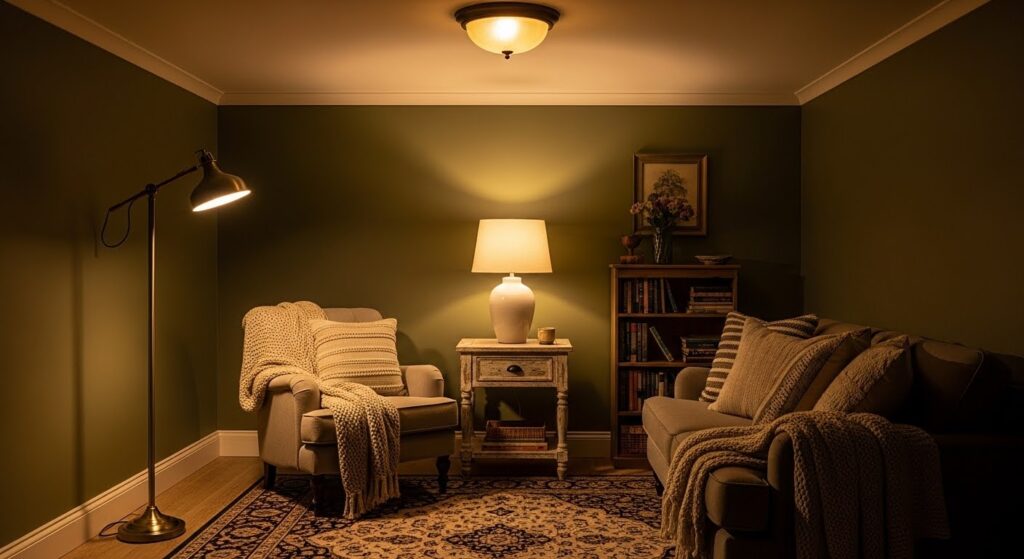
Ambient lighting is your foundation — the general fill light from an overhead fixture or a torchiere lamp. Task lighting serves a specific purpose: a reading lamp by the armchair, a focused light above a workspace, or a lamp on a desk in the corner. Accent lighting is the finishing touch — LED strip lights behind a TV, a light inside a bookshelf, or even a few candles on the coffee table. It draws attention to the things you want noticed and adds a layer of visual warmth that nothing else quite replicates.
The real magic happens when you stop relying on a single source. Aim for at least three separate light points in the room, positioned at different heights. A good test: turn off the overhead light entirely. If the room still feels functional and beautiful using only your lamps and accents, you have nailed it. If it feels too dim or patchy, add one more source and test again.
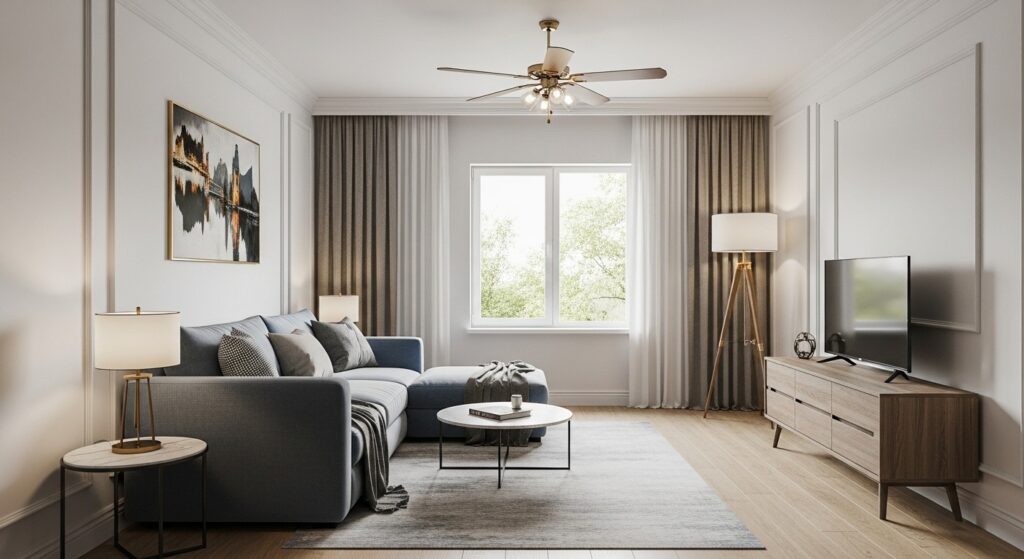
The three layers, simplified:
- Ambient — overhead fixture, torchiere floor lamp, or bright wall sconces to fill the room
- Task — a reading lamp, swing-arm lamp, or any focused light near where you actually do things
- Accent — LED strips, shelf lighting, candles, or a small uplight behind a plant
Common Mistakes to Avoid
Even well-intentioned beginners run into the same few stumbling blocks. Here are the ones worth knowing about before you start shopping.
- Not measuring first. Grab a tape measure before you buy anything. A floor lamp that is too tall looks out of place; a pendant hung too low becomes annoying to live around. Knowing your ceiling height and the space between pieces of furniture takes five minutes and prevents a lot of returns.
- Ignoring what is already there. Your wall color, existing furniture, and natural light all affect how new lighting will look. A lamp that seemed perfect in the store might look off against warm-toned walls or feel invisible near a bright window. Bring photos of your room when you shop, and test bulb colors before committing.
- Chasing trends over personal taste. Social media is full of gorgeous rooms with dramatic, statement-making fixtures. Some of them will look completely wrong in your space. Buy what genuinely suits your home and your style — not what is trending right now. A light you love will always look better than one you bought because it was popular.
- Skipping the planning phase. Picking up lights one at a time without a plan tends to produce a mismatched collection that does not layer well together. Before buying anything, sketch a rough floor plan and mark where each type of lighting will go. Even a quick pencil drawing helps you see the room as a whole rather than a series of isolated purchases.
Frequently Asked Questions
What is the most important element to focus on first?
Start with ambient lighting — it is the foundation the rest of the room builds on. If the base level of light feels wrong (too harsh, too dim, too cold), no number of accent pieces will fix it. Get your primary light source right first, ideally paired with a dimmer for flexibility, and then layer everything else from there. Think of it like a paint primer: it is not glamorous, but everything looks better with it done properly.
How do I actually start?
Walk through your living room at different times of day — morning, afternoon, and evening — and just notice how the light changes and where it falls short. Make a note of the darkest corners and the spots where you spend the most time. Then sketch a simple floor plan and mark where each layer could go. Start with one change at a time rather than overhauling everything at once. Living with each adjustment before adding the next one helps you see what is actually working.
What does this typically cost?
Honestly, it depends on how much you are starting with — but you can build a genuinely well-layered setup for anywhere between $50 and $500. The best bang for your money tends to come from three things: a dimmer switch, a quality warm-white LED bulb or two, and one good floor lamp. You do not need to do everything at once. Building gradually over a few months is completely reasonable, and often leads to more thoughtful choices anyway.
How long does the whole project take?
If you plan ahead and shop with intention, you can genuinely transform your living room lighting over a single weekend. Installing a dimmer switch typically takes under half an hour for anyone comfortable with basic home tasks. Setting up plug-in sconces or repositioning floor lamps is even faster. The planning and shopping phase takes the longest — usually a week or two — but that time is well spent. Give yourself space to try one thing, live with it for a few days, and then decide what comes next. Lighting is something your eye adjusts to, and sometimes you need a little time before you know if it is really right.
Ready to Transform Your Living Room?
Layered lighting is one of those home upgrades that looks like a big secret until you understand it — and then it is impossible to unsee. Combining ambient, task, and accent sources at different heights creates a room that can shift from bright and energetic to soft and relaxing without you changing a single piece of furniture. It is not about spending a lot. It is about being intentional with what you place and where you place it.
Start small. Add a dimmer this weekend. Swap a bulb. Pull back those heavy curtains and let the light in. Small adjustments add up fast, and each one brings your living room a little closer to the space you have been picturing. You do not need to get it perfect on the first try — you just need to start.
Keep reading:
→ Cozy Living Room Ideas — warm, welcoming decor ideas for any budget
→ Small Living Room Lighting Ideas — space-saving strategies built for compact apartments
→ Modern Living Room Lighting — contemporary styles and fixtures to inspire your next refresh