
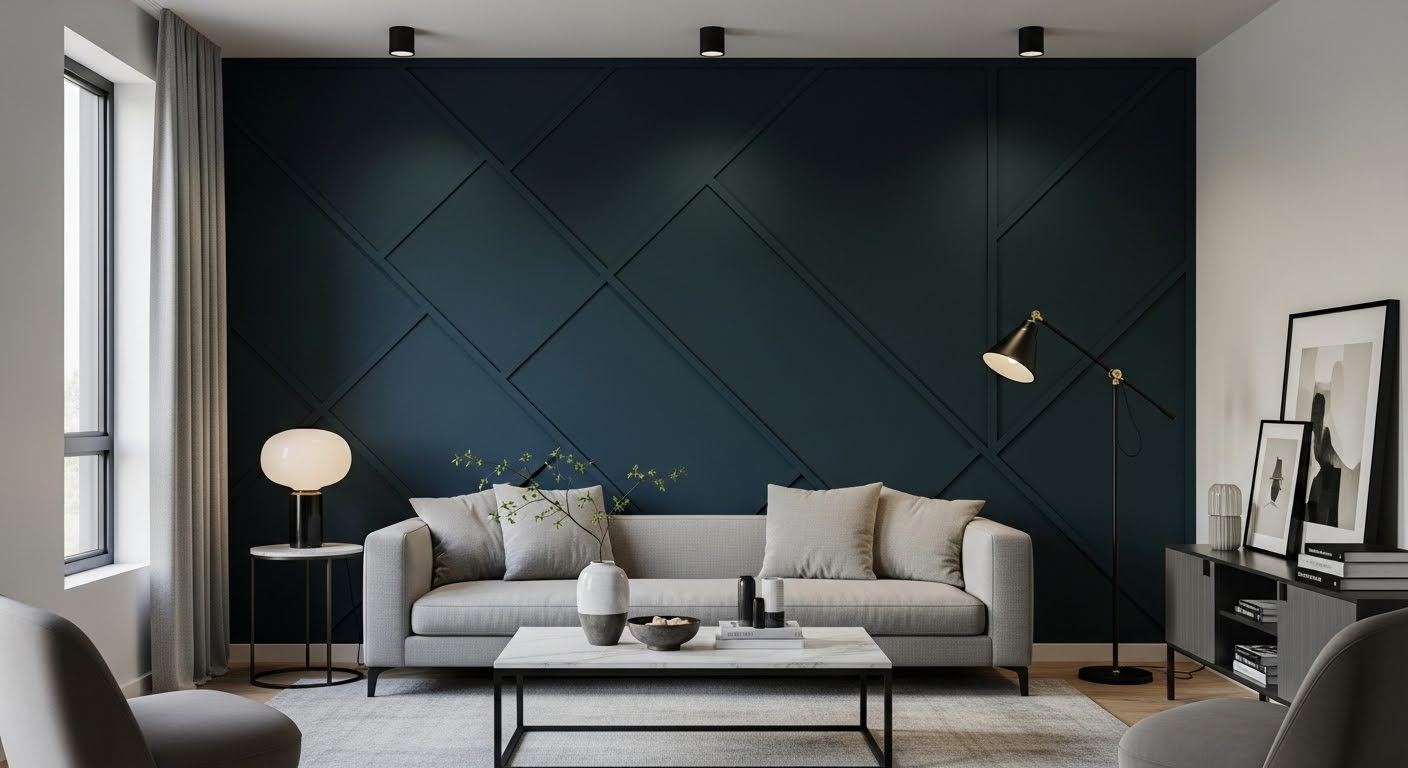
Living Room Accent Wall Ideas: Make a Statement
You’ve seen it in those home decor photos — the ones where a room just works. Everything looks pulled together, intentional, alive. And then you look around your own living room and wonder why yours doesn’t quite get there. The furniture is fine. The layout is sensible. But something is missing.
That missing thing is often a living room accent wall — one standout surface that gives the whole room a focal point and a sense of direction. The good news? You don’t need to renovate, hire anyone, or spend a fortune. What you need is a clear approach, a bit of confidence, and the right information.
If you’re a first-time decorator or you live in a small apartment, this is written for you. We’ll walk through everything: how to choose the right wall, which materials and finishes are beginner-friendly, how to pick accent wall colors that actually work with your existing space, and the common pitfalls worth knowing about before you lift a paintbrush.
Quick Summary
WHO THIS IS FOR
Home decor beginners and anyone looking to refresh their living room
TIME TO READ
6 min
TOP 3 TAKAWAYS
1. Choosing the Right Wall
Here’s a question worth sitting with: when you walk into your living room right now, where does your eye land first? That spot — whatever it is — is exactly where your feature wall living room makeover should begin. The most natural candidate is usually the wall your sofa faces, or the one directly across from the main entrance.
What you’re looking for is a large, relatively unbroken surface. Too many doors and windows interrupt the visual flow you’re trying to create, so a plain wall wins every time. If there’s a fireplace in the room, that wall already has a head start — it naturally draws attention, and a bold treatment there just amplifies what’s already happening.
For small apartments, the rule is simple: one wall only. Doubling up makes a tight space feel chaotic instead of cosy. Pick the right one, commit to it, and let everything else stay neutral. That contrast is actually what makes the accent wall pop.
- Choose the wall your seating faces or the one opposite the entrance
- Avoid walls crowded with windows, doorways, or uneven angles
- A fireplace wall is a natural focal point — work with it
- Small spaces benefit most from a single, well-chosen accent wall
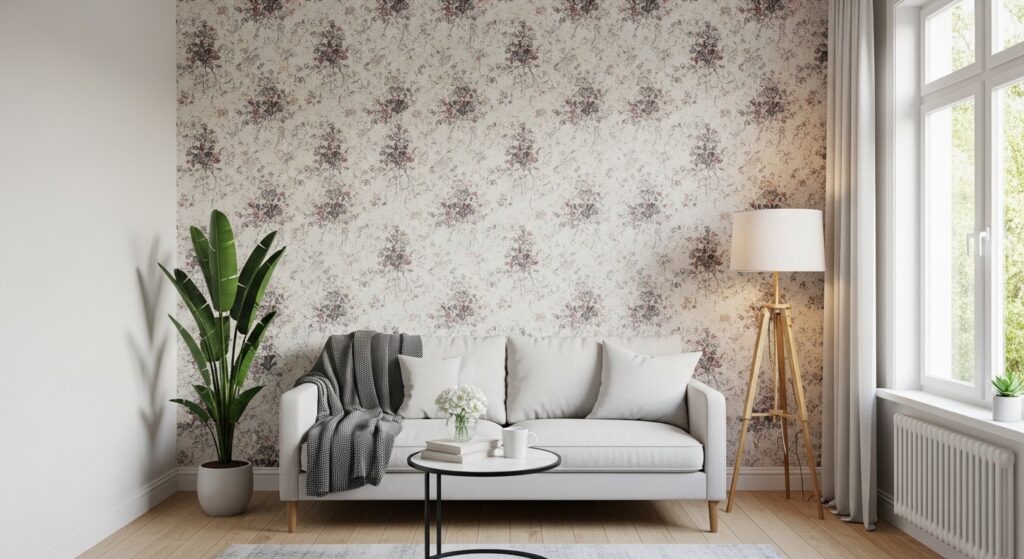
2. Paint Accent Walls
Paint is where most people start, and for good reason. It’s affordable, forgiving, and surprisingly powerful. A single wall in a well-chosen color can change how a room feels within an afternoon — and if you’re not in love with the result, you can paint over it next weekend. No permanent decisions required.
When it comes to finish, eggshell and satin are your friends. They hold up better to the occasional scuff, reflect just enough light to add warmth, and don’t show every tiny surface imperfection the way flat paint tends to. For deep, moody shades like forest green, slate blue, or charcoal, a matte finish gives a richer, more velvety result.
And don’t limit yourself to one flat color. Half-painted walls — where color stops at a horizontal line around chair-rail height — are elegant and surprisingly easy with painter’s tape. Painted arches have become a popular statement wall idea in recent years. Even a simple two-tone geometric pattern is completely achievable for a beginner with patience and a steady hand.
- Eggshell or satin for most living room walls — practical and polished
- Matte finish works beautifully with deeper, richer color choices
- Painter’s tape unlocks color blocking, arch details, and geometric patterns
- Always use a primer coat when going significantly darker than the existing wall
3. Wallpaper Options
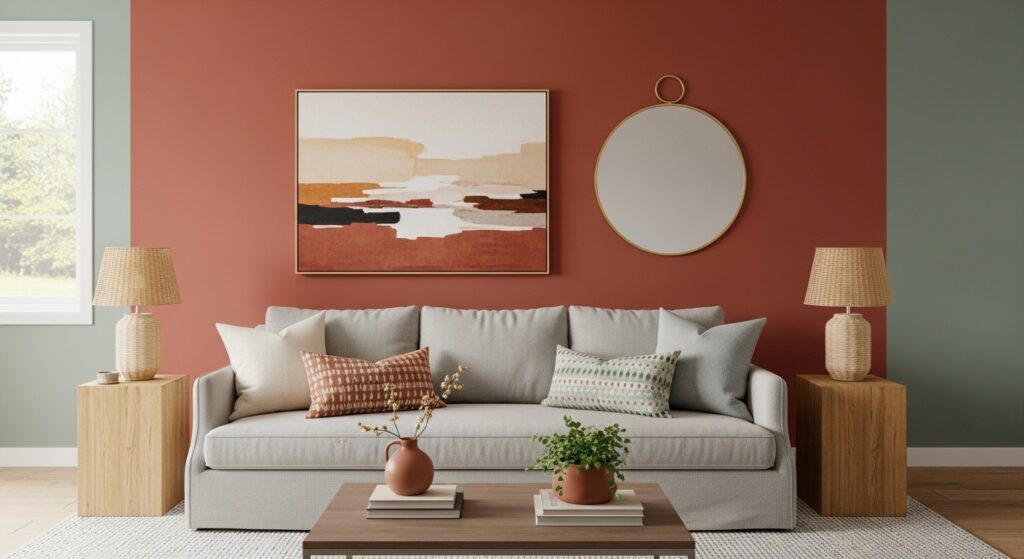
Wallpaper used to feel like a commitment — the kind that involved soaking, steaming, and mild frustration. Modern peel-and-stick options have changed all of that. You can paper an entire wall in an afternoon, step back, decide you want a different pattern, and start over the following weekend. For renters especially, this is a revelation.
Scale is the one thing to keep in mind when choosing wallpaper for a feature wall. Oversized, dramatic prints can feel heavy in a smaller room, closing in the space rather than opening it up. Smaller repeating patterns, subtle textures, and quiet geometric designs tend to give you visual interest without visual clutter.
Right now, grasscloth-look textures, understated linen patterns, and delicate botanical prints are all sitting in a sweet spot: they’re current without being trendy, and they complement almost any furniture style — whether your room leans mid-century, classic, or somewhere in between.
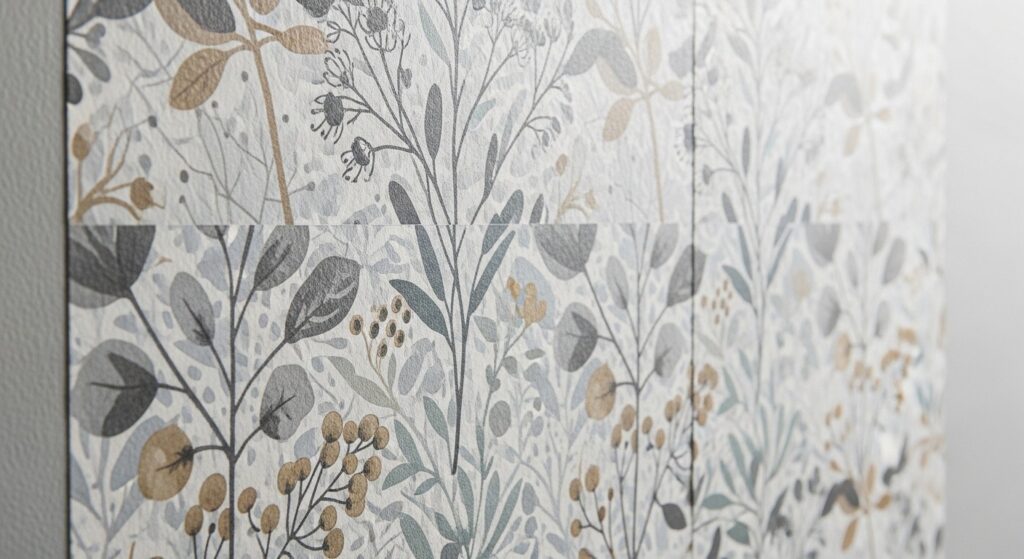
4. Textured Accent Walls
There’s something about a textured wall that paint alone can’t quite achieve. It catches light differently throughout the day. It has depth you can almost feel from across the room. And when it’s done well, it looks like it cost three times what it actually did.
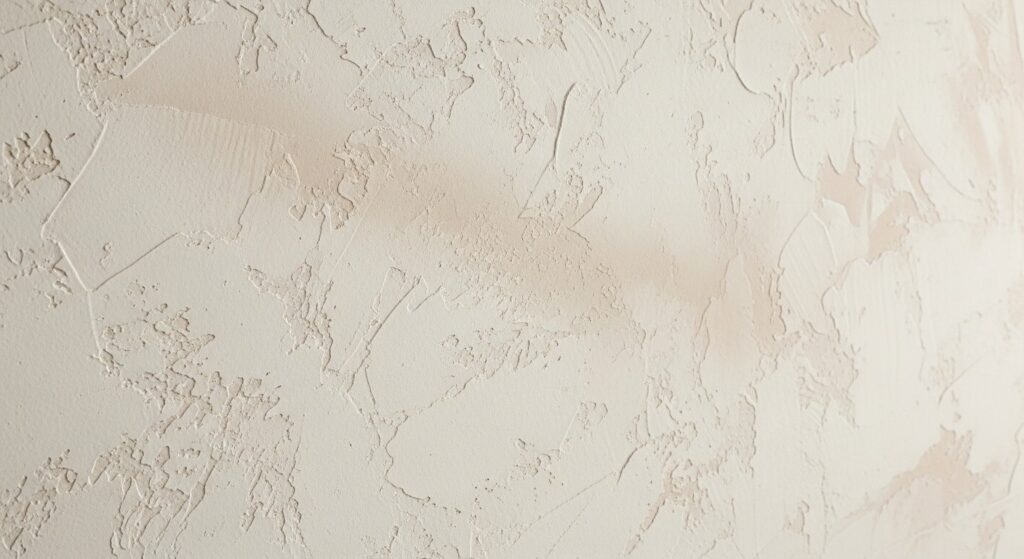
Limewash paint and plaster-effect paints are the most accessible starting points for beginners. You apply them in sweeping, overlapping strokes with a wide brush or spatula, and the variation in coverage — the parts that are thicker here, thinner there — creates the character you’re going for. It’s one of those finishes where imperfection is literally the point.
These walls also photograph beautifully in warm, directional light. If you have a floor lamp or wall sconce nearby, position it so the light skims across the surface at an angle. The shadows it creates in the texture are part of the effect.
- Limewash paint for a soft, layered, Mediterranean-inspired finish
- Venetian plaster for a smoother, more polished high-end effect
- Plaster-look paints for a beginner-friendly, forgiving application
- Position side lighting nearby to show off the texture at its best
5. Wood Accent Walls
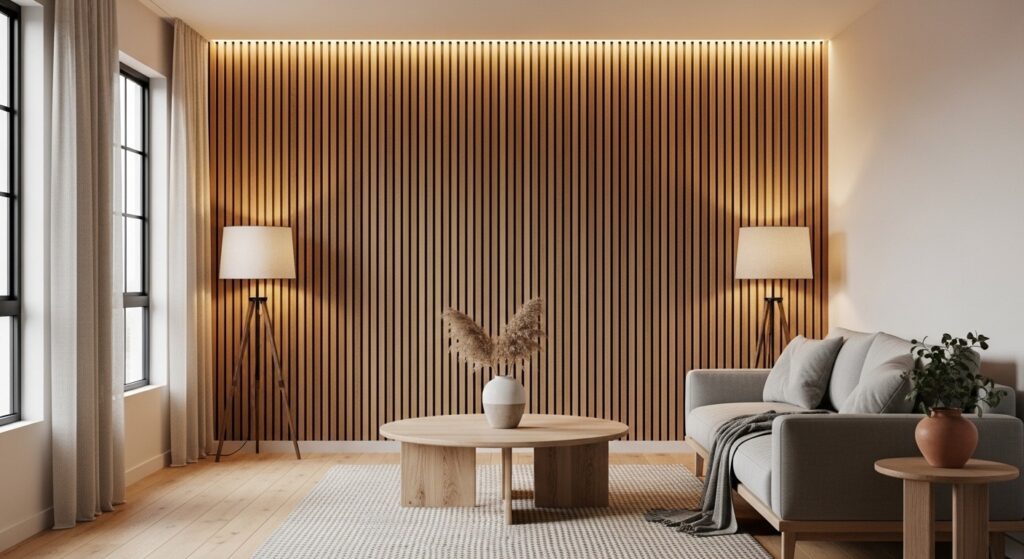
Wood brings something to a room that no other material does — warmth, organic texture, and a sense of calm that feels genuinely grounding. Whether you go with shiplap-style horizontal planks, vertical slat panels, or a mix of rough-cut reclaimed boards, a wood accent wall signals that this room has been thoughtfully put together.
Vertical slat panels are having a real moment right now, and it’s easy to see why. They draw the eye upward, which makes ceilings feel taller — a genuine win in apartments with average or below-average ceiling height. Many kits are designed to be wall-mounted with adhesive or simple clips, so the installation is genuinely manageable without carpentry experience.
For a more budget-friendly take, try painting your wood slats in a contrasting color rather than leaving them natural. A deep, dark green or charcoal against pale natural wood creates a striking two-toned look that goes a long way on a modest budget. Read our guide to Modern Living Room Wall Decor for more ways to combine wood tones with other materials.
6. Color Selection Tips
Choosing accent wall colors is where a lot of people stall — and it’s understandable. That terracotta swatch looks warm and inviting in the store, then somehow ends up feeling orange on your wall. The reliable fix is testing. Get a few sample pots, paint at least a 12-by-12-inch patch directly on the wall, and live with it for a couple of days. Look at it in the morning, in the afternoon, and in the evening with your lamps on. Color behaves differently in every light condition.
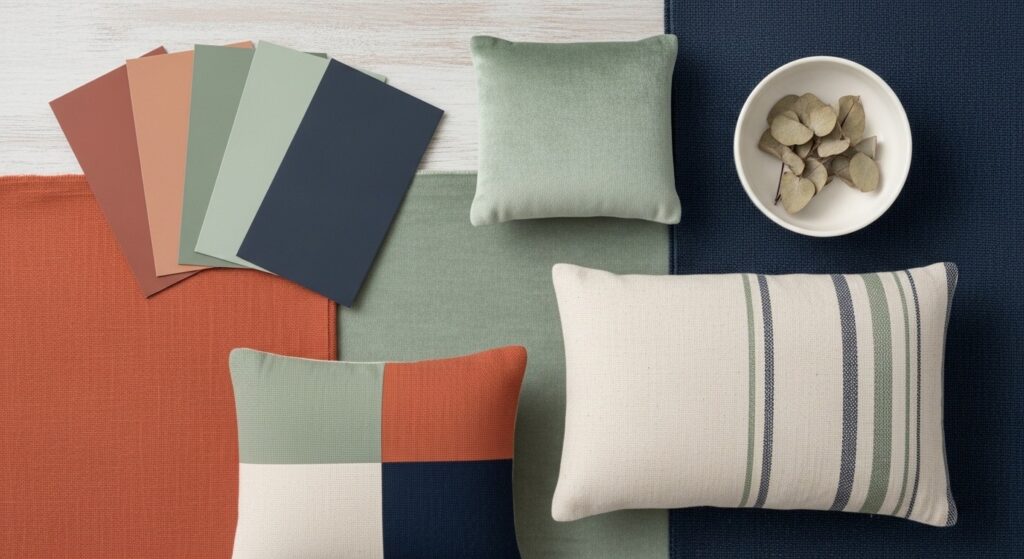
A simple trick that takes the guesswork out of color selection: look for a shade that already exists somewhere in the room — in a throw pillow, the underside of a rug, the art on your walls. Pulling a color that’s already present creates a cohesive look without any formal design knowledge. You’re not choosing a random accent; you’re amplifying something that’s already there.
One thing worth knowing if you’re working with a smaller space: deep, dark colors on an accent wall can actually make a room feel larger, not smaller. A dark wall visually recedes, pushing that surface further away. Paired with light furniture and good lighting, it creates real depth. Check out Small Living Room Color Ideas for a deeper look at this approach.
- Test on the actual wall — paint chips are never the full story
- Look for colors already present in your rugs, cushions, or artwork
- Check swatches in both daylight and evening lamplight
- Don’t be afraid of deep, dark shades — they often open up a space
7. Accent Wall Mistakes to Avoid
Most accent wall projects succeed — they’re genuinely forgiving once you know what you’re doing. But there are a handful of recurring missteps that consistently hold results back. Here’s what to watch for before you get started.
Hanging artwork too high.
This one is extremely common. The instinct is to hang things at eye level while standing, but in a living room, you’re seated most of the time. Center artwork around 57 to 60 inches from the floor. Anything higher starts to feel disconnected from the furniture beneath it, and ceilings end up feeling lower as a result.
Using pieces that are too small for the space.
A single small frame on a large wall looks like it got lost. When in doubt, go bigger — or group several smaller pieces together into an arrangement that reads as one composition. The scale of the decor should feel proportional to the scale of the wall.
Skipping the planning step for arrangements.
Before drilling a single hole, lay everything out on the floor and live with the arrangement for a bit. Take a photo from a standing position and review it — this gives you a much more accurate sense of proportion than just eyeballing it from the side. Adjust on the floor until it feels balanced, then transfer it to the wall.
Ignoring the room’s existing style.
A beautifully executed shiplap wall looks out of place in a sleek, contemporary room. A moody limewash finish might feel odd in a space full of bright, cheerful colors. Your accent wall should feel like it belongs in the same design conversation as everything else around it. Browse Wall Decor Ideas to find styles that genuinely match your room’s personality.
RELATED READING
→ Small Living Room Color Ideas
→ Modern Living Room Wall Decor
Frequently Asked Questions
Q1: What’s the most important element to focus on?
Start with the wall itself. Before colors, materials, or decor, the single most important decision is identifying which wall to work with. Get that right — find the one the eye naturally travels toward — and every subsequent choice becomes easier.
Once the wall is decided, color or material selection is your next priority. Those two choices together determine most of what the final result looks and feels like. Artwork, lighting, and accessories are the finishing layer — important, but secondary to a strong foundation.
If you’re feeling overwhelmed, just make the wall selection and stop there for now. It really is that simple to begin. The project has a way of clarifying itself once you’ve committed to that first decision.
Q2: How do I start this project?
Begin by photographing your living room from several angles — different corners, different times of day. This gives you an objective perspective that’s surprisingly hard to get when you’re familiar with a space. Pull together a small folder of inspiration images and compare them against your own photos.
From there, identify your focal wall and decide whether you’re starting with paint, wallpaper, or something else. Paint is the lowest-stakes option if you’re new to this — it’s fast, affordable, and easy to redo if your first attempt doesn’t land exactly right. Order a few color testers and apply large swatches before buying a full can.
Gather all your supplies before you begin so the project flows from start to finish without interruptions. Move the furniture back, give yourself time, and resist the urge to rush. A single unhurried afternoon almost always produces better results than two rushed ones.
Q3: What’s the typical budget range?
A painted accent wall done yourself typically falls somewhere between $30 and $80, covering paint, primer, tape, and a roller. Peel-and-stick wallpaper for a single wall usually runs $50 to $150 depending on the design and the size of the wall.
Wood panel treatments — vertical slat kits, shiplap, or reclaimed boards — have a wider range, generally $100 to $400 for a single wall, depending on materials and room size. Textured paint effects like limewash or plaster-look paint tend to fall in the $50 to $120 range for a DIY job.
In every case, the DIY route makes a significant difference to the final cost. And even at the lower end of the budget spectrum, a well-executed painted accent wall can do more for a room than a much larger spend spread across accessories and smaller decorative pieces.
Q4: How long does this project take?
A painted accent wall is typically a half-day project — three to five hours when you include prep work, taping, two coats with drying time in between, and cleanup. Most people start after breakfast and are done before dinner.
Peel-and-stick wallpaper takes a similar amount of time, sometimes slightly longer if you’re matching a pattern carefully across multiple drops. A wood panel installation tends to be a full-day project, particularly if you’re cutting panels to size or navigating outlets and light switches.
Textured plaster and limewash effects vary. Some can be completed in an afternoon. Others look best with a second application after the first coat has fully dried overnight. Whatever method you choose, don’t cut corners on drying time — it’s the one step in the process where patience genuinely makes a visible difference.
Your Statement Wall is Closer Than You Think
A living room accent wall is one of the most effective changes you can make to your space — not because it’s dramatic, but because it gives the whole room a clear sense of intention. One wall, treated thoughtfully, can transform everything around it. You don’t need to be a designer. You don’t need a big budget. You just need to start somewhere.
Pick the right wall. Choose your approach. Test before you commit. And remember — every beautifully decorated living room you’ve ever admired began with someone deciding to try one thing. This can be yours.
→ Read Next: Modern Living Room Wall Decor Ideas