
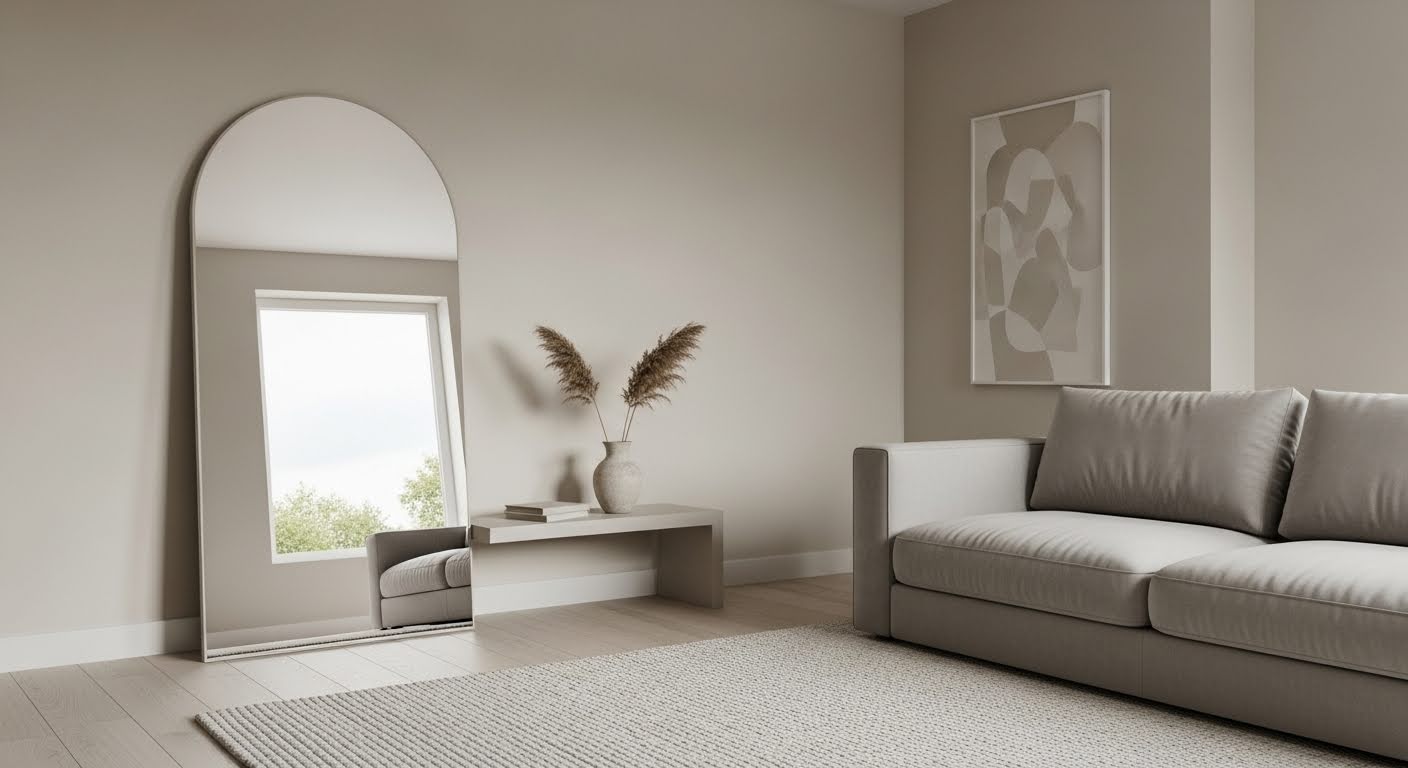
Living Room Mirror Ideas: Reflect Light & Space
Simple, beginner-friendly ways to use mirrors to open up any room — even the tiniest apartment.
Here’s something most beginner decorators never hear: you do not need to repaint a single wall to make your living room feel twice as big. You just need the right mirror in the right spot.
If your room feels dark, boxed-in, or just a bit lifeless, you are not alone. Rented apartments, north-facing windows, low ceilings — they all present the same challenge. But mirrors have been solving that problem for centuries, and they are just as effective today. A well-placed mirror reflects both light and depth into a room in a way that furniture rearrangement simply cannot match.
In this guide, you’ll walk through everything you need to know — from placement basics and light-boosting tricks to statement mirrors, gallery walls, and how to choose the right shapes and frames for your space. By the end, you’ll have a clear plan and the confidence to act on it.
Quick Summary
WHO THIS IS FOR
Apartment renters, first-time homeowners, and small-space dwellers looking for practical ideas.
TIME TO READ
5 min
TOP 3 TAKAWAYS
1. Mirror Placement Principles
Placement is where everything starts. Buy the wrong mirror and you can return it. Hang the right mirror in the wrong spot and you will be looking at a reflection of your messiest corner for the next six months. So before anything else, think about what you want your mirror to show.
The golden rule is simple: position your mirror across from or at an angle to a natural light source. That way, sunlight enters, hits the reflective surface, and bounces into the darker parts of the room. It is the closest thing to adding a second window without calling a contractor.
Height is another detail people overlook. The center of most wall-mounted mirrors looks best at around 57 to 60 inches from the floor — roughly eye level for most adults. Above a console table or a sofa, drop it a little lower. On a tall, empty wall, you can go higher. Let the furniture guide you, not the other way around.
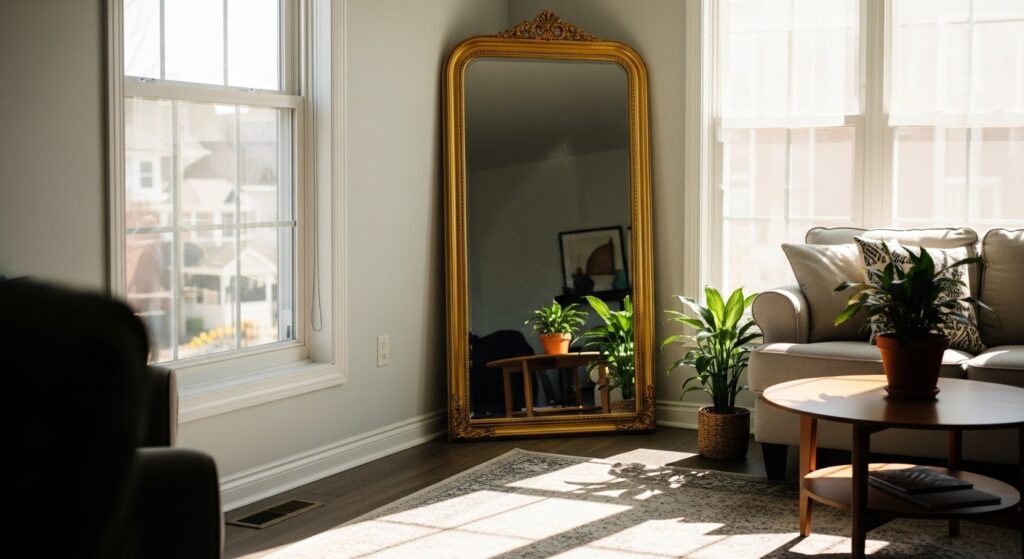
Quick placement tips:
- Face mirrors toward windows, lamps, or attractive room features — never toward clutter
- Mount the center of the mirror at 57–60 inches from the floor unless anchored above furniture
- Use painter’s tape to mark out the size on your wall before you drill a single hole
- Step back and look at the reflection before committing — what you see in the mirror is what your guests will see too
2. Using Mirrors to Add Light
Dark rooms are frustrating. Whether your apartment faces the wrong direction or your windows are on the small side, the problem is familiar. Mirrors cannot manufacture daylight, but they can spread whatever light you have much further than it would travel on its own.
The most effective approach for a dim room is leaning a large floor mirror against the wall closest to your main window. You do not even need a perfect angle. A big reflective surface captures ambient light and disperses it in all directions. Pair it with light walls and a few well-placed lamps and the difference can be dramatic — the kind people notice the moment they walk in.
For smaller spaces, grouping a few mirrors together near a light source works surprisingly well. Three round mirrors above a side table next to a floor lamp, for example, create layered light in the evenings that feels warm and intentional rather than accidental. You are not just decorating — you are engineering the mood of the room.
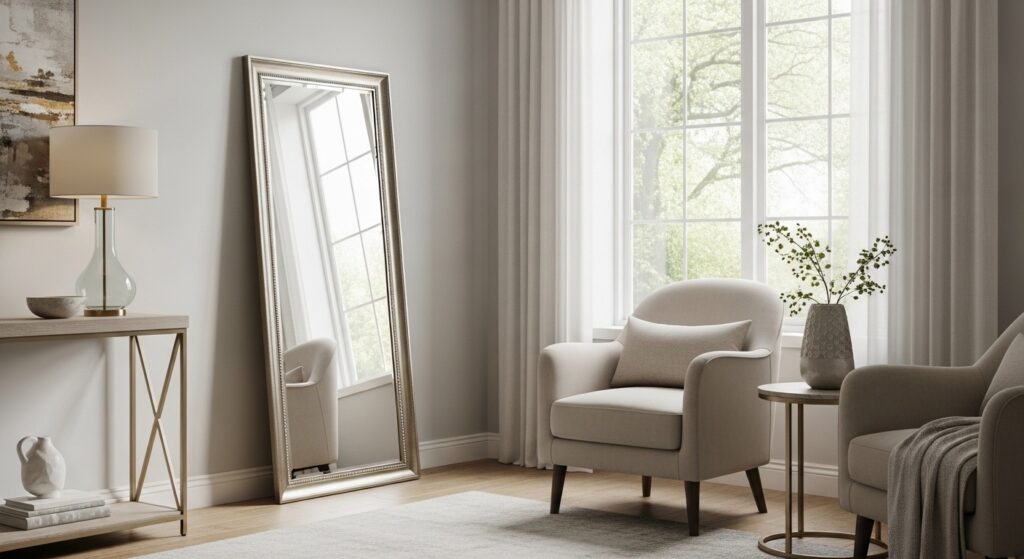
How to maximize light with mirrors:
- Choose mirrors with thin or no frames to maximize the reflective surface area
- Lean a floor mirror close to a window, even if the angle isn’t precise
- Group three or more small mirrors near a lamp to multiply warm evening light
- Warm-toned mirror frames — brass, gold, natural wood — enhance the glow from warm-bulb lighting
3. Statement Mirror Ideas
A statement mirror does what a piece of bold art does — it sets the tone for everything around it. Walk into a room with a beautiful oversized arch mirror above the sofa and you notice the mirror before you notice anything else. That is the point. One strong, confident piece beats five timid ones every time.
Scale is key. In a small room, the instinct is often to go small, to not overwhelm the space. But that instinct works against you. A large mirror makes a room feel bigger. A small mirror on a large wall feels like an afterthought. If you are nervous about going big, that is usually the sign to go bigger.
Sunburst and starburst mirrors are particularly strong standalone pieces. Hang one above a console or sideboard and let it breathe. You do not need to surround it with anything else. Arch-top mirrors work beautifully above a sofa or fireplace — their curved silhouette softens a room full of straight-edged furniture and creates a natural focal point that draws the eye in all the right ways.
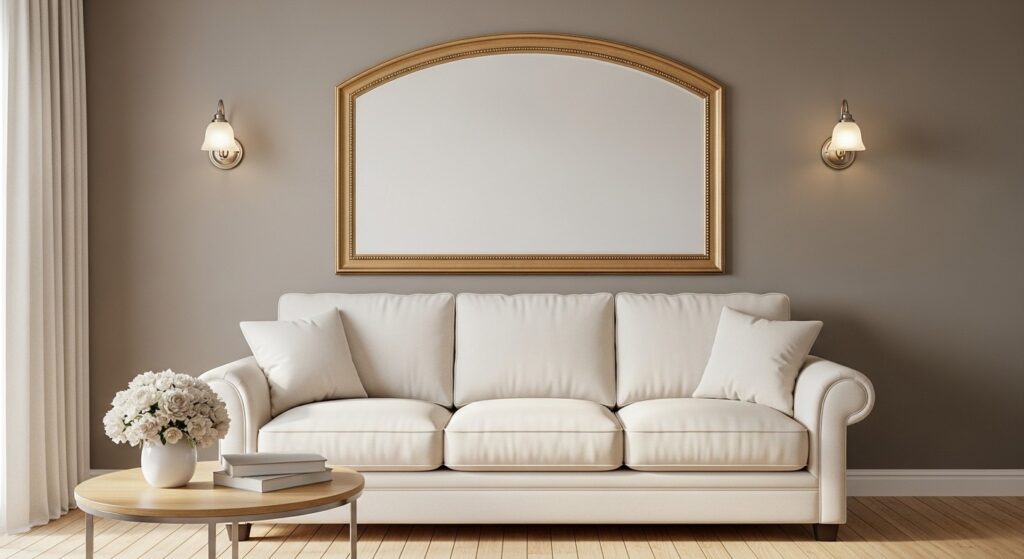
Statement mirror tips:
- One large mirror beats a cluster of small ones when you want real visual impact
- Arch, sunburst, and organic irregular shapes all read as intentional focal points
- Let the mirror do the work — it does not need art or shelving competing beside it
- If the budget allows just one splurge in the room, a statement mirror is one of the best investments you can make
4. Mirror Gallery Walls
A mirror gallery wall is one of the most beginner-friendly decorating projects out there. The idea is to group several mirrors of different shapes, sizes, and frames together on one wall in an arrangement that feels curated rather than random. Done well, it looks like you collected these pieces slowly over time, each one with its own small story.
The first step is to lay everything out on the floor before you touch a nail. Experiment with arrangements until something clicks. Odd numbers — three, five, seven — tend to look more natural and relaxed than even groupings. Mix up the shapes: a round mirror next to a rectangular one next to something with an ornate frame keeps the eye moving and makes the collection feel alive.
The one thing that keeps a gallery wall from tipping into chaos is a unifying element. That might be a consistent frame finish (all brass, all matte black, all natural wood), a shared color palette, or a similar level of detail. Without at least one thread connecting them, the arrangement can feel scattered rather than styled.
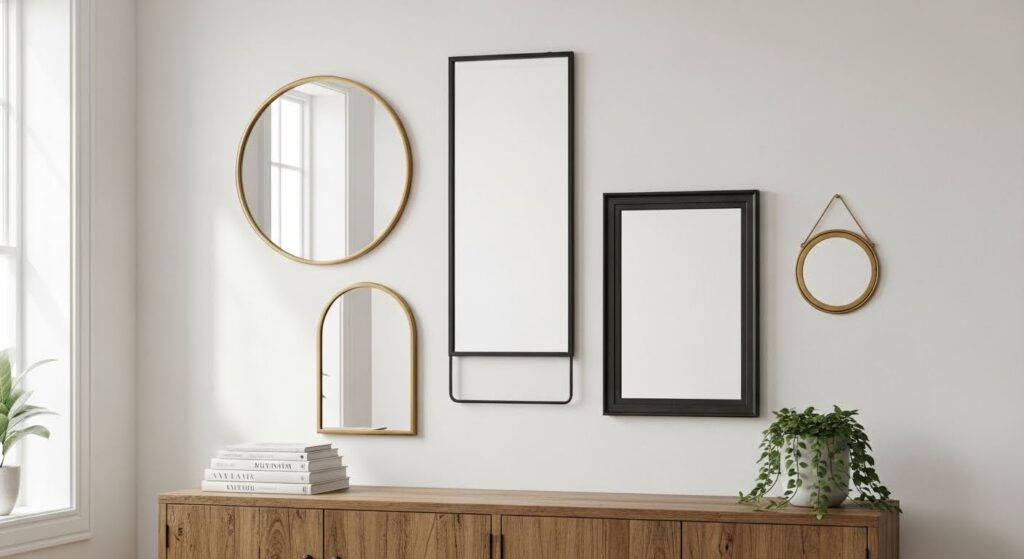
Gallery wall tips:
- Always arrange on the floor first, then trace and transfer your layout to the wall
- Odd numbers (3, 5, 7) create a more natural, easy-going composition
- Mix shapes freely, but keep one frame detail consistent to unify the collection
- Leave a little breathing room between each mirror — tight groupings can feel cluttered
5. Functional vs Decorative Mirrors
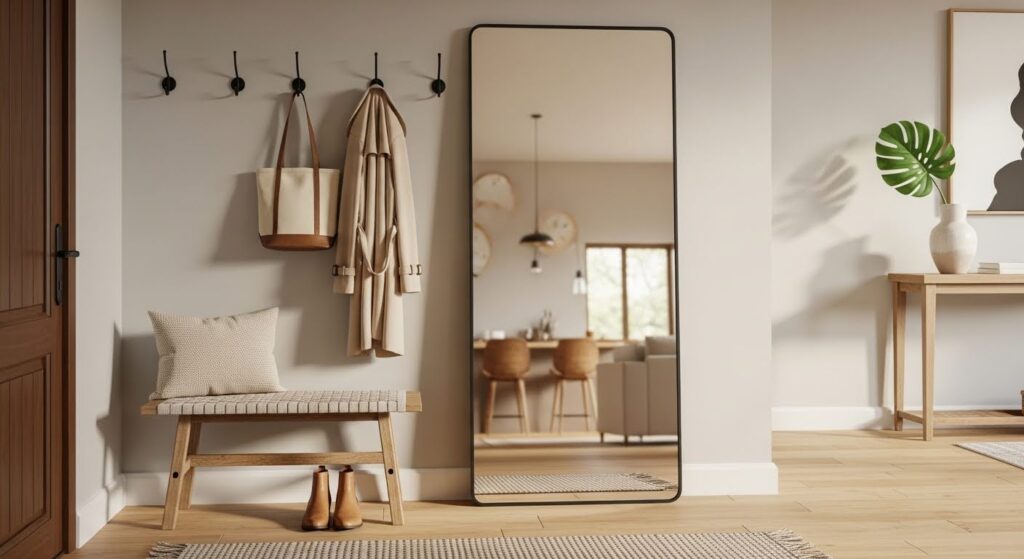
Here is a distinction worth making, especially in small apartments: decorative mirrors are chosen purely for how they look, while functional mirrors are meant to be used. In a compact living space, the best mirrors do both at once.
A full-length mirror near the front door is a perfect example. It helps you check your outfit before you leave, yes — but it also makes the transition from hallway to living room feel more open. Similarly, a mirrored tray on the coffee table catches the light, organizes remotes and candles, and doubles as a design detail. None of this feels heavy-handed because the pieces are genuinely useful.
The goal in a small space is for every object to earn its place. A beautiful arch mirror by the entry, a round decorative mirror above the TV console, a mirrored surface on a side table — these touches work hard without announcing themselves. The room feels considered rather than over-decorated, which is exactly what you want.
6. Mirror Shapes and Frames
Shape is the first thing a mirror communicates. Round mirrors are warm and friendly — they soften hard lines and work in practically any room style, from minimalist to maximalist to Scandinavian to bohemian. If you are buying your very first decorative mirror and you want something that is unlikely to clash with anything, start round.
Rectangular mirrors feel more formal and structured. They suit traditional living rooms, look excellent in gallery walls, and are a natural fit above a fireplace mantel. Arched mirrors sit somewhere in the middle: they have the clean geometry of a rectangle but the curve adds just enough warmth to keep things from feeling stiff. They have been everywhere in home decor lately, and for good reason.
Frames define personality just as much as shape does. A chunky raw-wood frame reads rustic and warm. A thin black metal frame is sharp and contemporary. An ornate gilded frame leans maximalist and vintage. The trick is to match your frame to the materials that already dominate the room. If your room is full of warm wood tones, a natural wood frame will feel at home immediately. If clean metal and white walls are the vibe, go thin and black.
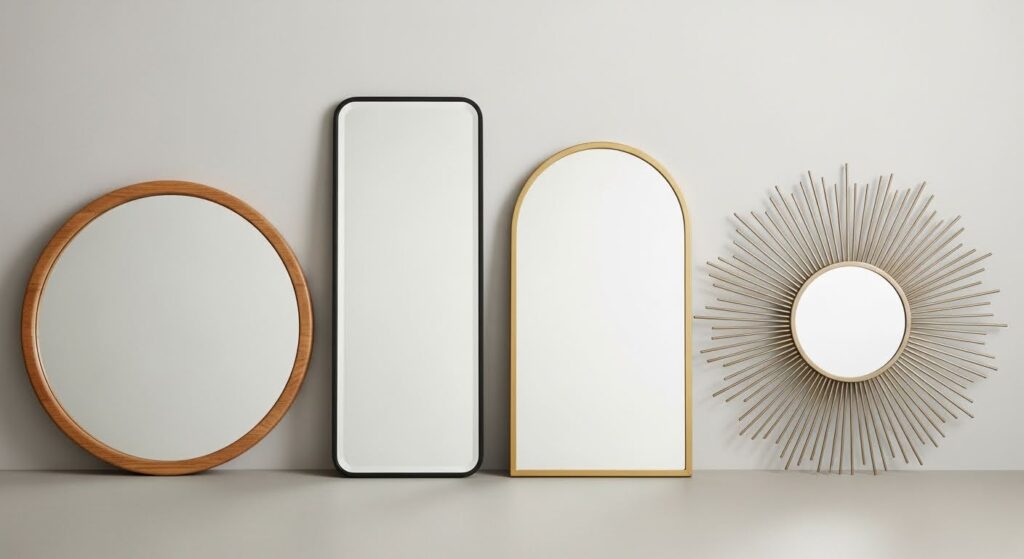
Mirror shapes and frames at a glance:
- Universally flattering, soft, works in any style: Round
- Classic and structured, ideal for formal or traditional rooms: Rectangular
- Architectural and refined, creates an elegant focal point: Arched
- Bold standalone piece, adds drama without needing company: Sunburst/Starburst
- Modern and minimal, great for contemporary spaces: Frameless
Common Mistakes to Avoid
| 1 | Not Measuring FirstA mirror that is too small vanishes on a large wall. One that is too big can make a narrow space feel cramped. Always measure the wall and your furniture before you shop — write the numbers down and take them with you. |
| 2 | Ignoring What the Mirror Will ReflectYour mirror is not just decoration — it is a window into another part of the room. Make sure it faces something you love: a window, a lamp, a plant. Pointing it at a cluttered shelf or a bare corner defeats the whole purpose. |
| 3 | Chasing Trends Over Personal StyleA mirror style can be everywhere one season and gone the next. If you genuinely love a sunburst mirror, buy it. But do not choose something just because you saw it on a mood board. Buy what feels like you, and it will look right for years. |
| 4 | Skipping the Planning StepHanging a mirror without testing placement first leads to unnecessary holes in the wall and a result that just never sits right. Use paper cut-outs or painter’s tape to map out the size and position before you commit. It takes ten minutes and saves a lot of frustration. |
Frequently Asked Questions
What is the most important thing to focus on when decorating with mirrors?
Placement, without a doubt. The most beautiful mirror in the world does nothing for a room if it is facing the wrong direction or hung at an awkward height. Before you think about shape, size, or frame style, walk around your room and identify where the natural light comes from. Build your placement decision around that first. Everything else — aesthetics, size, style — follows naturally once you have the position right.
How do I start if I have never done this kind of decorating before?
Start with one wall and one mirror. Seriously — just one. Walk through your room, find the space that feels the most bare or the corner that gets the least light, and make that your starting point. Measure the wall and any furniture in front of it, decide whether you want something leaning or mounted, then shop with those numbers in your pocket. First-time wins build real confidence, and a single well-placed mirror is one of the quickest wins you can get in home decorating.
What is a realistic budget for this kind of project?
It varies more than you might expect. Small decorative mirrors can be found for under thirty dollars at thrift stores, discount home stores, and online resale platforms. A quality statement mirror or floor mirror typically runs somewhere between eighty and three hundred dollars depending on size and style. For a gallery wall of four to six mirrors, a budget of one hundred fifty to four hundred dollars is realistic. The good news is mirrors hold up very well secondhand, so thrifting is a completely sensible strategy and often how the best collections are built.
How long does it actually take to do this?
A single mirror — from decision to hung — usually takes most people a weekend, and the shopping trip is almost always the longest part. The physical hanging rarely takes more than twenty minutes once you know where it is going. A gallery wall takes longer to plan because the arrangement matters, but the actual installation is usually under an hour once you have your layout mapped on paper. If you give yourself a week from first idea to finished wall, you will feel relaxed and unhurried the whole way through.
KEEP EXPLORING: Wall Decor Ideas • Small Living Room Ideas • Modern Living Room Ideas
You’ve Got This
Living room mirror ideas do not have to be complicated, and they do not have to be expensive. What you need is a clear sense of where your light comes from, a little patience with placement, and the willingness to trust your instincts when something looks right. You now have the framework. The rest is just doing it.
Start with one mirror. Pick the wall that needs it most. Measure before you shop, check what the mirror will reflect before you hang it, and do not be afraid to move things around until it clicks. The best rooms are not designed all at once — they are built slowly, one good decision at a time.
Ready to keep going? Mirrors are just the beginning. → Read Next: Living Room Plant Ideas