
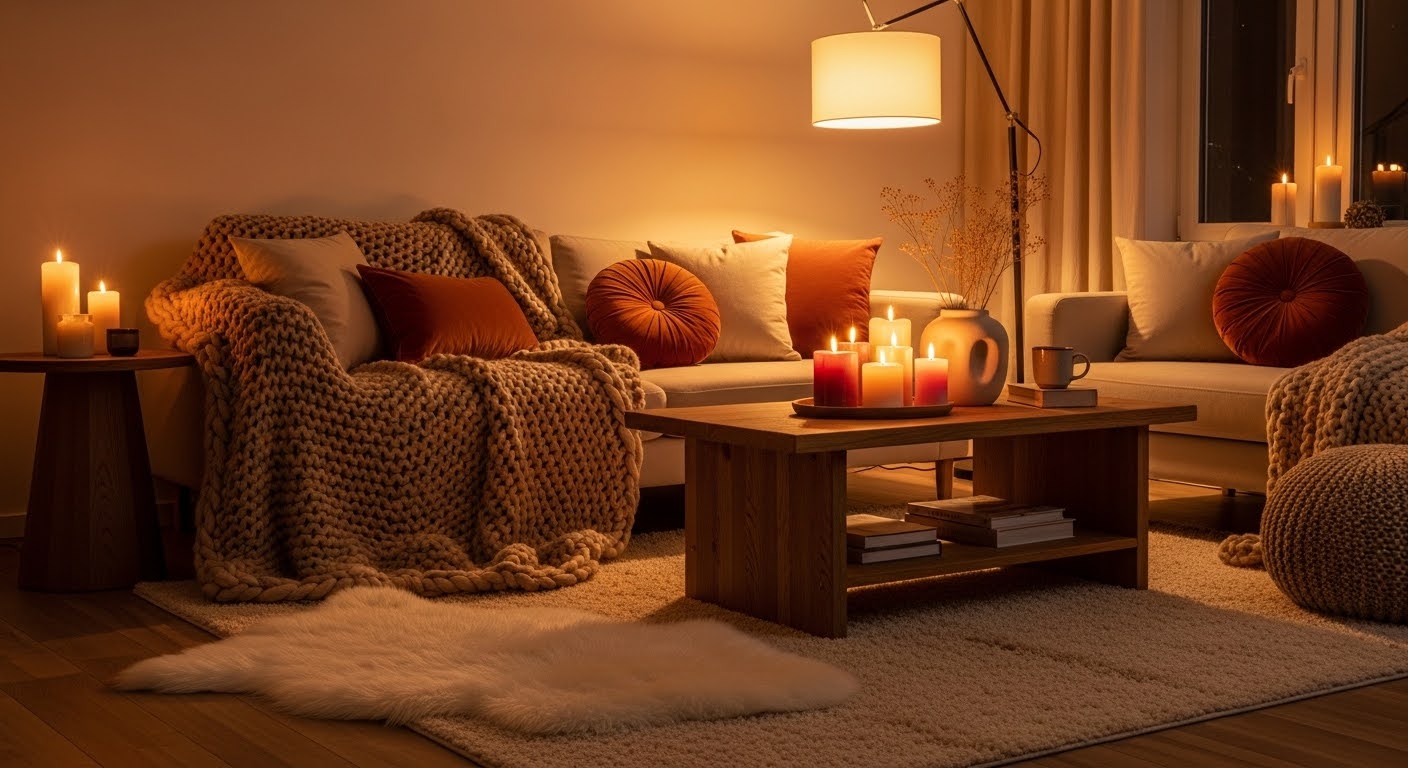
Modern Farmhouse Living Room Ideas: Rustic Meets Contemporary
You love the warmth of a farmhouse living room — the wood grain, the layered textures, the feeling that a space actually lives — but you don’t want to end up with something that looks like a barn moved into your apartment. That tension is real, and honestly? More people feel it than you’d think.
Here’s the thing: you don’t need a sprawling country house, an exposed beam ceiling, or a serious renovation budget to pull this off. Whether you’re working with a compact city flat or a modest suburban lounge, modern farmhouse design scales beautifully to smaller spaces. It’s one of the most forgiving decorating styles for beginners, partly because a bit of imperfection is actually the point.
In this post, you’ll find out exactly how to blend rustic textures with clean contemporary lines, which wood elements work hardest in tight spaces, and how to build a neutral palette that never tips into boring. By the end, you’ll have a clear, practical plan for your living room — no contractor required.
Quick Summary
WHO THIS IS FOR
Modern design fans, small-space decorators, and anyone who wants a warmer home without a renovation budget.
TIME TO READ
8 min
TOP 3 TAKAWAYS
1. Modern Farmhouse Defined
Modern farmhouse style lives at the intersection of two worlds: the raw, textured warmth of traditional country living and the clean, uncluttered lines of contemporary design. Think a reclaimed wood coffee table with sleek metal legs. Or exposed wood against a smooth plastered wall. The style works because the contrast between those two things isn’t accidental — it’s the entire point.
What separates this from purely rustic farmhouse decor is restraint. You’re not filling every surface with vintage finds or lining your shelves with mason jar collections. Instead, you’re choosing a small number of meaningful pieces that carry warmth and texture, then letting the empty space around them breathe. That editing process is what gives the style its calm, settled feeling.
For apartment dwellers especially, this balance is a lifesaver. You get all the warmth of farmhouse living room decor without the visual weight that makes small rooms feel closed-in and overwhelming.
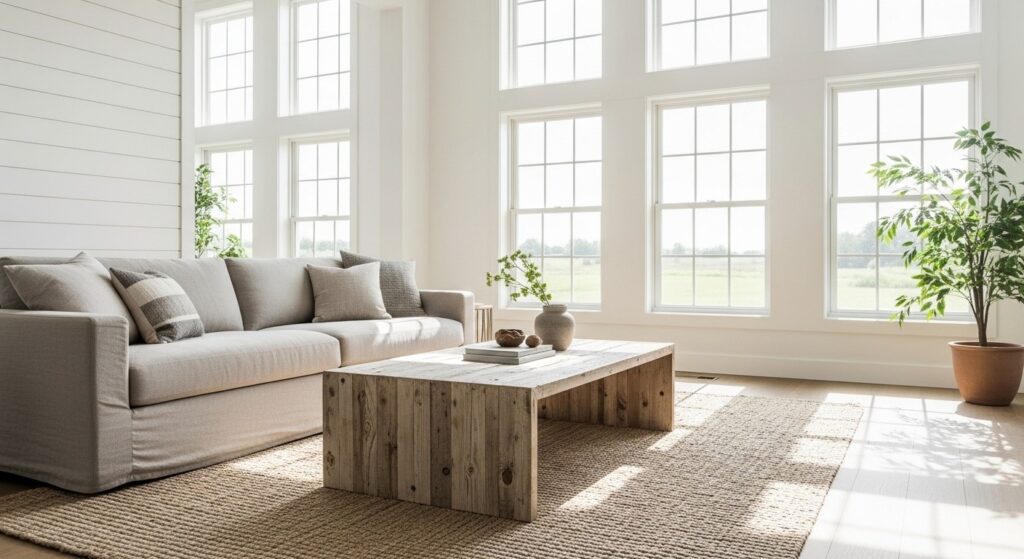
Key characteristics at a glance:
- Combines raw natural textures with clean architectural lines
- Prioritizes breathing room over surface-level decoration
- Scales well in both small apartments and open-plan spaces
- Feels collected and intentional, never random or cluttered
2. Mixing Rustic and Contemporary
The secret to mixing rustic and contemporary elements without your room looking confused is something I think of as the two-thirds rule. Let one style lead by about two-thirds of the room’s visual weight, then bring in the other as contrast. If your large furniture and architecture are modern and streamlined, the rustic touches — a wooden tray, a jute rug, a linen throw — feel intentional rather than like an afterthought.
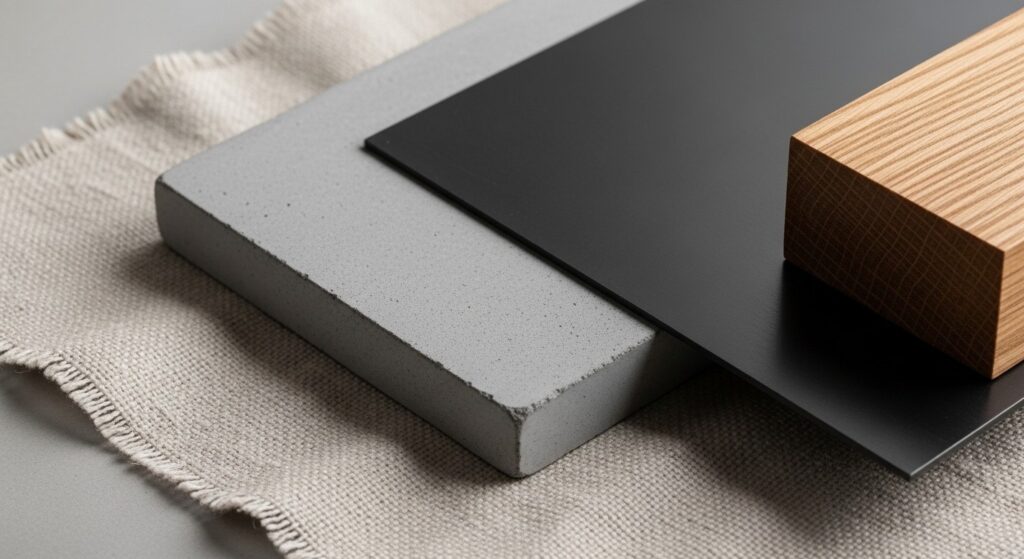
Material contrast does most of the heavy lifting here. Pair smooth plaster walls with a rough-hewn wood shelf. Set a concrete lamp base on a weathered oak side table. Place a clean-lined metal floor lamp beside a chunky knit blanket. These pairings create genuine visual interest without needing a lot of objects or cluttered surfaces.
Texture is your most powerful tool in a rustic modern living room. When your color palette is neutral — and in modern farmhouse, it usually is — texture is what stops a room from reading as flat and lifeless.
See also:
Modern Living Room Ideas — for a broader range of contemporary decorating directions
3. Wood Elements Done Right
Wood is the backbone of modern farmhouse design. But how you use it matters as much as how much you use. In a small room, too much dark or heavy wood makes walls close in fast. The trick is to vary your tones: keep the largest pieces — flooring, big furniture — in lighter, more natural finishes, then layer in darker wood through smaller accents.
Think about one anchor wood piece per zone. In your seating area, that might be the coffee table. In a reading corner, a side table or small stool. Let that one piece do the work, and keep other wood elements much smaller — a picture frame, a candle holder, a small tray. This creates warmth and consistency without the room feeling heavy.
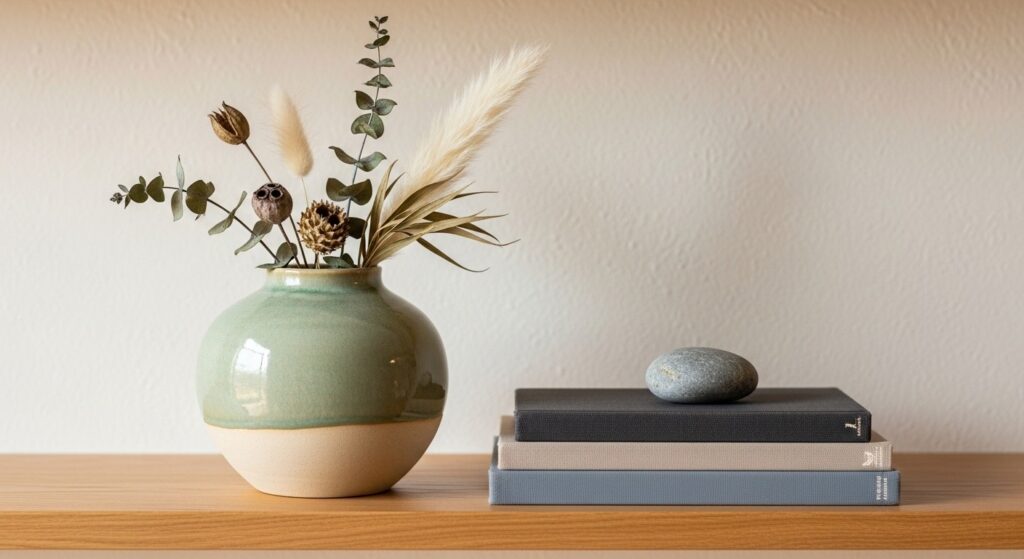
Floating shelves in natural wood are a classic move for apartment living. They add storage and character without eating floor space, and they give you a spot to style a small curated vignette — a plant, a book, a simple ceramic object — that says something about who you actually are.
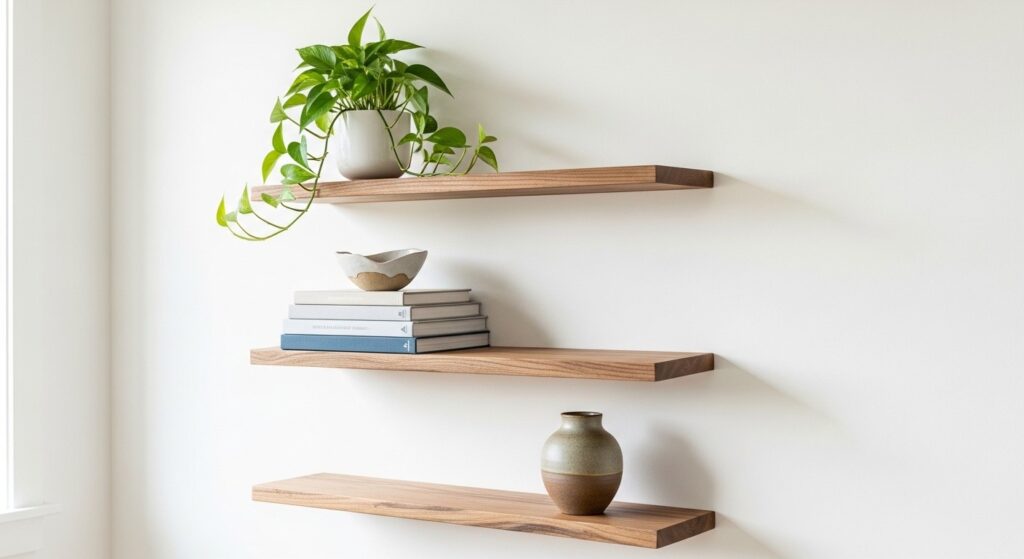
Quick tips for wood:
- Mix light and mid-tones rather than matching everything
- Keep your largest wood piece in a light, natural finish
- One anchor element per zone — not five small ones
- Floating shelves add warmth without using floor space
- Avoid full matching wood sets — they flatten the room instantly
4. Neutral Farmhouse Palette
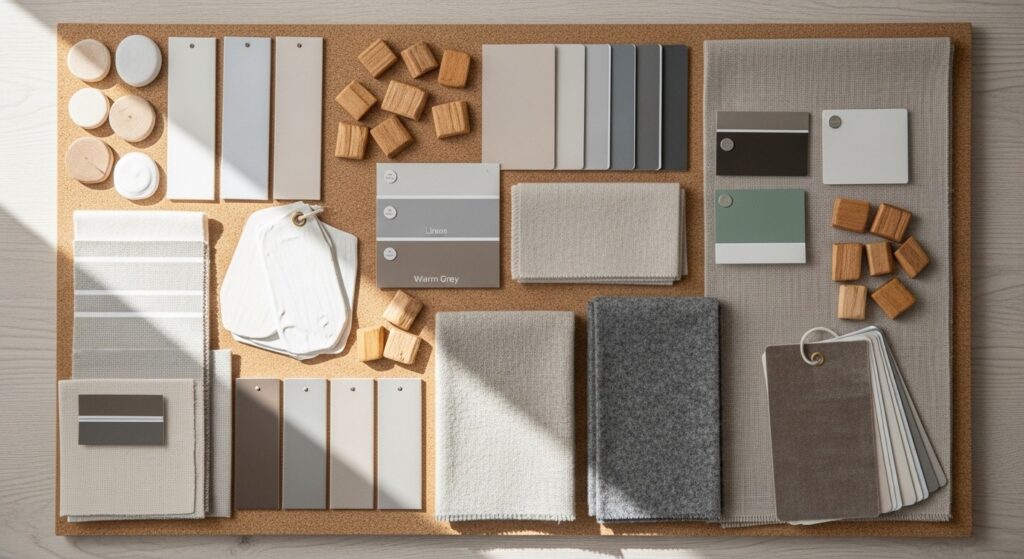
Modern farmhouse color palettes stay firmly in the warm neutral family: creamy whites, soft linens, warm greys, and gentle taupes. But neutral doesn’t mean boring, and the warmth in these tones comes entirely from their undertones. A warm cream with a hint of yellow reads completely differently from a cool, slightly blue-toned white. Always go warm for this style — your room will thank you.
Think of your walls as the lightest element in the space. From there, build depth by moving gradually darker: a mid-tone sofa or rug, then a moment of deeper color — a charcoal throw, a dark wood accent, a matte black fixture — to anchor everything. This light-to-dark layering creates the depth and coziness that makes modern farmhouse rooms feel so inviting.
If you want to introduce a bit of color, let it come from nature. Muted sage green, soft dusty blue, and warm terracotta all work beautifully as accent tones. Use them sparingly — a single armchair, two cushions, a woven basket — and you’ll keep the calm quality of the style intact.
See also:
Neutral Living Room Ideas — a deep dive into every shade and how to layer them without losing warmth
5. Cozy Textiles and Layers
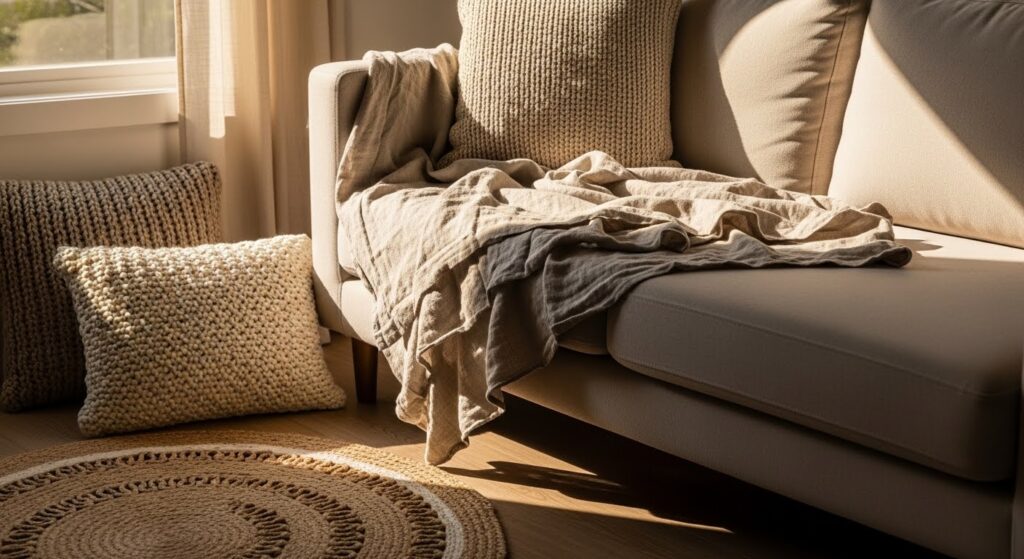
If wood gives modern farmhouse rooms their structure, textiles give them their soul. And this is the one area where you genuinely get to pile on without guilt. Layering different materials — a smooth cotton sofa base, a chunky knit throw, a linen cushion, a woven jute rug — creates the kind of effortlessly cozy atmosphere that photographs well and, more importantly, actually feels wonderful to live in.
The key is staying within your neutral palette while varying texture dramatically. A cream sofa, cream linen cushions, and a cream knit blanket sounds like it should be dull. It isn’t — because each material catches light differently and tells its own tactile story. Add one dusty blue cushion or a muted terracotta throw and the whole composition comes alive.
For apartments especially, a large area rug is one of the highest-impact investments you can make. It grounds your seating area, makes the room feel designed rather than default, and softens the acoustics. Go bigger than you think you need. Rugs that are too small make rooms feel choppy and unfinished — a mistake that’s very easy to avoid.
Textile layering checklist:
- Layer at least three different textures in your main seating zone
- Keep colors tonal, but vary textures as much as you like
- Size your area rug up — all front furniture legs should sit on it
- Swap textiles with the seasons for an easy, low-cost refresh
See also:
Cozy Living Room Ideas — apartment-friendly layering tips for maximum warmth in minimum space
6. Industrial Accents
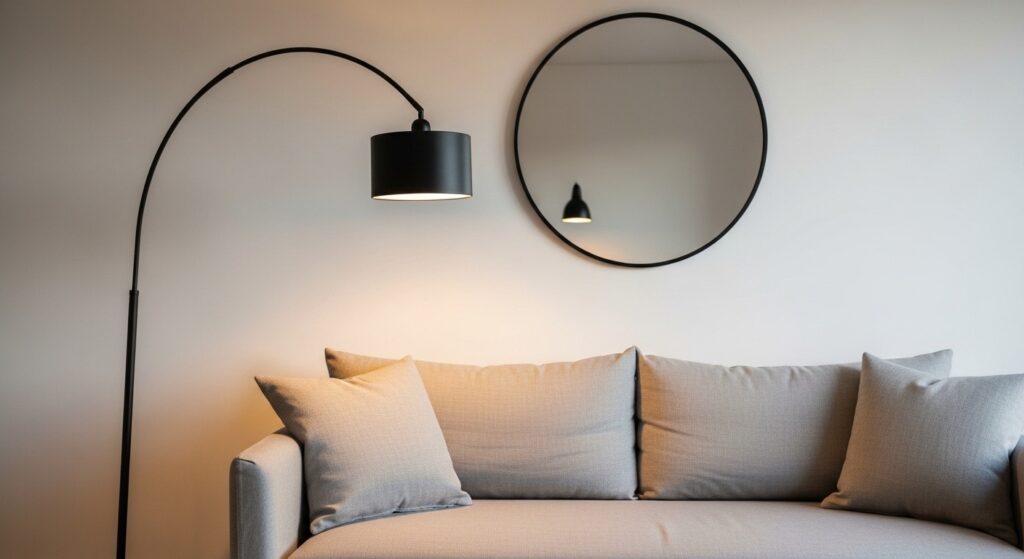
Matte black and brushed steel are the bridge between farmhouse warmth and contemporary sharpness. Industrial accents — a thin-frame black mirror, simple steel shelf brackets, a floor lamp with a black stem — inject just enough edge to stop your room from tipping into overly sweet or precious territory. Think of them as the punctuation marks of your space.
In a rental apartment, you can introduce these touches without anything permanent. Swap your existing light switch plates for matte black versions (most take about five minutes with a screwdriver). Add a black-framed mirror. Choose hardware and handles in a brushed metal finish. Small swaps like these cost very little but genuinely shift the character of a room.
Don’t overdo it, though. Two or three industrial elements placed with intention — a lamp, a shelf bracket, a mirror — are plenty. More than that and it starts to read as a theme. And the moment your home decor reads as themed, it stops feeling like home.
7. Avoiding the Cliche Look
Modern farmhouse has a few well-worn tropes that have been reproduced so many times they’ve lost their original charm: the inspirational word sign, the matching set of decorative vases, the buffalo check on everything. Avoiding these doesn’t take anything away from the style — it just asks you to find pieces that feel more like you.
Instead of a word sign, hang a simple piece of abstract art or a framed botanical print. Instead of a collection of small matching vases, use one sculptural ceramic piece. Instead of a matching cushion set, mix scales and textures within the same tonal family. These small edits take the style from something you’ve seen on social media to something that actually belongs to you.
Country living room ideas work best when they feel collected over time, not assembled in a single afternoon. Even if you’re starting from scratch, think about giving pieces different visual ages — a brand-new sofa alongside a vintage side table, a fresh rug under a family heirloom lamp. That mix of old and new is where the real character lives.
8. Farmhouse on a Budget
One of the best things about modern farmhouse style is how well it works with secondhand and pre-loved objects. Worn wooden crates, aged glass bottles, vintage textile pieces — these things look better with a bit of history. Thrift stores, estate sales, and online marketplaces are full of exactly the pieces this style calls for, often at a fraction of the retail cost.
Focus your budget on the items that get the most use and carry the most visual weight: your sofa, your rug, and your main light fixture. Get those three things right — quality, comfort, and proportion — and everything else can come from thrifting, simple DIY, or phased purchasing over time.
And genuinely, DIY is your friend in this style. A pine board painted in a warm white makes a perfectly decent floating shelf. A plain terracotta pot with a trailing plant does more for a room than five small decorative objects on a shelf. Sometimes the simplest, most honest materials are exactly right for modern farmhouse living — and they also happen to be the most affordable.
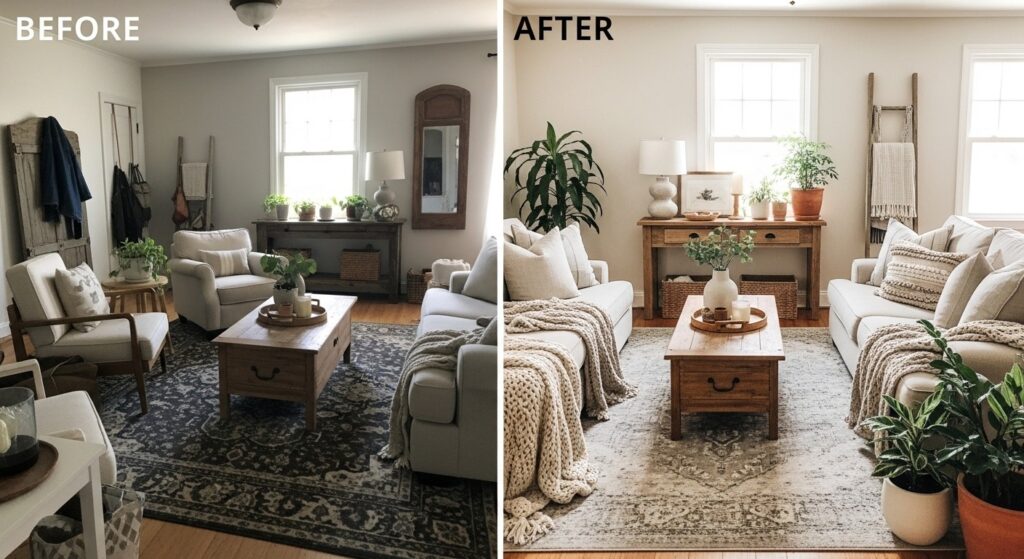
Budget-smart approach:
- Invest in sofa, rug, and lighting — save on everything else
- Thrift stores are goldmines for wood, ceramic, and glass accents
- Pine boards and white paint make excellent DIY floating shelves
- One large plant beats five small decorative objects every time
- Phase your purchases — a really good room takes time
Common Mistakes to Avoid
Even thoughtful decorators trip over these. If your modern farmhouse living room isn’t quite feeling right, one of these four things is usually the reason why.
| Making it feel cold and sterileNeutral palettes can tip into clinical if you’re not careful. Warm up your bulbs (aim for 2700K), pile on a chunky throw, and bring in something living — a trailing plant or a vase of dried stems fixes this almost immediately. | Going too matchy-matchyMatching furniture sets drain a room of personality. Mix your wood tones, pair different cushion textures at the same scale, and let things feel slightly imperfect. That slight mismatch is exactly what makes a room feel real. |
| Forgetting about comfortThis style is supposed to feel like a hug. If your sofa photographs beautifully but you’d never choose to sit on it for an evening, something went wrong. Prioritize deep cushions and soft textiles. A good-looking room that nobody wants to use isn’t really good. | No personal touchesModern farmhouse isn’t a showroom. Your room should tell your story — a few books you’ve actually read, artwork you genuinely love, one object that means something to you. Without those anchors, even the most carefully styled space feels a little empty. |
Frequently Asked Questions
Q1: What defines modern farmhouse living room style?
Modern farmhouse is built on the intentional blend of rustic, natural materials — wood, linen, leather, stone — with clean contemporary lines and a warm, restrained color palette. It deliberately contrasts warmth with simplicity: a streamlined sofa beside a rough-hewn coffee table, smooth white walls behind a layered textile arrangement. The style values comfort and livability over decorative perfection. At its core, it asks the same question as good minimalism: does this piece add warmth and meaning, or is it just taking up space?
Q2: How do I make a modern farmhouse room feel cozy?
Coziness in this style comes from layering textures, not adding more objects. Start with a large, soft area rug to ground the space, then layer your seating with throws and cushions in different materials — linen, cotton, knit, maybe a touch of velvet. Warm up your lighting: swap cool-toned bulbs for warm white (around 2700K) and add a floor lamp or table lamp to create pools of soft light rather than relying on a single overhead fixture. Finally, bring in something living — a trailing plant, a small bunch of dried botanicals — to add that organic warmth that no manufactured product can quite replicate.
Q3: What colors work best for modern farmhouse living rooms?
Warm neutrals are the foundation: creamy whites, soft linens, warm greys, and natural taupes. The critical word is warm — always choose paints and fabrics with warm undertones rather than cool, blue-based ones, which can feel stark and clinical in this style. From that base, you can introduce accents in nature-inspired tones: muted sage green, dusty terracotta, soft blue-grey, or deep charcoal for grounding. Use your accent tones sparingly — one or two pieces per room — to preserve the calm, uncluttered quality that makes the style so appealing in the first place.
Q4: Is modern farmhouse style expensive to achieve?
No — and it’s actually one of the more budget-accessible decorating styles available, specifically because it celebrates raw, imperfect, aged materials that are easy to find secondhand. The aesthetic actively rewards thrifting, patient sourcing, and DIY. That said, the places worth investing are your largest, most-used pieces: a quality sofa, a well-sized rug, and a good light fixture. Get those three right, and everything else — the accessories, the textiles, the accent furniture — can come from more affordable sources over time. Restraint also saves money: because this style relies on a handful of meaningful pieces rather than a lot of objects, you naturally spend less on decorative clutter.
Q5: How do I mix modern farmhouse with other decorating styles?
Modern farmhouse blends naturally with Scandinavian minimalism (shared love of natural materials and breathing room), industrial style (the metal accents and raw finishes overlap beautifully), and mid-century modern (the clean lines and warm wood tones align well). The two-thirds rule is your guide: let one style lead by roughly two-thirds of the room’s visual weight, then bring the secondary style in as contrast through accessories, lighting, and textiles. The biggest mistake is trying to blend too many styles at once — pick one strong partner for farmhouse and stay disciplined with it.
Final Thoughts
Modern farmhouse living room ideas work because they solve a real problem: how do you make a space feel warm, collected, and genuinely personal without filling it with things? The answer is always the same — invest in quality texture, edit everything else down, and let the natural materials do the emotional heavy lifting. Whether you’re working with a tiny city apartment or a larger space that just needs a sense of direction, these principles translate to any room size or budget.
Start small. Swap one thing this week — a rug, a throw, a lamp. See how it changes the room. Modern farmhouse design rewards patience and gradual layering far more than a single weekend overhaul. The most beautiful rooms always look like they happened naturally. With this style, they practically do.