Coffee Table Alternatives for Small Living Rooms
You finally have your own place. Then comes the reality check: the living room is smaller than you remembered, the sofa barely squeezes in, and a full-sized coffee table? Forget it. If you’ve been staring at that gap in front of your couch wondering how everyone else pulls off these effortlessly stylish small spaces, you’ve landed in the right spot.
Here’s the thing — living in a compact apartment doesn’t mean giving up on good design. Millions of renters and first-time homeowners face the exact same puzzle. And honestly? Skipping the traditional coffee table isn’t a compromise anymore. It’s a genuinely smart design decision that can make your whole room feel more open, more functional, and more you.
In this post, you’ll find six of the best coffee table alternatives for small living rooms, a rundown of the most common decorating mistakes to sidestep, and answers to the questions every small-space dweller eventually asks. Let’s get into it.
Quick Summary
WHO THIS IS FOR
Apartment rentersFirst-time homeownersSmall-space dwellers
TIME TO READ
5 min
TOP 3 TAKAWAYS
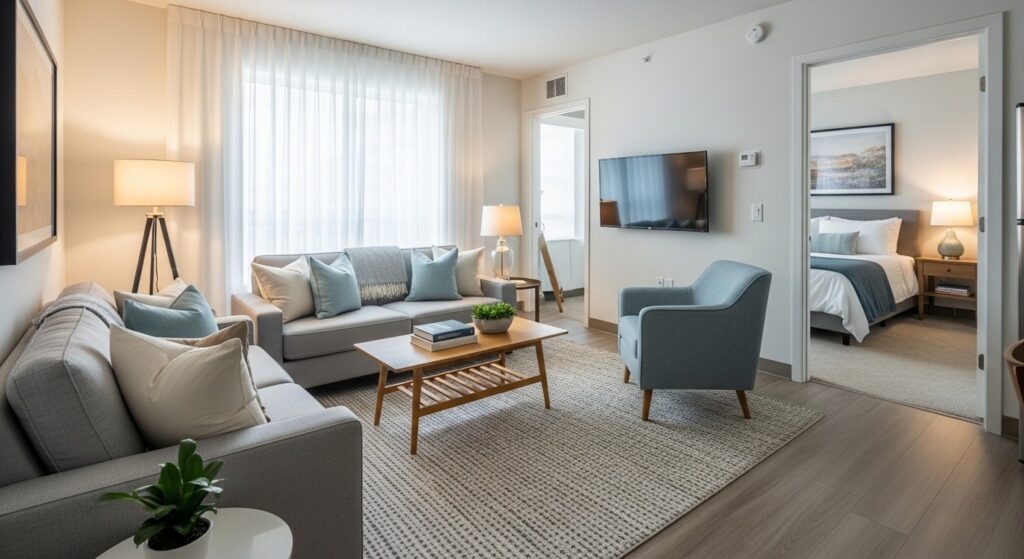
1. Do You Really Need a Coffee Table?
Before you start searching for a replacement, it’s worth slowing down and asking yourself honestly: do you actually need a coffee table at all? A traditional rectangular table sitting in front of your sofa takes up more prime floor space than almost anything else in the room. In a small living room, that real estate matters.
Think about how you actually use your living space day to day. If you’re mostly watching TV, working from the couch, reading, or relaxing with a cup of coffee, a well-placed side table or a small tray balanced on a pouf might give you everything you need. The no-coffee-table living room look is genuinely trending — and it’s not just an aesthetic choice. It makes practical sense for tight spaces.
Clearing that central floor area improves the flow of the room, makes it easier to move around, and visually opens things up in a way that no amount of clever furniture arranging can otherwise achieve. So instead of asking “what replaces my coffee table,” try starting with “what do I actually need a coffee table to do?” The answer shapes everything else.
2. Nesting Tables for Flexibility
If there’s one small-space coffee table idea that consistently earns its keep, it’s nesting tables. You get two or three surfaces in one, and when you don’t need them, they stack neatly together and occupy the footprint of a single small piece. Pull one out for movie night, tuck it away the next morning. It really is that simple.
They’re especially useful in living rooms where you occasionally entertain but don’t want a permanent obstacle taking up your daily path. You get the surface space exactly when you need it and the breathing room the rest of the time. It’s the kind of flexibility that small-space living genuinely demands.
When choosing nesting tables, look for slim legs and a light visual weight. Round or oval shapes tend to feel less imposing than sharp corners in a tight room. A warm wood tone or matte black finish can anchor the space without dominating it. Less visual weight means the room feels less crowded, even when everything is in use.
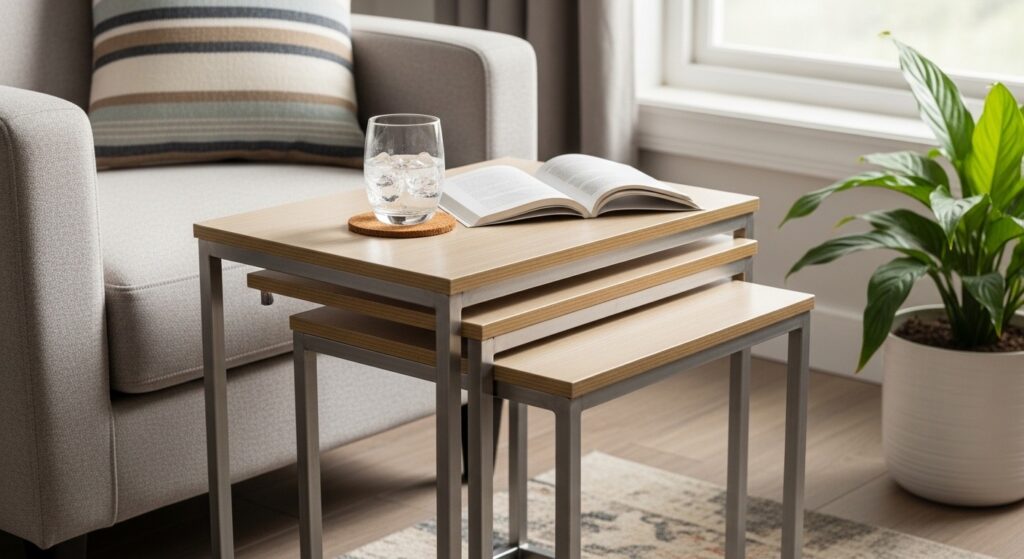
A few things that make nesting tables work especially well in small spaces:
- Pull them apart when guests arrive, push them together when you need the floor space back
- Mismatched heights add visual interest and give you practical variety
- Light materials like bamboo or clear acrylic make them feel even less intrusive
3. Ottoman as Coffee Table
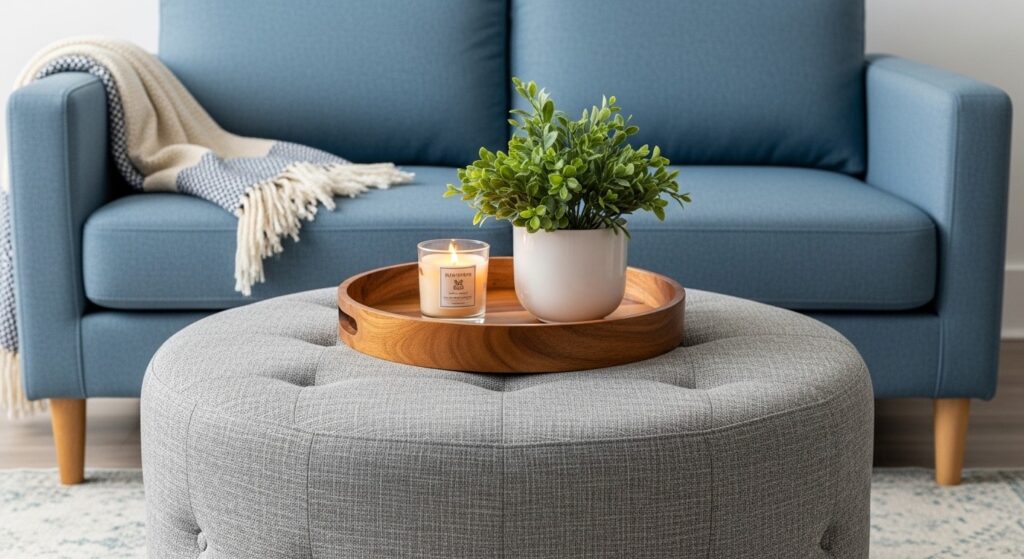
An ottoman might be the most versatile piece of furniture you can own in a compact living room. It functions as extra seating when friends come over, a footrest when you’re relaxing, and a coffee table surface when you need one — just add a small tray on top. That’s three jobs from a single piece, which is exactly the kind of multitasking that small spaces reward.
A round ottoman in particular works brilliantly as a coffee table idea for tiny rooms. No sharp corners to navigate around, softer visual lines, and it tends to feel less imposing than a rectangular table even when the footprint is similar. There’s something about a rounded shape that just breathes better in a small room.
For this to work well, look for an ottoman with a flat, firm top. Soft, deeply cushioned tops are comfortable but harder to use as a real surface — things slide around and don’t sit level. Add a round tray with a candle or a small plant on top and you’ve got a styled centerpiece that actually earns its place in the room.
4. Side Table Alternatives
Two side tables — one at each end of the sofa — can completely replace a coffee table in a small living room, and in many cases the room actually functions better this way. Instead of reaching across a central table, everything you need is right beside you. Your drink, your remote, your phone — all within arm’s reach without any awkward stretching.
The key is choosing tables with a small footprint and the right height. C-shaped tables that slide under the sofa arm are a brilliant solution for genuinely tight spots — they don’t take up any floor space in front of the couch at all. You tuck them under the arm, use the surface, and the floor in front of your sofa stays completely clear.
For a bit of personality, try using two slightly different tables on either side rather than a matching pair. A small drum table on one end and a slim tripod stand on the other adds character without looking too deliberate. It’s the kind of effortless-looking mix that makes a small room feel collected and intentional rather than just functional.
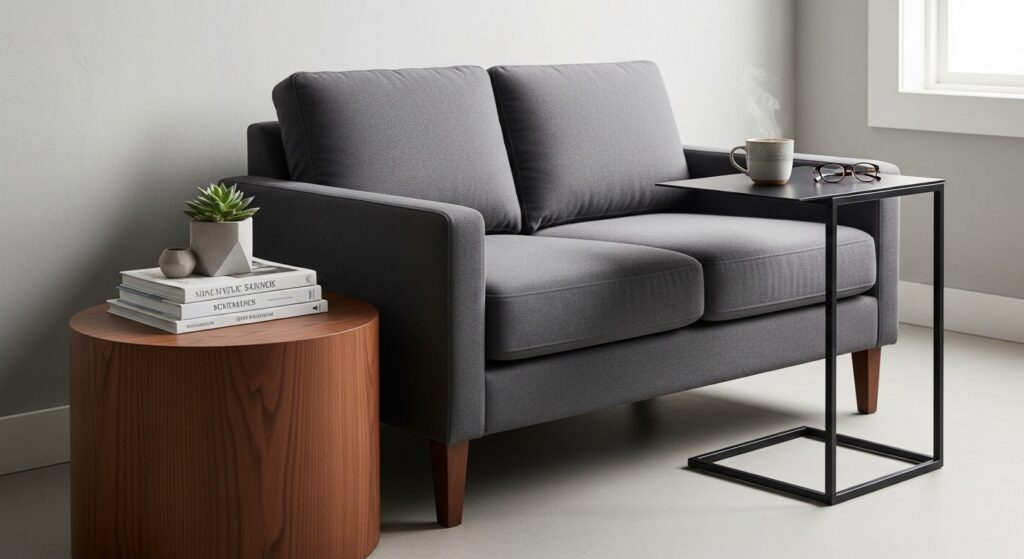
- C-shaped tables slot under sofa arms and completely free up the central floor space
- Drum tables with interior storage double your functional space without adding footprint
- Tables with legs beat solid bases every time — visible floor underneath keeps the room feeling open
5. Storage Coffee Tables
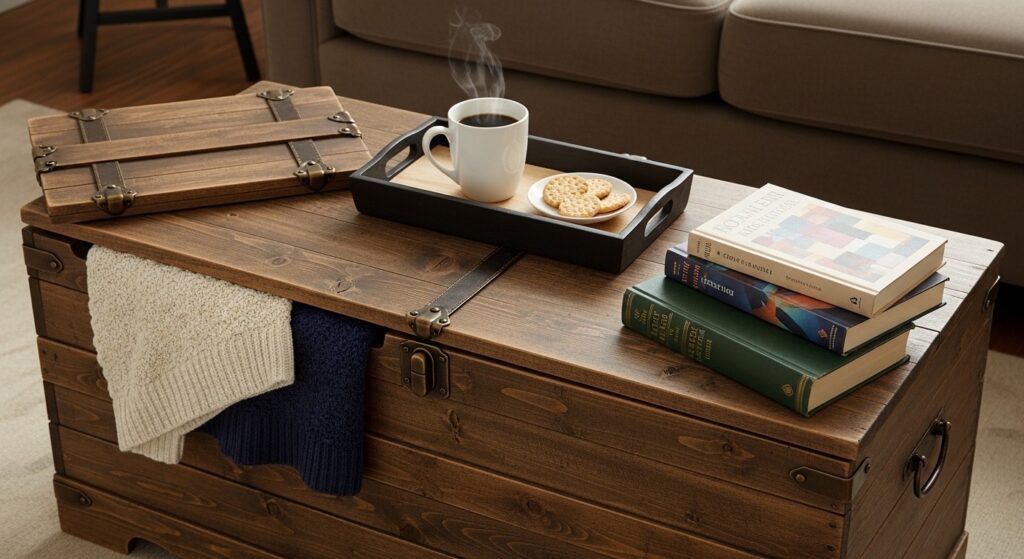
If you do want something in front of the sofa, make it work twice as hard. A small lift-top table with a hidden compartment, a low cube with a hinged door, or a trunk-style piece can hold remotes, extra blankets, board games, charging cables — all the stuff that tends to end up scattered around the living room. One piece, two problems solved.
This approach is especially useful for renters who don’t have built-in storage solutions. Your living room quietly doubles as a storage space without it being obvious to anyone who walks in. The surface reads as a coffee table; the interior is entirely yours to organize however you like.
Scale matters here more than anything. Look for pieces that sit lower than your seat cushions and run no wider than about two-thirds the length of your sofa. That proportion keeps the room feeling balanced rather than overwhelmed. If it’s too tall or too wide, even the most beautiful piece will make the room feel cramped.
6. Clear Acrylic Options
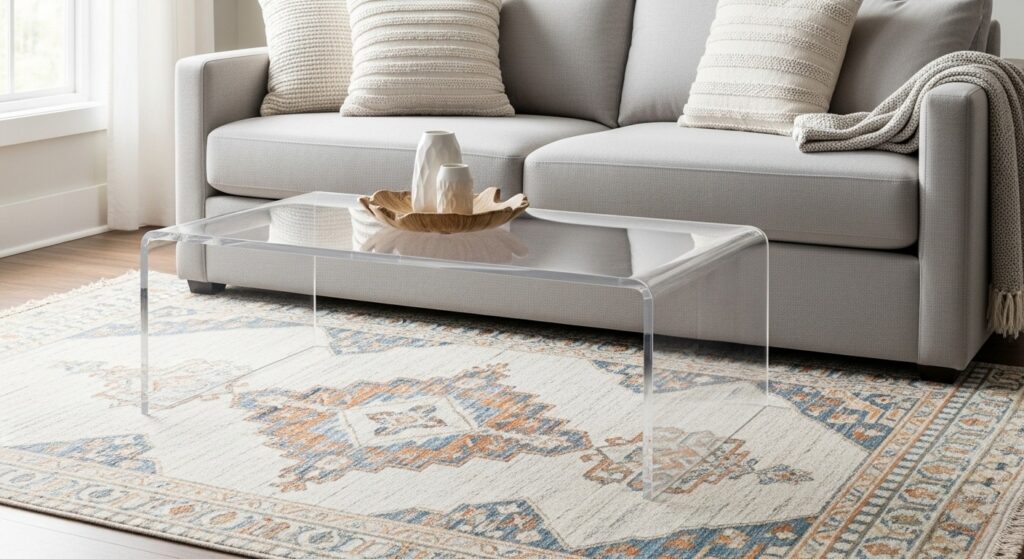
Clear acrylic tables are one of the most underrated tools in small-space decorating. Because they’re transparent, they barely register visually — your eye travels straight through to the floor and the rest of the room. The effect is a sense of openness that you simply can’t get from any opaque surface, no matter how carefully you style it.
Acrylic tables are particularly effective in rooms with a bold area rug or interesting flooring. Instead of blocking the pattern you worked hard to choose, the table lets it breathe. They also work with almost any furniture style — modern, bohemian, mid-century, transitional — which makes them a safe investment even if your aesthetic evolves over time.
They’re lightweight, easy to move, and much easier to clean than you might expect. The one thing to keep in mind: acrylic scratches more readily than wood or metal, so treat it with a bit of care. Style it with a few objects that have interesting shapes — a sculptural vase, a stack of books with good spines — and the table essentially becomes a display case.
✓ Pro Tip: Pair an acrylic table with warm wood accents elsewhere in the room — a shelf, a lamp base, a side table — to balance the coolness of the material and keep things from feeling clinical.
Common Mistakes to Avoid
Even the best furniture choices can fall flat if a few basic mistakes are getting in the way. Here are the ones that come up most often in small living rooms.
1. Pushing All Furniture Against the Walls
It feels logical — push everything back to create space in the middle. But it almost always backfires. The room ends up feeling disconnected and strangely hollow rather than open. Pull your seating slightly away from the walls to create a more deliberate, cozy arrangement. The breathing room you gain around the furniture is worth more than the floor space you’d expose by pushing it back.
2. Using Oversized Furniture
A sofa that’s too large for the room, a rug that’s too small, or a replacement table that somehow ends up bigger than the one you removed — all of these work against you. Measure before you buy, always. And when in doubt, choose the smaller option. You can add visual weight with accessories; you can’t shrink a too-big sofa.
3. Ignoring Vertical Space
Small rooms benefit enormously from drawing the eye upward. Tall shelves, wall-mounted storage, and art hung closer to the ceiling all help make the room feel taller and more spacious. Most people stop at eye level and leave a huge amount of potential above it. Don’t make that mistake — vertical space is some of the cheapest square footage you’ll ever find.
4. Too Many Small Decor Items
A collection of tiny objects creates visual clutter that makes a small room feel smaller and busier than it is. Group items thoughtfully — threes work well — and leave breathing room between pieces. Choose a few meaningful objects over a shelf crowded with trinkets. Edited is almost always more effective than abundant.
5. Poor Lighting Choices
A single overhead light flattens a room and squashes its sense of depth. Layering your lighting — a floor lamp, a table lamp, a softer ambient source — adds dimension and warmth in ways that furniture alone can’t. Good lighting makes a small room feel like a curated, intentional space rather than just a small one.
Frequently Asked Questions
Q1: What is the best sofa for a small living room?
The best sofa for a small living room is one that fits the scale of the space without dominating it. Look for sofas with exposed legs — the visible floor space underneath makes the piece feel lighter and considerably less bulky than one that sits flat on the ground. A two-seater or apartment-sized sofa, typically around 72 to 80 inches wide, tends to hit the right sweet spot for compact rooms.
Avoid sofas with heavy chunky arms or very high backs if your ceilings are on the lower side — low-profile designs make a room feel airier and less boxed in. A sofa in a light neutral or a mid-tone that echoes your flooring will help it blend into the room rather than dominate it. And always measure your doorways before ordering. It sounds obvious until it isn’t.
Q2: How do I make my small living room look bigger?
The single fastest way to make a small living room feel bigger is to clear the floor. Every piece of furniture sitting flat on the ground is competing for visual space. Choose pieces with legs where you can, hang your curtains close to the ceiling even if the window sits lower, and use mirrors strategically to reflect light and create the illusion of depth.
Consistent flooring color also helps expand the visual field — if you use a rug, make it large enough to anchor the seating area properly rather than floating awkwardly in the middle of the room. Keep the color palette cohesive, limit yourself to two or three tones throughout, and resist the urge to add one more thing. Consistency reads as spaciousness.
Q3: What colors make a small room look larger?
Light, cool colors — soft whites, pale grays, blush, sage — reflect more light and push walls back visually. But don’t write off darker tones entirely. A room painted a deep, moody shade from ceiling to baseboard, with walls, trim, and all treated the same way, can actually feel more expansive because the eye loses track of where walls begin and end.
The real principle here is consistency. Contrast — a white room with one dark accent wall, or trim that doesn’t match the walls — emphasizes boundaries and makes a room feel fragmented. Whether you go light or deep, commit to a single tonal direction and carry it through the whole space. Monochromatic styling, where furniture and walls stay in the same color family, is one of the most powerful tools in small-space decorating.
Q4: Should I use a rug in a small living room?
Yes — but size it correctly, and this part matters more than the rug itself. The most common mistake in small living rooms is going too small. A tiny rug floating in the center of the room makes the space feel more cramped, not less, because it fragments the visual field. Your rug should be large enough for the front legs of your sofa and chairs to sit on it, tying the seating area together into one cohesive zone.
In terms of pattern, a large-scale geometric or a simple solid tends to read cleaner in a small room than a busy, tightly-repeated pattern. Low-pile rugs also work better in compact spaces — they’re easier to clean, don’t add visual bulk, and won’t catch on furniture legs when you rearrange. When in doubt, go one size larger than you think you need. You almost never regret it.
Your Small Living Room, Sorted
A small living room isn’t a design problem to apologize for — it’s a challenge that makes you think more carefully, choose more intentionally, and ultimately live better. Swapping out or skipping the traditional coffee table is often the single biggest move you can make to change how a compact space feels and functions day to day.
Pick one idea from this list and try it. Test an ottoman, experiment with nesting tables, or spend a week living without a coffee table entirely and see how it changes things. Small, well-considered changes made one at a time add up faster than you’d expect. You’ve got more to work with than you think.
Keep reading: Small Living Room Furniture Ideas | Small Living Room Lighting Ideas