
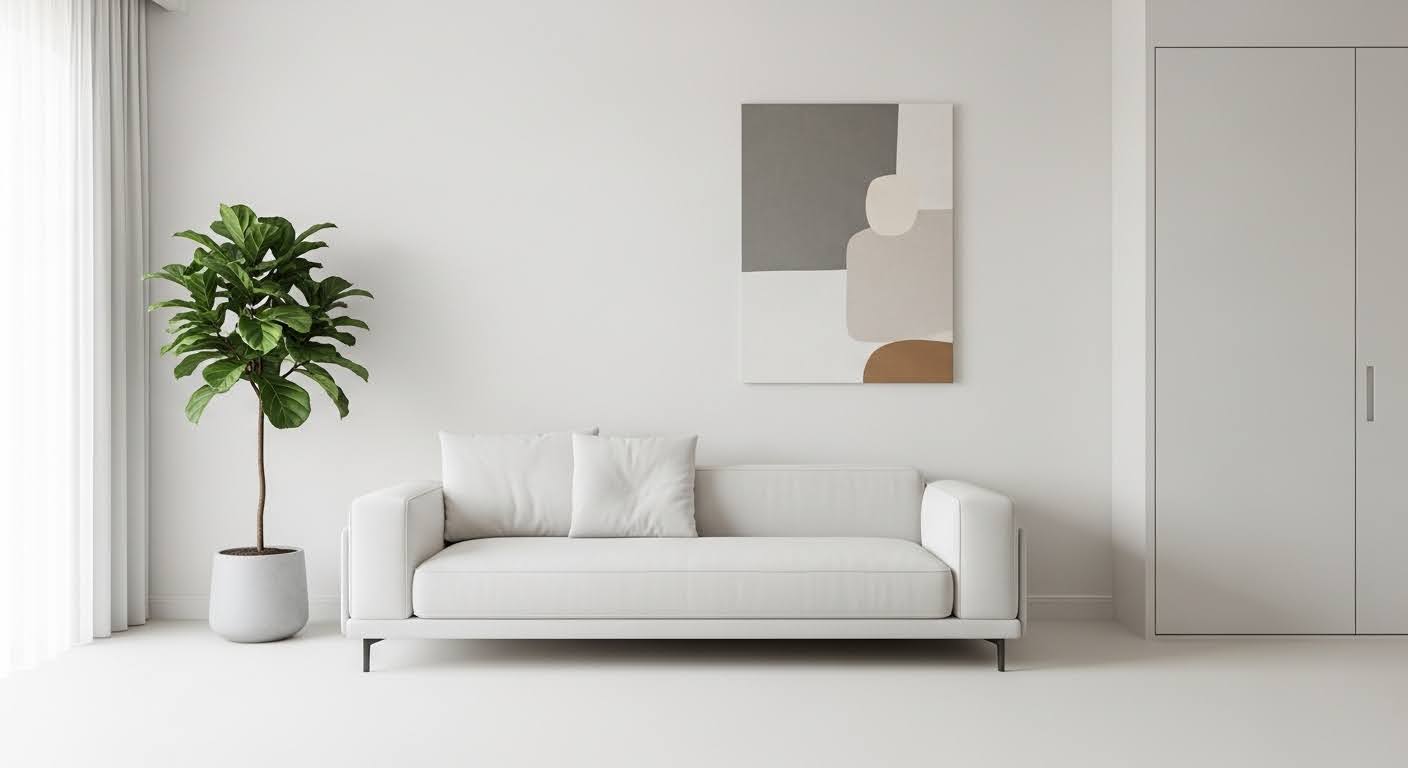
Modern Living Room Ideas: Clean Lines, Big Impact (2026)
You know that feeling when you walk into your own living room and something just feels… off? Maybe it looks cluttered. Maybe it feels stuck in a decade you’d rather forget. Or maybe you simply know you want something cleaner, something that actually reflects how you want to live — and you’re not quite sure where to start. If that’s where you are right now, you’re in the right place.
Here’s the good news: modern living room design is genuinely one of the most beginner-friendly styles out there. It doesn’t require a big renovation, an interior design degree, or an unlimited budget. It rewards restraint. It celebrates simplicity. And honestly? The less you do, the better it tends to look — which makes it a perfect match for small apartments and tight spaces.
Over the next few minutes, you’ll get a practical walkthrough of everything that makes contemporary living room design work: the furniture choices, the color palettes, the lighting tricks, and the small details that pull it all together. Whether you’re renting a studio or just tired of how your lounge looks right now, these modern living room ideas will give you a real path forward.
Quick Summary
WHO THIS IS FOR
Modern design enthusiasts, clean-line lovers, and anyone ready to refresh their space
TIME TO READ
13 min
TOP 3 TAKAWAYS
1. Defining Modern Style in 2026
Let’s clear something up first, because it trips a lot of people up: modern and contemporary are not the same thing. Modern design refers to a specific movement — one rooted in early 20th-century ideas about function, structure, and stripping away anything unnecessary. Contemporary just means what’s trending right now. They overlap sometimes, but they’re not interchangeable.
What’s interesting about modern style in 2026 is how much it has softened. The cold, rigid minimalism that made some rooms feel like hospital waiting rooms? That’s largely gone. Today’s take on modern living room decor keeps the clean bones — the uncluttered layouts, the simple shapes, the intentional use of space — but layers in warmth through texture, natural materials, and a much more livable approach to comfort.
The other thing worth knowing is that modern style plays nicely with others. A few mid-century pieces blend seamlessly with Scandinavian furniture. Industrial accents sit comfortably alongside clean-lined upholstery. The foundation stays uncluttered; what you bring in on top can be flexible. That’s part of what makes it such a forgiving style to work with.
2. Clean Lines: The Foundation
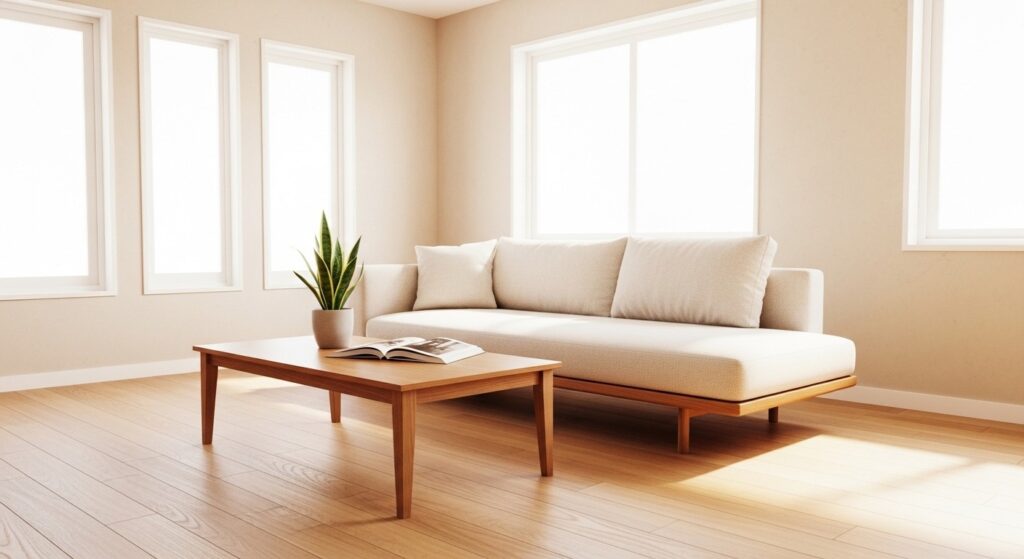
If there’s one principle that defines modern living room ideas more than any other, it’s this: let the shapes do the talking. Clean lines mean furniture with simple, straight, or gently curved silhouettes — no ornate carvings, no fussy details, no decorative legs that look like they belong in a Victorian manor. Just clear, confident form.
Why does this matter so much? Because when your eye moves around a room without snagging on busy details, the space instantly feels bigger and calmer. In a small apartment especially, visual noise compounds fast. Simplifying the silhouettes of your main pieces is one of the quickest ways to make a room feel more intentional without changing a single wall color.
And here’s the best part — you don’t have to replace everything at once. Start with the largest piece in the room, usually the sofa. If it has rolled arms or heavy carved wood detailing, that’s your biggest opportunity. Swap it (when budget allows) for something with track arms and a simple profile, and watch how much the whole room shifts.
Quick wins for cleaner lines:
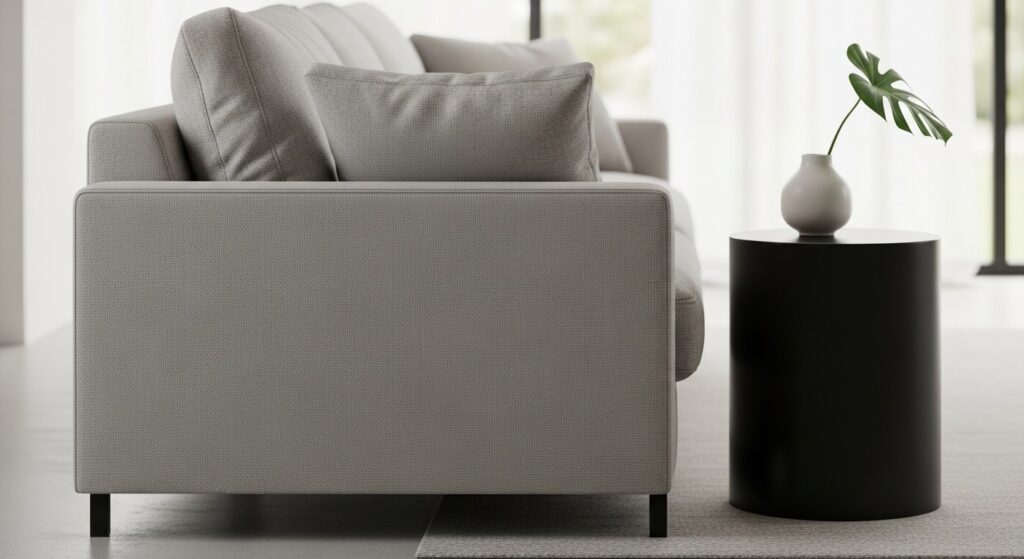
- Sofas and chairs with track or straight arms instead of rolled, padded arms
- Coffee tables with flat tops and minimal leg detail — one material works best
- Swap fussy curtain hardware for plain metal or natural wood poles
- Replace bulky display units with floating shelves used sparingly
3. Neutral Base with Bold Accents
Ask almost any interior designer what they’d do first in a modern room, and they’ll say: start with a neutral foundation. White walls. A greige sofa. A warm ivory rug. This isn’t the boring choice — it’s the strategic one. A neutral base gives everything else room to breathe, and it gives you room to experiment without costly mistakes.
Once the base is in place, one or two deliberate accents do the heavy lifting. A deep charcoal cushion. A rust-coloured vase on the shelf. A single piece of art with a pop of colour. These moments of contrast are what stop a modern room from feeling bland — they’re the punctuation in what would otherwise be a long, flat sentence.
A ratio that works really well here is 70-20-10. Roughly 70% of the room stays in your neutral base tone. About 20% introduces a secondary colour — warm wood, muted sage, or soft stone. The last 10% is your accent, used deliberately and sparingly. It sounds formulaic, but once you apply it you’ll see why designers keep coming back to it.
4. Furniture Selection Guide
Furniture is where most people go wrong, and it usually happens in one of two ways. Either everything comes from the same matched set — which makes the room look like an uncustomised showroom floor — or pieces get mixed so randomly that nothing connects. The sweet spot is intentional variety within a clear visual language.
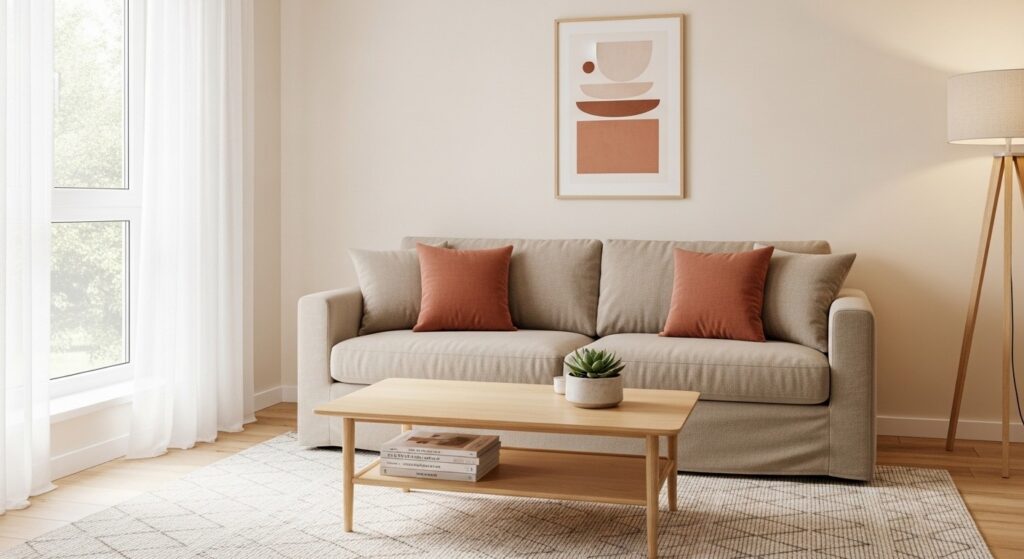
For a modern living room, low-profile pieces tend to work best. Sofas that sit closer to the ground, coffee tables in the 16-to-18-inch height range, shelving that doesn’t fight the ceiling for attention. Keeping the visual weight of furniture low makes ceilings feel higher and the whole room feel less crowded — especially useful in compact spaces.
Matching sets aren’t required. What creates cohesion is material consistency. If you choose a walnut-toned coffee table, echo that same wood somewhere else: a picture frame, a side table, a shelf bracket. The repetition ties the room together without making it look like you bought everything in one transaction.
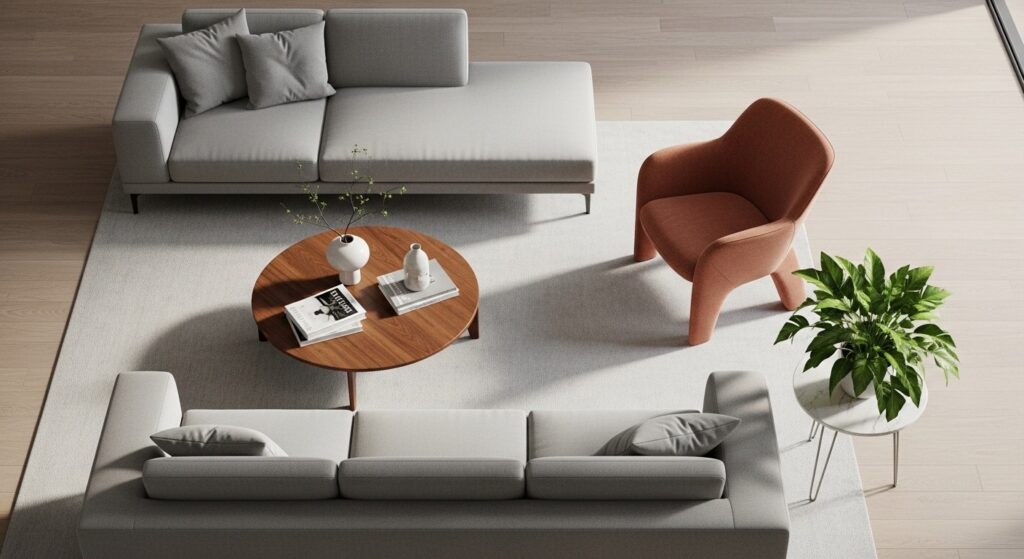
A practical furniture checklist:
- Sofa: low-profile, clean arms, solid colour or subtle weave texture
- Coffee table: simple shape, one or two materials maximum
- Accent chair: pick one that stands out — one is plenty
- Storage: closed wherever possible; open shelving kept minimal
- Rug: large enough that at least the front legs of all seating sit on it
5. Modern Lighting Essentials
Lighting is probably the most underused tool in home decorating, and it shows in a lot of modern rooms that otherwise have great bones. You can have the perfect sofa and the right colour palette, but if the lighting is harsh or one-dimensional, the room will feel flat. Get the lighting right, and the same room transforms entirely after dark.
The modern approach uses three layers working together. Ambient light handles overall brightness — your ceiling fixture or recessed lights, ideally on a dimmer. Task lighting is your floor lamp or table lamp next to a reading chair. Accent lighting is the more subtle layer: LED strips behind a media unit, a small spotlight on a piece of art, or a lit shelf. You don’t need all three everywhere, but having at least two layers in a living room makes a real difference.
For fixture styles, think sculptural. A pendant light with a geometric form, a floor lamp with a curved arm, a wall sconce in a matte finish. In a well-designed modern room, a good light fitting should be visually interesting even when it’s switched off. It’s a piece of functional art — don’t treat it as an afterthought.
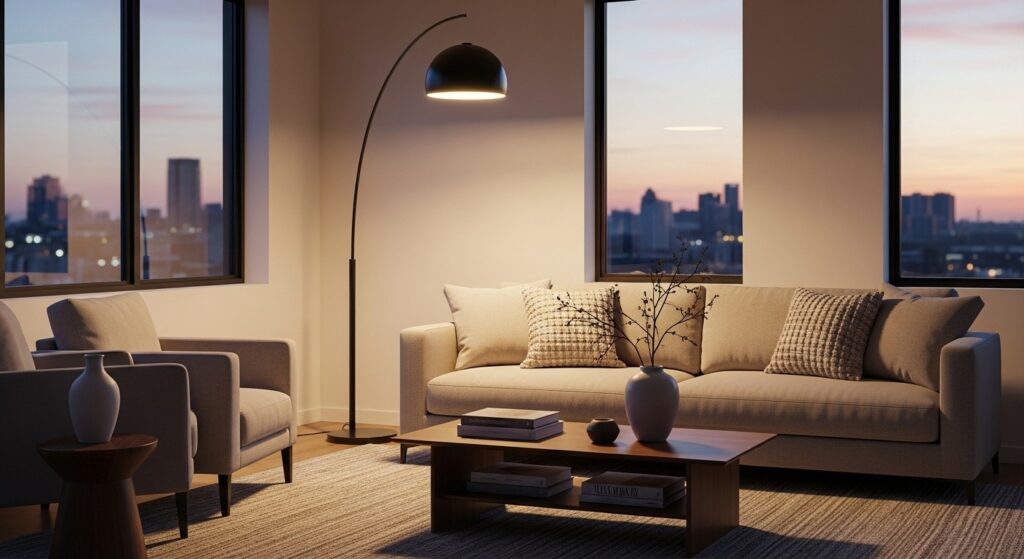
Three lighting layers to aim for:
- Ambient: ceiling fixture or recessed lights fitted with a dimmer switch
- Task: floor lamp or table lamp positioned beside main seating
- Accent: LED strip behind the TV unit, picture light, or shelf lighting
6. Art and Accessories
In a modern room, accessories are punctuation — not wallpaper. The goal isn’t to fill surfaces; it’s to place a small number of things so deliberately that each one actually gets noticed. Think of it as curating rather than decorating.
For art, one larger piece almost always outperforms a full gallery wall in a modern space. A single well-chosen canvas or print at the right scale creates a clear focal point and avoids the visual noise that comes with too many competing frames. If you do want multiple pieces, keep them within a consistent tonal range or use matching frames to unify them.
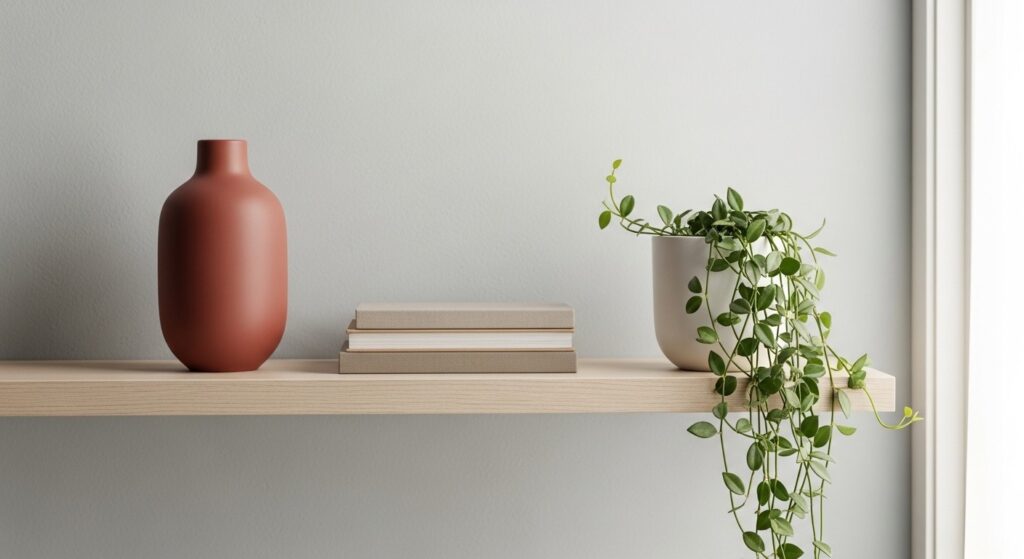
On shelves and surfaces, groupings of three in varying heights tend to hit the sweet spot. A short ceramic vase, a medium sculptural object, a taller plant or candle. That trio creates visual rhythm without clutter. Once you’ve arranged something, step back and look at it critically. If one item doesn’t add to the overall composition, try putting it away for a week — you might not miss it.
7. Technology Integration
Screens and cables are the natural enemies of a clean modern living room — and ignoring them is one of the most common decorating mistakes. The wires dangling from a wall-mounted TV, the charging cables pooling on the side table, the router sitting in plain sight like a small plastic eyesore. Each one chips away at the visual calm you’ve worked hard to build.
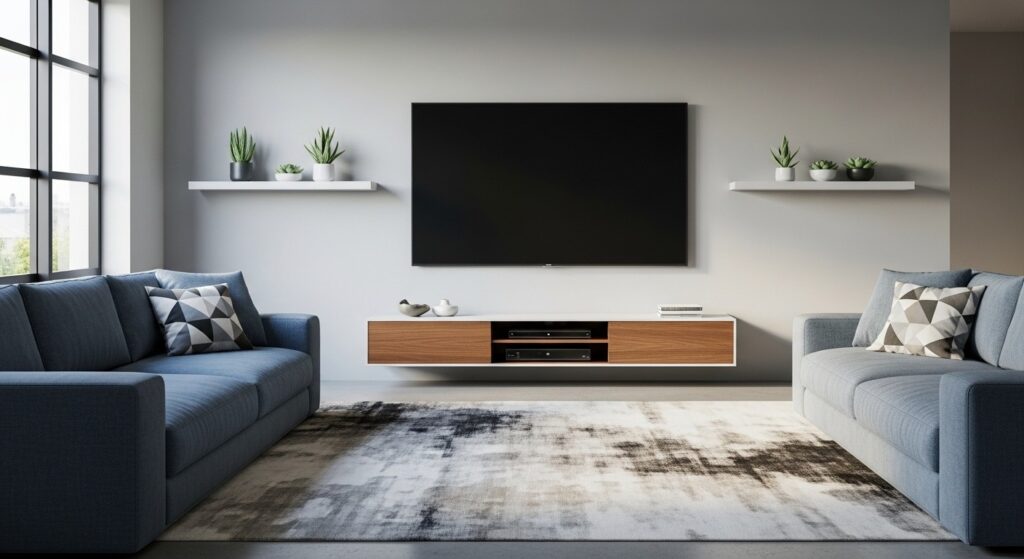
The simplest upgrade is a proper wall mount for your TV rather than a stand. If you can run cables through the wall, even better. If not, a slim cable channel painted to match the wall colour does the job neatly. A TV that sits flush to the wall with clean edges around it reads as a design choice rather than an appliance.
For everything else — speakers, smart home devices, charging stations — the goal is to group and contain. Pick devices that have clean, simple industrial forms in neutral colours. Designate one spot for tech rather than scattering it. A closed media unit or even a simple cable tidy box handles the rest. Out of sight really does mean out of mind.
8. Modern Color Palettes
Colour choices have a bigger impact on the feel of a room than most people expect — and in modern living room decor, the palette does a lot of the heavy lifting. Modern colour schemes tend to stay within a restrained range: neutrals and earthy tones as the base, with one or two carefully chosen accents. What they actively avoid is complexity. Too many competing colours break the sense of calm that modern design depends on.
The palettes that are working really well in 2026 tend to centre on warm whites and soft warm greys, muted greens and sage, rich earthy tones like rust, camel, and walnut brown, and charcoal or black used as graphic accents in small doses. What these share is a groundedness — they feel rooted in nature rather than fashionable for a season.
If you’re not sure where to start, begin with your walls and largest furniture pieces in neutral territory. Then introduce colour gradually through soft furnishings: a cushion cover, a throw, a rug. These are the lowest-commitment ways to test a palette, and they’re easy to swap out if something doesn’t land.
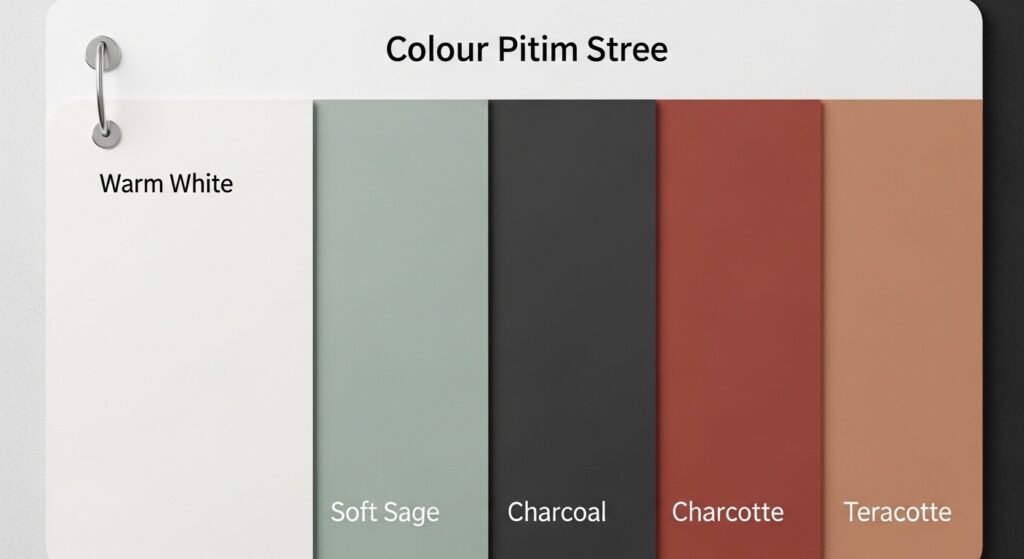
Palette combinations that consistently work:
- Warm white + natural wood + matte black accents (clean and timeless)
- Greige + sage green + natural linen (organic and relaxed)
- Soft charcoal + off-white + brushed brass details (moody and elegant)
- Off-white + rust + walnut (warm and grounded)
9. Materials and Textures
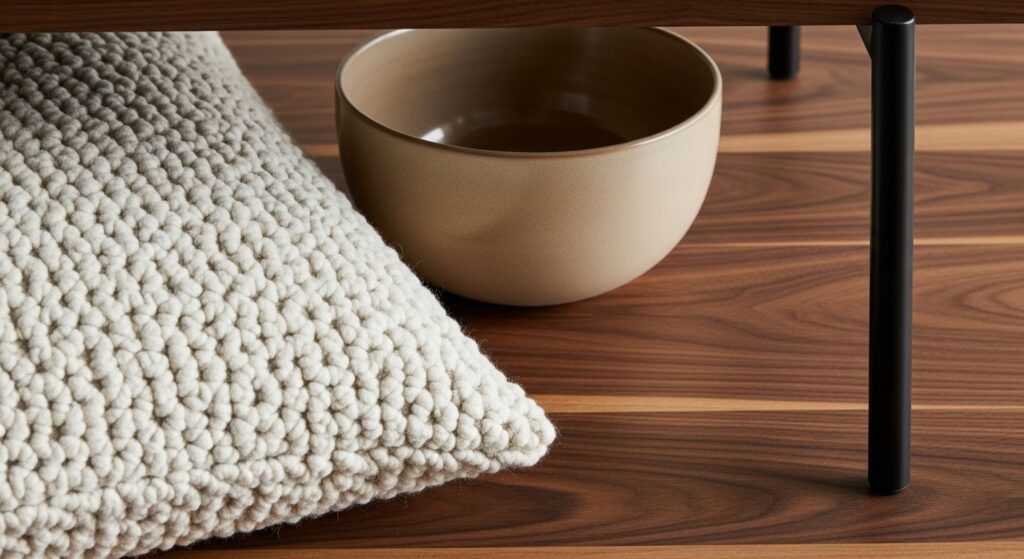
One of the more subtle things that separates a well-designed modern room from a flat one is texture layering. A room that relies on a single material tends to feel one-dimensional, no matter how beautiful that material is. But bring a smooth leather sofa next to a chunky knit throw, or a polished concrete surface next to a wool rug, and the room suddenly has depth and life.
The materials most associated with sleek living room ideas include natural wood (walnut, oak, and ash are the most common), stone or concrete for table surfaces, metal in matte black or brushed brass finishes, and natural textiles like linen, cotton, wool, and the boucle that’s been everywhere lately for good reason.
One thing to watch: reflective surfaces. One polished or glossy element in a room adds depth and interest. Several of them start to compete and create visual noise. Let matte finishes carry most of the room, and use gloss or metallic finishes as accents. A little goes a long way.
10. Open Space Planning
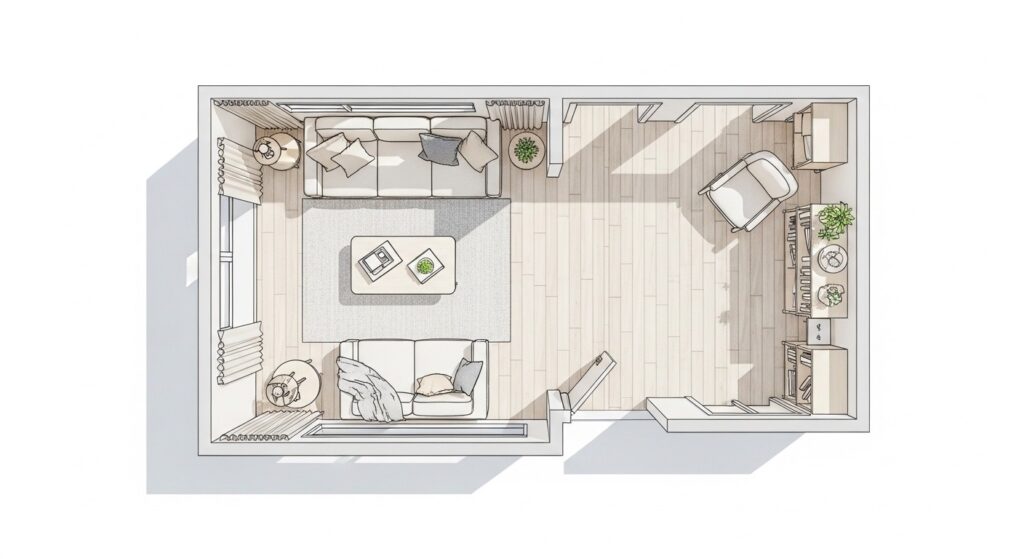
Here’s one that surprises almost every beginner: in modern design, empty space is not wasted space. It’s an intentional part of the design. The areas of a room where nothing sits give your eye somewhere to rest and stop the space from feeling claustrophobic. This is especially hard to embrace when you’re living in a small apartment and every square metre feels precious.
One of the most counterintuitive but effective tricks is to pull your furniture slightly away from the walls. Just a few centimetres can be enough. A sofa that floats in the room with a little breathing space behind it reads as deliberate and considered. One pressed flat against the wall just looks like it’s been pushed out of the way.
When you’re working out your layout, the main thing to protect is clear movement paths through the room. You should be able to walk through the space without having to navigate around chair corners or step over the edge of a coffee table. If the layout makes you do that, the room needs editing — not more furniture added to fill the gaps.
11. Statement Pieces That Work
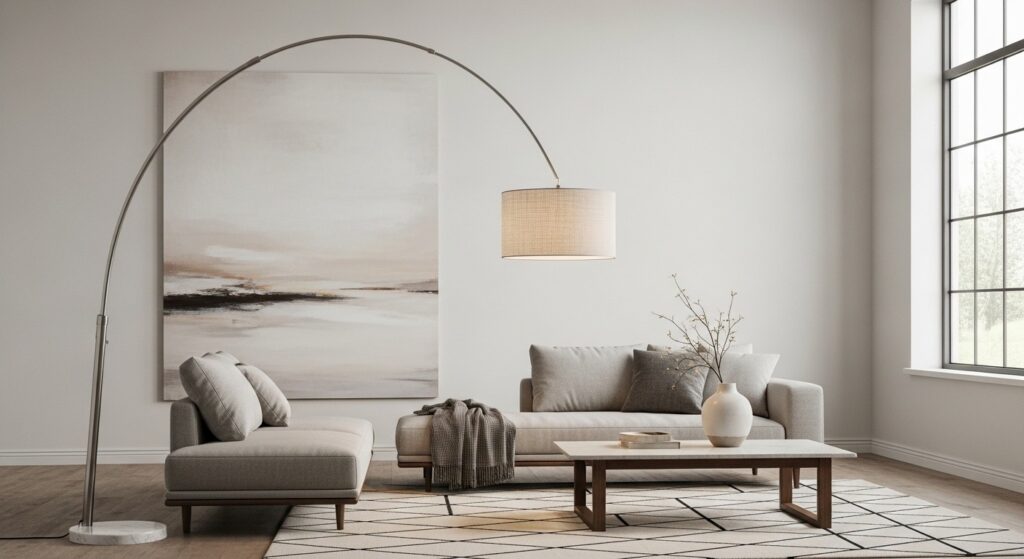
Every modern living room that really holds your attention has one piece that carries the room. Something that earns a proper look. It might be an oversized pendant light, a large-scale piece of art, an unusually shaped chair, or a rug with a bold pattern against neutral furniture. The thing that makes it work is its singularity — one statement, given space to breathe.
The price of that piece matters far less than its presence. A large printed artwork in a wide frame, a dramatically curved floor lamp from a charity shop find, a secondhand chair recovered in a fabric you love — these can carry a room just as well as anything expensive. Scale and intention are what count.
Once you’ve chosen your statement piece, the job of everything else in the room is to support it quietly. Keep surrounding furniture and accessories lower in visual weight and quieter in tone. The statement only lands when the room gives it room to land.
12. Keeping Modern Cozy
If one concern comes up more than any other when people think about modern living rooms, it’s this: what if it feels cold? It’s a fair worry. Poorly executed modern rooms absolutely can feel sterile — like somewhere you’d wait for an appointment rather than spend a Sunday afternoon. But when warmth is layered in well, modern becomes one of the most genuinely inviting styles there is.
The key is softness in layers. A thick rug underfoot. Cushions in varying sizes and textures — not a perfectly matched pair, but a mix of linen, cotton, and something nubby. A throw folded naturally over an arm rather than arranged like a prop. Bring in natural materials: a wooden bowl, a woven basket, a ceramic pot. And add at least one plant, even if it’s small and low-maintenance. Living things make a room feel lived-in.
Lighting does more for warmth than almost anything else in a modern room. Swap any cool white or daylight bulbs in your lamps for warm white ones — aim for 2700K to 3000K. Add a dimmer to your overhead light if you can. The difference between a room lit by a single overhead fitting and one lit by two lamps at evening time is dramatic. Same furniture, completely different mood.
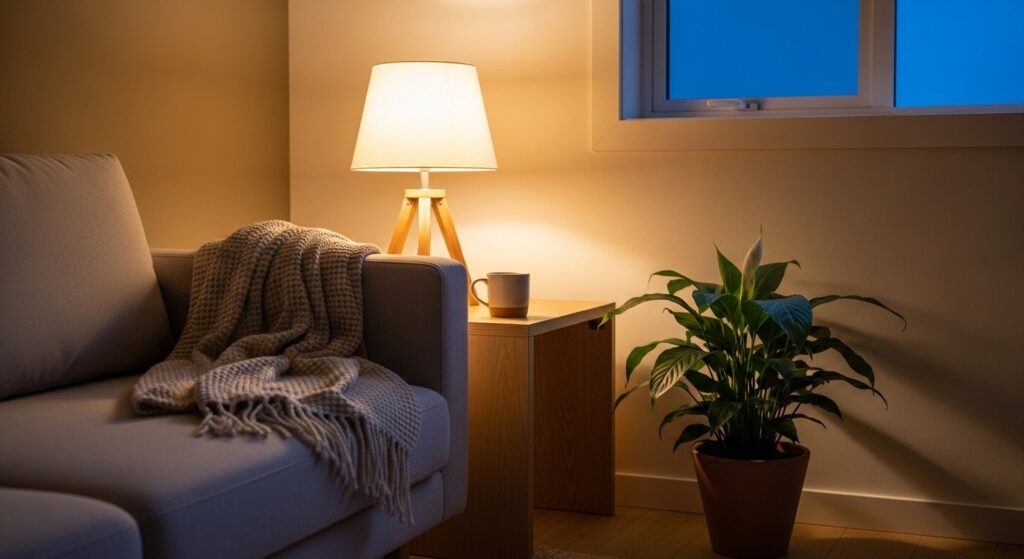
Easy ways to add warmth to any modern room:
- A textured rug — boucle, woven jute, or shaggy styles all work well
- Cushions in odd numbers; at least one should have a tactile, touchable texture
- One larger floor plant or a small cluster of plants on a windowsill or shelf
- A throw blanket draped naturally, not folded into a perfect rectangle
- Warm white bulbs (2700K-3000K) in all lamps and fixtures
Common Mistakes to Avoid
Even when you know the principles, a few habits can quietly undermine a modern room before it gets going. Here are the five worth keeping front of mind.
- Making it feel cold and sterile. This is the most common fear — and the most avoidable. Modern doesn’t mean empty or clinical. If your room feels more like a lobby than a home, layer in textiles, natural materials, and warm-toned lighting. Calm and comfortable aren’t opposites.
- Going too matchy-matchy. Buying a full sofa-and-loveseat set along with a matching coffee table and side tables makes a room look staged rather than lived in. Mix materials slightly, vary your shapes a little, and you’ll get a result that feels curated rather than assembled.
- Ignoring comfort. A beautiful room nobody actually wants to sit in has missed the point. Whenever possible, sit in furniture before you commit to it. The rug should feel good underfoot. The layout should invite people to settle in, not perch awkwardly.
- Skipping personal touches. Minimal doesn’t mean personality-free. A piece of art you genuinely connect with, a plant you’ve looked after yourself, a book you’ve read sitting on the coffee table — these details are what separate a designed room from a home.
- Filling every surface and corner. Resist it. Negative space is a design decision, not an oversight. Leave room for the eye to rest and the room will feel larger, calmer, and more confident overall.
Frequently Asked Questions
What defines modern living room style?
Modern style comes from a design philosophy that puts function first and strips away anything purely decorative. Originating in the early 20th century, it’s built around clean lines, geometric shapes, honest materials, and a restrained approach to colour. In 2026, it’s evolved to feel warmer and more livable than it once did — natural materials and softer textures are very much part of the picture now. But the core principle hasn’t changed: every piece in the room should be there for a reason, whether that’s practical use or genuine visual purpose.
How do I make a modern room feel cozy?
Warmth doesn’t come from adding more stuff — it comes from the right kind of layering. Start with a rug that has real texture to it. Add cushions in tactile fabrics like linen, boucle, or cotton velvet. Switch all your lamp bulbs to a warm white (2700K to 3000K) and rely more on floor and table lamps than overhead lighting in the evenings. Bring in at least one plant and a few natural material accents like wood, ceramic, or woven pieces. Those layers together make a modern room genuinely inviting without touching its clean structure.
What colours work best in a modern living room?
Modern palettes favour tones that feel grounded and cohesive rather than bold or trend-driven. Warm whites, soft warm greys, and earthy neutrals form the most versatile foundations. Popular accent tones right now include muted sage green, warm terracotta, deep charcoal, and camel. Black tends to appear in small doses — as metal finishes, lamp bases, or picture frames — rather than as a dominant colour. The practical rule is to keep your overall palette to three or four tones, with one neutral carrying the majority of the visual weight.
Is modern style expensive to achieve?
Actually, modern design is one of the more budget-friendly approaches precisely because it uses fewer pieces — and that’s not a compromise, it’s the whole point. You don’t need to fill every surface or buy everything at once. A smart approach is to invest in the two pieces you use most and see most: your sofa and your main rug. Then fill in with simpler, more affordable items for accessories, art, and accent pieces. Secondhand and vintage furniture also fits beautifully into modern rooms — a mid-century chair with clean lines and good bones often looks right at home alongside newer pieces.
How do I mix modern style with other styles?
Modern blends most naturally with styles that share its love of simplicity and natural materials — Scandinavian design, mid-century modern, and organic or earthy aesthetics all work really well together. The approach is to keep the modern elements in your largest, most structural pieces (the sofa, the main shelving, the coffee table) and let other styles influence your accessories, textiles, and accent pieces. A vintage rug, a handmade ceramic bowl, or artisan cushions can all bring warmth and character into a modern space without disrupting its overall clarity. Just keep the room edited overall — the mixing should feel considered, not random.
Wrapping Up
If you take one idea away from this, let it be that modern living room design is really about intention. Not emptiness, not showing off, not following a trend — just choosing carefully, editing honestly, and giving your space room to breathe. When you do that, even a modest room in a small apartment can feel genuinely impressive.
You don’t need to overhaul everything at once. Pick one section from this guide that resonates with where you are right now — maybe it’s simplifying your furniture silhouettes, or sorting out your lighting layers, or finally doing something about those TV cables. Start there. Small, thoughtful changes compound quickly, and before long the room looks and feels like somewhere you genuinely want to be.
Want to keep exploring? These related guides are worth a read next: