Open Concept Living Room Ideas: Flow & Function
So you have an open floor plan and you are staring at it wondering where anything is supposed to go. Maybe your kitchen bleeds into your sitting area with nothing in between. Maybe the whole thing feels a bit too exposed, or furniture just seems to float around without any real purpose. That feeling is incredibly common, and — good news — it is very fixable.
Open concept living is popular for a reason. The light travels further, the space breathes, and when you have people over you are never stuck alone in the kitchen. But without walls doing the visual heavy lifting, it falls on you to create a sense of order. That is the real challenge, and it is one that does not require a renovation or a big budget to solve.
This guide walks you through practical, beginner-friendly open concept living room ideas that work in real apartments and real homes. By the time you finish reading, you will know how to carve out zones, use color and lighting with intention, and turn that wide-open floor plan into a space that actually feels like yours.
Quick Summary
WHO THIS IS FOR
Home decor beginners and anyone ready to refresh their living space
TIME TO READ
6 min
TOP 3 TAKAWAYS
1. Open Concept Pros and Cons
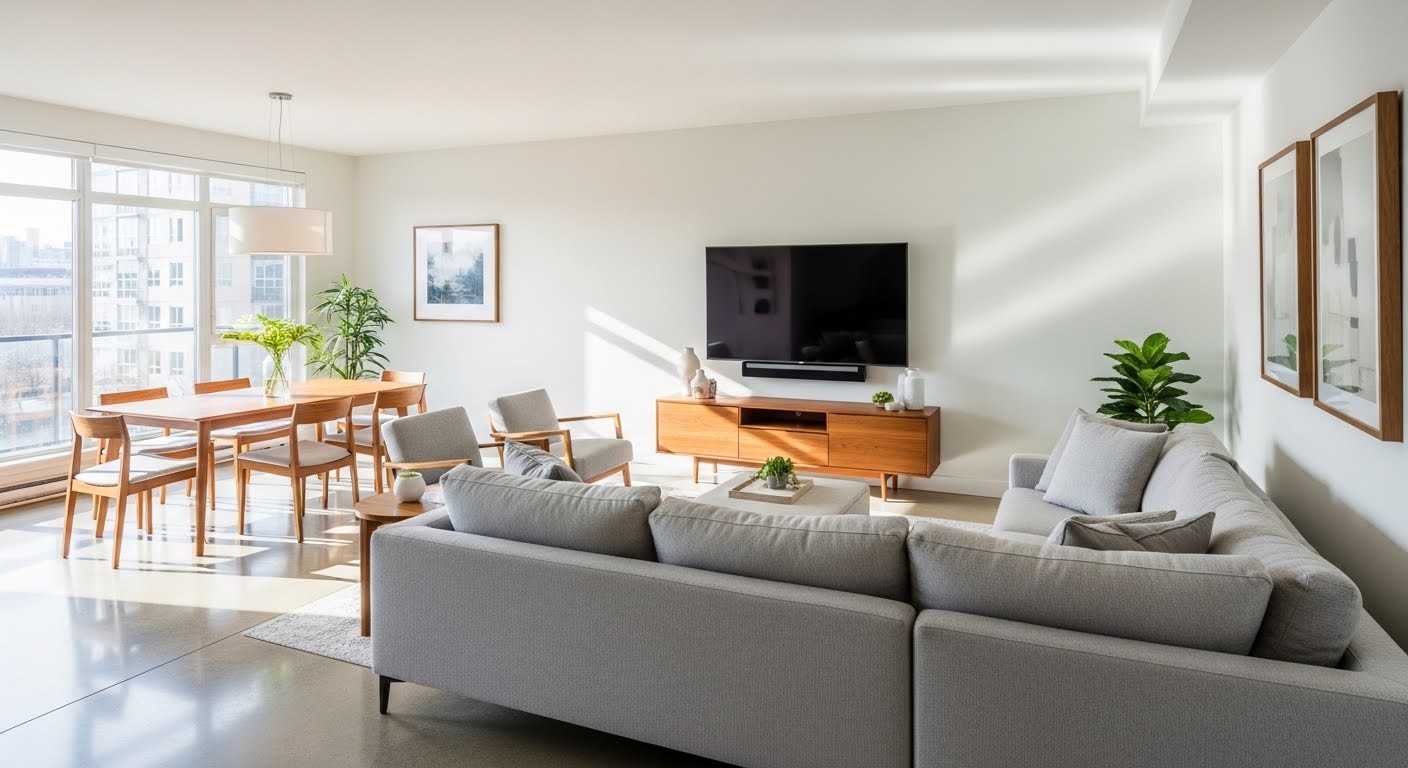
Before you do anything else, it helps to get honest about what you are working with. Open floor plan living rooms have genuine strengths: natural light pours through the whole space, the layout invites conversation, and even a modest square footage can feel surprisingly generous. When you cook dinner, you are still part of the room. That kind of connection is hard to replicate in a closed-off layout.
But there are real trade-offs too. Noise travels freely. A messy kitchen counter is always in the frame. Without walls, sound, smells, and visual clutter from one area drift into every other part of the home. And for some people, the openness can feel a little unsettling at first, almost like the space lacks personality.
Here is the thing though: once you understand both sides, you can design around the downsides rather than fight them. The goal is a layout that plays to the strengths and quietly solves the rest.
- Strengths: natural light, social connection, flexible layout, sense of space
- Challenges: sound travel, visual clutter always on display, harder to create cozy zones
- Key idea: design with intention and the challenges become manageable
2. Defining Zones Without Walls
Here is where a lot of people get stuck. In a traditional home, walls do the zoning work automatically. In an open layout design, you have to create those invisible boundaries yourself using furniture, flooring, lighting, and accessories. It sounds harder than it is.
Start on paper. Grab a pen, sketch a rough floor plan, and mark where you want the living area to end and the dining zone to begin. Spending twenty minutes on this step before you move a single piece of furniture will save you hours of frustration. Think about how you actually live in the space: where do you eat, relax, work? Let that guide where the zones land.
Once you have a rough plan, you can start placing visual anchors. Even something as simple as a tall plant or a change in flooring finish signals a zone shift. You are not building walls. You are giving the eye a clear path through the room.
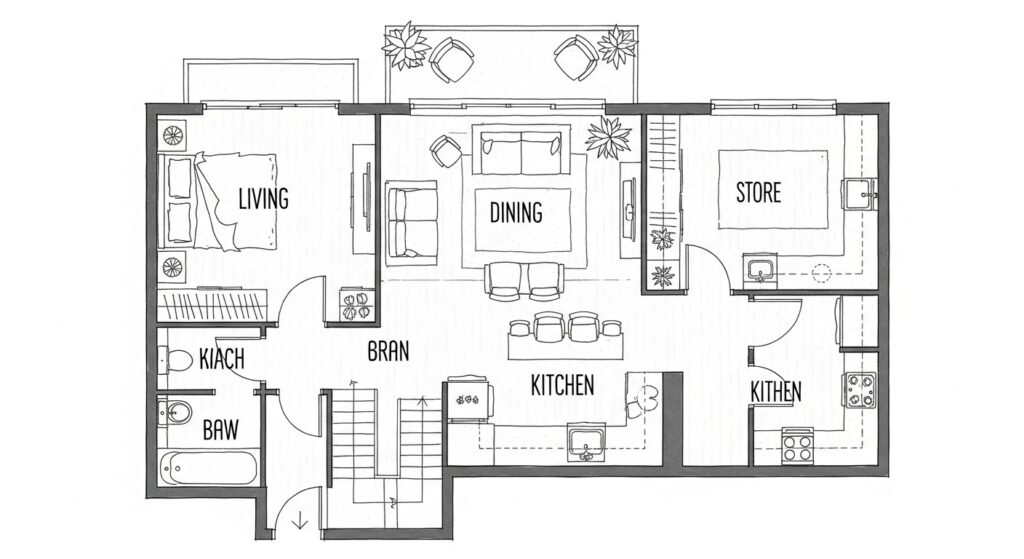
- Sketch your zones on paper before touching any furniture
- Use area rugs, plants, and lighting to mark where one zone ends and another begins
- A tall bookcase or open shelving unit can act as a soft, see-through divider
- Even a different ceiling treatment or pendant light above the dining table signals a zone
3. Using Furniture as Dividers
One of the smartest and most underrated open concept living room ideas is simply floating your furniture. Instead of pushing your sofa flat against the wall, pull it into the room so its back faces the dining area. That single move creates a natural boundary between two zones without adding anything new to the space at all.
Low bookshelves and open shelving units work beautifully as partial dividers in a kitchen living room combo. They give structure without blocking light or making the space feel smaller. A console table tucked behind the sofa serves double duty as both a decor surface and a visual edge to the living zone. Think of it as building a room within a room.
One important thing to keep in mind: keep your dividing pieces low. Anything over about five feet tall starts to chop up the open feel that makes this layout worth having in the first place. You want definition, not division.
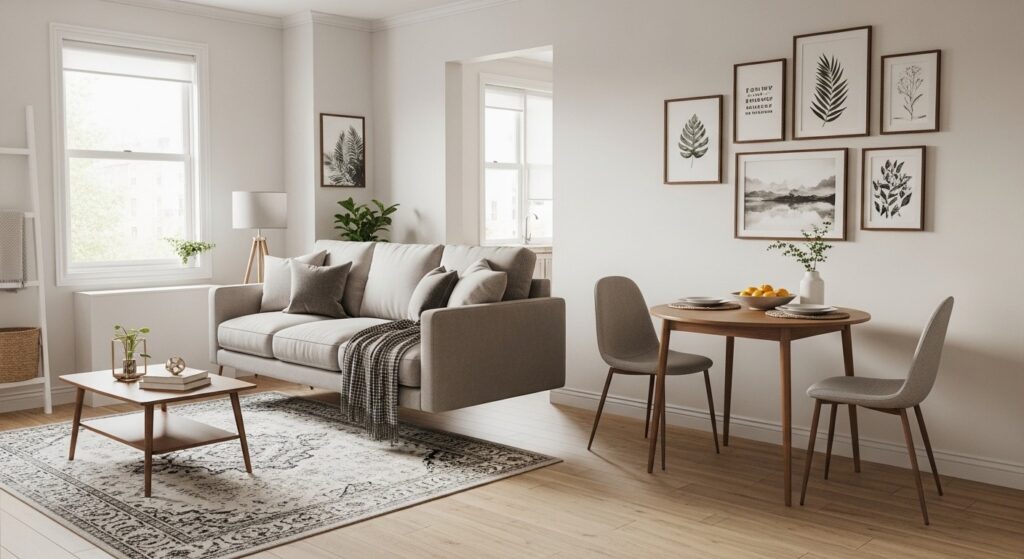
- Pull your sofa away from the wall and orient it toward the room
- Use open shelving rather than solid cabinets so light passes through
- A console table behind the sofa costs nothing extra and defines the zone immediately
- Keep dividing furniture under five feet tall to preserve the open atmosphere
4. Rugs That Anchor Each Space
If there is one thing I would spend money on in an open floor plan living room, it is a good area rug. Rugs do something almost magical in open layouts: they literally draw a circle around a space and say, this is the living zone. Without one, furniture floats in a way that feels incomplete, no matter how nice the individual pieces are.
The most common mistake people make is going too small. A rug that only fits under the coffee table is not anchoring anything. You want all four legs of your main seating on the rug, or at minimum the front two. When in doubt, size up. A bigger rug almost always looks more intentional than a smaller one.
If you have multiple zones in one open space, use different rugs for each. A natural jute rug under the dining table and a plush woven rug in the living area immediately signal two distinct areas. The textures do not need to match. They just need to feel like they belong in the same home.
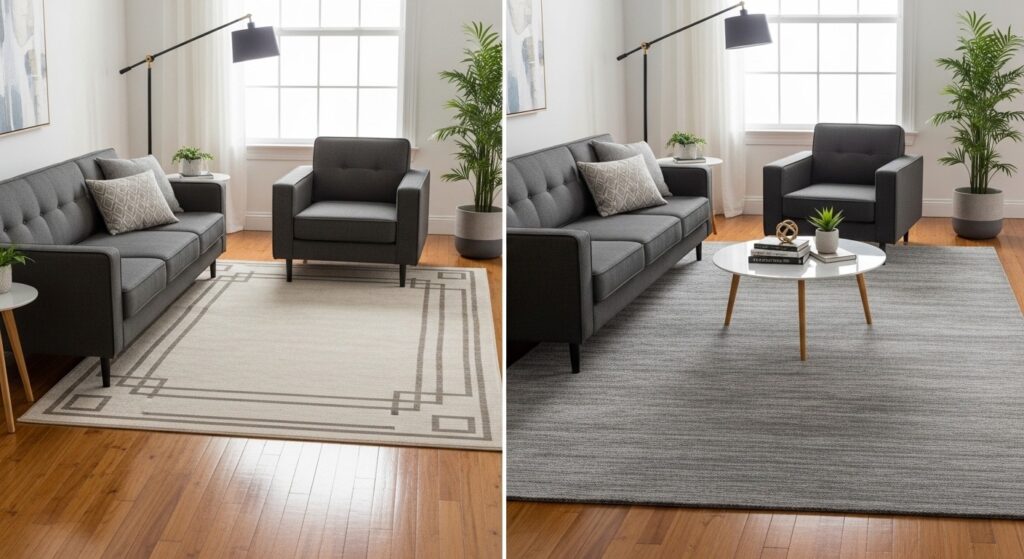
- Size up: most people go too small and it makes the whole room feel off
- All four legs on the rug is ideal; front two is the minimum
- Different textures for adjacent zones create separation without effort
- Layering rugs adds warmth and depth in larger open spaces
5. Keeping a Consistent Color Flow
Color is one of the most powerful tools in an open layout design, and it is entirely free to use. When the living room, dining area, and kitchen all feel connected through a shared color story, the whole space looks deliberate and calm. When they clash or feel unrelated, the room reads as scattered no matter what else you do.
A simple way to approach this: pick one neutral palette for your large surfaces (walls, main sofa, big furniture), then choose one or two accent colors that you repeat across all three zones. A terracotta tone that shows up in your kitchen accessories, a dining chair cushion, and a throw pillow in the living area ties everything together without any of it looking matchy-matchy.
You are not going for a matched set. You are going for a conversation between pieces. When every zone speaks a similar color language, the eye reads the whole space as one cohesive room rather than several mismatched areas pushed together.
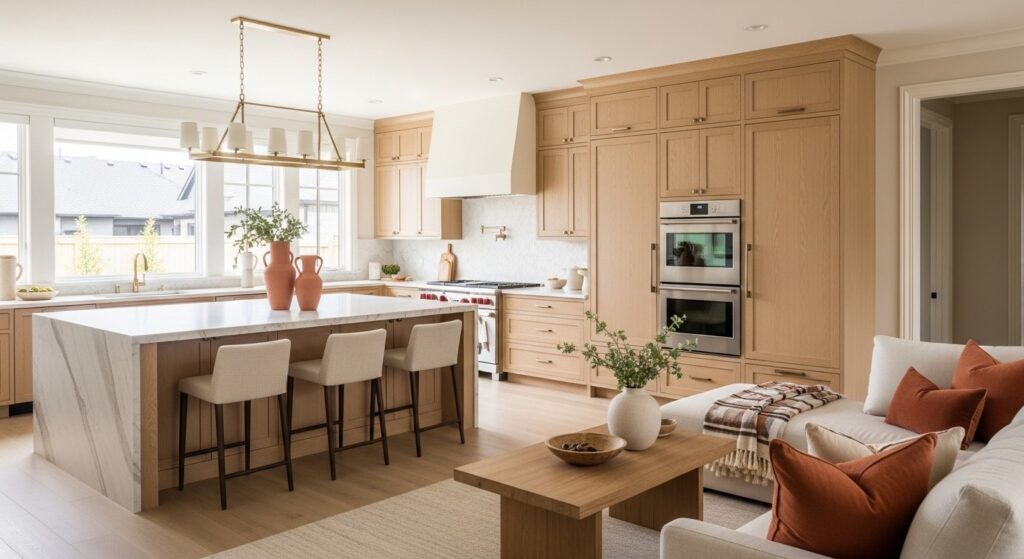
- Stick to one neutral base for walls and large furniture pieces across all zones
- Repeat your accent color in at least three spots spread across the whole space
- Limit yourself to three main colors in one open area to avoid visual chaos
- Warm metals like brass or matte black hardware unify zones through small repeated details
6. Lighting Each Zone
Lighting is genuinely one of the most underestimated parts of open concept living, and getting it right changes everything. In a space with multiple zones, lighting lets you independently control the mood in each area. The bright task lighting over your kitchen counter does not have to spill into your cozy reading corner if you plan each zone with its own light source.
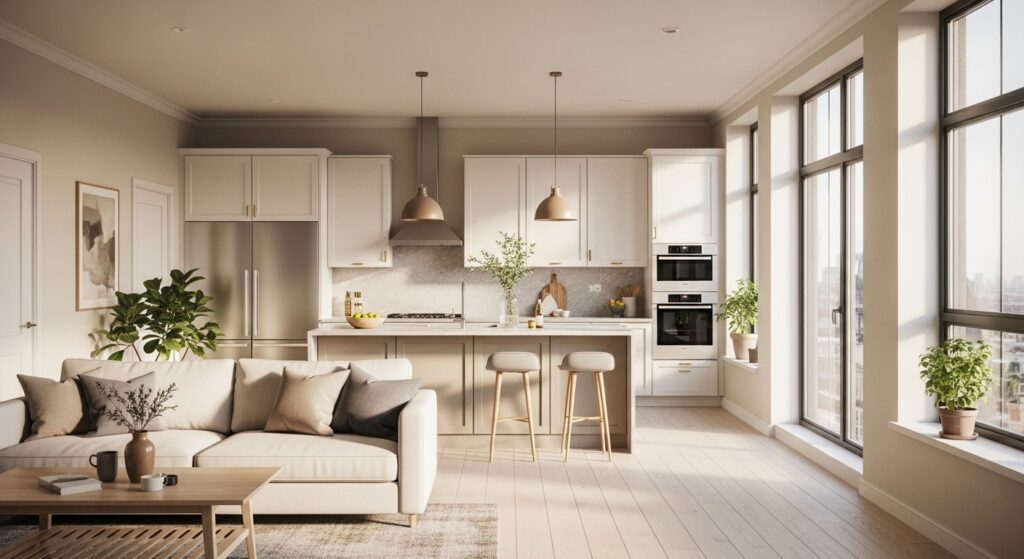
Aim for three layers in every zone: ambient (the main overhead light), task (focused light for specific activities like cooking or reading), and accent (table lamps, floor lamps, or decorative lighting that adds warmth). In a kitchen living room combo, pendant lights above the island anchor the kitchen visually. A floor lamp beside the sofa creates an entirely different mood just a few feet away.
Dimmers are worth every penny in an open layout. They let you shift the entire energy of the space depending on what you are doing. Bright and clear for a dinner party; warm and low for a quiet evening on the sofa. One switch, totally different room.
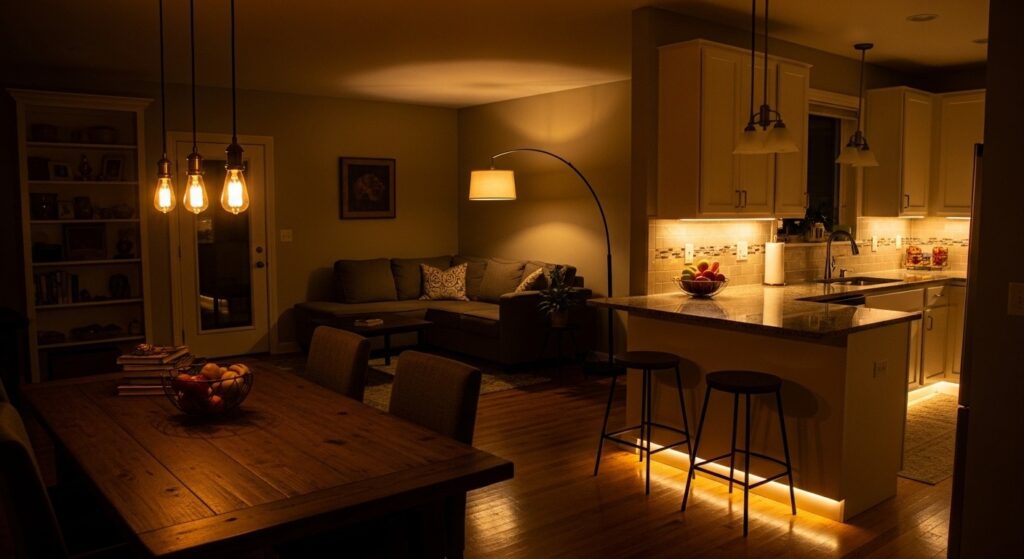
- Layer ambient, task, and accent lighting in every zone independently
- Pendant lights above a dining or kitchen island visually anchor that zone
- Install dimmers wherever possible for full flexibility day to night
- Warm bulbs in the 2700-3000K range keep the whole space feeling inviting rather than clinical
7. Managing Sightlines
Here is something most decor guides skip over: in an open floor plan, where your eye lands when you walk into a room matters just as much as any individual piece of furniture. Sightlines are those invisible lines from the front door to the far wall, from the sofa to the kitchen, from the hallway to the living area. Whatever sits at the end of each sightline sets the whole tone of the space.
Take a minute to walk slowly through your home and notice what draws your eye first. If it is a cluttered counter or a forgotten pile of bags, that is the experience every person has when they step inside. Now imagine replacing that focal point with something that actually makes you smile, a styled shelf, a piece of art, or a statement plant. Same room, completely different feeling.
In a kitchen living room combo, the kitchen counter is almost always visible from the living zone, which means your styling and storage choices in the kitchen matter far more than they would in a closed layout. Keep surfaces intentional. What you see daily shapes how your home feels daily.
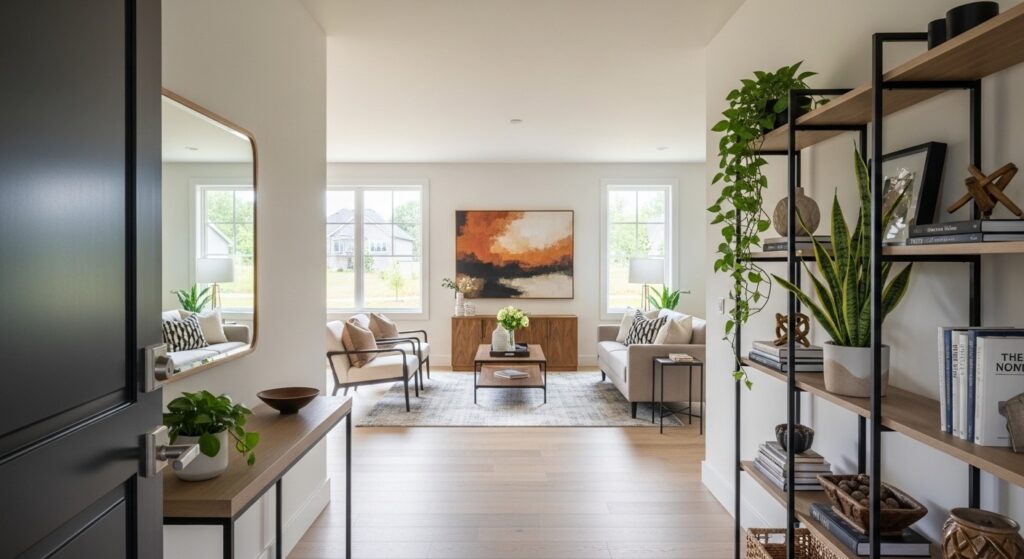
- Identify the two or three main sightlines in your home before you start decorating
- Place your best decor or a strong focal point at the end of each sightline
- Keep kitchen counters clear and styled since they are always visible from the living zone
- Mirrors can extend sightlines and make smaller open spaces feel twice as deep
8. Common Mistakes to Avoid
Even the best open concept living room ideas can unravel when a few classic mistakes creep in. Keep these in mind before you start any changes.
- Skipping measurements: Scale matters enormously in open layouts. A sofa that looks right in a showroom can completely swallow a small apartment. Measure your space, measure your furniture, and check both before buying or moving anything.
- Ignoring what is already there: Your windows, flooring material, and kitchen layout are fixed. Rather than fighting the existing architecture, work with it. Designs that lean into the room’s natural features almost always feel more settled and intentional than those that try to mask them.
- Chasing trends instead of your own style: Inspiration images are genuinely helpful, but your home should reflect how you actually live. A space that photographs beautifully but does not suit your daily routine will start to feel wrong within weeks.
- Diving in without a plan: Moving furniture without a rough layout sketch wastes a surprising amount of time and energy. Thirty minutes with a pen and paper before you start can save you an entire afternoon of second-guessing.
9. Frequently Asked Questions
What is the most important element to focus on first?
Zone definition, without question. Everything else you do, the color choices, the lighting, the furniture arrangement, builds on top of a clear sense of where each space begins and ends. If you skip this step, even the most beautiful pieces will feel like they are floating without purpose. Spend twenty minutes sketching your zones on paper before you do anything else. That one step shapes every decision that follows and saves you a lot of backtracking later.
How do I actually get started without feeling overwhelmed?
Break the project into phases and work one zone at a time. Start with the space you use most, usually the living area, and get that corner feeling right before moving on to the dining or kitchen zone. Small wins build real momentum. Trying to transform the whole open layout design in a single weekend is a fast way to end up exhausted with half-finished ideas scattered around the room. One zone at a time works every time.
What kind of budget should I expect for a refresh like this?
It honestly depends on what you are starting with, but a meaningful transformation is possible at almost any price point. The highest-impact changes, like adding a large area rug, rearranging existing furniture, and layering in a few lamps, are often far more affordable than people expect. Before spending anything at all, try rearranging what you already own. It costs nothing and frequently reveals how much potential was already sitting in the room.
How long does a project like this realistically take?
A simple furniture rearrangement and accessory refresh can happen in a single afternoon. A more thorough update that brings in new rugs, lighting, and a few furniture pieces usually plays out over one to three weekends across about a month. Give yourself permission to live with changes for a few days before deciding whether they work. What feels slightly off on day one often looks completely natural by day four once your eye adjusts to the new arrangement.
10. Conclusion
Open concept living room ideas work best when you treat the process as creative problem-solving rather than an overwhelming to-do list. Yes, the lack of walls takes some adjusting to. But it also gives you something most rooms do not: complete freedom to shape every zone exactly the way you want it.
Start by defining your zones, anchor each one with a rug and a light source, thread a consistent color story through the whole space, and watch how quickly it begins to feel intentional. You do not need to do it all at once. One good change leads to the next, and before long the whole room clicks into place. Trust the process and enjoy making it yours.
Keep exploring with these related guides: