Living Room Plant Ideas: Bring Nature Indoors
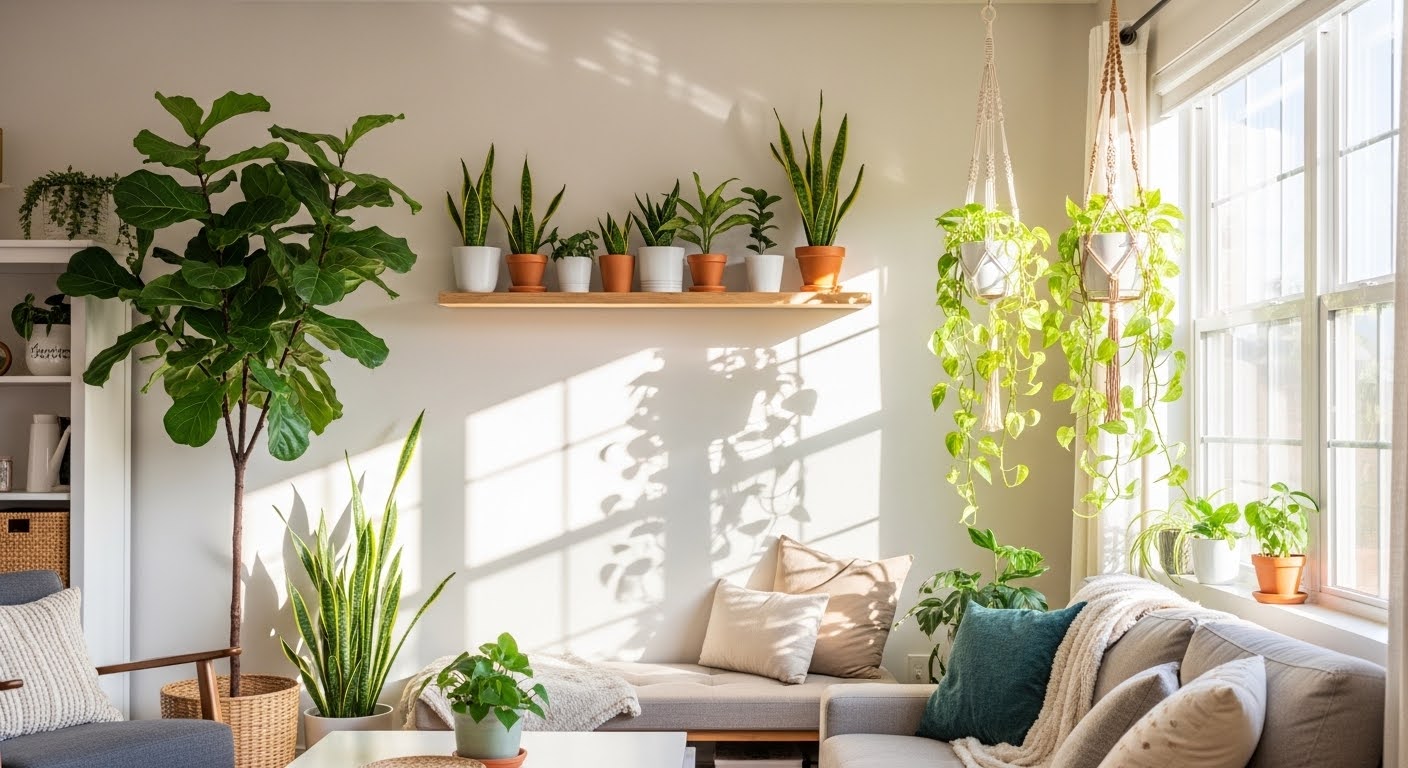
You’ve scrolled through hundreds of beautiful living rooms online, and almost every single one has something in common: plants. There’s something about a trailing pothos on a shelf or a tall leafy tree anchoring a corner that makes a space feel alive — warm, settled, and effortlessly put-together. But if you’ve ever bought a plant only to watch it slowly decline despite your best efforts, the idea of decorating with them might feel more stressful than fun.
Here’s what I want you to know: you don’t need a big home or any special gardening talent to pull this off. Even a small apartment with tricky lighting can look like a verdant little retreat with the right plant choices and a bit of planning. The secret is learning to work with your space, not against it.
In this guide, you’ll find practical living room plant ideas for every situation — from low-light corners to bold statement floor plants, from simple terracotta pots to beautiful faux options. By the end, you’ll have a clear, actionable picture of how to bring some greenery into your living room in a way that actually fits your life.
Quick Summary
WHO THIS IS FOR
Home decor beginners and anyone looking to freshen up their living room.
TIME TO READ
6 min
TOP 3 TAKAWAYS
Best Plants for Living Rooms
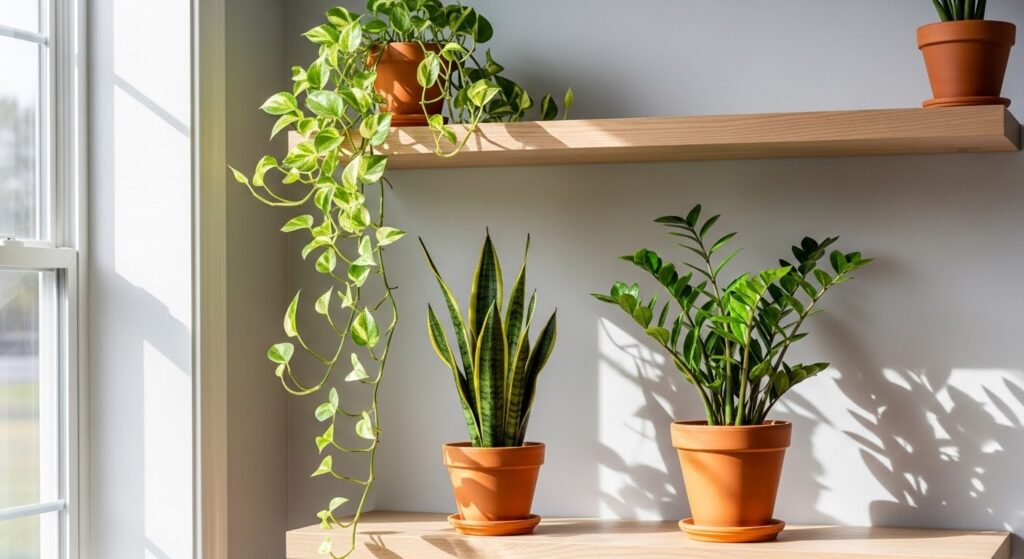
The best indoor plants for a living room hit a sweet spot: they look great, they’re pretty forgiving if you miss a watering here and there, and they thrive in a range of light conditions. Think pothos, snake plants, ZZ plants, peace lilies, and rubber trees. These are the workhorses of plant decor — reliable, beautiful, and genuinely hard to go wrong with.
When you’re choosing, your lifestyle matters just as much as your light conditions. If you travel often or tend to forget watering days, lean toward drought-tolerant options like the snake plant or ZZ plant — they’ll sit patiently on your shelf for weeks without complaint. If you’re home a lot and enjoy tending to something, a peace lily or monstera will reward that extra attention with lush, dramatic growth.
My advice? Start with just one or two plants before you go all in. Getting a feel for how a plant actually behaves in your specific space — your light levels, your temperature, your humidity — teaches you more than any article ever could. (Including this one.)
- Pothos — trailing vine, nearly impossible to kill, gorgeous on shelves
- Snake plant — architectural, upright, thrives with minimal care
- ZZ plant — glossy leaves, handles low light and dry conditions like a champ
- Peace lily — flowers indoors, prefers shade, droops slightly when thirsty so you always know
- Rubber tree — bold and sculptural, grows impressively tall over time
Low-Light Plant Options
Not every living room is bathed in natural light — and honestly, that’s completely fine. Some of the most stylish houseplants for living rooms actually prefer indirect or low light. You just need to know which ones to reach for.
Cast iron plants live up to their name. They handle dim rooms, temperature swings, and irregular watering without so much as a wilted leaf. Chinese evergreens are another solid pick; they come in beautiful variegated varieties that add visual interest even in a darker corner. And if you want something taller and more dramatic, dracaena handles low-light conditions well and doubles as a statement plant.
One thing worth noting: ‘low light’ doesn’t mean ‘no light.’ Every plant needs some natural light to survive long-term. If your room has almost no windows, a simple grow light on a timer is an easy, affordable fix that opens up your options significantly.
- Cast iron plant — extremely resilient, slow-growing, quietly elegant
- Chinese evergreen — colorful varieties available, great for air quality
- Dracaena — tall, architectural, several varieties suited to low light
- Heartleaf philodendron — fast-growing, vining, and very forgiving of beginners
Large Statement Plants
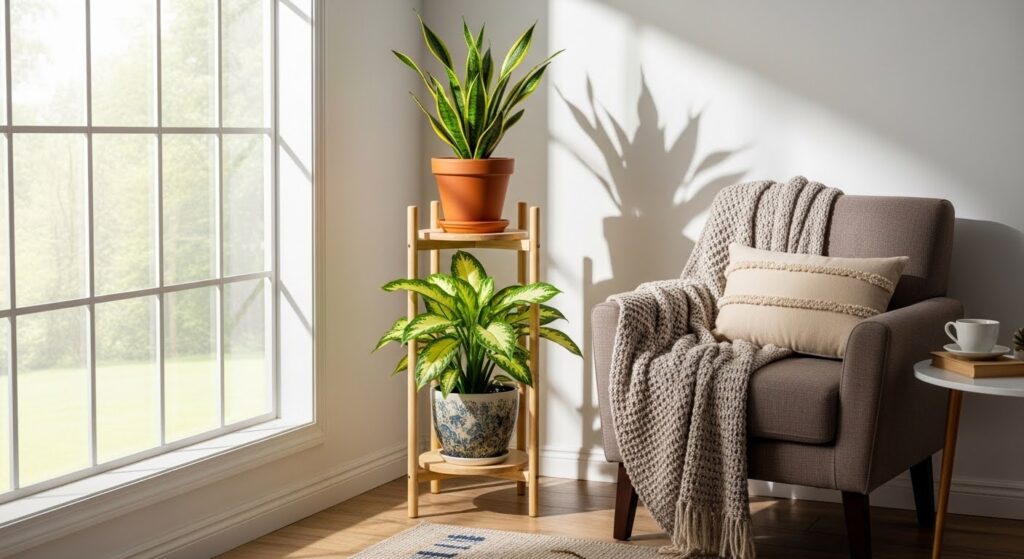
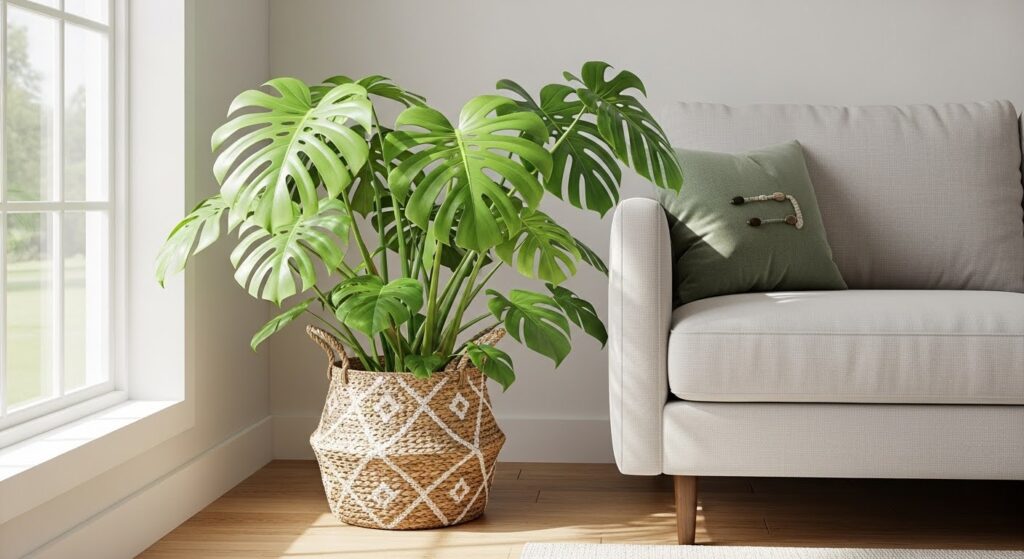
One large plant can do more for a living room than a dozen small ones scattered across every surface. A well-placed statement plant anchors a corner, adds height, and gives the whole room a more intentional feel. This is honestly one of the most impactful plant decor ideas you can try — and it doesn’t need to cost a fortune.
The fiddle leaf fig is the classic choice — tall, sculptural, and instantly recognizable. It does need bright, indirect light and a bit of consistent care, so it’s best for someone who enjoys tending their plants. If you want something more forgiving, a monstera deliciosa grows large and dramatic with far less fuss. Bird of paradise is another stunning option if your room gets plenty of sunshine.
Placement matters here. A large plant works best where it becomes part of the room’s natural visual flow — a corner near a window, beside the sofa, or flanking a media console. Think of it as furniture, not just decoration. For more ideas on making a big visual impact in a small space, take a look at our Small Living Room Decor Ideas guide.
Plant Placement Ideas
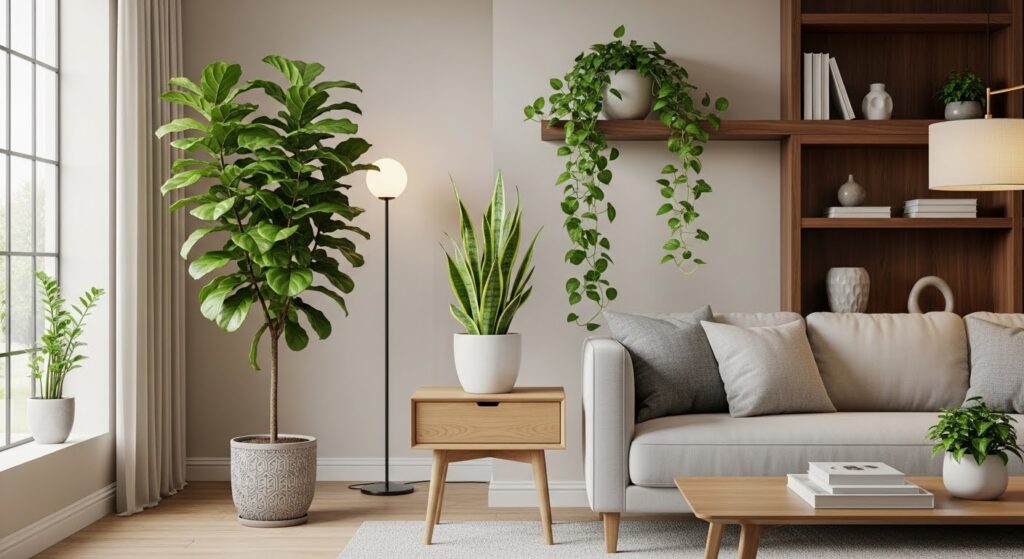
Where you put your plants matters just as much as which plants you choose. Think in layers: tall floor plants anchor corners, medium plants work beautifully on side tables and consoles, and trailing or compact varieties shine on shelves and windowsills. Mix those three levels and your room instantly looks more dynamic — and intentional.
Grouping plants together is one of my favorite tricks. It creates a lush, collected look, and it’s actually better for the plants — they create a little pocket of humidity for each other. Try clustering three plants of different heights and textures on a plant stand or in a corner arrangement. Odd numbers almost always look more natural than even groupings.
Don’t sleep on vertical space, either. Wall-mounted planters, hanging macramé holders, and tall plant stands all draw the eye upward and make ceilings feel higher — a huge win in a small apartment. For more ideas on how plants and wall styling can work together, check out our Wall Decor Ideas guide.
- Floor level: large statement plants, decorative floor pots
- Surface level: coffee table plants, side table arrangements, console styling
- High level: hanging plants, shelf vines, wall-mounted planters
Planters and Pots
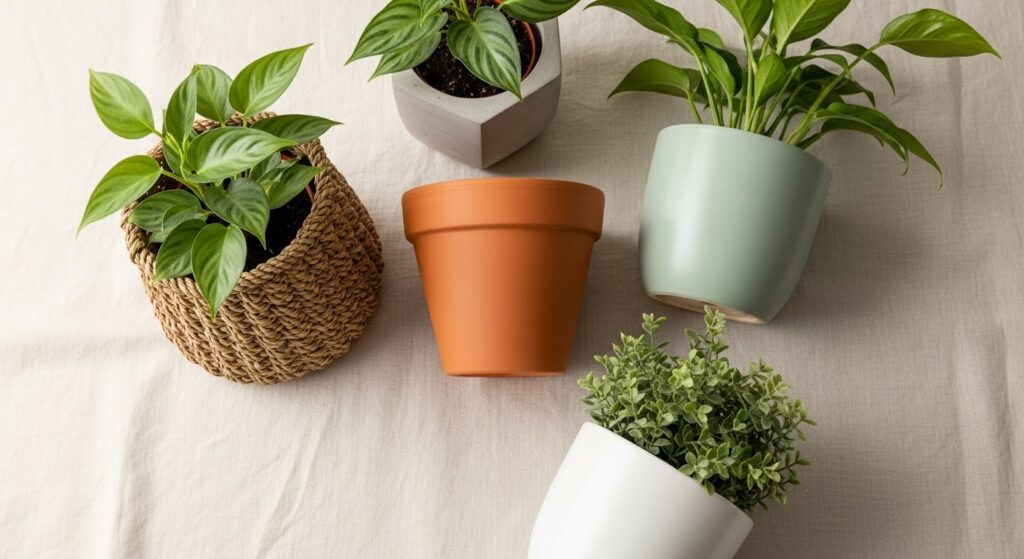
The pot matters almost as much as the plant itself. A beautiful plant in a flimsy nursery pot loses half its visual impact. Swapping to a proper planter is one of the quickest, most affordable ways to level up your plant decor — and it takes about thirty seconds.
Terracotta is a timeless choice. It’s affordable, breathable (genuinely great for plant health), and looks warm and organic in almost any living room style. Woven baskets work beautifully for floor plants and bring a natural texture that complements both modern and bohemian spaces. For a cleaner look, matte ceramic pots in neutral or earthy tones are incredibly versatile and easy to style around.
Here’s a little tip that saves a lot of time and money: you don’t need to repot the plant at all. Just drop the plastic nursery pot into a decorative cover pot. It’s simple, cheap, and totally reversible. Just make sure you’re not letting water sit at the bottom of the cover pot — that’s the fastest way to accidentally harm your plant.
Faux Plant Options
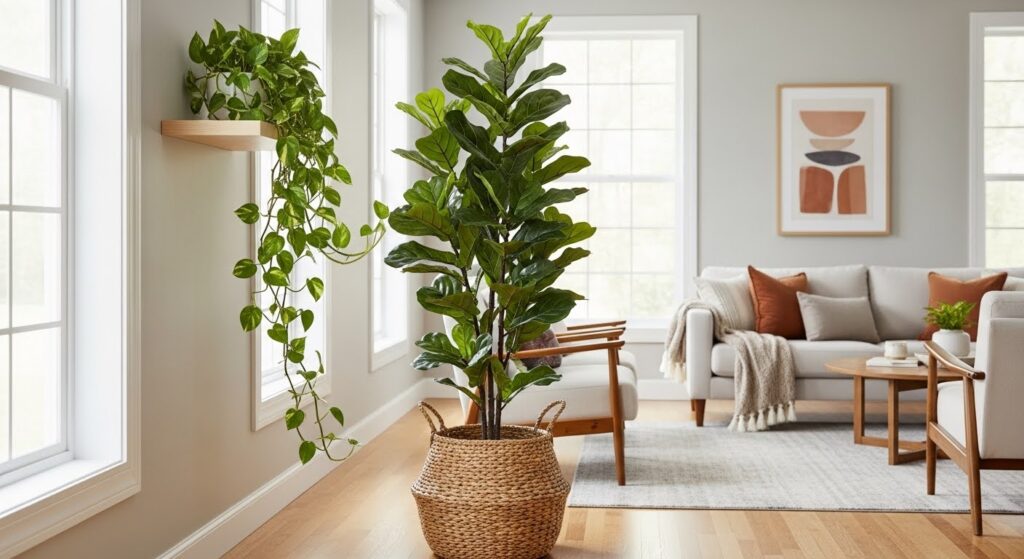
Let’s be honest — faux plants have come a long way. The best ones today look so realistic that guests genuinely can’t tell the difference, and using them is a completely legitimate choice. If your room gets almost no natural light, if you travel often, or if you simply don’t want the maintenance that comes with live plants, faux is a great option.
The key to making faux plants look convincing is choosing quality over quantity. One well-made faux plant reads as real; five cheap ones scattered around will always look plastic. When you’re shopping, look for options with natural color variation in the leaves, realistic textures, and stems that actually bend and move the way a real plant would.
A popular trick among interior decorators: mix faux and real plants together in the same grouping. The real plants bring life and freshness to the arrangement, while the faux ones fill spots where live plants wouldn’t thrive. Nobody needs to know your secret.
Plant Care Basics
You don’t need to become a botanist to keep your plants looking good. Most living room plants really only need three things done reasonably well: appropriate light, water when the soil is ready for it, and occasional feeding during the growing season (spring and summer). Get those three things roughly right, and most plants will genuinely thrive.
Overwatering kills far more houseplants than underwatering ever does. Before you reach for the watering can, stick your finger about an inch into the soil. Damp? Put the can away for a few more days. Dry? Water thoroughly until it drains from the bottom. That one simple habit will save more plants than any expensive gadget or supplement.
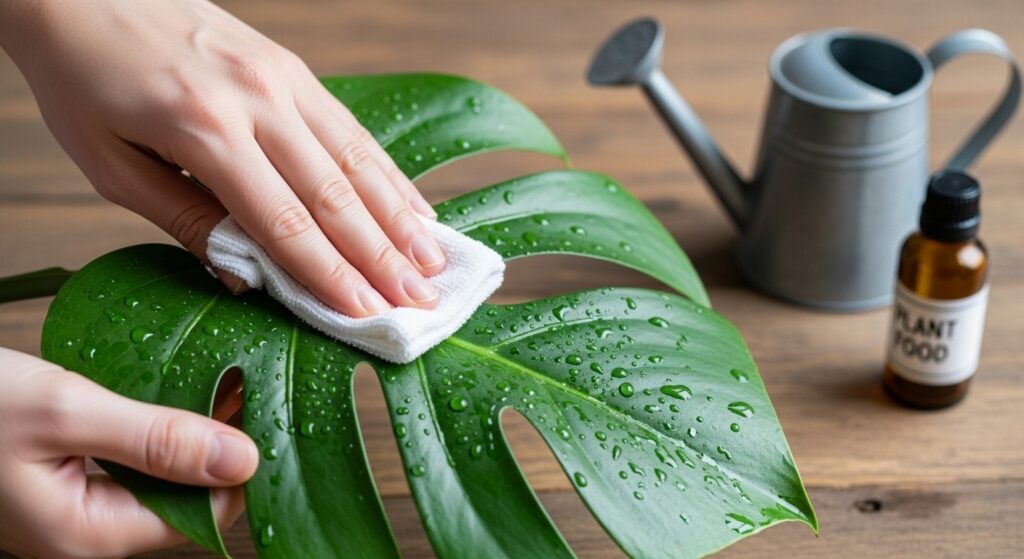
One last thing worth adding to your routine: wipe your plant leaves with a damp cloth every few weeks. It helps them absorb light more efficiently and keeps everything looking fresh. A well-tended plant is part of the decor. For a broader approach to creating a relaxed, well-styled home, our Cozy Living Room Ideas guide is a great next read.
- Light: Match the plant to your actual conditions — check before you buy, not after.
- Water: Check soil moisture first; err on the side of less rather than more.
- Feeding: A balanced liquid feed once a month in spring and summer is plenty.
- Cleaning: Wipe leaves gently with a damp cloth every two to three weeks.
- Rotation: Turn plants a quarter turn weekly for even, balanced growth.
Common Mistakes to Avoid
Even well-intentioned plant styling can go sideways. Here are four mistakes worth avoiding before you start shopping or rearranging.
| Watch Out For TheseNot measuring first. A floor plant that looks perfect online might completely overpower a small living room — or look lost in a large one. Measure your available floor space and ceiling height before committing to any plant over a foot tall.Ignoring your existing style. Your sofa, rug, and existing decor all affect which plants and pots will feel at home. A spiky, architectural plant can look amazing in a minimal room but feel out of place in a cozy, layered one.Chasing trends over personal taste. Certain plants have had their moment as social media darlings — but if your room doesn’t have the right light for them, forcing it will lead to frustration. Choose plants that work for you, not for an aesthetic you saw online.Skipping the planning phase. Buying plants impulsively and then figuring out where to put them leads to awkward placement and plants stuck in the wrong light. Five minutes sketching out your room and identifying your best spots before you shop makes a real difference. |
Frequently Asked Questions
What’s the most important element to focus on when adding plants to a living room?
Light — and I mean your room’s actual light, not the light you wish it had. Before buying any plant, honestly assess how much natural light your space gets throughout the day. A north-facing room needs low-light plants; a south-facing room opens up a much wider range of options. Getting the light match right is genuinely the difference between plants that thrive and plants that slowly decline no matter how carefully you water them.
How do I start adding plants to my living room without feeling overwhelmed?
Start with just one plant — one that suits your light conditions and fits your lifestyle. Place it somewhere you’ll actually see it every day, like a side table or a windowsill. Spend a few weeks getting to know how it behaves in your space before you add anything else. Building your collection gradually means you actually learn something from each addition, rather than ending up with a room full of struggling, mismatched plants all at once.
What’s a realistic budget for decorating with plants?
You can absolutely start for under $30 — and in many cases, even less. Many of the most beginner-friendly plants (pothos, snake plants, spider plants) are inexpensive and widely available at garden centers, hardware stores, and even some grocery stores. A single small plant plus a simple terracotta pot can cost less than $15 total. As your collection grows, you might invest more in a statement plant or a beautiful ceramic planter — but that’s entirely optional, not a requirement.
How long does it take for plants to make a noticeable difference in a room?
The visual impact is almost immediate — the moment you place a well-chosen plant in the right spot, the room feels different. That said, some plants grow slowly and may take months to fill out to their full potential. Fast-growing options like pothos, monstera, and philodendrons can visibly change shape and size within a single growing season, which is genuinely rewarding to watch. If you want instant impact without the wait, buying a larger, more established plant from a garden center gives you that full, lush look right away.
Ready to Bring the Outdoors In?
Adding plants to your living room doesn’t require a big budget, a ton of space, or any prior experience. It takes a little planning, the right plant for your actual conditions, and the willingness to start somewhere. You now have everything you need to take that first step — or your next one.
Remember: there’s no such thing as a perfectly styled plant corner on the first try. You’ll move things around, upgrade a pot, swap out a plant that isn’t quite right. That’s not failure — that’s how great rooms actually get made. Start imperfectly. Let it evolve.
| Keep the momentum going — read these next:→ Living Room Shelf Decor Ideas · Cozy Living Room Ideas · Small Living Room Decor Ideas |