
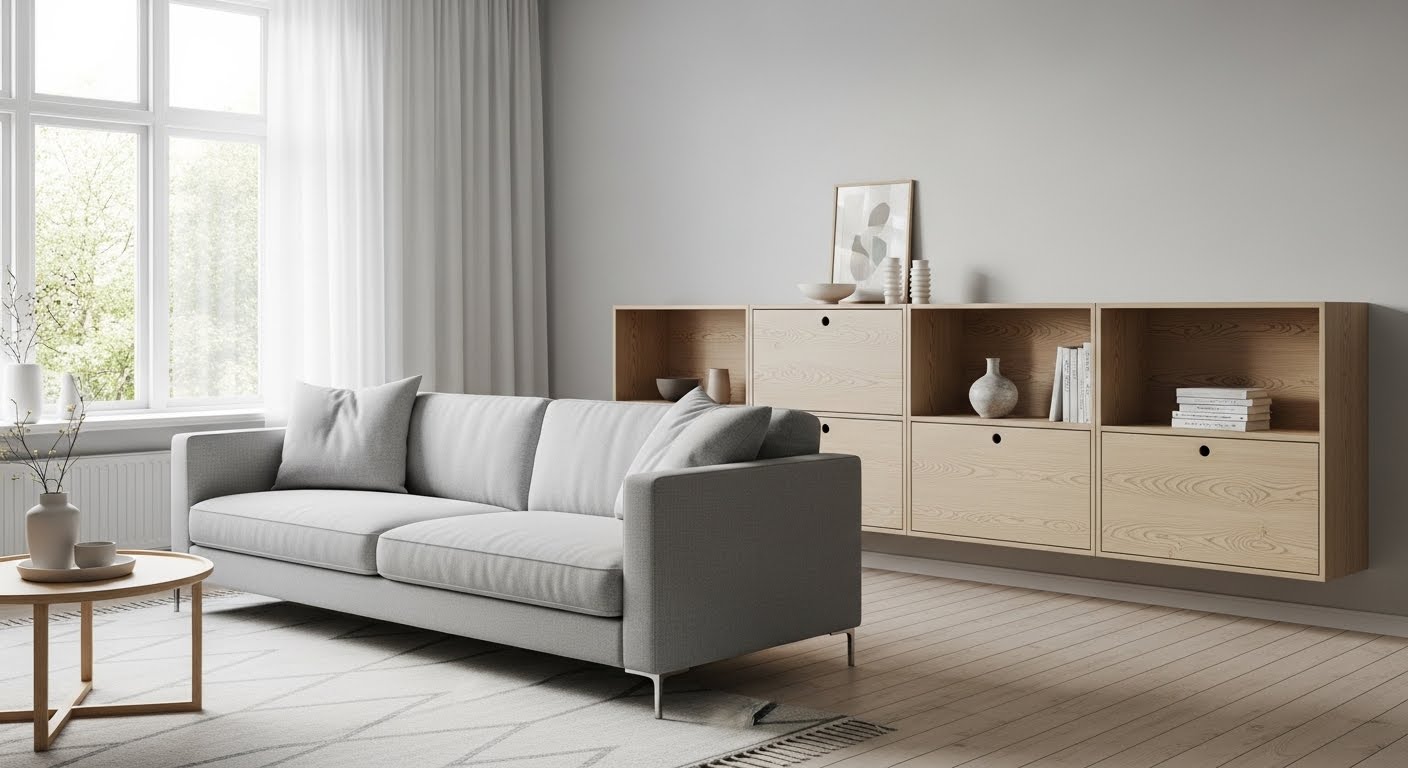
IKEA Living Room Ideas: Hacks & Styling Tips
You walked into your living room this morning and felt that familiar twinge. Something just doesn’t feel right. Maybe the furniture looks too bulky, the layout feels random, or the whole space still looks like it came out of a moving box. Sound familiar? You’re not alone — this is one of the most common challenges for first-time decorators and apartment renters alike. The good news? You don’t need a big budget or a design background to turn things around.
IKEA has quietly become the go-to source for people who want stylish, functional living rooms without designer price tags. Whether you’re working with 300 square feet or just trying to make a rental feel more like home, the right IKEA living room ideas can genuinely transform a space. The trick is knowing how to actually use these pieces well — not just assemble them and call it done.
In this post, you’ll discover practical IKEA living room hacks, learn how to style IKEA furniture so it looks thoughtful and personal, and get honest advice on when to spend more and when to save. By the end, you’ll have a clear, doable action plan for your own space. No overwhelm, no designer jargon — just real tips that work.
Quick Summary
WHO THIS IS FOR
Home decor beginners and anyone wanting to refresh their living room
TIME TO READ
6 min
TOP 3 TAKAWAYS
1. IKEA Living Room Favorites
Some IKEA pieces show up in living rooms over and over again — and honestly, it makes sense. Modular sofas, open shelving units, and low-profile coffee tables keep coming up because they work. They’re versatile, easy to style, and sized to fit most apartment layouts. If you’re just getting started, these dependable options take a lot of guesswork out of the process.
The modular sofa setup is a real game-changer for small spaces. Instead of squeezing a fixed-shape sofa into a room that wasn’t designed for it, you configure the sofa around your space. Pair it with a simple coffee table and a wall shelf and you already have the foundation of a room that works. That’s more than most people start with.
Don’t overlook IKEA’s smaller accent pieces either. A slim console table or drum-style side table can add storage and visual interest without eating into precious square footage. These smaller items are also great starting points if you’re not ready to commit to a full furniture overhaul just yet.
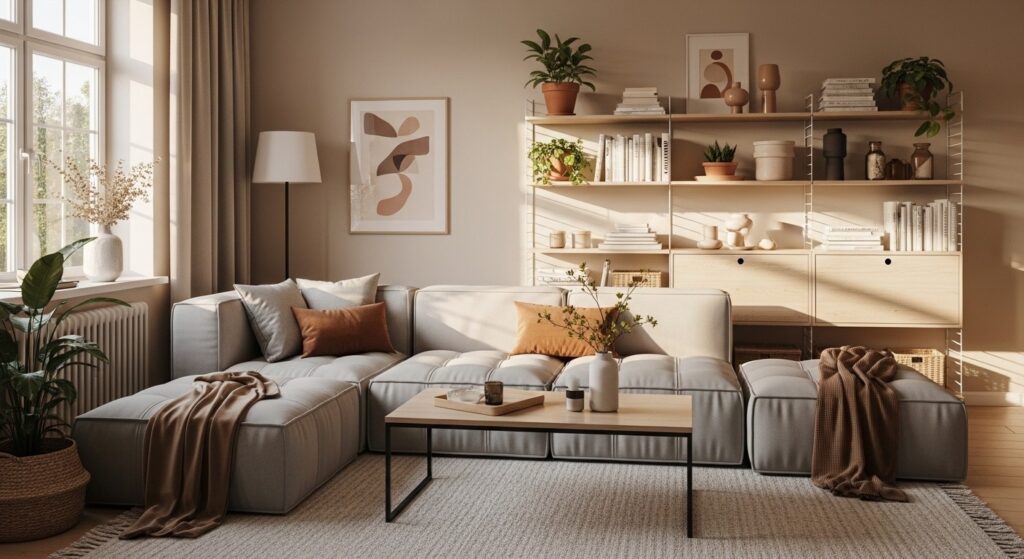
What works well here:
- Modular sofas that adapt to your layout, not the other way around
- Open shelving that doubles as display space and storage
- Low-profile coffee tables that make small rooms feel more open
- Slim side tables that add function without claiming floor space
2. IKEA Hacks Worth Trying
IKEA hacks are exactly what they sound like: small modifications to standard pieces that make them look more intentional and function better. The ones that actually stick aren’t complicated. The best living room hacks tend to focus on adding legs, swapping hardware, or combining units to create a custom-looking build. A few simple changes can make a budget piece look like it cost significantly more.
One of the most popular upgrades is swapping out the standard legs on a sofa or storage unit for tapered, mid-century style legs. It takes about 20 minutes, costs almost nothing, and immediately changes the look of the piece. Replacing basic knobs and handles with brass or matte black alternatives has a similar effect — a $15 hardware swap can make a storage unit look like a custom cabinet.
Another tried-and-true hack: stack two identical bookcases and mount them to the wall. Add LED strip lighting inside and the whole thing looks like a built-in installation. The key with any IKEA hack is keeping the modification clean and intentional. One well-executed change beats three half-finished ones every time.
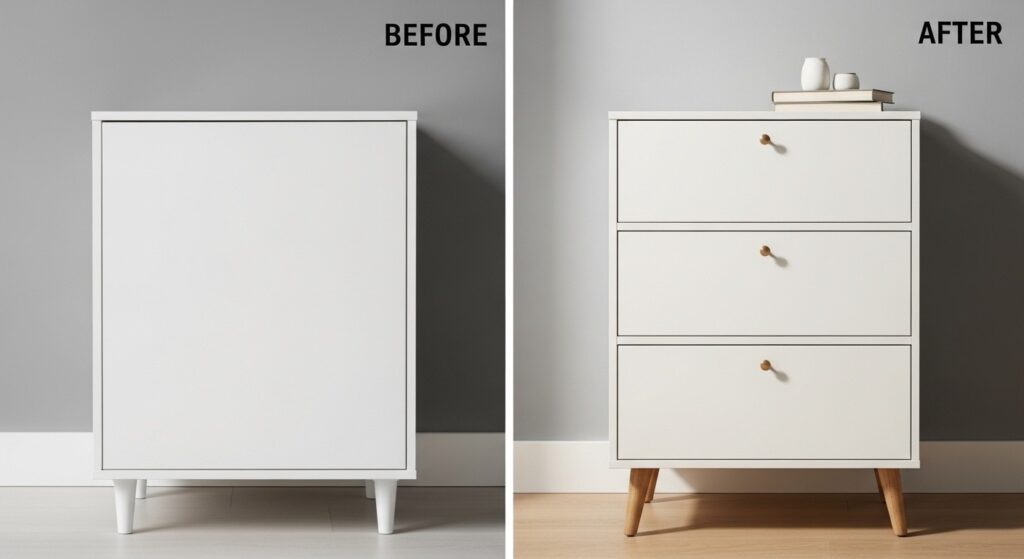
Easy hacks to start with:
- Swap legs on sofas and storage units for an instant style lift
- Replace standard hardware with brass, matte black, or ceramic alternatives
- Stack and mount identical units for a built-in look
- Add peel-and-stick wallpaper inside shelving units for a pop of pattern
3. Styling IKEA Furniture
Here’s the honest truth: the difference between an IKEA room that looks put-together and one that looks straight out of a catalog (and not in a good way) comes down almost entirely to how you style it. Layering textures, working with a consistent color palette, and leaving intentional breathing room can transform even the most basic piece into something that feels considered. This is where your taste gets to show up.
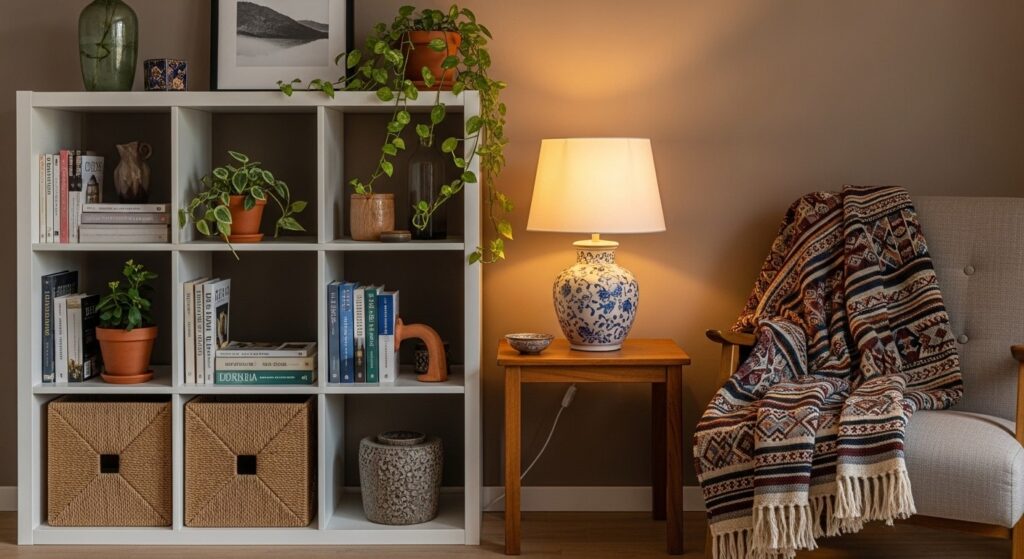
Start with a simple color palette — two neutrals and one accent color is a solid formula. Then layer in textiles: a rug, throw pillows, and a blanket. Each layer adds warmth and depth without requiring you to buy more furniture. For open shelves, group items in odd numbers, vary the heights, and mix materials like wood, ceramic, and greenery. It sounds basic, but it works every time.
Lighting is the most underrated element in styling any room, IKEA or otherwise. A single overhead light flattens everything. Add a floor lamp and at least one table lamp, and suddenly the room has warmth, depth, and atmosphere. Good lighting does more for a space than almost any furniture purchase you’ll ever make.
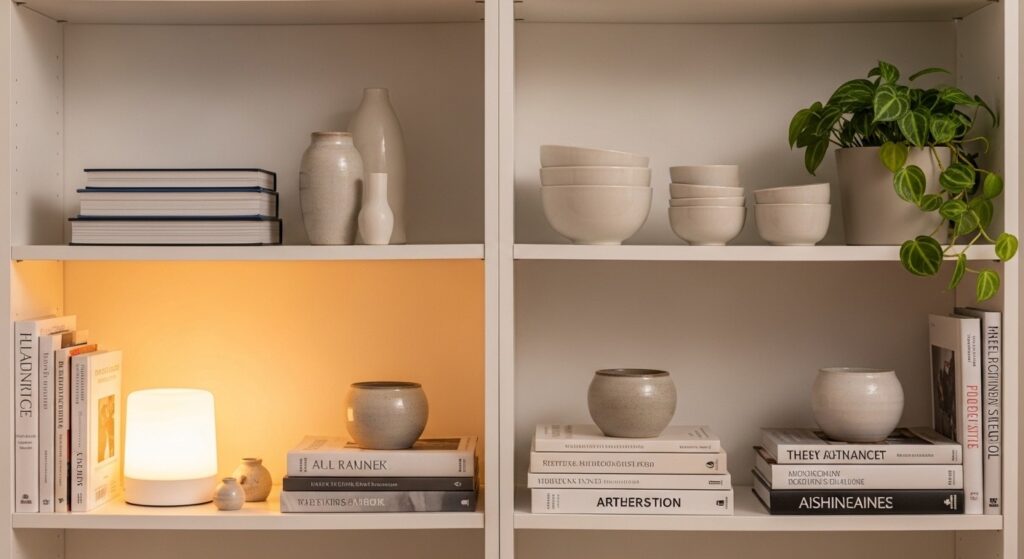
Styling fundamentals:
- Two neutrals, one accent color — keep it cohesive
- Layer rugs, throws, and pillows to add texture and warmth
- Group shelf items in threes with varied heights and materials
- Add floor and table lamps — never rely on one overhead light alone
4. Mixing IKEA with Other Brands
The real secret to a living room that doesn’t look entirely flat-pack? Mix your IKEA pieces with things from other sources. Thrift stores, vintage markets, and even other budget retailers carry items that can add character and elevate what’s around them. When every piece in a room comes from the same place, it tends to feel more like a showroom than a home.
A helpful approach: let IKEA handle the big structural pieces — your sofa, shelving, storage — and bring in personality through smaller, one-of-a-kind finds. A vintage lamp, a secondhand side table, or a handmade throw can introduce warmth and individuality that mass-produced furniture simply can’t replicate. The room starts to feel layered and personal rather than assembled.
Don’t be afraid to mix price points either. A quality rug or a well-chosen mirror can anchor a room full of budget-friendly pieces and make everything around it look more expensive. Strategic spending on one or two standout items goes a long way.
5. IKEA Storage Solutions
Storage is where IKEA genuinely shines — and for small living rooms, smart storage is often the difference between a space that feels calm and one that feels chaotic. The goal is to choose pieces that do double duty: looking good while keeping clutter out of sight. Open shelving, closed cabinets, and storage ottomans each serve a different purpose, and they work well together.
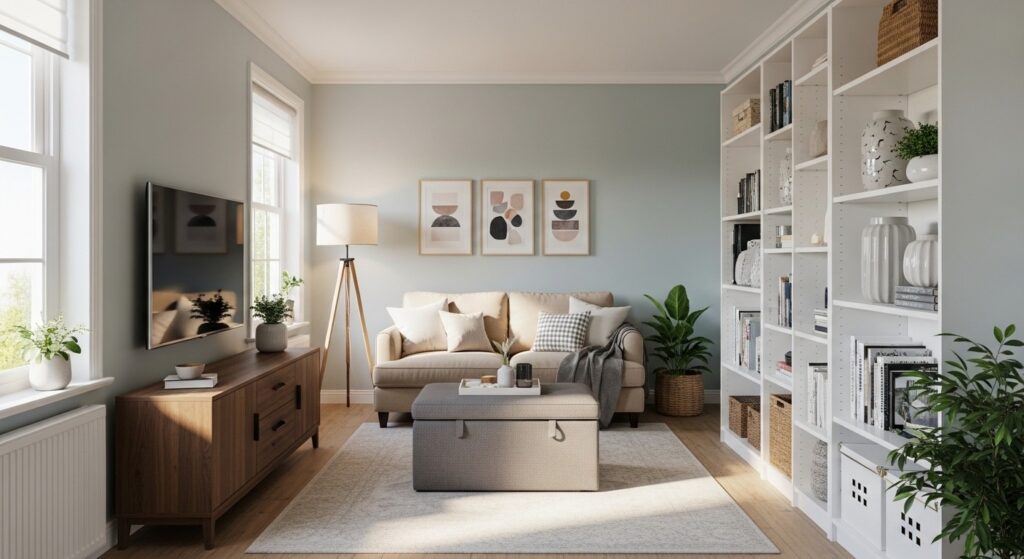
For small apartments, think vertical. Tall shelving units that reach toward the ceiling draw the eye upward and make the room feel larger. Use the lower shelves for things you actually reach for and save the upper shelves for display-only pieces you rarely touch. This keeps everyday items accessible without adding visual clutter at eye level.
Hidden storage matters just as much. A storage ottoman near your sofa holds blankets, magazines, and remotes while also functioning as extra seating or a surface for drinks. TV consoles and media units with closed doors are also worth prioritizing if visual mess is something that bothers you. For more storage-focused layout ideas, check out our guide to Small Living Room Furniture Ideas.
Storage tips for small spaces:
- Use tall shelving units to draw the eye up and maximize vertical space
- Choose a storage ottoman to hide clutter and gain flexible seating
- Opt for TV units with closed doors to reduce visual noise
- Reserve open shelves for styled displays, not everyday storage
6. When to Splurge vs IKEA
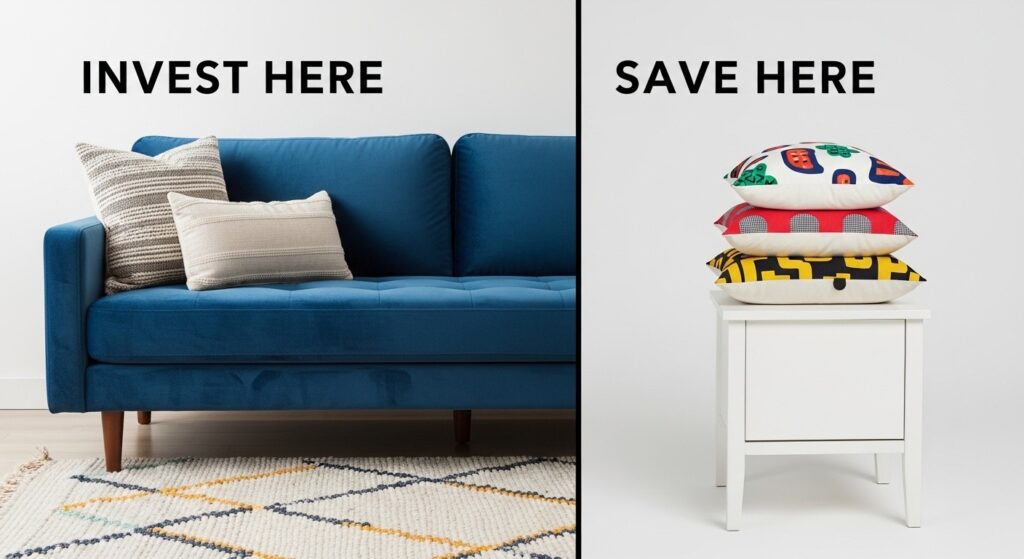
Not every piece needs to be a budget buy, and knowing where to invest can actually save you money over time. The general principle: spend more on items you use every single day or that form the visual anchor of the room. Save on pieces that are secondary, decorative, or easily swapped out.
Your sofa is the clearest case for spending more. You sit on it daily, and a poor frame or uncomfortable cushion will wear on you fast. A quality rug is the other smart investment — it ties the room together, adds warmth, and covers a lot of visual real estate. For both of these, think of it as a cost-per-use equation over several years. For a deeper look at smart spending priorities, take a look at our Budget Living Room Ideas guide.
Accent chairs, side tables, throw pillows, and decorative objects, on the other hand, are great IKEA or secondhand territory. These are the pieces you’ll want to swap out as your taste evolves, so you don’t want to feel locked in. The sweet spot is a room where a few quality anchors make everything around them look elevated.
7. IKEA Quality Expectations
Let’s be upfront about IKEA quality — it’s not heirloom furniture, and it doesn’t try to be. Most pieces are designed for roughly a 5 to 10 year lifespan with normal use. Go in with that expectation, and you’ll be happy. The issues come when people expect IKEA furniture to behave like solid hardwood pieces that cost several times as much.
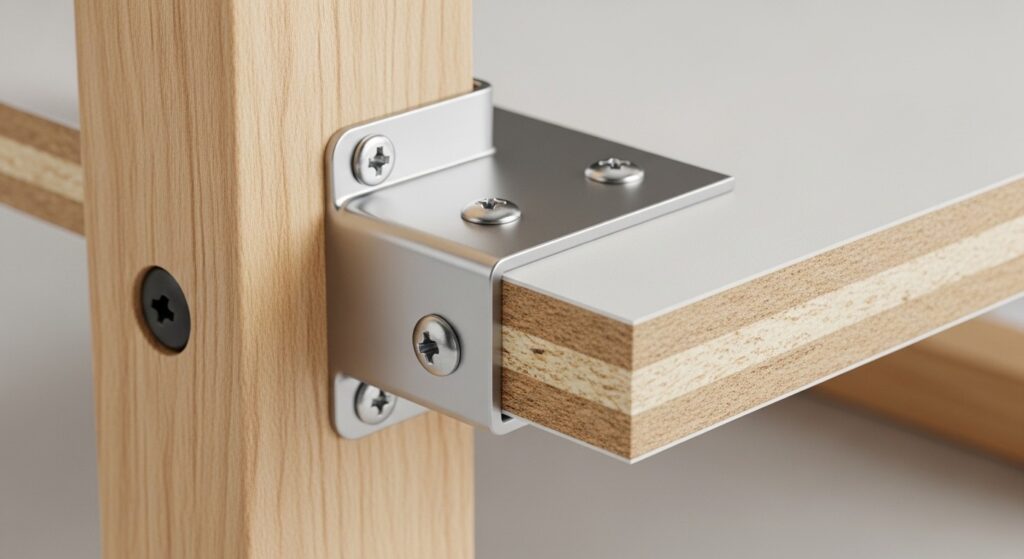
That said, some IKEA product lines are noticeably more durable than others. Pieces with solid wood components, metal legs, and heavier construction tend to hold up better than lighter alternatives. Reading customer reviews before buying and checking the finished weight of a piece are both useful quality signals — heavier usually indicates better build quality.
Maintenance plays a big role too. Wiping surfaces down regularly, keeping particleboard away from excessive moisture, and tightening fittings every six months will extend the life of your furniture considerably. Treat IKEA pieces with reasonable care, and they’ll hold up through multiple apartment moves. For more ideas on making the most of your setup, our Modern Living Room Ideas guide is worth a read.
Common Mistakes to Avoid
Even the most solid IKEA living room ideas can fall flat if you stumble into these easy-to-avoid traps. Keep this list in mind before you start shopping.
1. Not measuring first
This is the single most common decorating mistake. Always measure your room, your doorways, and the exact spot where each piece will live before buying anything. A sofa that’s even a few inches too long can derail an entire layout. IKEA’s return policy is generous, but it’s still a hassle you can easily avoid.
2. Ignoring what’s already in the room
Your flooring, wall color, and trim all need to inform your furniture choices. Buying pieces in isolation without considering what’s already in the room almost always leads to clashes. Work with your existing elements, not against them.
3. Chasing trends over personal style
Trends move fast, and if you decorate entirely around what’s popular right now, you’ll feel the urge to redo everything in a year or two. Build around what genuinely makes you feel comfortable and at home. That rarely goes out of style.
4. Skipping the planning phase
It’s tempting to just start buying things and figure it out as you go. Resist that. Even a rough sketch on paper showing furniture placement and traffic flow will save you time, money, and a lot of frustration. Plan first, then shop.
Frequently Asked Questions
Q: What’s the most important element to focus on first?
Start with your sofa and rug. These two pieces do more to define a living room than anything else — they set the scale, anchor the color palette, and determine how everything else will be arranged. Once they’re in place, every other decision becomes much easier because you’re building around something, not starting from scratch. Choose both with longevity in mind, since they’ll influence every other decorating decision you make in that room.
Q: How do I start without feeling overwhelmed?
Break the project into phases rather than trying to overhaul everything at once. Start by decluttering and measuring your space. Then identify the one piece of furniture causing the most frustration — replace or reposition just that first. Once you see one improvement, momentum usually takes care of the rest. Give yourself permission to take months rather than days. A room built intentionally over time almost always looks better than one furnished in a single weekend shopping trip.
Q: What’s a realistic budget for an IKEA living room?
A functional IKEA living room with a sofa, coffee table, storage unit, and a few accent pieces typically runs anywhere from $500 to $2,000, depending on how many pieces you need and which product lines you choose. If you’re starting completely from scratch, budget toward the higher end and prioritize the sofa first. If you’re refreshing an existing room, a $200 to $500 investment focused on textiles, lighting, and a few key pieces can make a real difference. Shopping IKEA’s As-Is section or the secondhand market can stretch your budget even further.
Q: How long does the whole process take?
Assembly typically takes one to two weekends depending on how many pieces you’re building and whether you have help. But the styling and fine-tuning phase — getting the arrangement right, adding the right textiles, adjusting the lighting — can take several more weeks of living in the space and observing how you actually use it. That’s completely normal, and it’s actually ideal. The best living rooms evolve gradually rather than appearing fully formed in one go. Give yourself at least a month before deciding anything isn’t working.
Ready to Start?
Creating a living room you genuinely love doesn’t require a big budget, a large apartment, or years of experience. It requires a plan, a willingness to take it one step at a time, and enough confidence to trust your own instincts. IKEA gives you an incredibly accessible starting point — and with the right hacks, some thoughtful styling, and smart decisions about where to spend, the results can genuinely surprise you.
Start small, measure everything, and remember that decorating is an ongoing process, not a one-time project. The goal isn’t a perfect room. It’s a room that feels like yours. You’ve got everything you need to make it happen.
Continue Reading:
- Thrift Living Room Ideas
- Small Living Room Furniture Ideas
- Modern Living Room Ideas