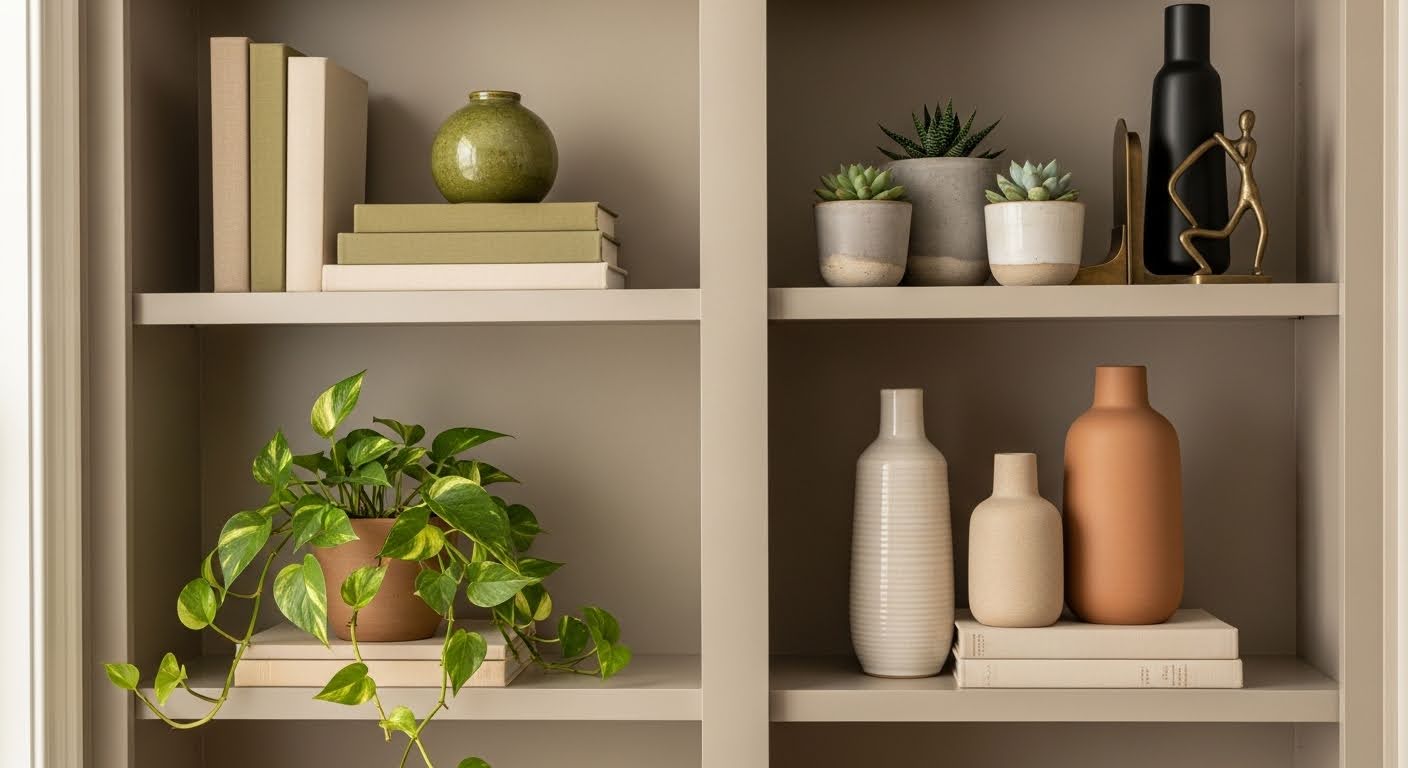
Living Room Shelf Decor Ideas: Style Your Shelves
You’ve rearranged the same shelf four times. Everything looks a little bit off, yet nothing is obviously wrong. Maybe it feels cluttered. Maybe it feels weirdly empty. Maybe that one candle has lived in three different spots and still hasn’t found a home. If any of this sounds familiar — good. That means you’re paying attention, and paying attention is really where good shelf styling begins.
Here’s the thing: styling shelves is genuinely trickier than it looks in those perfectly curated Instagram photos. For beginners, and especially for people living in smaller apartments where every inch of space has to work hard, it can feel like an impossible puzzle. You add something, step back, and think, still not it. That loop can go on for a while.
But there’s a way out of it. Living room shelf decor doesn’t have to be guesswork. In this guide, you’ll find simple, practical ideas for turning your shelves into something you actually love looking at — without spending a lot of money, without needing a design background, and without losing a whole weekend to the project. Let’s get into it.
Quick Summary
WHO THIS IS FOR
Home decor beginners and anyone wanting to refresh their living room
TIME TO READ
6 min
TOP 3 TAKAWAYS
1. The Less-Is-More Philosophy
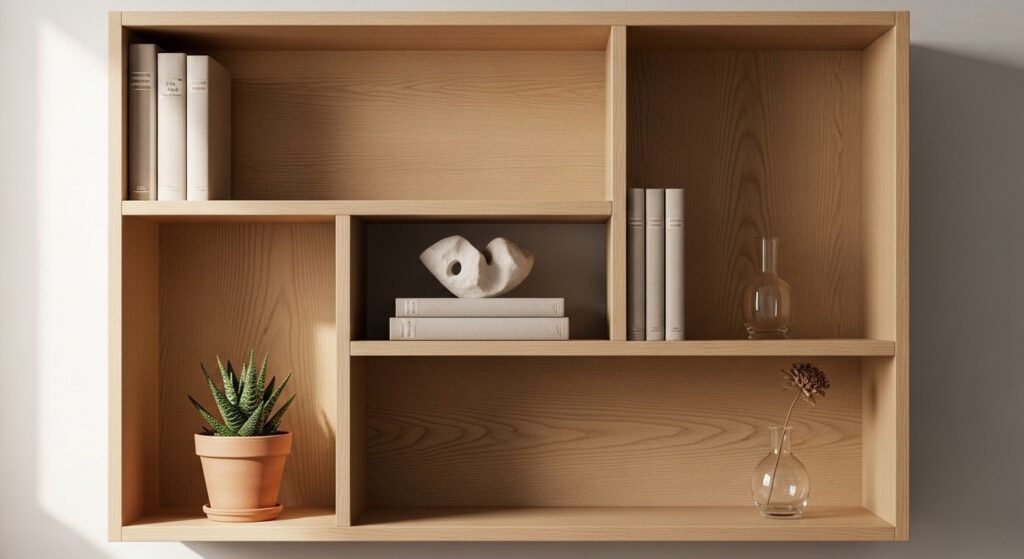
Let’s start here because it’s where most people go wrong: too much stuff. It’s an easy trap to fall into. You have things you like, and your shelves are right there, so naturally you put them all on display. But overcrowded shelves don’t show off your things — they just create noise. Your eye has nowhere to land, and the room ends up feeling busy and small.
A simple rule that works really well: aim to leave roughly 20 to 30 percent of your shelf space empty. That open space isn’t wasted. It gives the objects around it room to breathe, and it makes the whole arrangement feel intentional rather than accidental. Some of the best-looking shelves are the ones where you can tell someone actually chose what to leave off.
The easiest way to put this into practice? Clear everything off completely. Yes, all of it. It sounds like a lot, but starting with a blank shelf is so much easier than shuffling things around an existing arrangement. You can actually see what you’re working with, and it becomes much easier to be honest about what deserves to go back.
A few things that help right away:
- Arrange objects in groups of three or five — odd numbers feel more natural to the eye than even ones
- Pull out anything you haven’t consciously looked at in the past month
- Not every book needs to be on display — a smaller, curated row of your favourites looks far better than a full-to-the-brim shelf
2. Choosing a Focal Point
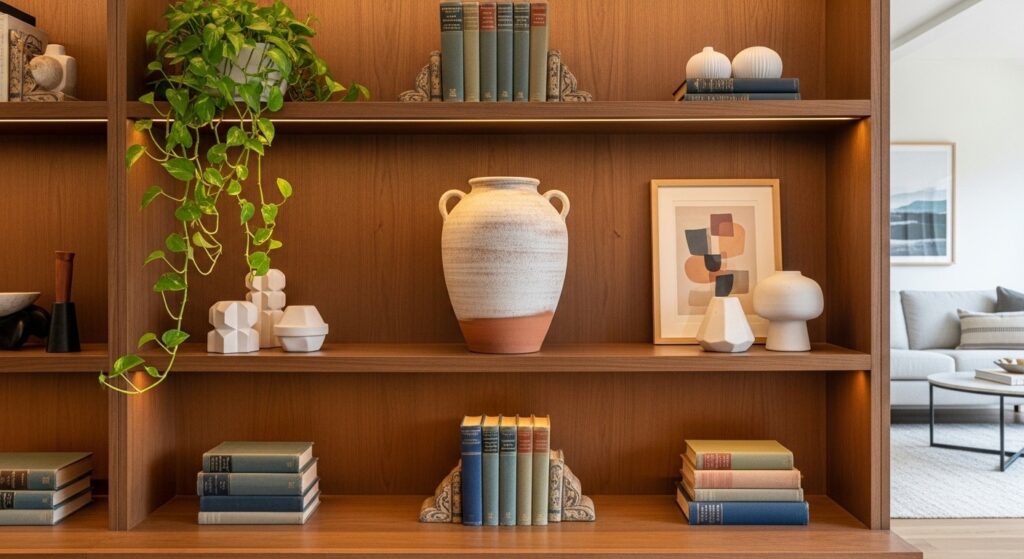
Every shelf that looks good has something anchoring it — one object or grouping that your eye goes to first. Without that anchor, even a well-curated arrangement can feel random, like a collection of nice things that just happen to be near each other. That’s the difference between a shelf that looks styled and one that just looks full.
Your focal point doesn’t have to be fancy or expensive. A large vase, a piece of art leaned against the back wall, a sculptural bowl, or even a stack of oversized books can all do the job. What matters is that it’s noticeably bigger or bolder than everything else on that shelf — something that clearly says “look here first.”
One small trick: place your focal point slightly off-center rather than right in the middle. Dead-center arrangements tend to feel stiff and static. A little asymmetry gives the shelf energy and makes it look like someone thoughtfully placed things rather than just lined them up.
How to pick your focal point:
- It should be noticeably larger than everything else nearby — at least twice the size
- One strong focal point per shelf is plenty; two competing anchors cancel each other out
- Leaned artwork or framed prints work especially well on deeper shelves with more visual depth
3. Scale and Proportion Basics
This is one of those things that makes an enormous difference once you notice it. When everything on a shelf is roughly the same height, the whole arrangement looks flat — like a row of soldiers standing at attention. Varying the heights of your objects is one of the fastest ways to make a shelf look styled rather than just stocked.
Think of it in three tiers: something tall, something medium, and something low. On any given shelf, try to hit all three. A tall vase or candlestick, a couple of medium-height objects, and something low and horizontal — like a small stack of books laid flat, or a short little plant — creates a rhythm that feels natural without looking forced.
For smaller apartments especially, keep an eye on overall bulk. Big, heavy objects on every shelf can make a room feel oppressive. Slimmer pieces, things with legs or open frames, and lighter materials all help a shelf feel less dense, which matters a lot in a compact space.
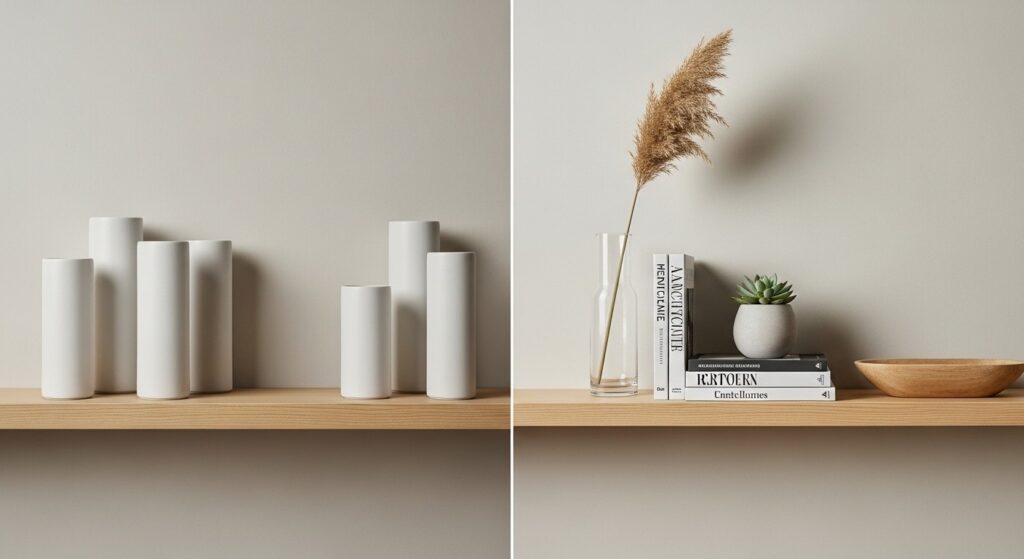
Scale checklist — aim for this on every shelf:
- One tall vertical element: a vase, a candlestick, a tall stack of upright books
- One or two mid-height objects to bridge the visual gap
- Something low and horizontal — a small tray, a flat stack of books, a short potted plant
4. Mixing Textures Effectively
Texture is what makes a shelf feel warm and lived-in rather than like a showroom display. When you put smooth surfaces next to rough ones, shiny next to matte, soft next to hard — something clicks. The shelf stops looking like a collection of objects and starts looking like a considered arrangement.
The trick is contrast. A smooth ceramic vase next to a woven basket. A stack of hardcover books beside a small leafy plant. A metallic object sitting next to a piece of raw wood. These pairings work because the differences between the surfaces make each one more interesting. A shelf full of similarly smooth, similarly shiny things ends up looking a bit cold no matter how nice the individual pieces are.
And here’s the good news: you probably don’t need to buy anything new to add texture. Look around your home. Woven baskets, ceramic bowls, natural fiber items, wooden objects, trailing houseplants — these are all textural elements most people already own. It’s more about noticing what you have and pairing it thoughtfully.
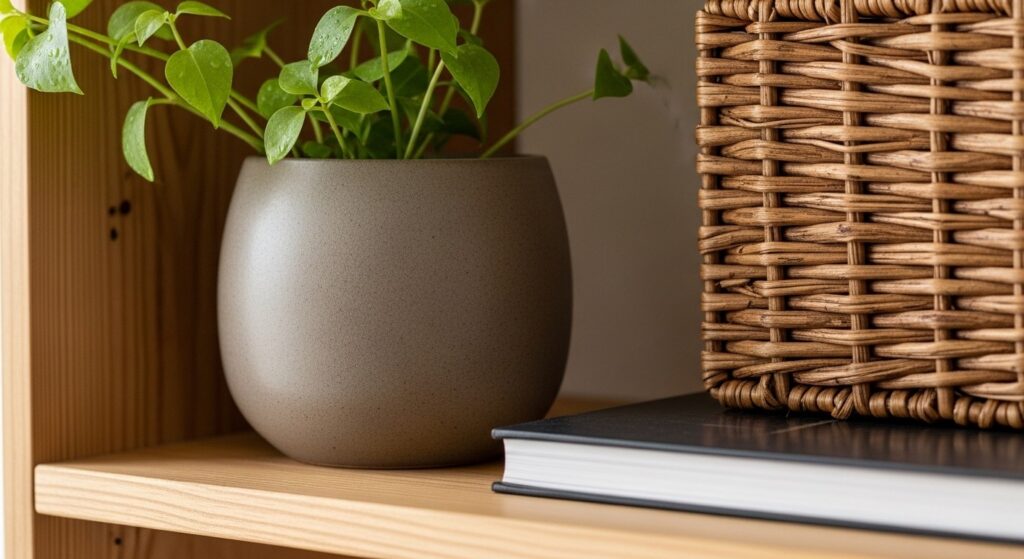
Texture combinations that consistently work well:
- Pottery or ceramics paired with natural wood or rattan
- Books (paper texture) alongside a trailing or potted plant
- Glass or metallic objects balanced with something soft — linen, cotton, or woven material
5. Color Coordination Tips
You don’t need to match every object to every other object. That would look rigid and a little clinical. But you do need a loose color story — a few tones that keep coming back — otherwise the shelf can start to feel chaotic even when it’s not cluttered.
Start by looking around the room. What colors are already there — in your sofa, your rug, your curtains, your walls? Pick two or three of those tones and use them as your guide when choosing what to display on the shelves. When the same colors appear in multiple places across a room, the whole space feels cohesive. It’s a simple trick and it works every time.
One thing beginners often overlook: books are actually a fantastic color tool. You can arrange a section of your bookshelf by cover color rather than by author or subject. A gradient of warm tones, or a tight cluster of all-white spines, can become a genuine style moment. You can also face some books backward — spine toward the wall — for a clean, uniform look in one section of the shelf.
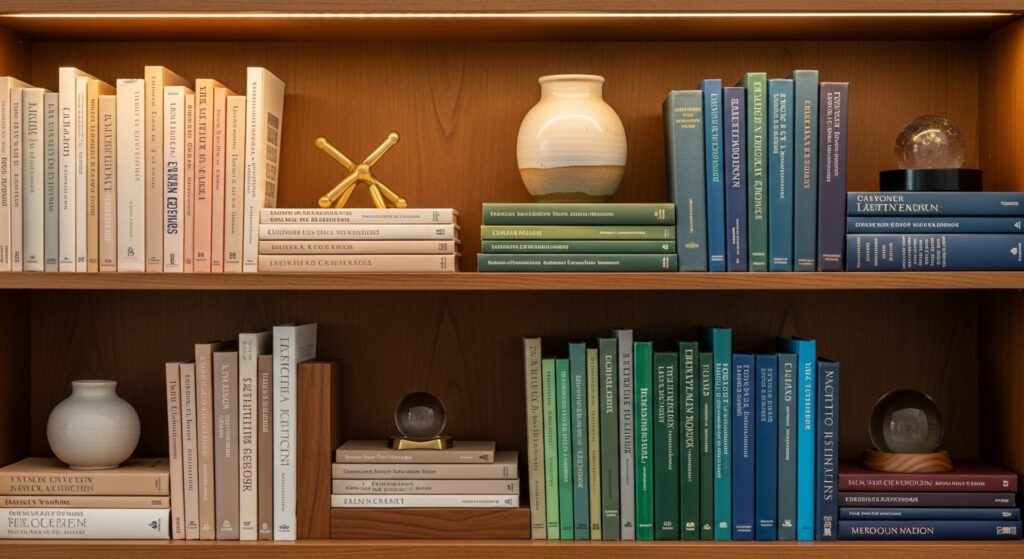
Quick color tips that work for beginners:
- Neutral tones — cream, white, warm beige, soft black — make the best base; build accent colors from there
- Stick to two accent colors maximum so things stay cohesive rather than busy
- Turning books spine-in creates a calm, uniform section that balances out busier parts of the shelf
6. Personal Touches That Work
A shelf that looks beautiful but feels cold and anonymous is a missed opportunity. The best shelf styling doesn’t just look good — it says something about who you are. A travel memento, a framed photo from a trip you loved, a small object with a story behind it — these things make a shelf feel like it belongs to a real person rather than a catalog.
The key is treating personal items like design elements rather than afterthoughts. Give each one a deliberate spot. Pair it with something complementary. Let it have space around it so it can actually be seen. A tiny souvenir crammed between two books gets lost; the same souvenir on a small riser with a little room around it becomes a feature.
You also don’t need to display everything meaningful to you all at once. Pick two or three pieces per shelf that genuinely matter, and rotate others in over time. Restraint actually makes the pieces you do display feel more significant, not less.
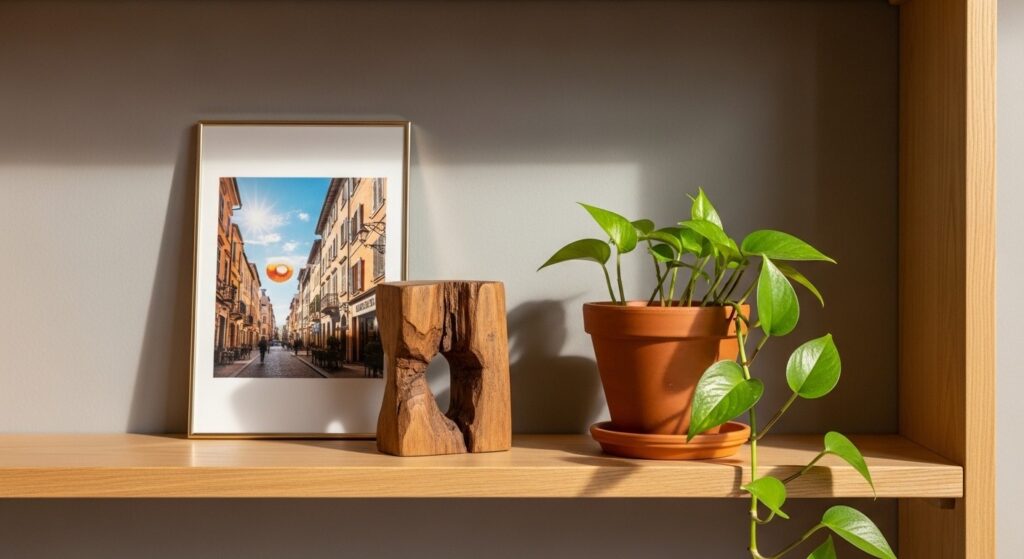
Personal items that tend to style well:
- Framed photos — especially in black and white, which blends into almost any color palette
- Small travel finds or natural objects with interesting shapes or textures
- Books that genuinely mean something to you — their presence adds authenticity that no purely decorative object can
7. What to Edit Out
Editing is genuinely half the work of shelf styling — maybe more. Knowing what to remove is just as important as knowing what to keep. Clutter on shelves doesn’t just look messy; it makes the whole room feel harder to relax in. The good news is that a ruthless edit can transform a shelf faster than buying anything new.
Start with duplicates. If you have three similar candles, keep the best one. Two vases of the same general type? Choose your favourite and find a home for the other somewhere else in the apartment. Then look for objects that have no particular visual interest — generic, shapeless, forgettable things that are there mostly because they’ve always been there.
Practical stuff — charging cables, remote controls, loose papers, random things that land on shelves because there’s nowhere else to put them — needs to live somewhere other than your display shelves. A small basket or lidded box on a lower shelf can handle the necessities without wrecking the visual story above.
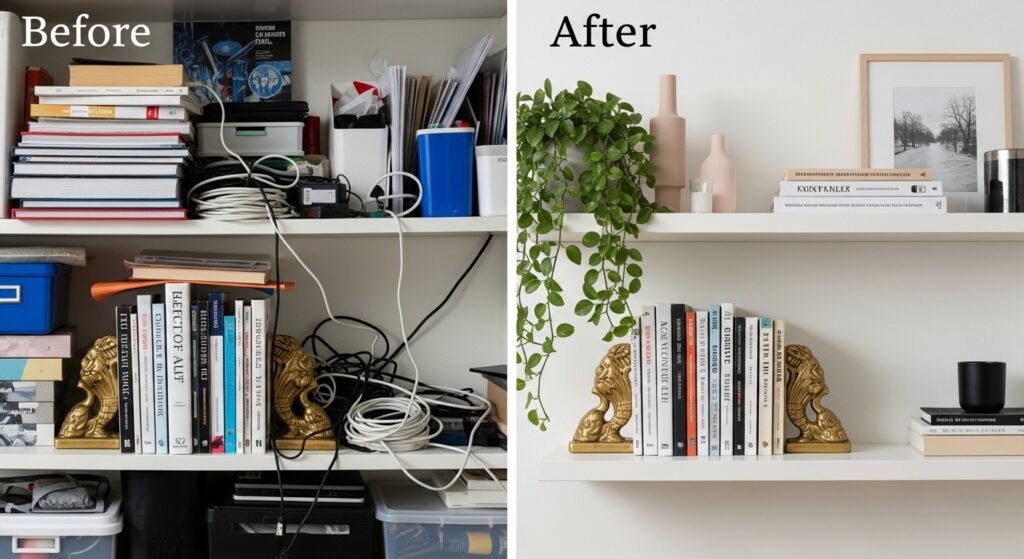
Things to remove first:
- Duplicate objects — keep the best one, rehome or store the rest
- Shapeless, visually forgettable items that don’t add interest or meaning
- Practical clutter: cables, remotes, loose papers, miscellaneous items
- Anything you haven’t consciously looked at or thought about in several months
Common Mistakes to Avoid
Even with the best intentions, a few easy missteps can work against you. These are the ones that come up most often — and the simplest to avoid once you know about them.
- Not measuring before you start. It sounds obvious, but a lot of people skip this step and regret it. Before you commit to a tall vase or a new piece of art, check the height and depth of your shelves. Finding out something doesn’t fit after you’ve built a whole arrangement around it is genuinely annoying.
- Ignoring what’s already in the room. Your shelves don’t exist in a vacuum. The colors, textures, and mood of your sofa, rug, curtains, and walls all matter. Style your shelves in conversation with the rest of the room, not independently of it.
- Chasing trends over your own style. If you style your shelves to match whatever’s popular right now, you’ll be restying them in six months when the trend shifts. Focus on what genuinely feels like you — that’s what creates a home that stays satisfying long after the novelty wears off.
- Skipping the planning step. Jumping straight in without any kind of plan usually means more time, more frustration, and more trips back and forth to the shop. Spend even ten minutes sketching a rough idea or laying objects out on the floor before you start building the arrangement. It genuinely saves time.
Frequently Asked Questions
What’s the single most important thing to focus on?
Honestly? Editing. More than any individual object, more than color or texture, your ability to remove things — to choose less over more — is what determines how your shelves look. Beginners almost always put too much on display, and the biggest improvement almost always comes from taking things away rather than adding them. Once you have a clean, uncluttered arrangement, everything else — focal points, texture contrast, color — falls into place so much more easily.
How do I actually get started if the whole thing feels overwhelming?
Take everything off first. All of it. It feels counterintuitive, but starting from a blank shelf is genuinely easier than trying to rearrange an existing pile of things. Lay it all out on the floor or a nearby table, group similar items together, and then only bring back the pieces that earn their place. You’ll probably be surprised by how much you can let go of once you see it all out in the open.
What does it typically cost to refresh shelf decor?
Less than most people think, especially if you’re willing to work with what you already have. Most homes have usable decor scattered around — objects in drawers, books in boxes, plants on windowsills, frames tucked away in cupboards. If you do want to add a few new pieces, you can make a real difference for somewhere between 30 and 80 dollars. One or two interesting ceramic pieces, a small plant, and a fresh set of bookends can completely change the feel of a shelf without a significant outlay.
How long does it take to do properly?
For a single bookcase or shelving unit starting from scratch, plan on two to four hours. That includes clearing everything out, editing your objects, building the arrangement, and — this part matters — stepping back repeatedly to look at it from a distance and make adjustments. Don’t rush the adjustment phase. A lot of the best decisions happen after you’ve walked away, come back with fresh eyes, and moved just one thing. Some people find it helpful to sleep on it and make final tweaks the next morning.
Gallery Wall Ideas for Living Room
Ready to Give Your Shelves a Real Refresh?
Here’s the thing about shelf styling: it’s genuinely one of the more forgiving home decor projects you can take on. Nothing is glued down. Nothing is permanent. You can try something, decide it’s not working, and change it in five minutes. That freedom is actually what makes it a great place to start building your design eye.
Start small. Pick one shelf — just one — and use the principles from this guide: edit ruthlessly, anchor with a focal point, vary your heights, mix your textures, and let a little personality show. See how it feels. Then move to the next shelf when you’re ready. For more ideas on building out your space, take a look at our guides on Wall Decor Ideas, Small Living Room Storage Ideas, and Minimalist Living Room Ideas. Your home gets better one good decision at a time.